

Bench Pull-ups vs Bodyweight Standing Close-grip One Arm Row: Complete Comparison Guide
Bench Pull-ups vs Bodyweight Standing Close-grip One Arm Row — two bodyweight back movers that both target the lats but load them differently. If you want clear guidance on which to pick for muscle growth, unilateral strength, or easy home setup, this guide has your back. You’ll get a breakdown of primary and secondary muscle activation, biomechanics (force vectors, length-tension), equipment needs, progression options, and concrete technique cues so you can choose the best option for your goals and program.
Exercise Comparison
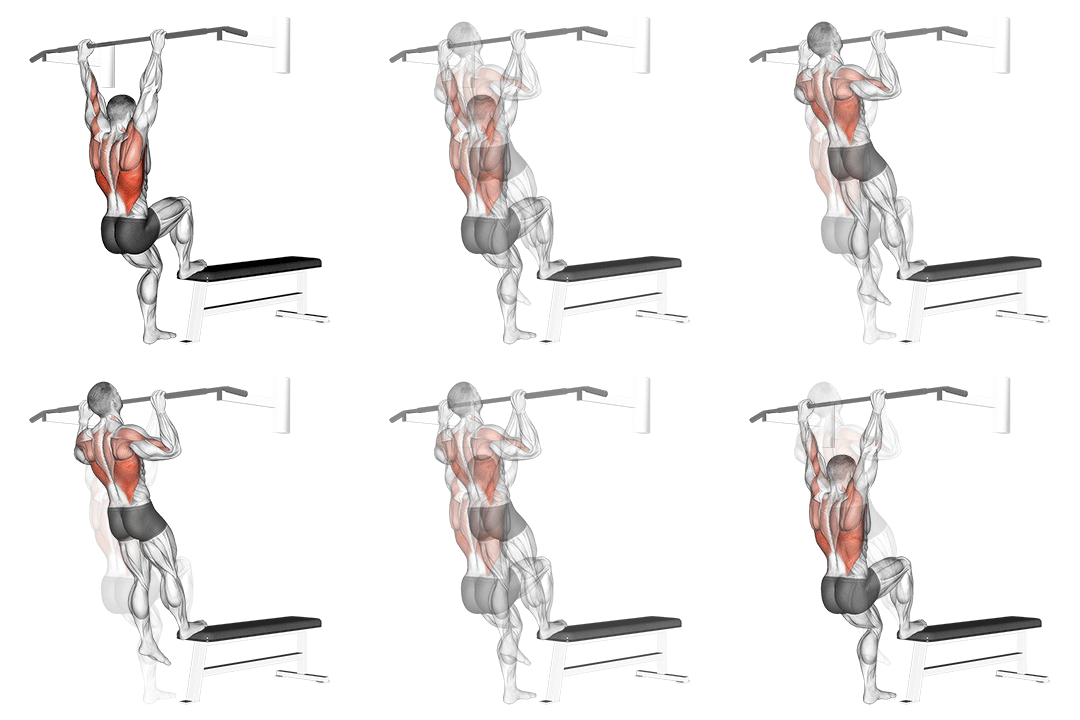
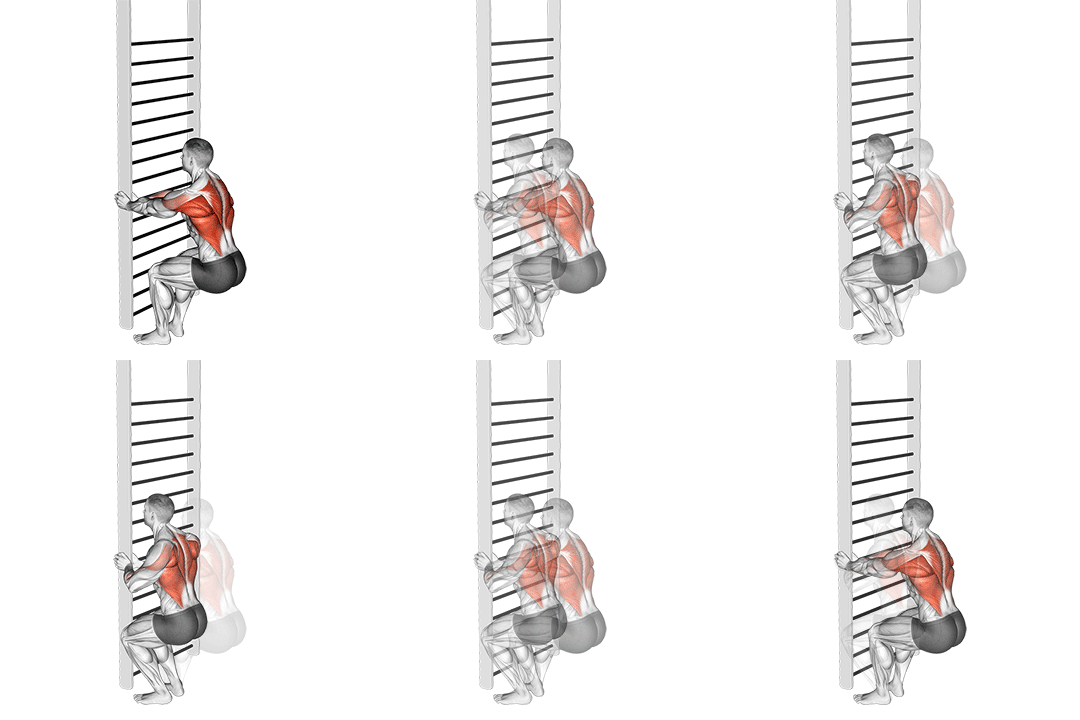
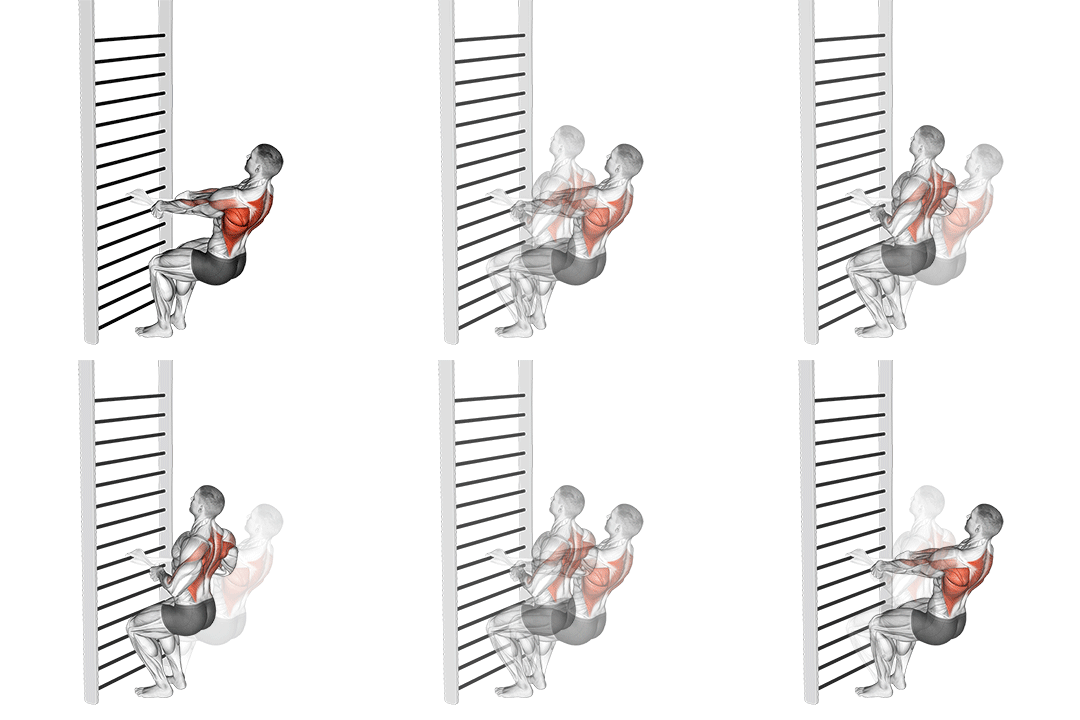
Bench Pull-ups
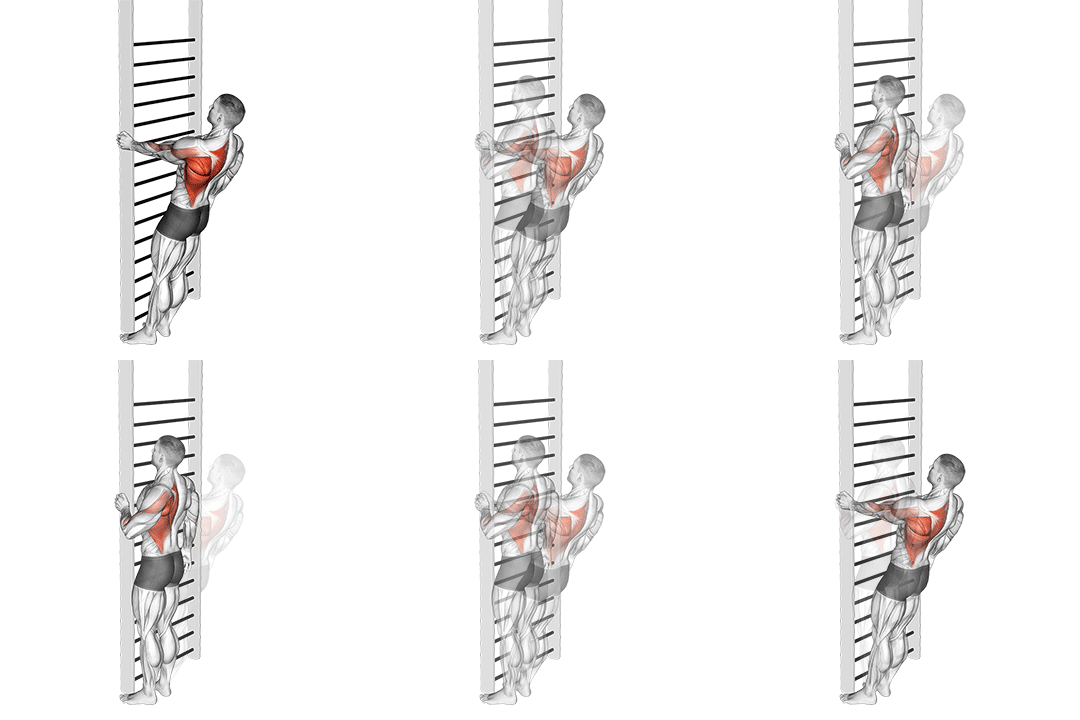
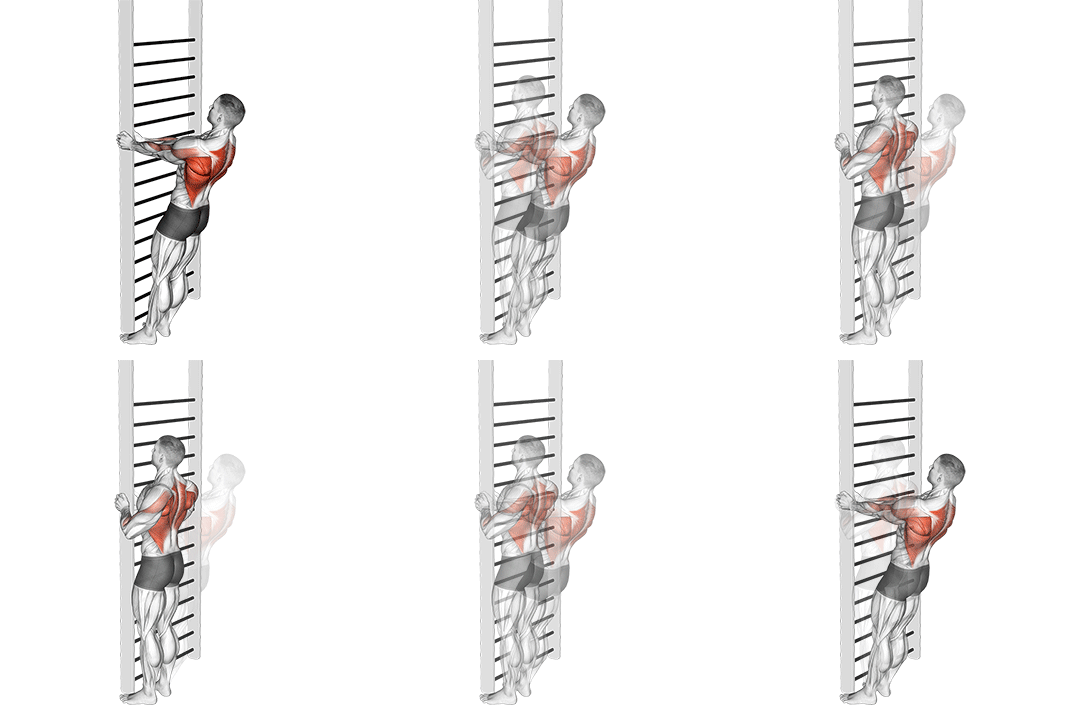
Bodyweight Standing Close-grip One Arm Row
Head-to-Head Comparison
| Attribute | Bench Pull-ups | Bodyweight Standing Close-grip One Arm Row |
|---|---|---|
| Target Muscle |
Lats
|
Lats
|
| Body Part |
Back
|
Back
|
| Equipment |
Body-weight
|
Body-weight
|
| Difficulty |
Intermediate
|
Intermediate
|
| Movement Type |
Compound
|
Compound
|
| Secondary Muscles |
2
|
2
|
Secondary Muscles Activated
Bench Pull-ups
Bodyweight Standing Close-grip One Arm Row
Visual Comparison
Overview
Bench Pull-ups vs Bodyweight Standing Close-grip One Arm Row — two bodyweight back movers that both target the lats but load them differently. If you want clear guidance on which to pick for muscle growth, unilateral strength, or easy home setup, this guide has your back. You’ll get a breakdown of primary and secondary muscle activation, biomechanics (force vectors, length-tension), equipment needs, progression options, and concrete technique cues so you can choose the best option for your goals and program.
Key Differences
- Both exercises target the Lats using Body-weight. The main differences are in their movement patterns and muscle activation angles.
Pros & Cons
Bench Pull-ups
+ Pros
- Easy setup with a bench, table, or low bar — minimal equipment
- Stable bilateral movement that teaches scapular retraction and pull mechanics
- Lower core and rotational demand makes it approachable for beginners
- Simple progressive loading by flattening body angle or elevating feet
− Cons
- Limited unilateral work so it may hide left-right strength imbalances
- Less peak lat stretch than a vertical/diagonal pull at full ROM
- Harder to load progressively beyond bodyweight without extra gear
Bodyweight Standing Close-grip One Arm Row
+ Pros
- Strong unilateral loading for limb-specific strength and hypertrophy
- Greater peak lat stretch and mechanical tension per side
- Easier to progressively overload one side with tempo, pauses, or added load
- Adds core anti-rotation demand, improving stability and functional strength
− Cons
- Requires more stability and coordination; steeper learning curve
- Needs an anchor or strap for optimal hand placement
- Higher rotational stress on the spine and shoulder if performed without bracing
When Each Exercise Wins
Unilateral loading produces higher mechanical tension per side and a longer lat stretch at the top of the pull, which favors muscle growth. Use 6–12 reps per side with slow eccentrics (3–4 seconds) to maximize time under tension.
The one-arm row allows targeted progressive overload and heavier effective per-limb loading, making it better for increasing one-arm pulling strength and addressing imbalances. Use lower rep ranges (3–6) and add pause or weighted progressions.
Bench Pull-ups provide a more stable, bilateral pattern that teaches scapular control and elbow flexion without heavy anti-rotation demands. Start at a shallow torso angle and work toward a flatter bodyline as you progress.
Bench Pull-ups require only a bench, table, or low bar and minimal setup, making them easier to do consistently at home. They scale by changing body angle so you can progress without extra equipment.
Frequently Asked Questions
Can I do both Bench Pull-ups and Bodyweight Standing Close-grip One Arm Row in the same workout?
Yes. Start with the more demanding pattern for your goal (usually the one-arm row for unilateral strength) then use bench pull-ups as a volume or technique-focused finisher. Keep total weekly volume for the back in recommended ranges (12–20 working sets) to avoid overtraining.
Which exercise is better for beginners?
Bench Pull-ups are better for beginners because they offer a stable, bilateral pattern that teaches scapular depression/retraction and elbow flexion with a gentler core demand. Progress by flattening the torso angle before moving to unilateral variations.
How do the muscle activation patterns differ?
Bench Pull-ups bias horizontal force vectors, increasing mid-trap and rhomboid recruitment and producing consistent bilateral lat activation. The one-arm close-grip row applies a more diagonal/vertical vector with a longer lat stretch and greater biceps and oblique activation due to unilateral stabilization.
Can Bodyweight Standing Close-grip One Arm Row replace Bench Pull-ups?
It can replace bench pull-ups if your goal is unilateral strength or targeted hypertrophy, but you’ll lose some bilateral scapular control work. For balanced development, rotate or pair both across training phases.
Expert Verdict
Both moves earn a place in smart programming, but use them for different priorities. Choose Bench Pull-ups when you need an accessible, teachable horizontal pull that reinforces scapular retraction and builds bilateral pulling capacity — ideal for beginners or cramped home setups (work 8–15 reps, adjust torso angle). Choose the Bodyweight Standing Close-grip One Arm Row when you want unilateral overload, greater lat stretch, and targeted biceps/forearm loading for muscle growth or single-arm strength (use 6–12 reps per side or 3–6 for strength with added load). Pairing them across a cycle lets you attack symmetry, tension, and stability from both angles.
Also Compare
More comparisons with Bench Pull-ups
More comparisons with Bodyweight Standing Close-grip One Arm Row
Compare More Exercises
Use our free comparison tool to analyze any two exercises head-to-head.
Compare Exercises