

Body-up vs Close-grip Push-up: Complete Comparison Guide
Body-up vs Close-grip Push-up is the matchup you need when your goal is stronger, thicker triceps without a gym. I'll walk you through muscle activation, equipment needs, technique cues, progression options, and injury considerations so you can pick the best move for your program. You’ll get clear comparisons of primary and secondary muscle work, specific rep ranges for hypertrophy and strength, and simple cues—like ideal elbow angles and hand placement—to maximize triceps tension while protecting your shoulders.
Exercise Comparison
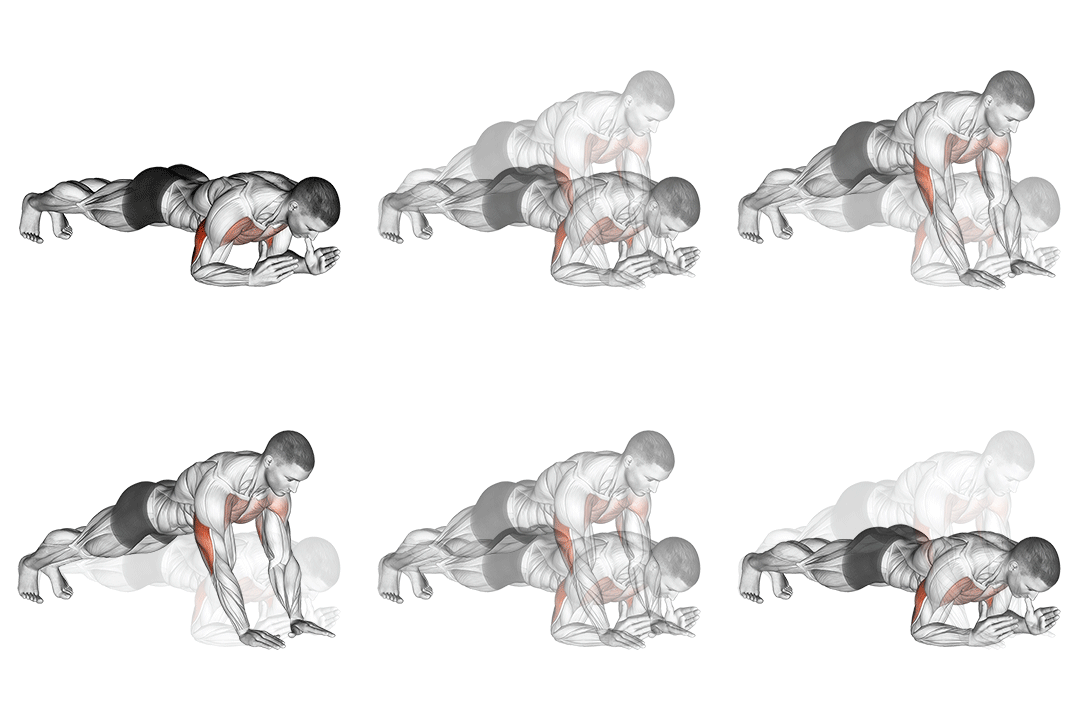
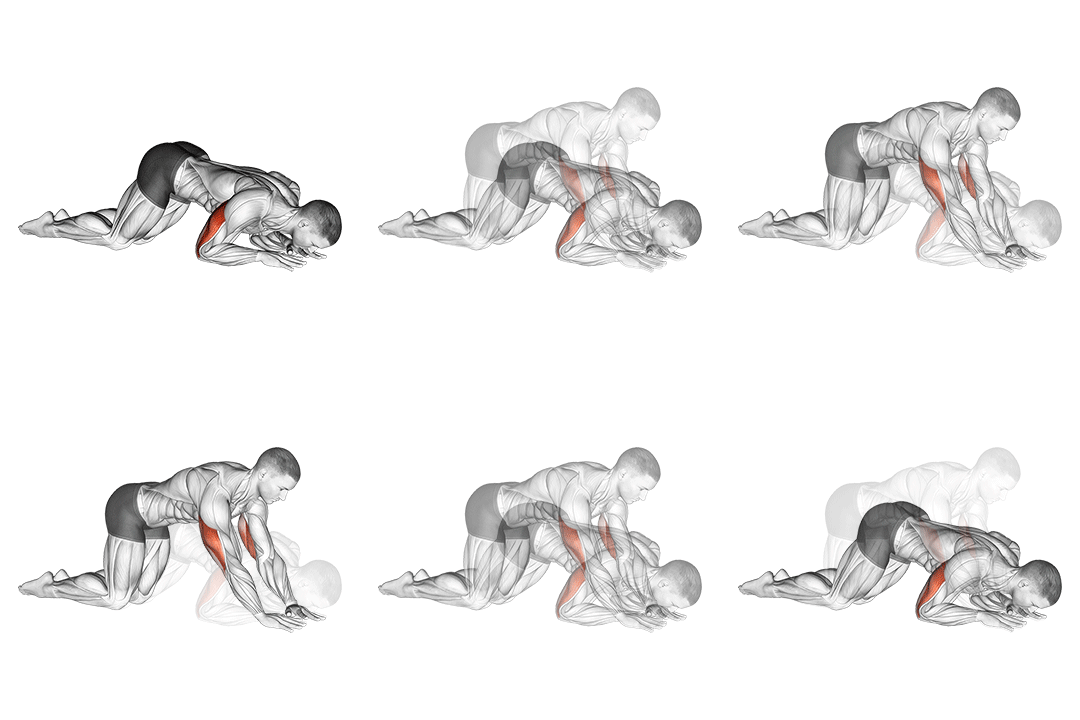
Body-up
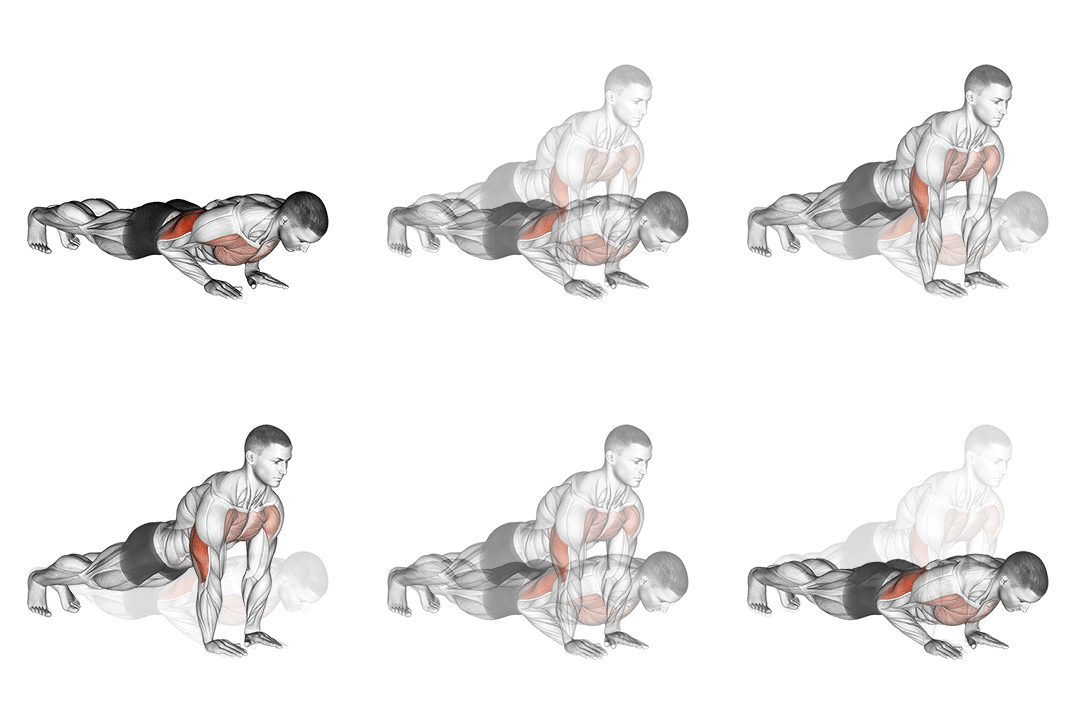
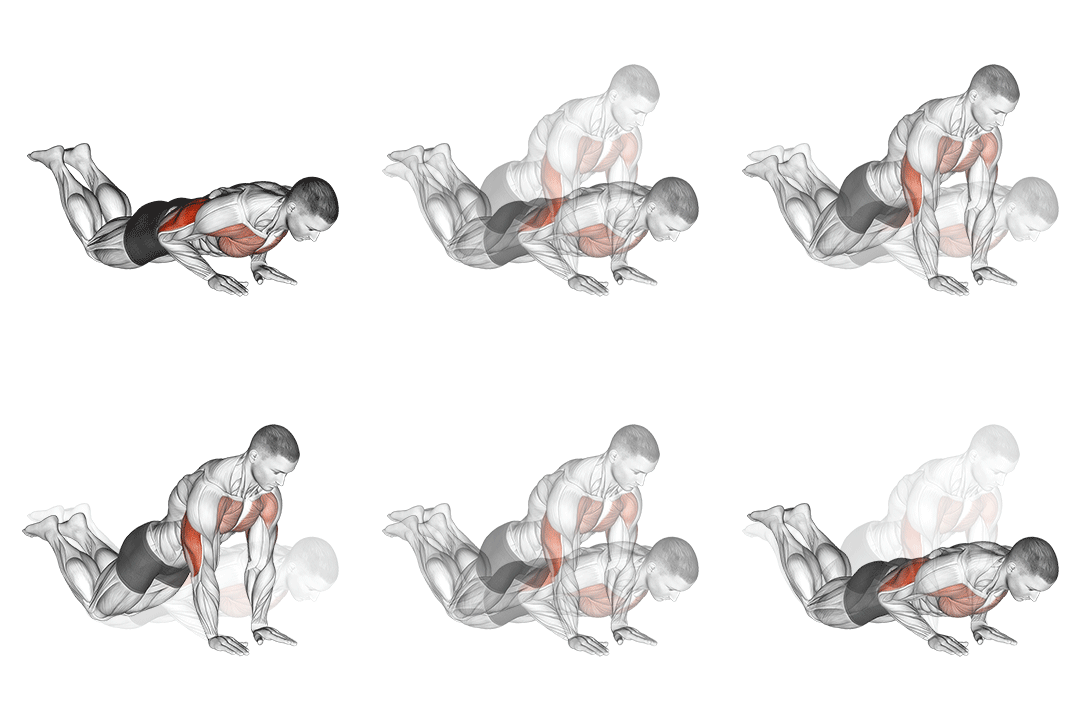
Close-grip Push-up
Head-to-Head Comparison
| Attribute | Body-up | Close-grip Push-up |
|---|---|---|
| Target Muscle |
Triceps
|
Triceps
|
| Body Part |
Upper-arms
|
Upper-arms
|
| Equipment |
Body-weight
|
Body-weight
|
| Difficulty |
Intermediate
|
Intermediate
|
| Movement Type |
Compound
|
Compound
|
| Secondary Muscles |
2
|
2
|
Secondary Muscles Activated
Body-up
Close-grip Push-up
Visual Comparison
Overview
Body-up vs Close-grip Push-up is the matchup you need when your goal is stronger, thicker triceps without a gym. I'll walk you through muscle activation, equipment needs, technique cues, progression options, and injury considerations so you can pick the best move for your program. You’ll get clear comparisons of primary and secondary muscle work, specific rep ranges for hypertrophy and strength, and simple cues—like ideal elbow angles and hand placement—to maximize triceps tension while protecting your shoulders.
Key Differences
- Both exercises target the Triceps using Body-weight. The main differences are in their movement patterns and muscle activation angles.
Pros & Cons
Body-up
+ Pros
- Greater long-head triceps stretch through increased ROM
- Easier to add overload with handles or weighted vests
- Strong carryover to vertical pressing due to shoulder position
- Sustained triceps tension across the rep for hypertrophy
− Cons
- Requires better scapular control and core stability
- Slightly higher shoulder stress if depth is uncontrolled
- Harder to scale precisely without equipment like parallettes
Close-grip Push-up
+ Pros
- Ultra-accessible — no equipment and many regressions
- Clear technique cues make it easy to teach and self-correct
- Scales across rep ranges (8–20+) for conditioning or hypertrophy
- Lower technical demand for consistent sets and volume
− Cons
- Limited overload options without accessories
- Wrist discomfort for some lifters in narrow hand positions
- Can underload triceps if form drifts into wide push-up mechanics
When Each Exercise Wins
Body-up produces a longer triceps length-tension window and lets you increase ROM and time under tension. Use 6–12 reps with slow 2–3s eccentrics or added load to maximize muscle growth.
Because you can overload Body-up more effectively (weighted vest, elevated handles) and emphasize heavy, low-rep sets, it builds raw elbow-extension strength better than the body-only Close-grip Push-up.
Close-grip Push-up is simpler to learn and offers immediate regressions like knee or incline variations, letting you build triceps capacity while maintaining safe shoulder mechanics.
Close-grip Push-up requires zero gear and scales well with body position changes, making it the most practical triceps choice for limited-space, no-equipment sessions.
Frequently Asked Questions
Can I do both Body-up and Close-grip Push-up in the same workout?
Yes. Pair them strategically: use Close-grip Push-ups as a warm-up or volume work (12–20 reps) and finish with Body-ups for heavier or slower sets (6–12 reps). That sequence preserves strength for the heavier, more ROM-focused Body-up.
Which exercise is better for beginners?
Close-grip Push-up is better for beginners because it has easier regressions (knees, incline), simpler setup, and lower technical demand. It lets you build the necessary scapular and core control before advancing.
How do the muscle activation patterns differ?
Close-grip Push-ups create earlier peak triceps activation near lockout due to a more horizontal force vector, while Body-ups sustain triceps tension through a longer portion of the rep because the triceps is lengthened more at the bottom—this uses length-tension mechanics to increase time under tension.
Can Close-grip Push-up replace Body-up?
It can replace Body-up for general conditioning and initial triceps work, but it won’t match the overload and ROM options of Body-up for hypertrophy and maximal strength. If you lack equipment, prioritize progressive Close-grip variations and add Body-ups when you can.
Expert Verdict
If your priority is targeted triceps hypertrophy or maximizing elbow-extension strength, choose the Body-up and emphasize full ROM, controlled eccentrics (2–3s), and progressive overload. If you want a highly accessible, easy-to-scale triceps builder for higher-volume training or to start your program, choose the Close-grip Push-up and focus on tight core, elbows tucked ~45 degrees, and 8–20 rep sets. Use both: start with Close-grip variations to build volume and technique, then introduce Body-ups or weighted progressions for focused overload and long-term triceps development.
Also Compare
More comparisons with Body-up
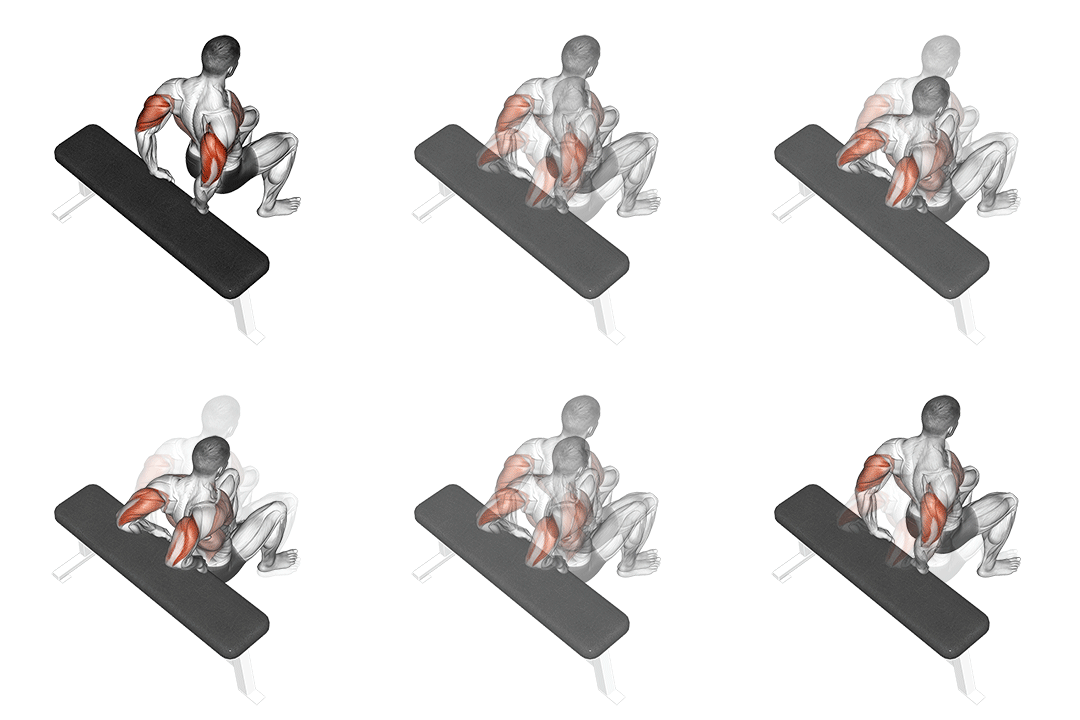
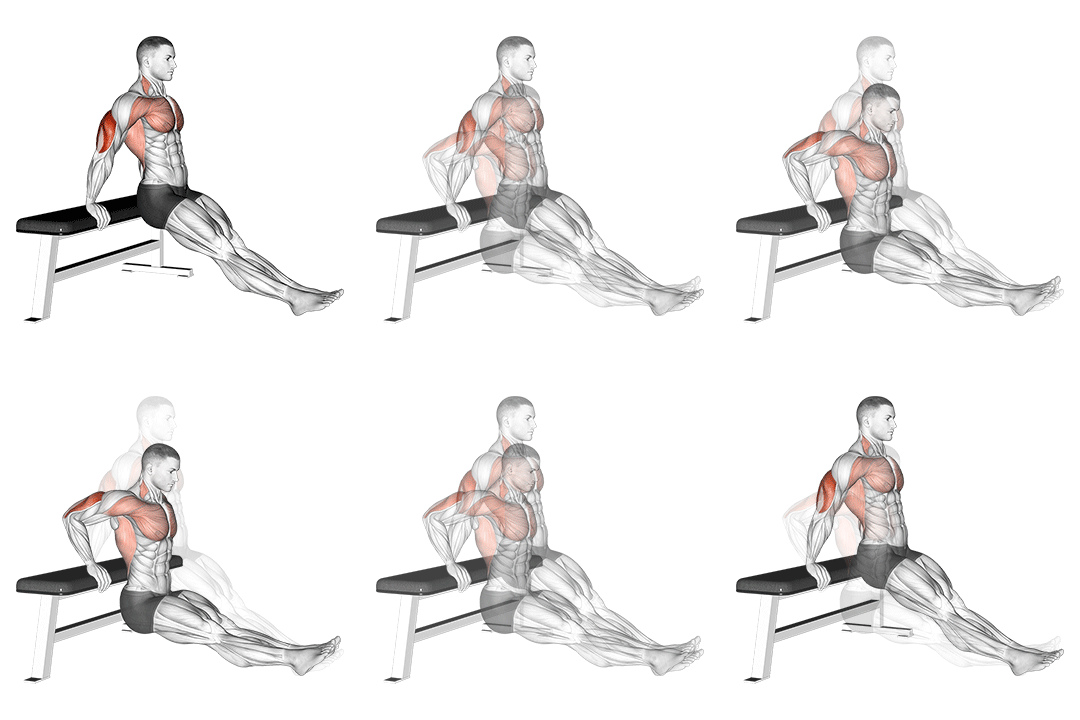
Compare More Exercises
Use our free comparison tool to analyze any two exercises head-to-head.
Compare Exercises