

Body-up vs Close-grip Push-up (on Knees): Complete Comparison Guide
Body-up vs Close-grip Push-up (on Knees). If you want to target stronger, thicker triceps and decide which bodyweight exercise fits your program, you’re in the right place. I’ll compare how each movement loads the elbow extensors, how much chest and shoulder work they add, what equipment (if any) you need, and which to pick based on goals like hypertrophy, strength, or learning progressions. Expect clear technique cues, biomechanical reasoning (force vectors, lever arms, length-tension), and actionable rep ranges so you can choose the right move for your next workout.
Exercise Comparison
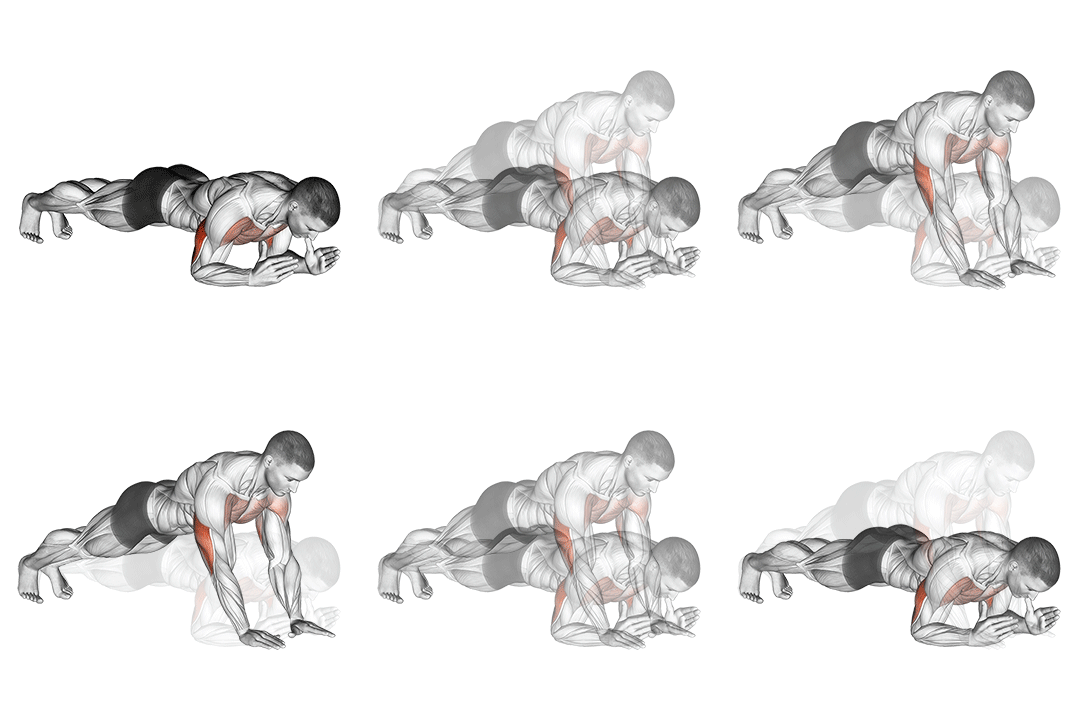
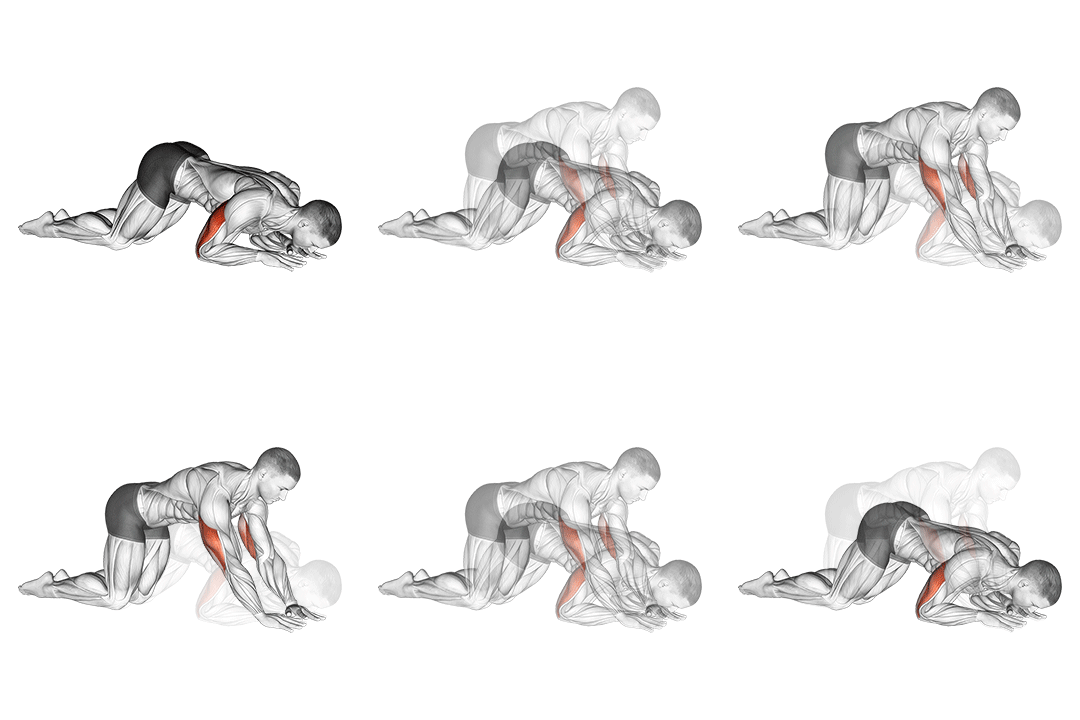
Body-up
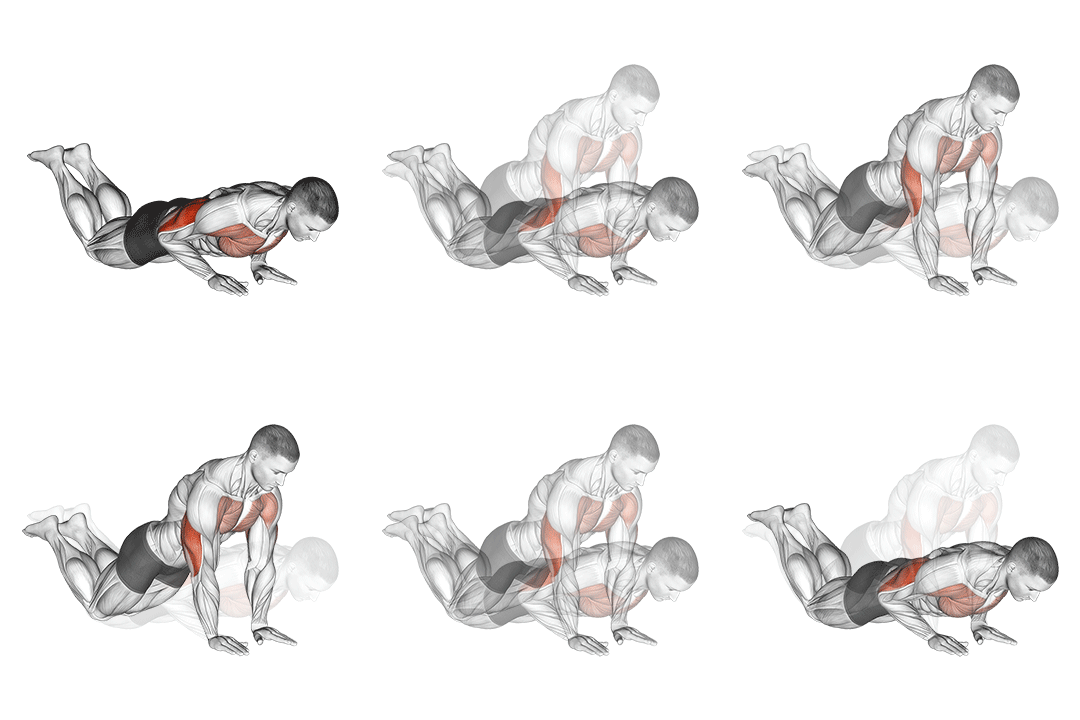
Close-grip Push-up (on Knees)
Head-to-Head Comparison
| Attribute | Body-up | Close-grip Push-up (on Knees) |
|---|---|---|
| Target Muscle |
Triceps
|
Triceps
|
| Body Part |
Upper-arms
|
Upper-arms
|
| Equipment |
Body-weight
|
Body-weight
|
| Difficulty |
Intermediate
|
Beginner
|
| Movement Type |
Compound
|
Compound
|
| Secondary Muscles |
2
|
2
|
Secondary Muscles Activated
Body-up
Close-grip Push-up (on Knees)
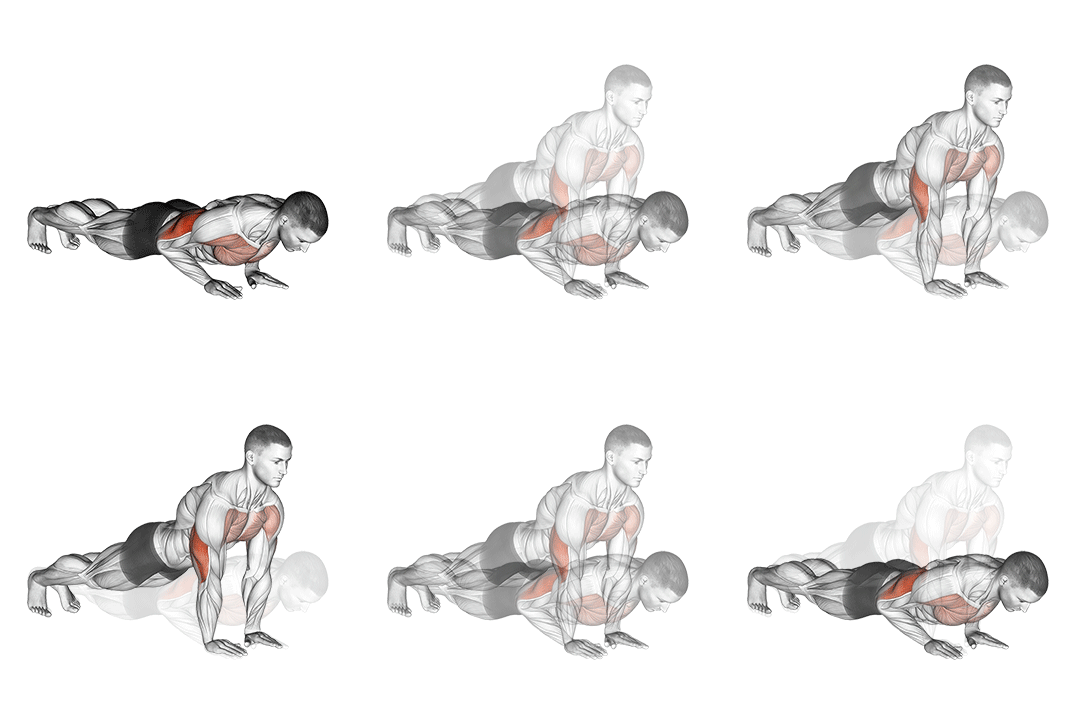
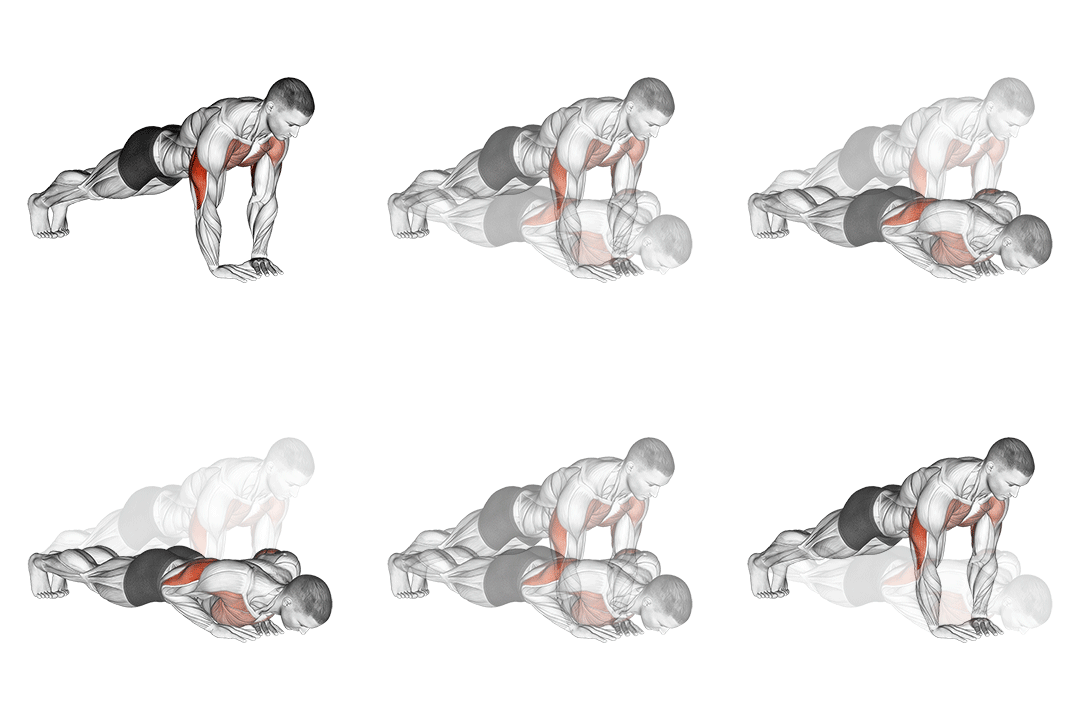
Visual Comparison
Overview
Body-up vs Close-grip Push-up (on Knees). If you want to target stronger, thicker triceps and decide which bodyweight exercise fits your program, you’re in the right place. I’ll compare how each movement loads the elbow extensors, how much chest and shoulder work they add, what equipment (if any) you need, and which to pick based on goals like hypertrophy, strength, or learning progressions. Expect clear technique cues, biomechanical reasoning (force vectors, lever arms, length-tension), and actionable rep ranges so you can choose the right move for your next workout.
Key Differences
- Difficulty levels differ: Body-up is intermediate, while Close-grip Push-up (on Knees) is beginner.
- Both exercises target the Triceps using Body-weight. The main differences are in their movement patterns and muscle activation angles.
Pros & Cons
Body-up
+ Pros
- Higher mechanical tension on triceps thanks to larger moment arm and torso angle
- Greater secondary chest and anterior deltoid recruitment for balanced upper-body development
- More progression options (weighted, tempo, elevated, single-arm)
- Better for low-rep strength work and higher mechanical overload per rep
− Cons
- Requires stronger core and scapular stability to perform safely
- Higher shoulder and elbow joint stress—greater injury risk if form breaks down
- Harder to learn for true beginners; technique errors reduce effectiveness
Close-grip Push-up (on Knees)
+ Pros
- Very accessible—ideal for beginners and rehabilitation phases
- Lower joint torque reduces injury risk and allows more volume
- Easy to load via higher reps or tempo without extra equipment
- Useful as a technical drill to learn hand placement and elbow tuck
− Cons
- Lower absolute mechanical tension limits maximal strength progressions
- Reduced chest and shoulder recruitment compared to more horizontal variants
- Can become too easy quickly, requiring careful progression planning
When Each Exercise Wins
Body-up produces higher mechanical tension and a larger range of motion, recruiting more motor units per rep. Aim for 6–12 controlled reps with 2–3 second eccentrics to maximize time under tension and muscle growth.
Strength depends on overcoming higher peak torque; Body-up creates greater elbow-extension load so it’s better for building triceps strength. Use lower rep clusters (3–6 reps) and progress via added load or harder leverage.
The knee variation reduces the external moment arm and simplifies core demands, letting beginners learn hand placement and elbow path safely. Start with sets of 8–15 reps and focus on full ROM and scapular control.
While both need minimal equipment, the knee close-grip is simplest to program for high-volume, no-setup sessions and reduces injury risk for frequent home training. It’s ideal for adding volume across many sessions.
Frequently Asked Questions
Can I do both Body-up and Close-grip Push-up (on Knees) in the same workout?
Yes. Pair the knee close-grip as an activation or volume exercise (2–4 sets of 10–20 reps) and follow with Body-up for heavier work (3–5 sets of 6–12 reps). That sequence builds movement skill and then applies higher mechanical tension when you’re warmed up.
Which exercise is better for beginners?
Close-grip Push-up (on Knees) is better for beginners because it lowers the external load and simplifies torso demands, letting you focus on elbow tracking and scapular control. Use it until you can do sets of 12–15 with clean form before progressing.
How do the muscle activation patterns differ?
Body-up increases absolute triceps activation by raising elbow-extension torque and time under tension in mid-to-end range angles, while the knee close-grip reduces the moment arm and shifts recruitment toward lower-threshold fibers. The Body-up also adds more chest and anterior deltoid involvement due to a more horizontal trunk and larger horizontal force vector.
Can Close-grip Push-up (on Knees) replace Body-up?
It can replace Body-up temporarily for volume or rehab phases, but it won’t fully substitute when your goal is maximal triceps overload or strength. Use the knee variation to build capacity, then progress to Body-up or add external load to reach higher mechanical tension.
Expert Verdict
Choose Body-up when you need higher mechanical tension and a progression path for triceps strength or targeted hypertrophy—especially if you can maintain good scapular control and core stiffness. Use 6–12 reps or lower-rep weighted variations for maximal overload. Pick Close-grip Push-up (on Knees) if you’re a beginner, recovering from injury, or want a safe, high-volume option for building baseline triceps endurance and technique. Program both: use the knee close-grip for volume and skill work, then graduate to Body-up variations for heavier, strength-focused blocks.
Also Compare
More comparisons with Body-up
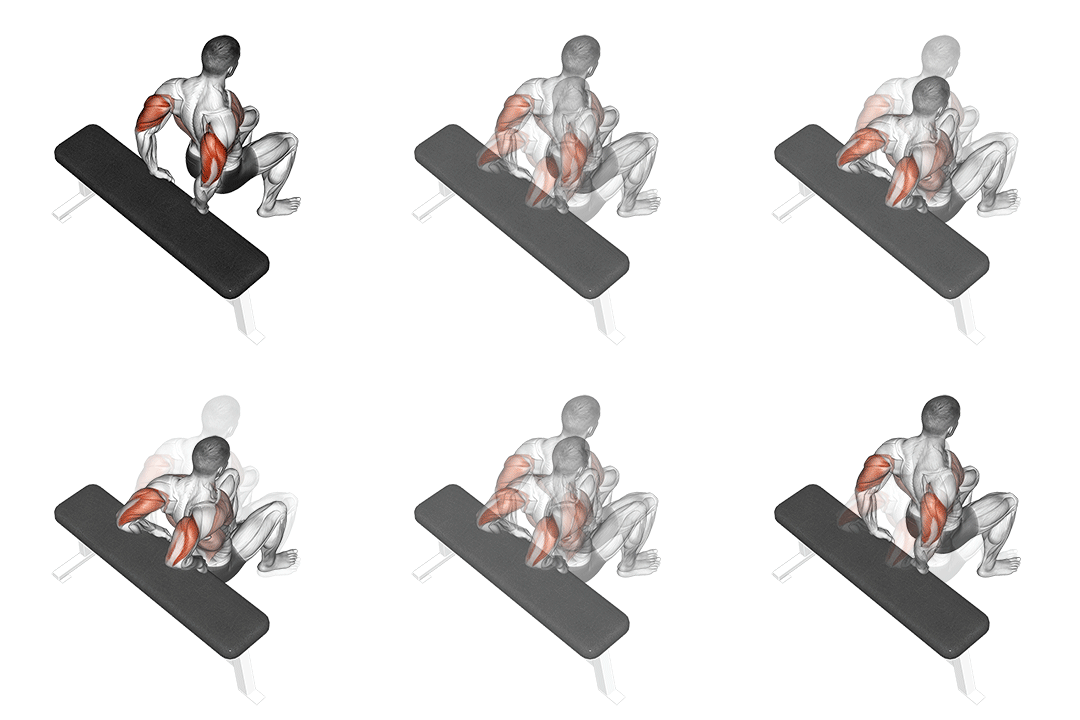
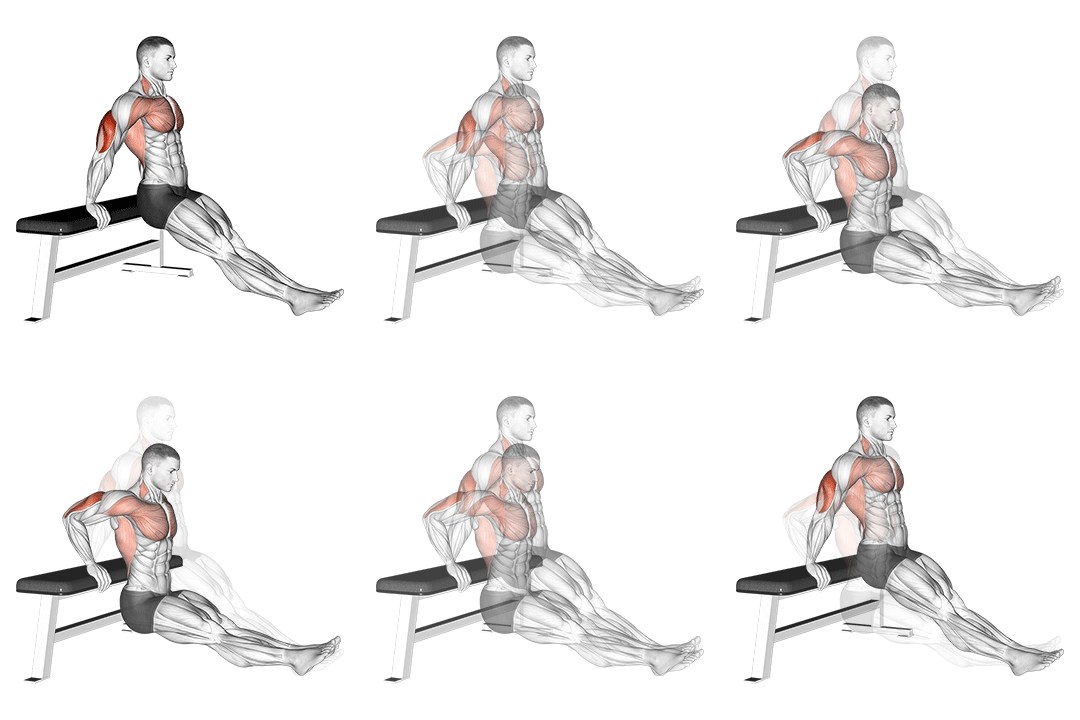
More comparisons with Close-grip Push-up (on Knees)
Compare More Exercises
Use our free comparison tool to analyze any two exercises head-to-head.
Compare Exercises