

Body-up vs Diamond Push-up: Complete Comparison Guide
Body-up vs Diamond Push-up — you want a triceps-focused, bodyweight upper-arm move that fits your goals and equipment. This guide compares both exercises head-to-head so you can pick the best option for muscle growth, strength, and safe progressions. You’ll get clear technique cues, biomechanics (force vectors, elbow moment arms, length-tension), rep ranges (6–12 for hypertrophy, 3–6 for strength), equipment needs, and decisive recommendations. Read on and use the cues to practice both safely so your triceps and shoulders develop predictably.
Exercise Comparison
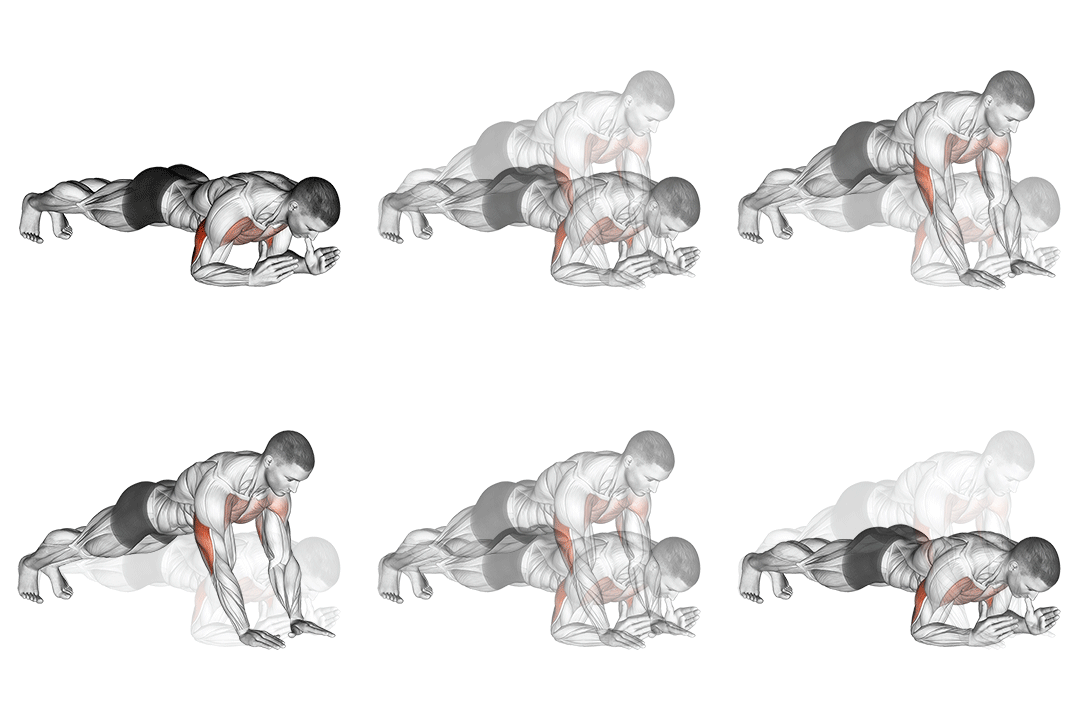
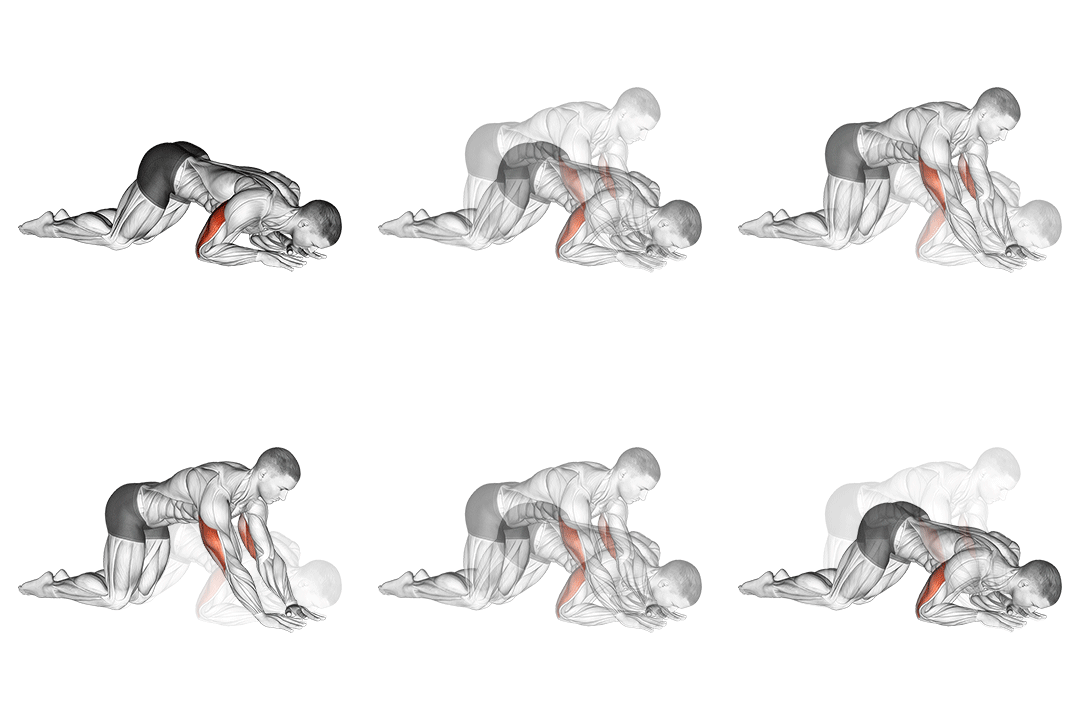
Body-up
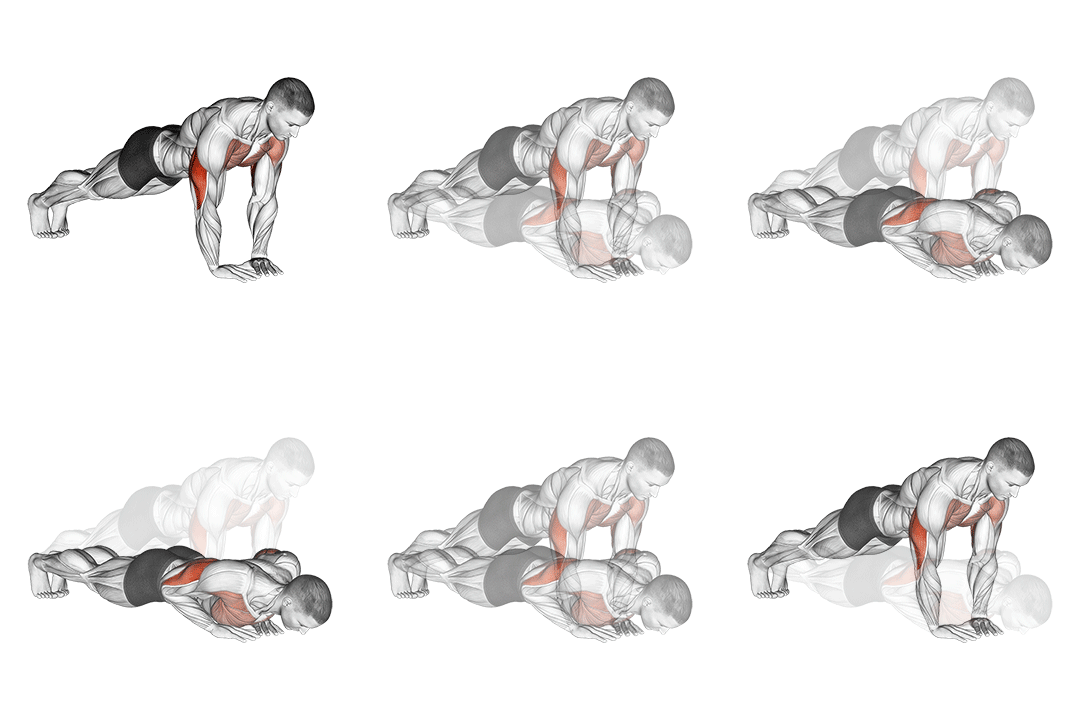
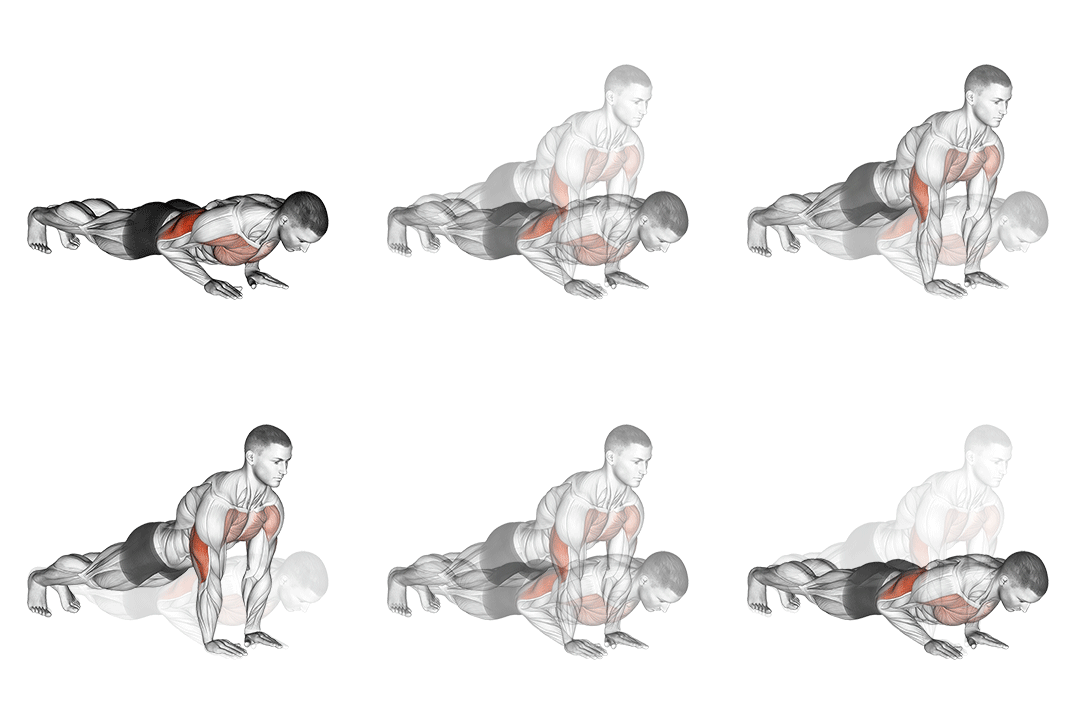
Diamond Push-up
Head-to-Head Comparison
| Attribute | Body-up | Diamond Push-up |
|---|---|---|
| Target Muscle |
Triceps
|
Triceps
|
| Body Part |
Upper-arms
|
Upper-arms
|
| Equipment |
Body-weight
|
Body-weight
|
| Difficulty |
Intermediate
|
Advanced
|
| Movement Type |
Compound
|
Compound
|
| Secondary Muscles |
2
|
2
|
Secondary Muscles Activated
Body-up
Diamond Push-up
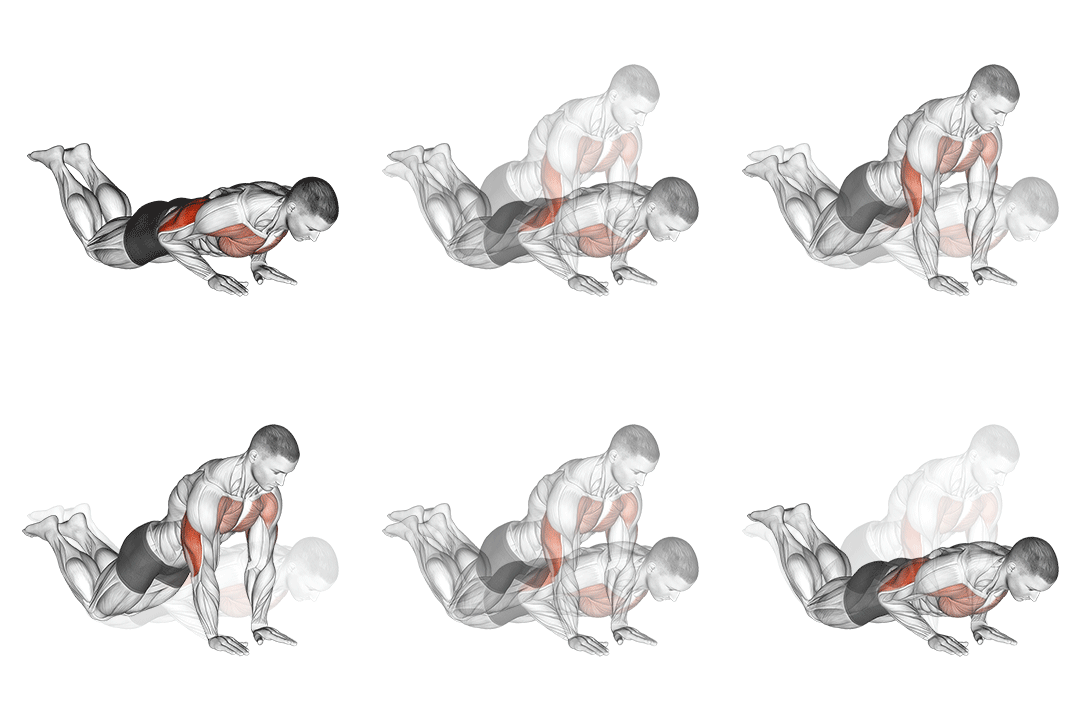
Visual Comparison
Overview
Body-up vs Diamond Push-up — you want a triceps-focused, bodyweight upper-arm move that fits your goals and equipment. This guide compares both exercises head-to-head so you can pick the best option for muscle growth, strength, and safe progressions. You’ll get clear technique cues, biomechanics (force vectors, elbow moment arms, length-tension), rep ranges (6–12 for hypertrophy, 3–6 for strength), equipment needs, and decisive recommendations. Read on and use the cues to practice both safely so your triceps and shoulders develop predictably.
Key Differences
- Difficulty levels differ: Body-up is intermediate, while Diamond Push-up is advanced.
- Both exercises target the Triceps using Body-weight. The main differences are in their movement patterns and muscle activation angles.
Pros & Cons
Body-up
+ Pros
- Easier to scale with inclines/declines and tempo work
- Better for accumulating high-volume hypertrophy sets (8–15+ reps)
- Less peak stress on wrists and elbows with correct form
- Good balance of triceps, chest, and shoulder recruitment
− Cons
- Less peak triceps overload per rep compared to Diamond Push-up
- Harder to reach maximal strength intensity without added load
- Can be performed with sloppy form that shifts work to chest if elbows flare
Diamond Push-up
+ Pros
- Higher peak triceps demand per rep due to narrow hand placement
- Excellent for low-rep strength work and motor unit recruitment
- Simple progression to weighted variations or slow eccentrics
- Minimal equipment — pure bodyweight intensity
− Cons
- Greater wrist and elbow stress; requires strong scapular control
- Advanced technique — harder to scale for beginners
- Smaller range for safe high-volume hypertrophy unless careful with form
When Each Exercise Wins
Body-ups are easier to accumulate volume (8–15 reps) across sets with lower peak joint stress and allow tempo and incline variations to maximize time under tension and mechanical tension for growth.
Diamond Push-ups produce higher elbow extension torque and recruit high-threshold motor units, making them better for low-rep (3–6) strength work and adding external load for progressive overload.
Body-ups scale down to incline or partial ROM and reduce wrist/elbow stress, giving beginners a safer platform to learn elbow tracking, scapular control, and movement tempo.
Both require no equipment, but Body-ups are more adaptable to household items (benches, stairs) and allow easier progressions without needing weight vests or accessories.
Frequently Asked Questions
Can I do both Body-up and Diamond Push-up in the same workout?
Yes. Use Body-ups for volume early in the session (3–4 sets of 8–15) and add Diamond Push-ups later as a heavy or fatigue-resistant finisher (2–4 sets of 4–8) to target high-threshold motor units while managing fatigue.
Which exercise is better for beginners?
Body-up is better for beginners because you can regress with an incline, reduce range of motion, and emphasize scapular control; Diamond Push-ups demand more wrist strength and elbow stability and are best introduced after foundational strength.
How do the muscle activation patterns differ?
Diamond Push-ups increase elbow-extension torque and medial triceps activation due to a narrower hand position and altered force vector; Body-ups distribute load more evenly between triceps and pectoralis major because the shoulder produces more horizontal adduction during the push.
Can Diamond Push-up replace Body-up?
Diamond Push-ups can replace Body-ups if your priority is maximal triceps overload, but they’re less suited for high-volume hypertrophy and may increase joint stress. For balanced development, keep Body-ups in your program and rotate Diamond Push-ups in for strength cycles.
Expert Verdict
Choose Body-up when you want reliable hypertrophy and easier scalability — its biomechanics let you manipulate torso angle, rep ranges (8–15), and tempo to increase time under tension without excessive wrist or elbow stress. Pick Diamond Push-up when your goal is triceps-focused strength: the narrow hand position increases elbow moment arm and concentrates load on elbow extensors for heavy 3–6 rep work or weighted progressions. For most trainees, use Body-ups as your volume builder and add Diamond Push-ups as a heavy, low-rep or finishing variation to overload the triceps and consolidate strength.
Also Compare
More comparisons with Body-up
Compare More Exercises
Use our free comparison tool to analyze any two exercises head-to-head.
Compare Exercises