

Bodyweight Squatting Row vs Bodyweight Squatting Row (with Towel): Complete Comparison Guide
Bodyweight Squatting Row vs Bodyweight Squatting Row (with Towel) — which should you add to your routine? You’ll get a clear, practical comparison so you can pick the right variation for your goals. I’ll walk you through how each version loads the lats, how the movement pattern and grip change muscle recruitment, what equipment and angles matter, and which variant is easier to learn or safer to progress. Read on for specific technique cues, recommended rep ranges (8–15 for hypertrophy, 4–8 for strength emphasis), and quick programming tips you can use this week.
Exercise Comparison
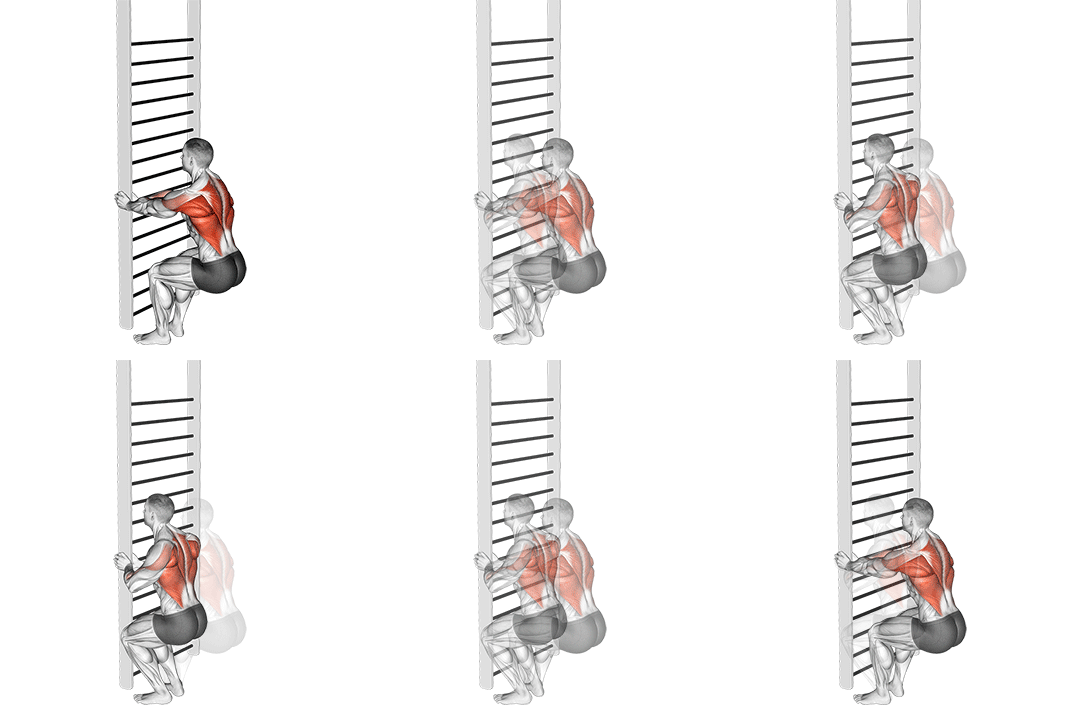
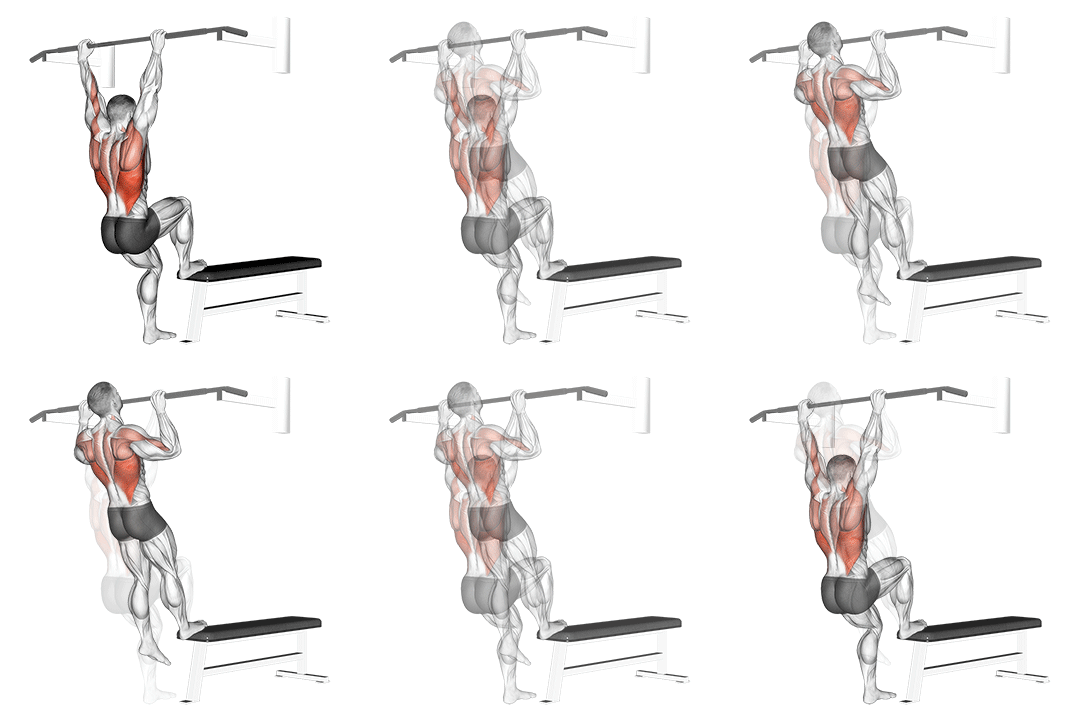
Bodyweight Squatting Row
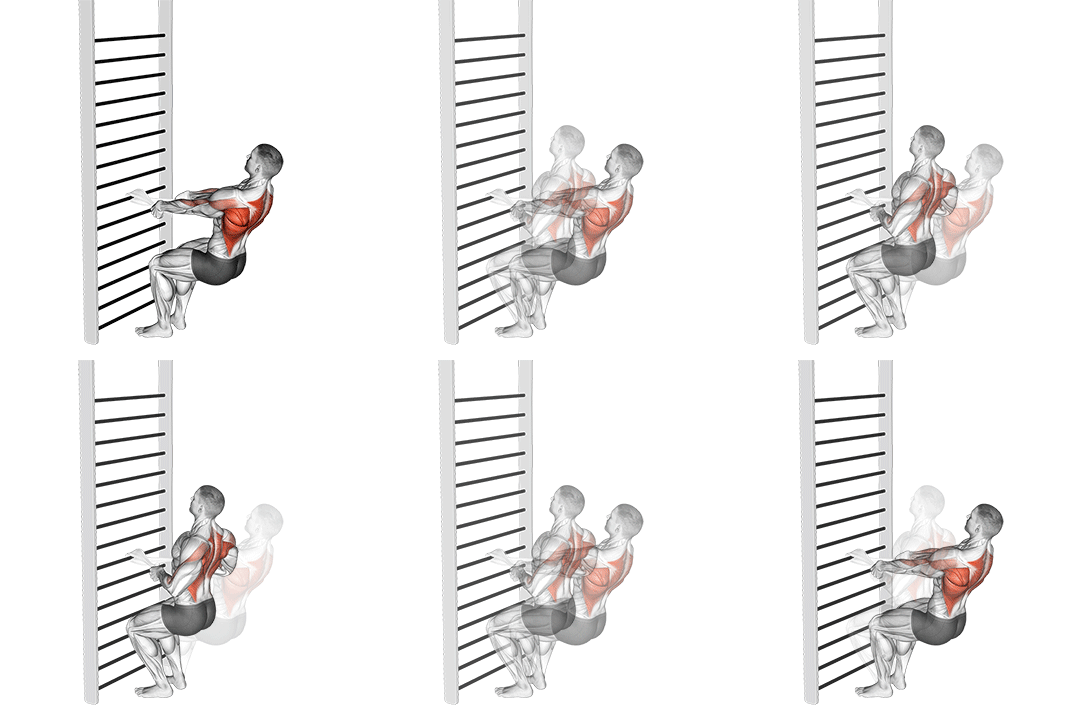
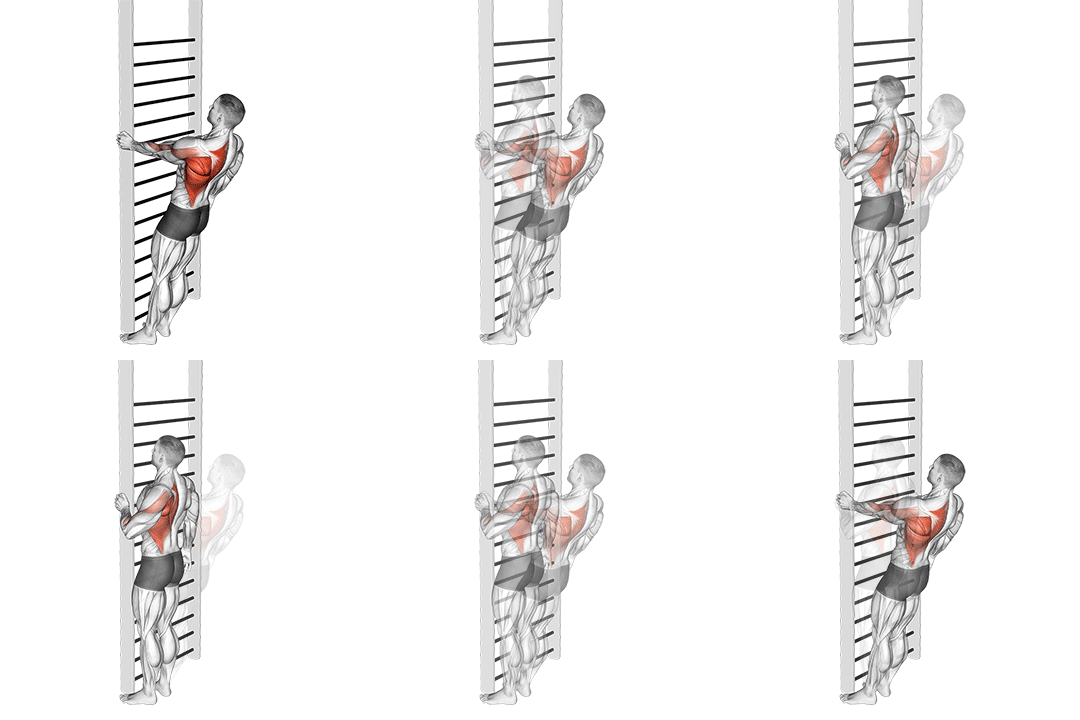
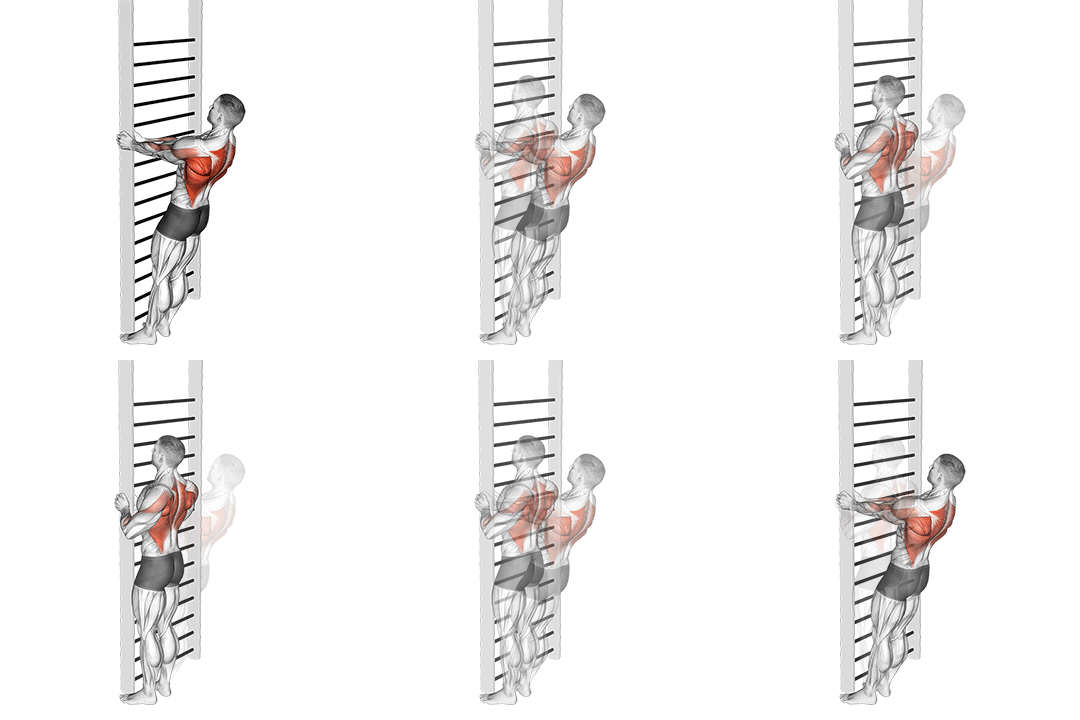
Bodyweight Squatting Row (with Towel)
Head-to-Head Comparison
| Attribute | Bodyweight Squatting Row | Bodyweight Squatting Row (with Towel) |
|---|---|---|
| Target Muscle |
Lats
|
Lats
|
| Body Part |
Back
|
Back
|
| Equipment |
Body-weight
|
Body-weight
|
| Difficulty |
Beginner
|
Intermediate
|
| Movement Type |
Compound
|
Compound
|
| Secondary Muscles |
2
|
2
|
Secondary Muscles Activated
Bodyweight Squatting Row
Bodyweight Squatting Row (with Towel)
Visual Comparison
Overview
Bodyweight Squatting Row vs Bodyweight Squatting Row (with Towel) — which should you add to your routine? You’ll get a clear, practical comparison so you can pick the right variation for your goals. I’ll walk you through how each version loads the lats, how the movement pattern and grip change muscle recruitment, what equipment and angles matter, and which variant is easier to learn or safer to progress. Read on for specific technique cues, recommended rep ranges (8–15 for hypertrophy, 4–8 for strength emphasis), and quick programming tips you can use this week.
Key Differences
- Difficulty levels differ: Bodyweight Squatting Row is beginner, while Bodyweight Squatting Row (with Towel) is intermediate.
- Both exercises target the Lats using Body-weight. The main differences are in their movement patterns and muscle activation angles.
Pros & Cons
Bodyweight Squatting Row
+ Pros
- Simple setup with minimal equipment — easy to scale by changing torso angle
- Lower grip and wrist demand, enabling higher set volume (12–20 reps)
- Clear force vector for consistent lat activation when torso angle is lowered to ~30°
- Safer for beginners and those with weak forearms or wrist issues
− Cons
- Less challenge for grip and scapular stabilizers compared with towel variation
- Can plateau if you don’t manipulate torso angle or leverage for progressive overload
- Lower carryover to grip-intensive pulling tasks
Bodyweight Squatting Row (with Towel)
+ Pros
- Greater forearm and grip activation, improving grip endurance and functional strength
- Increased scapular stabilizer and rotator cuff demand for better shoulder integrity
- Easier to create unilateral or asymmetry-focused progressions (single-arm towel rows)
- Adds proprioceptive and core challenge, increasing overall training stimulus
− Cons
- Requires a secure towel/anchor and has a higher technical demand
- More wrist and forearm strain risk, especially with poor wrist alignment
- Harder to accumulate high-volume sets due to grip fatigue
When Each Exercise Wins
The towel variation increases time under tension and engages stabilizers, allowing you to overload the lats indirectly while also taxing grip and forearms. Use 3–5 sets of 8–15 reps with a 2–3s eccentric for hypertrophy.
Because it’s more challenging to resist the instability, the towel row raises the relative intensity and forces improved neural control; perform lower-rep sets (4–8) with more horizontal torso angles to increase effective load on the lats.
The plain version has a gentler learning curve and lower grip demand, letting you focus on scapular retraction, neutral spine, and consistent torso angle before adding instability.
It requires minimal extra gear and can be done safely with household anchors (table edge, sturdy broom setup). It’s easier to program into bodyweight circuits and accumulate volume.
Frequently Asked Questions
Can I do both Bodyweight Squatting Row and Bodyweight Squatting Row (with Towel) in the same workout?
Yes — pair them strategically. Do the plain rows first for volume and technique (3–4 sets of 8–12), then add 2–3 sets of towel rows as a heavier or stability-focused finisher to target grip and scapular control.
Which exercise is better for beginners?
The plain Bodyweight Squatting Row is better for beginners because it has a simpler grip, clearer movement pattern, and lower injury risk. Focus on learning scapular retraction, neutral spine, and a 2–3s eccentric before moving to the towel version.
How do the muscle activation patterns differ?
Both prioritize the lats through horizontal pulling, but the towel version increases forearm and scapular stabilizer activation due to instability and different hand mechanics. The plain row allows more consistent lat and biceps loading across higher-volume sets.
Can Bodyweight Squatting Row (with Towel) replace Bodyweight Squatting Row?
Yes for advanced trainees seeking more stimulus, but not always for beginners or high-volume programs. Use the towel row to progress intensity or address grip, while keeping plain rows for volume days and technique work.
Expert Verdict
Choose the plain Bodyweight Squatting Row if you’re new to horizontal pulling or need a reliable, high-volume lat builder with low grip demands. It’s ideal for teaching scapular retraction, controlling torso angle (~30°–45°), and stacking sets in the 8–20 rep range. Pick the Bodyweight Squatting Row (with Towel) when you want more challenge: it increases grip, scapular stabilization, and neuromuscular demand, useful for single-arm progressions and strength-focused 4–8 rep work. Program both: start with the plain row to build technique, then phase in towel rows for added stimulus and progression.
Also Compare
More comparisons with Bodyweight Squatting Row
More comparisons with Bodyweight Squatting Row (with Towel)
Compare More Exercises
Use our free comparison tool to analyze any two exercises head-to-head.
Compare Exercises