

Bodyweight Squatting Row vs Bodyweight Standing Close-grip One Arm Row: Complete Comparison Guide
Bodyweight Squatting Row vs Bodyweight Standing Close-grip One Arm Row — two bodyweight rows that both target your lats but load them differently. If you want clear guidance on which to pick, this guide walks you through muscle activation, biomechanics, exact technique cues, equipment needs, difficulty, and progressions. I'll show when to use the squatting row for stable, full-body pulling and when the single-arm close-grip row is better for unilateral overload and forearm development. Read on so you can choose the drill that matches your goals and skill level.
Exercise Comparison
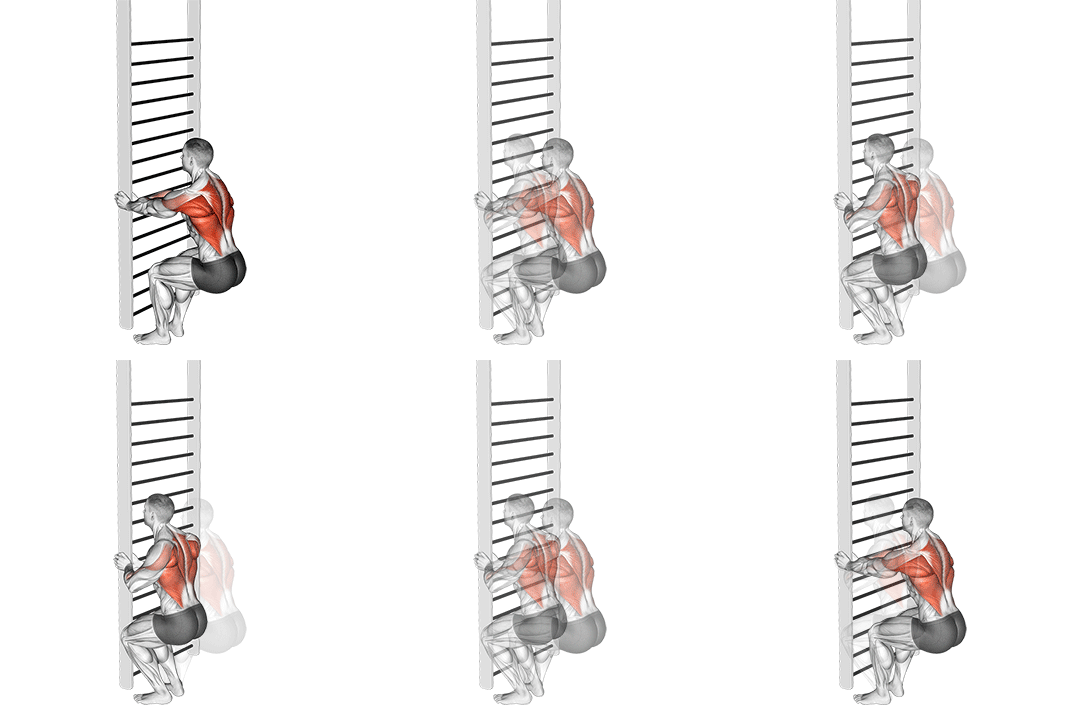
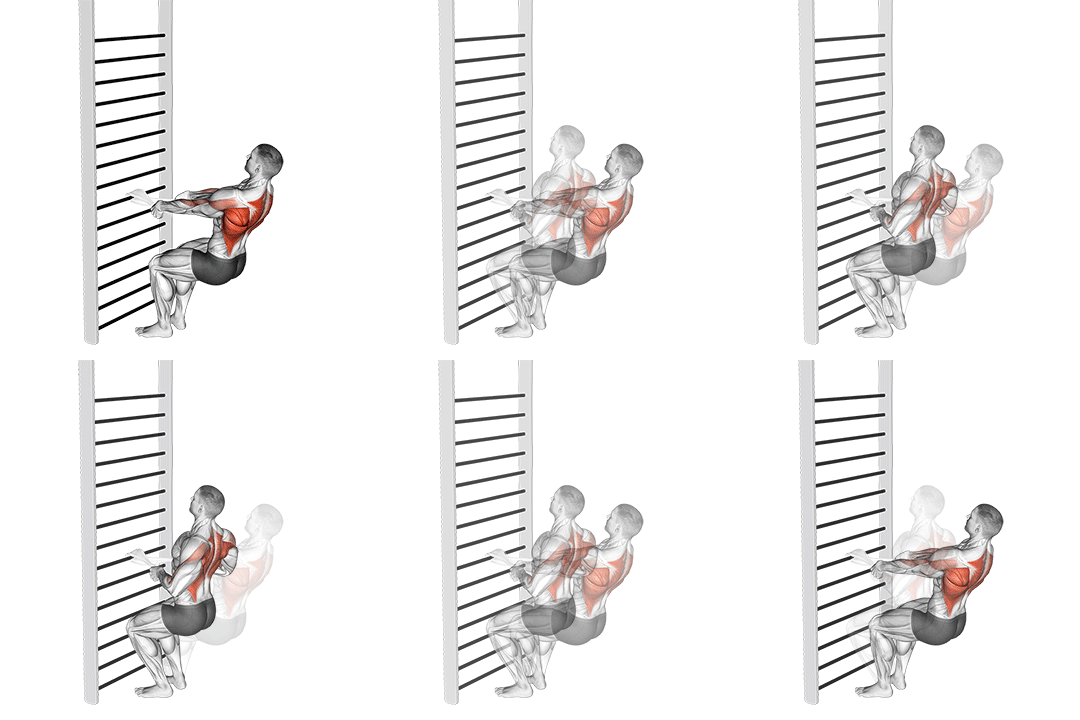
Bodyweight Squatting Row
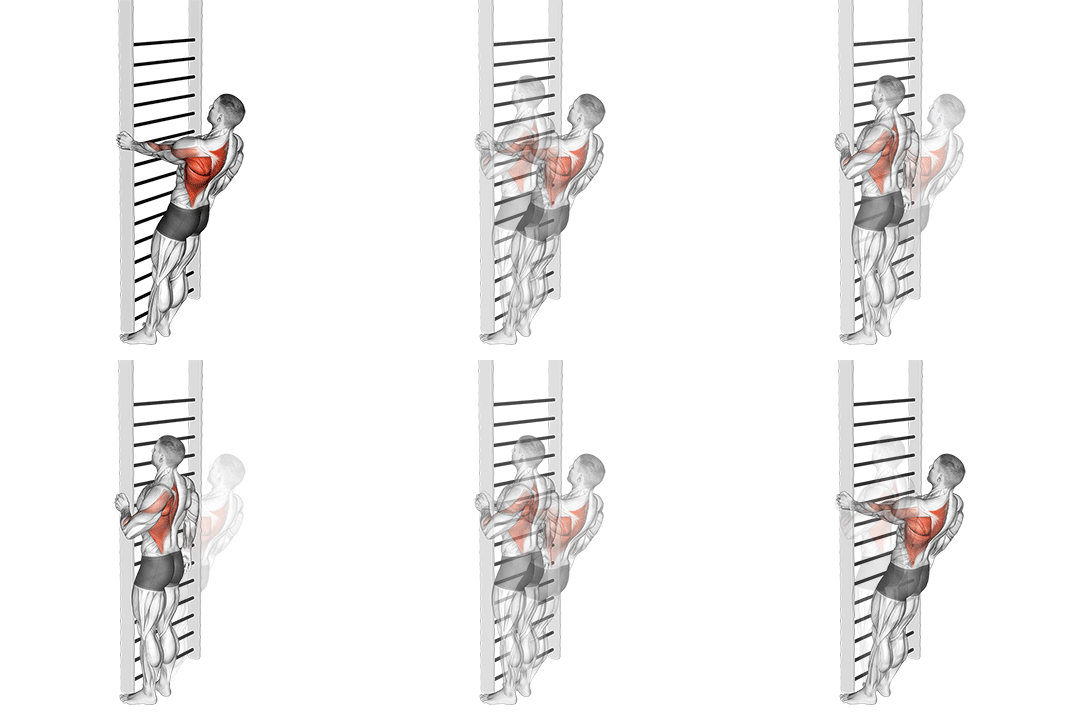
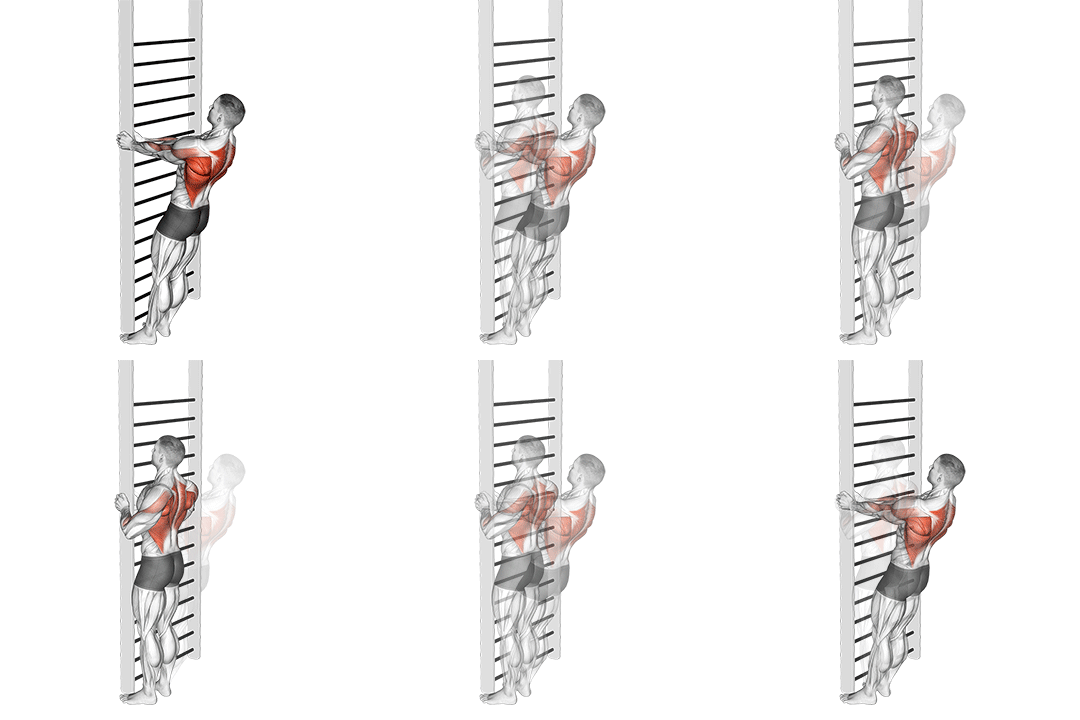
Bodyweight Standing Close-grip One Arm Row
Head-to-Head Comparison
| Attribute | Bodyweight Squatting Row | Bodyweight Standing Close-grip One Arm Row |
|---|---|---|
| Target Muscle |
Lats
|
Lats
|
| Body Part |
Back
|
Back
|
| Equipment |
Body-weight
|
Body-weight
|
| Difficulty |
Beginner
|
Intermediate
|
| Movement Type |
Compound
|
Compound
|
| Secondary Muscles |
2
|
2
|
Secondary Muscles Activated
Bodyweight Squatting Row
Bodyweight Standing Close-grip One Arm Row
Visual Comparison
Overview
Bodyweight Squatting Row vs Bodyweight Standing Close-grip One Arm Row — two bodyweight rows that both target your lats but load them differently. If you want clear guidance on which to pick, this guide walks you through muscle activation, biomechanics, exact technique cues, equipment needs, difficulty, and progressions. I'll show when to use the squatting row for stable, full-body pulling and when the single-arm close-grip row is better for unilateral overload and forearm development. Read on so you can choose the drill that matches your goals and skill level.
Key Differences
- Difficulty levels differ: Bodyweight Squatting Row is beginner, while Bodyweight Standing Close-grip One Arm Row is intermediate.
- Both exercises target the Lats using Body-weight. The main differences are in their movement patterns and muscle activation angles.
Pros & Cons
Bodyweight Squatting Row
+ Pros
- Beginner-friendly: stable bilateral stance and simpler coordination
- Low equipment needs: can use a table, low bar, or rings
- Full-body stability: integrates hip and knee extensors for carryover
- Easier to scale by changing body angle or elevation
− Cons
- Less unilateral overload per side for addressing imbalances
- Reduced forearm and grip challenge compared to one-arm variations
- Can underload the lats if torso is too vertical or reps are too light
Bodyweight Standing Close-grip One Arm Row
+ Pros
- Superior unilateral loading to fix imbalances and build each lat
- Higher grip and forearm activation due to single-handle work
- Stronger core anti-rotation demand improves torso stability
- Easier to increase intensity by changing leverage on one side
− Cons
- More technical: requires balance and strict bracing
- Needs a secure single-handle anchor or equipment
- Higher risk of asymmetrical compensation if form breaks down
When Each Exercise Wins
The one-arm row produces greater unilateral tension and a longer lat stretch that increases time under tension per side. That lets you target each lat with higher peak force and focused volume — aim for 8–15 reps per side with 2–3 second negatives.
Unilateral loading builds stronger neural drive and stabilizer strength, improving one-arm pulling strength. Use heavy leverage (more horizontal torso) or slow eccentrics to increase force production and carryover to weighted rows.
Its bilateral setup and simpler movement pattern reduce coordination demands and let you focus on scapular retraction and elbow path. Start with 3 sets of 8–12 reps while keeping a neutral spine and shoulders down.
It can be performed with common household anchors (table, low bar) and scales easily by body angle. The set-up and lower technical demand make it a safer choice for limited-equipment sessions.
Frequently Asked Questions
Can I do both Bodyweight Squatting Row and Bodyweight Standing Close-grip One Arm Row in the same workout?
Yes. Use the squatting row early to prime bilateral strength (3 sets of 8–12) then follow with 2–3 sets per side of the one-arm close-grip row for focused unilateral work. Monitor total volume to avoid overtaxing the lats—keep the session within 12–18 working sets for the back.
Which exercise is better for beginners?
Bodyweight Squatting Row is better for beginners because it has simpler coordination, lower balance demand, and easier setup. Focus on torso angle (45–60° from horizontal) and a full scapular retraction to build a solid pulling pattern before moving to unilateral rows.
How do the muscle activation patterns differ?
The squatting row uses a more horizontal pull with bilateral loading, producing steady bilateral lat tension and greater involvement of posterior deltoids and hip/knee extensors. The one-arm close-grip row creates higher unilateral peak force, more forearm/grip activation, and greater core anti-rotation demand due to the asymmetrical force vector.
Can Bodyweight Standing Close-grip One Arm Row replace Bodyweight Squatting Row?
Yes, if your goal is unilateral strength or hypertrophy and you have the anchor and stability to perform it safely. However, keep the squatting row in your program when you need bilateral volume, easier recovery, or an exercise that’s simpler to scale for beginners.
Expert Verdict
Use the Bodyweight Squatting Row if you need an accessible, beginner-friendly horizontal pull that builds bilateral strength and integrates lower-body stability. Keep your chest proud, hinge at the hips, and pull with elbows tucked to maximize lat drive. Choose the Bodyweight Standing Close-grip One Arm Row when you want unilateral overload, increased forearm work, and targeted lat development — brace your core, keep the elbow close to the body, and control rotation. For hypertrophy and single-side strength focus the one-arm row; for learning foundational pulling mechanics and home convenience, use the squatting row.
Also Compare
More comparisons with Bodyweight Squatting Row
More comparisons with Bodyweight Standing Close-grip One Arm Row
Compare More Exercises
Use our free comparison tool to analyze any two exercises head-to-head.
Compare Exercises