

Bodyweight Squatting Row vs Bodyweight Standing Close-grip Row: Complete Comparison Guide
Bodyweight Squatting Row vs Bodyweight Standing Close-grip Row — both are beginner-friendly bodyweight pulls that hit the lats, but they load the back differently. In this guide you’ll learn how each movement stresses the lats, how the torso and elbow angles shift force vectors, and which variation best suits hypertrophy, strength, beginners, or home setups. I’ll give clear technique cues (body angles, grip width, rep ranges), practical progressions (angle, unilateral), and injury-risk notes so you can pick the right row for your program.
Exercise Comparison
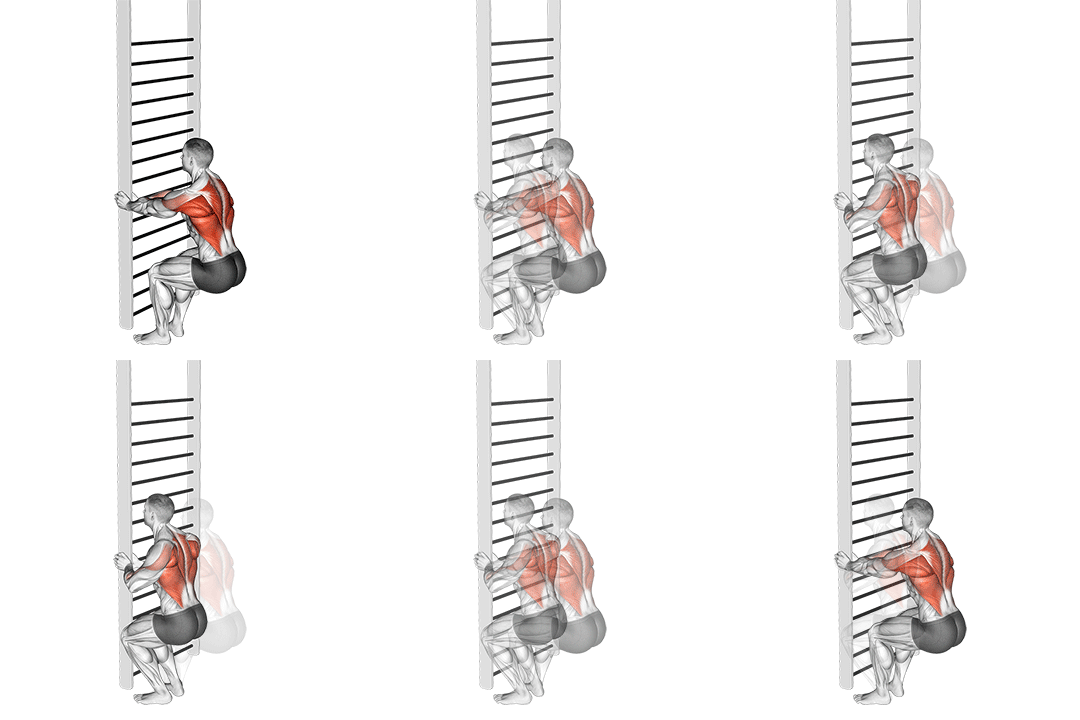
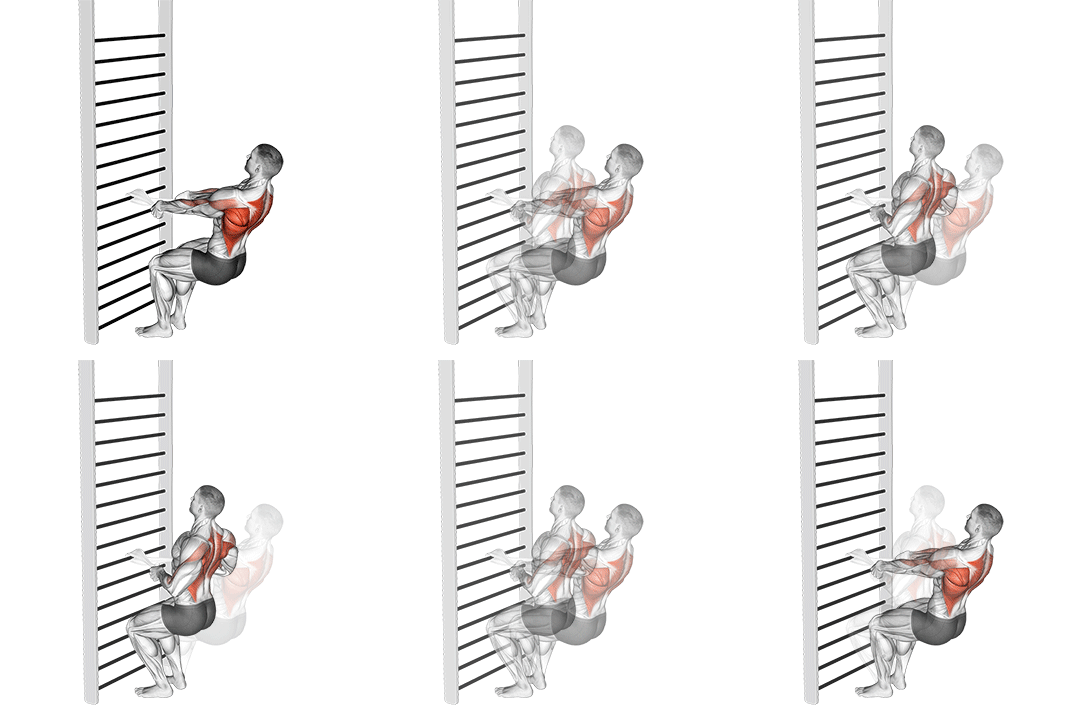
Bodyweight Squatting Row
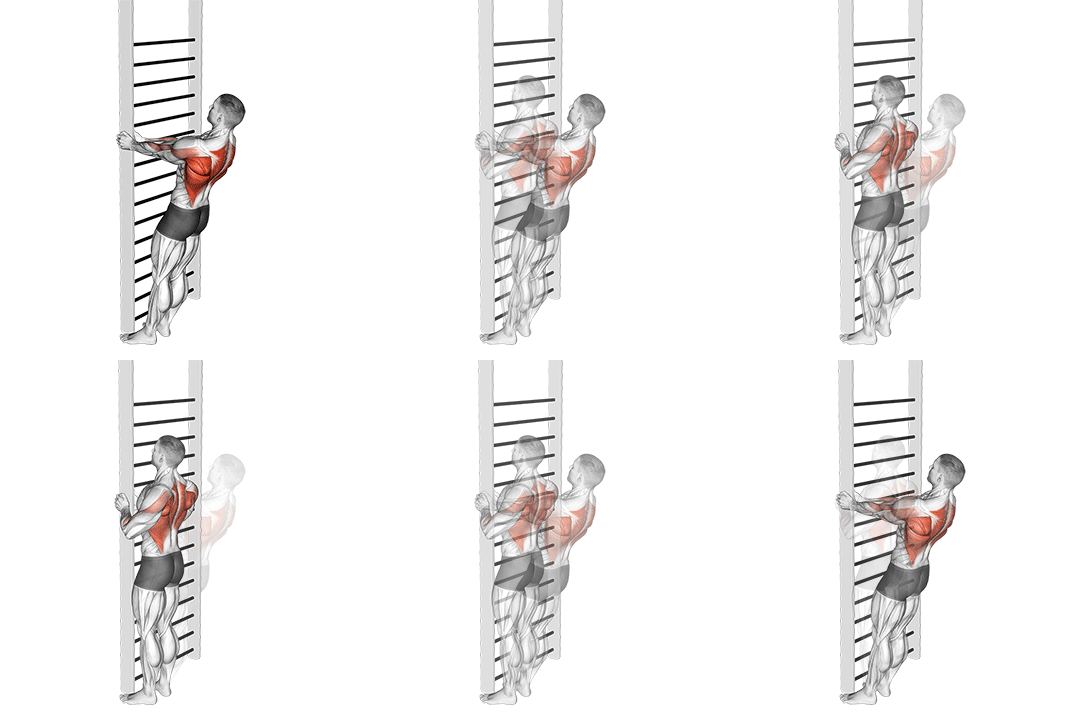
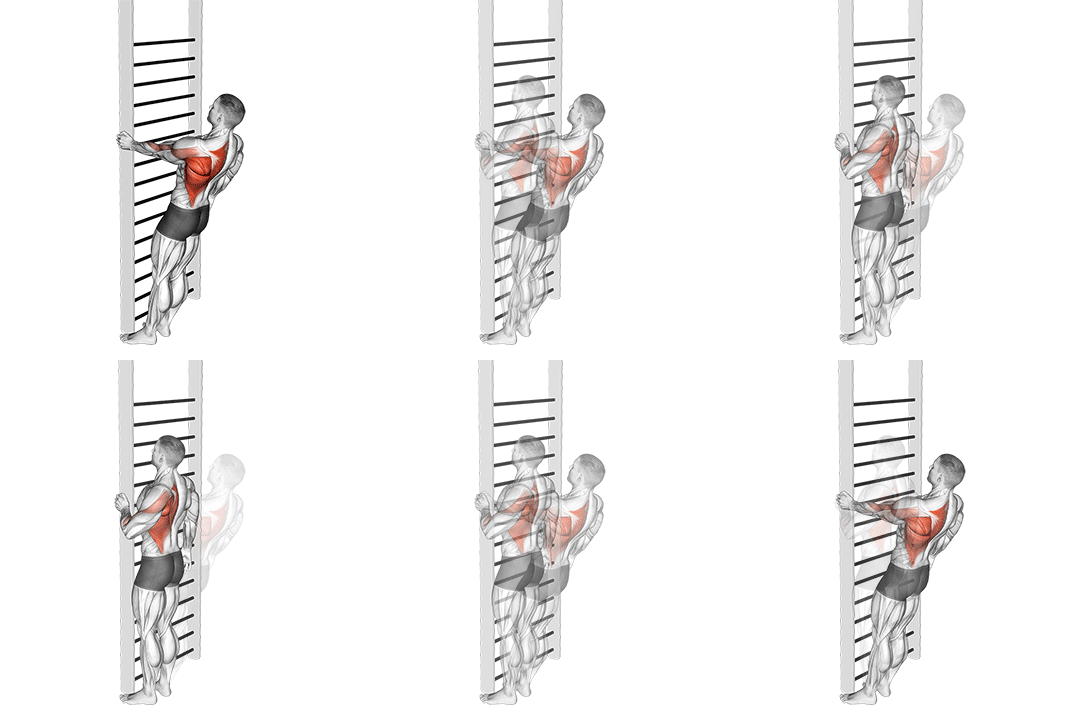
Bodyweight Standing Close-grip Row
Head-to-Head Comparison
| Attribute | Bodyweight Squatting Row | Bodyweight Standing Close-grip Row |
|---|---|---|
| Target Muscle |
Lats
|
Lats
|
| Body Part |
Back
|
Back
|
| Equipment |
Body-weight
|
Body-weight
|
| Difficulty |
Beginner
|
Beginner
|
| Movement Type |
Compound
|
Compound
|
| Secondary Muscles |
2
|
2
|
Secondary Muscles Activated
Bodyweight Squatting Row
Bodyweight Standing Close-grip Row
Visual Comparison
Overview
Bodyweight Squatting Row vs Bodyweight Standing Close-grip Row — both are beginner-friendly bodyweight pulls that hit the lats, but they load the back differently. In this guide you’ll learn how each movement stresses the lats, how the torso and elbow angles shift force vectors, and which variation best suits hypertrophy, strength, beginners, or home setups. I’ll give clear technique cues (body angles, grip width, rep ranges), practical progressions (angle, unilateral), and injury-risk notes so you can pick the right row for your program.
Key Differences
- Both exercises target the Lats using Body-weight. The main differences are in their movement patterns and muscle activation angles.
Pros & Cons
Bodyweight Squatting Row
+ Pros
- Increases scapular control and upper-trap engagement through a more vertical torso
- Adds lower-body isometric demand, improving core and quad stability
- Encourages full chest-to-bar range, improving posture and scapular squeeze
- Easy to scale by changing squat depth or anchor height
− Cons
- Requires good ankle and hip mobility for deep squats
- Higher technical demand — coordination of squat and pull
- Less emphasis on forearms and biceps compared to close-grip
Bodyweight Standing Close-grip Row
+ Pros
- Simpler motor pattern — easier for beginners to learn
- Stronger elbow flexor and forearm recruitment for grip strength
- Highly adjustable difficulty by changing body angle
- Minimal mobility requirements; works well in small spaces
− Cons
- Narrow grip can increase wrist or biceps-tendon stress
- Less demand on lower-body stability and core compared with squatting row
- Can underload scapular retractors if performed with poor torso angle
When Each Exercise Wins
Its narrow grip increases biceps and forearm time under tension and allows easy manipulation of body angle and tempo (8–12 reps, 3–4 sets). That controlled elbow-driven loading provides consistent hypertrophic stimulus for the lats when you make the torso more horizontal.
The Squatting Row forces greater scapular control and integrates lower-body isometric support, improving whole-body strength transfer. Use heavier mechanical loads by shifting to a more horizontal torso and low rep ranges (4–6 reps) to maximize force production.
It has a simpler movement pattern, fewer mobility demands, and straightforward progressions by changing step distance, so novices can build technique and pull strength faster.
Requires less space and less precise anchor height; you can use a broom across chairs, rings, or a low bar and adjust difficulty by stepping back, making it the more practical home choice.
Frequently Asked Questions
Can I do both Bodyweight Squatting Row and Bodyweight Standing Close-grip Row in the same workout?
Yes — pair them within the same session by ordering the more technical Squatting Row first, then the Close-grip Row as an accessory. Use 3–4 sets each and vary rep ranges (e.g., 4–6 heavy squatting rows, 8–12 close-grip rows) to avoid excessive fatigue and preserve technique.
Which exercise is better for beginners?
The Bodyweight Standing Close-grip Row is better for most beginners because it has fewer mobility demands and a simpler motor pattern. It allows straightforward angle-based progressions while building pulling strength and grip endurance.
How do the muscle activation patterns differ?
The Squatting Row produces earlier scapular retraction and higher upper-trap/mid-back demand because of a more vertical torso and chest-to-bar cue, while the Standing Close-grip Row shifts emphasis to elbow flexors (biceps, forearms) with a longer elbow-driven phase. Torso angle alters the force vector and length–tension relationships for the lats.
Can Bodyweight Standing Close-grip Row replace Bodyweight Squatting Row?
Yes for many programs — it can substitute when mobility or space is limited and still hit the lats effectively. However, it won’t replace the Squatting Row’s benefits for scapular control and lower-body isometric integration if those are training priorities.
Expert Verdict
Use the Bodyweight Standing Close-grip Row when you want a straightforward, scalable pull that prioritizes biceps and forearm work and fits limited space — target 8–15 reps per set and progress by increasing torso angle. Choose the Bodyweight Squatting Row when you want to challenge scapular control, integrate lower-body stability, and build coordinated strength; aim for 4–8 reps for strength emphasis or 8–12 with controlled tempo for hypertrophy. Both are valuable: pick the Standing Close-grip Row for accessibility and early progression, and the Squatting Row to develop whole-body tension and scapular mechanics.
Also Compare
More comparisons with Bodyweight Squatting Row
More comparisons with Bodyweight Standing Close-grip Row
Compare More Exercises
Use our free comparison tool to analyze any two exercises head-to-head.
Compare Exercises