

Bodyweight Squatting Row (with Towel) vs Bodyweight Standing Close-grip One Arm Row: Complete Compar
Bodyweight Squatting Row (with Towel) vs Bodyweight Standing Close-grip One Arm Row — two intermediate, equipment-free rows that target the lats but load the body differently. If you want to know which movement gives you more lat tension, which recruits the biceps and forearms more, and which fits home training and progression, you’re in the right place. I’ll compare muscle activation, technique cues (body angle, elbow path, scapular control), equipment needs, progression options, and give clear winners for hypertrophy, strength, beginners, and home workouts so you can pick the right row for your goals.
Exercise Comparison
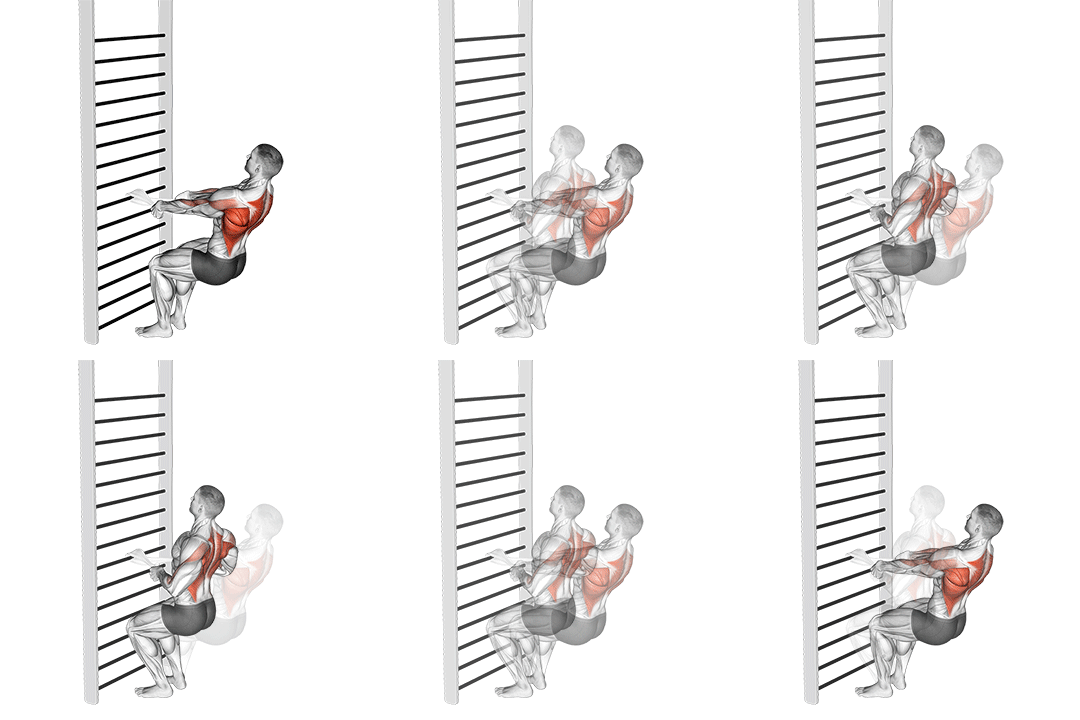
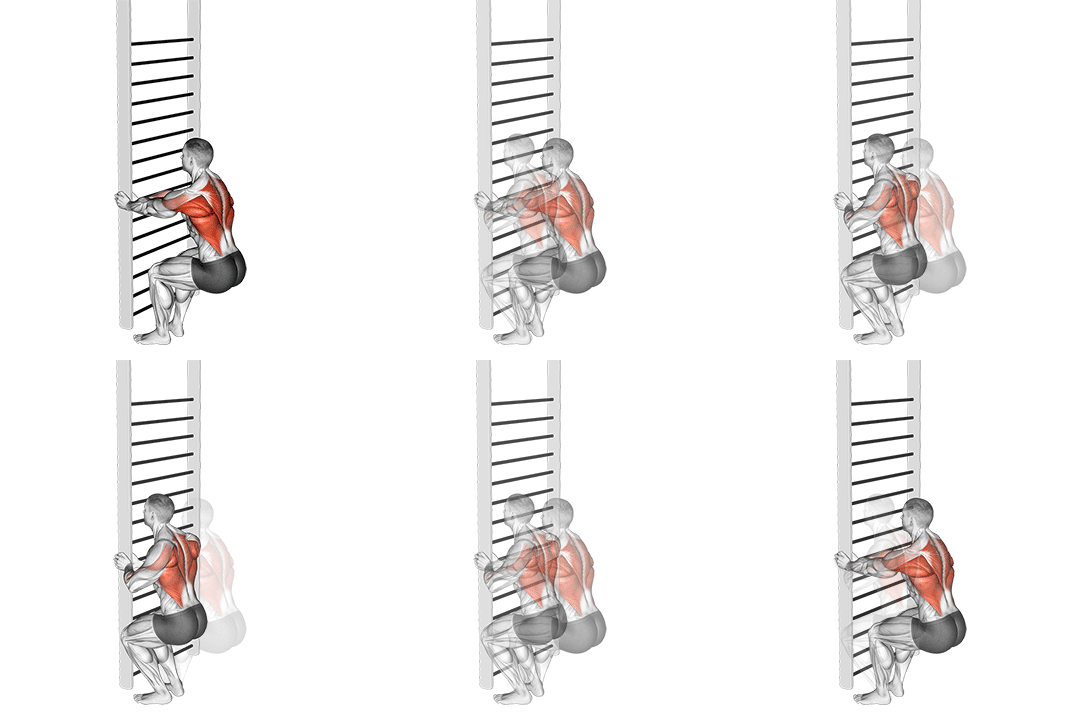
Bodyweight Squatting Row (with Towel)
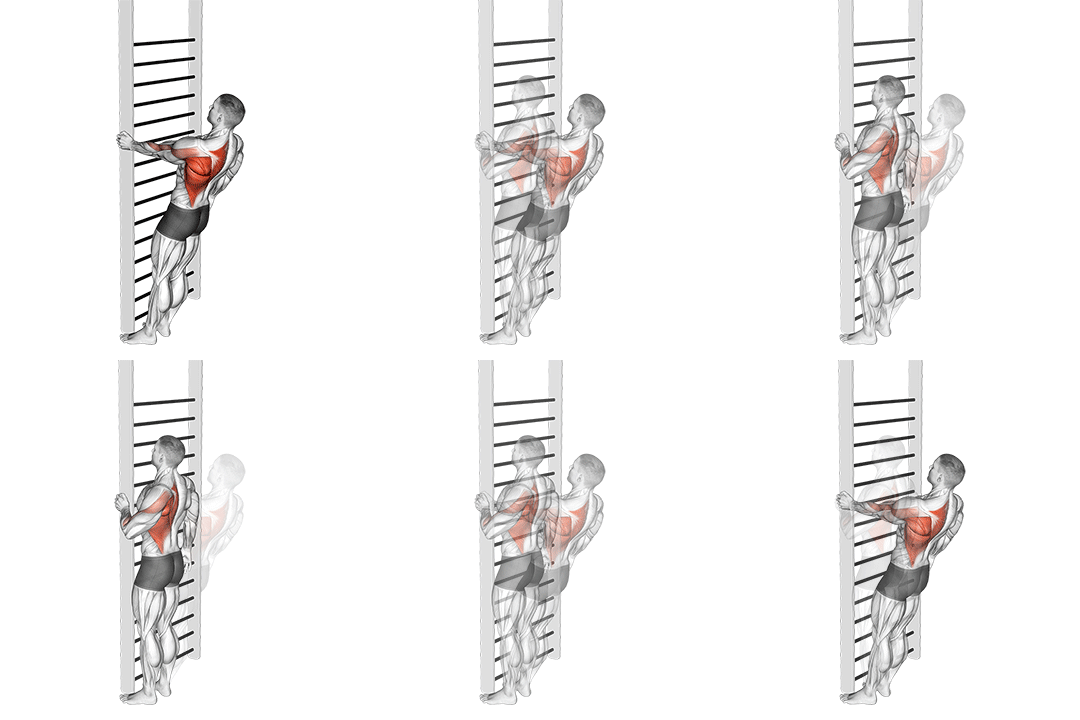
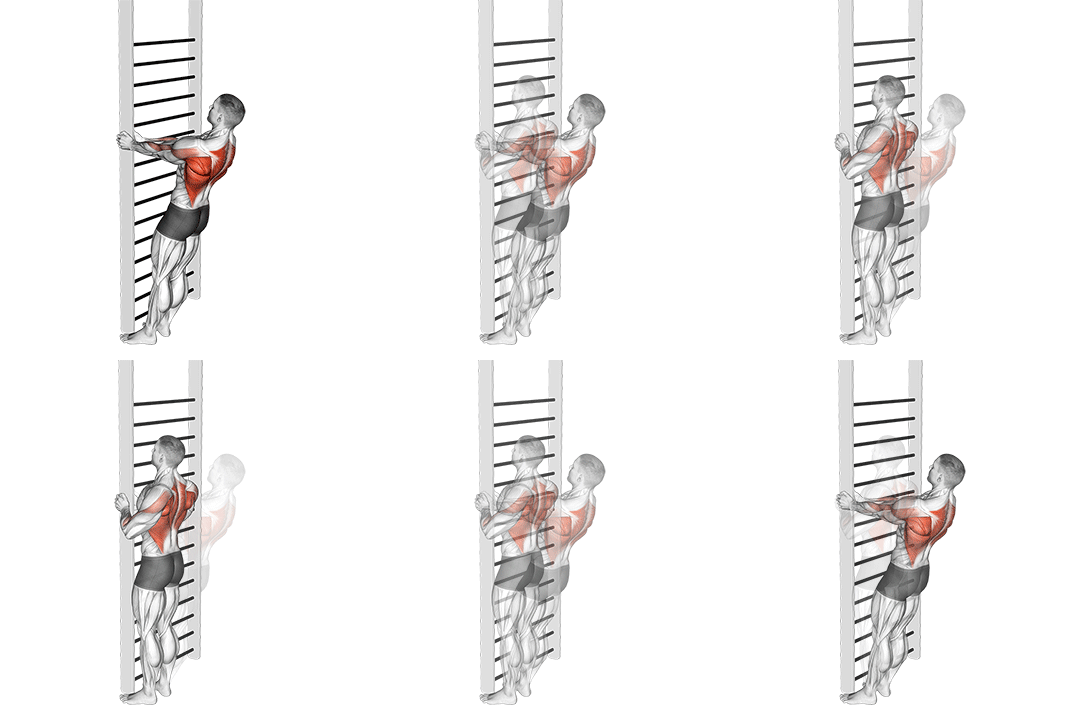
Bodyweight Standing Close-grip One Arm Row
Head-to-Head Comparison
| Attribute | Bodyweight Squatting Row (with Towel) | Bodyweight Standing Close-grip One Arm Row |
|---|---|---|
| Target Muscle |
Lats
|
Lats
|
| Body Part |
Back
|
Back
|
| Equipment |
Body-weight
|
Body-weight
|
| Difficulty |
Intermediate
|
Intermediate
|
| Movement Type |
Compound
|
Compound
|
| Secondary Muscles |
2
|
2
|
Secondary Muscles Activated
Bodyweight Squatting Row (with Towel)
Bodyweight Standing Close-grip One Arm Row
Visual Comparison
Overview
Bodyweight Squatting Row (with Towel) vs Bodyweight Standing Close-grip One Arm Row — two intermediate, equipment-free rows that target the lats but load the body differently. If you want to know which movement gives you more lat tension, which recruits the biceps and forearms more, and which fits home training and progression, you’re in the right place. I’ll compare muscle activation, technique cues (body angle, elbow path, scapular control), equipment needs, progression options, and give clear winners for hypertrophy, strength, beginners, and home workouts so you can pick the right row for your goals.
Key Differences
- Both exercises target the Lats using Body-weight. The main differences are in their movement patterns and muscle activation angles.
Pros & Cons
Bodyweight Squatting Row (with Towel)
+ Pros
- Bilateral pattern gives stable setup and even lat loading across both sides
- Longer lat length-tension curve due to greater eccentric stretch — good for sustained tension
- Engages legs and core isometrically for full-body tension (helps generate higher overall force)
- Easier to cue symmetry: knees ~80–100° flexion, hips back, chest up, pull elbows to hips
− Cons
- Requires a longer/sturdy anchor and more space to lean and squat
- Higher demand on knees and hips — uncomfortable for those with knee issues
- Harder to overload unilaterally for imbalances without modifying to single-leg variations
Bodyweight Standing Close-grip One Arm Row
+ Pros
- Excellent unilateral tension for fixing left-right imbalances and core anti-rotation
- Close grip increases biceps and forearm recruitment for stronger lockout
- Smaller footprint — easier to set up at home with a door or table
- Allows precise angle adjustments to change mechanical advantage (lean back 20–60°)
− Cons
- Greater demand on wrist and forearm strength which can fatigue before the lats
- Requires more scapular stability and single-limb coordination — harder for novices
- If bracing is poor, the lower back and obliques can take excessive load
When Each Exercise Wins
The unilateral close-grip row provides sharper peak contractions and allows you to isolate the lat through a fuller concentric squeeze and longer time under tension per side. Use 8–15 reps, 3–4 sets, and slow 2–3s eccentrics to maximize hypertrophy.
Bilateral positioning lets you generate higher overall tension and recruit legs and core to assist force production, which better translates to raw pulling strength. Lower reps (4–8) with a lower anchor and harder lean increase mechanical load for strength.
Its symmetrical stance and full-body tension make motor patterns simpler to learn; beginners can focus on neutral spine, full scapular retraction, and elbow path without managing unilateral balance.
It requires less space and a smaller anchor point and you can progress by changing body angle or rep tempo. A secure table edge or door setup often suffices, making it the more practical home option.
Frequently Asked Questions
Can I do both Bodyweight Squatting Row (with Towel) and Bodyweight Standing Close-grip One Arm Row in the same workout?
Yes. Start with the harder multi-joint pattern for strength (squatting towel row) for 3–5 sets of 4–8 reps, then add 2–4 sets of 8–15 reps of the one-arm close-grip row to increase volume and address unilateral weaknesses.
Which exercise is better for beginners?
The squatting towel row is better for most beginners because the bilateral setup is more stable and easier to cue. It lets you learn scapular retraction and a neutral spine while producing full-body tension.
How do the muscle activation patterns differ?
The squatting towel row emphasizes a longer eccentric lat stretch and continuous tension from a more horizontal force vector, while the one-arm close-grip row produces a stronger peak concentric lat contraction with higher biceps and forearm involvement due to the narrow grip and unilateral stabilization.
Can Bodyweight Standing Close-grip One Arm Row replace Bodyweight Squatting Row (with Towel)?
It can replace it for hypertrophy and unilateral work, but not entirely for bilateral strength and full-body tension. If your goal is maximal pulling strength or lower-body integration, keep the squatting towel row in your program.
Expert Verdict
Choose the squatting towel row when you want a stable bilateral pull that lets you recruit the posterior chain and build raw pulling strength; cue a chest-up squat position, hips back, and drive elbows to the hips while keeping the spine neutral. Pick the standing close-grip one-arm row when you want targeted lat work, better unilateral hypertrophy, and a compact home setup; keep the elbow tight, squeeze the scapula at top, and control the eccentric for 2–3 seconds. Both belong in a balanced program: use squatting rows for strength and stability phases and one-arm close-grip rows for focused volume and symmetry work.
Also Compare
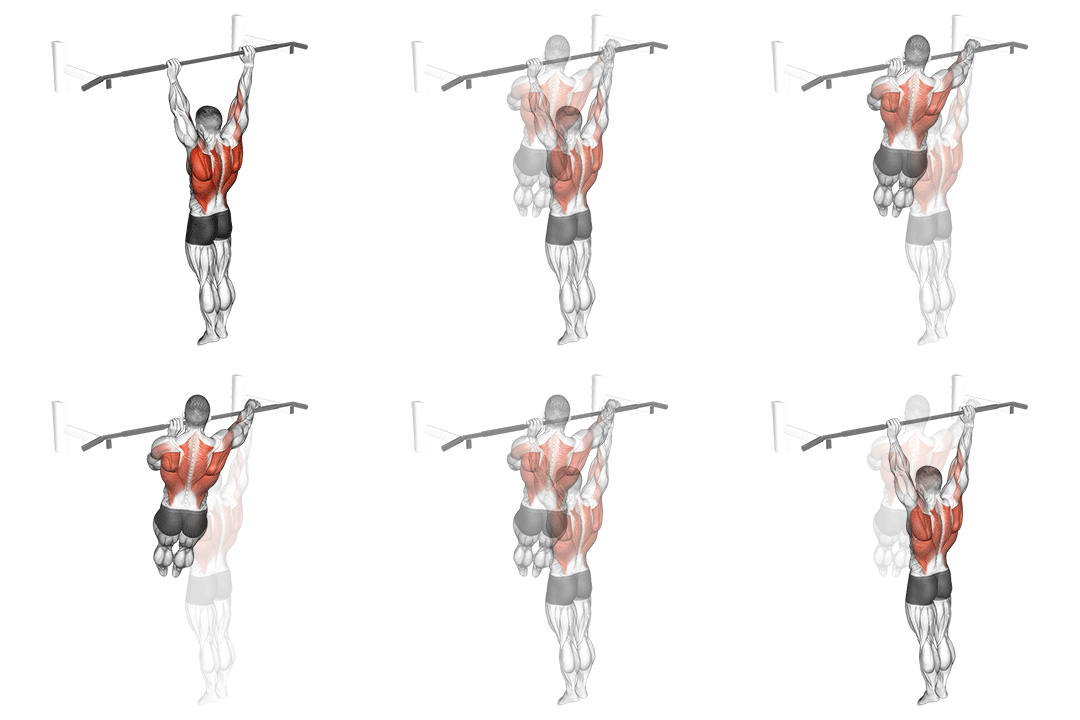
More comparisons with Bodyweight Squatting Row (with Towel)
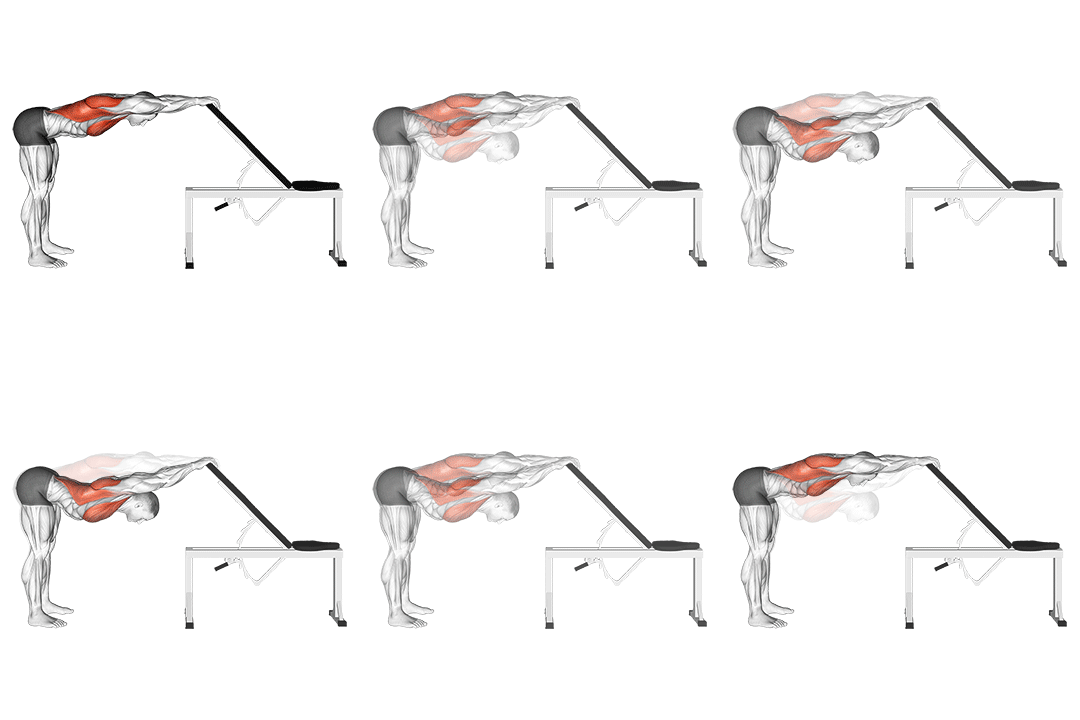
More comparisons with Bodyweight Standing Close-grip One Arm Row
Compare More Exercises
Use our free comparison tool to analyze any two exercises head-to-head.
Compare Exercises