

Bodyweight Squatting Row (with Towel) vs Bodyweight Standing Close-grip Row: Complete Comparison Gui
Bodyweight Squatting Row (with Towel) vs Bodyweight Standing Close-grip Row — two bodyweight rows that both target the lats but do it with different angles, tensions, and technical demands. If you want clear guidance on which to pick, this comparison breaks down muscle activation, equipment needs, difficulty, progression options, and when one beats the other for hypertrophy or strength. Read on and you’ll get specific technique cues, rep ranges (8–15 for hypertrophy, 4–6 for strength-focused sets), and biomechanical reasons to choose one over the other.
Exercise Comparison
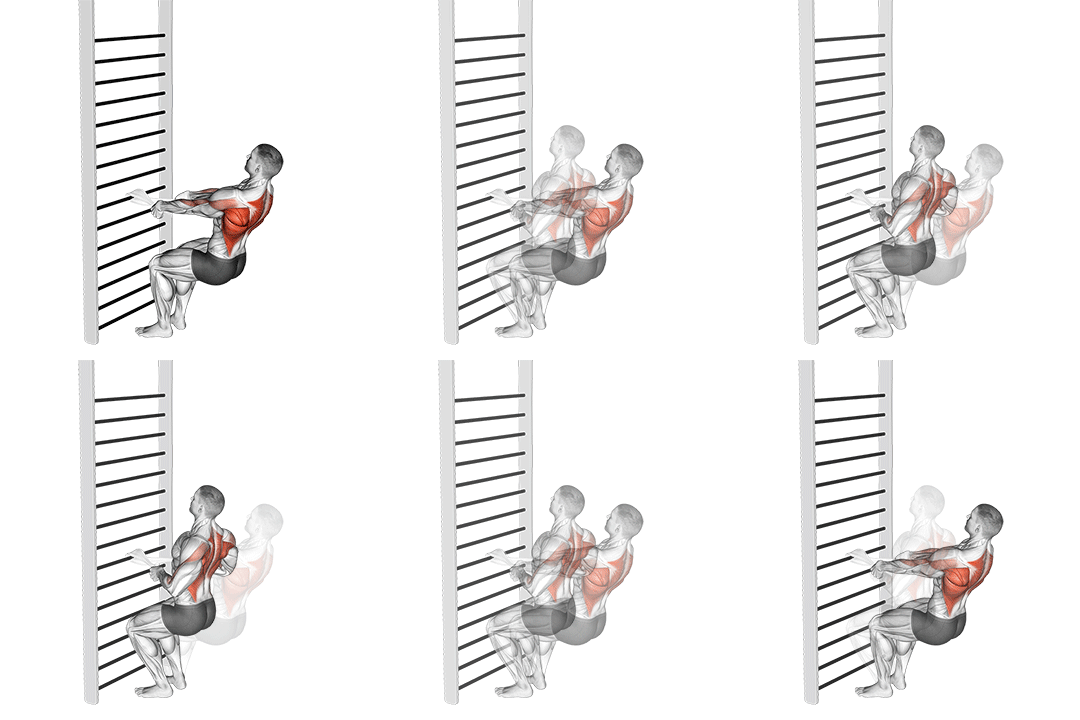
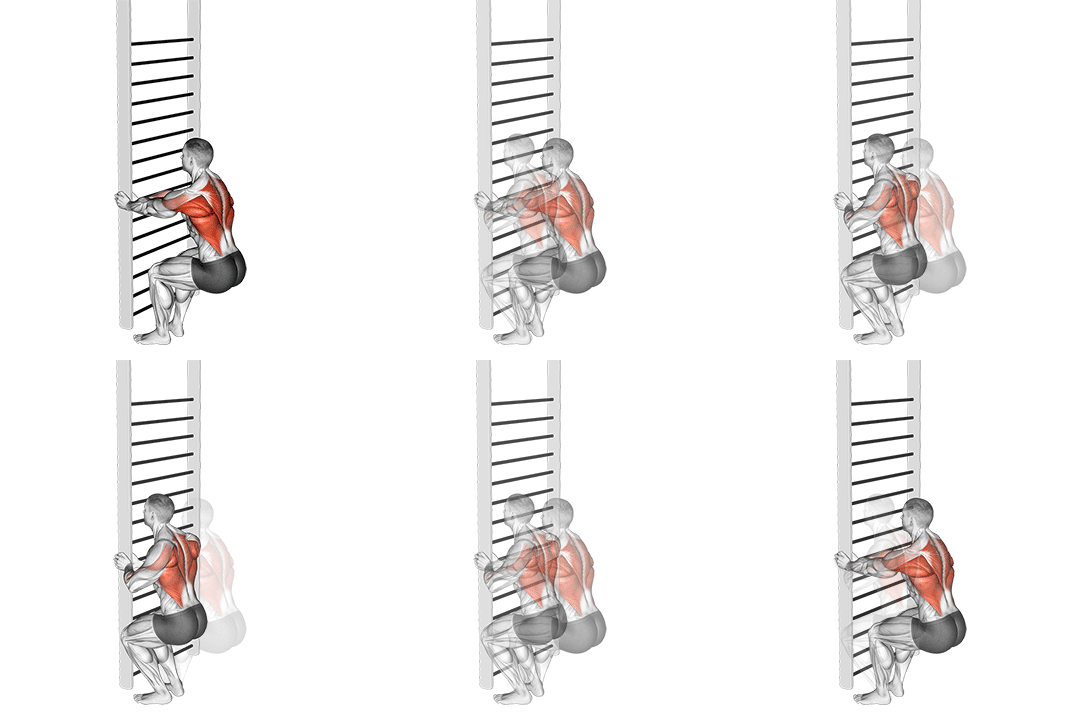
Bodyweight Squatting Row (with Towel)
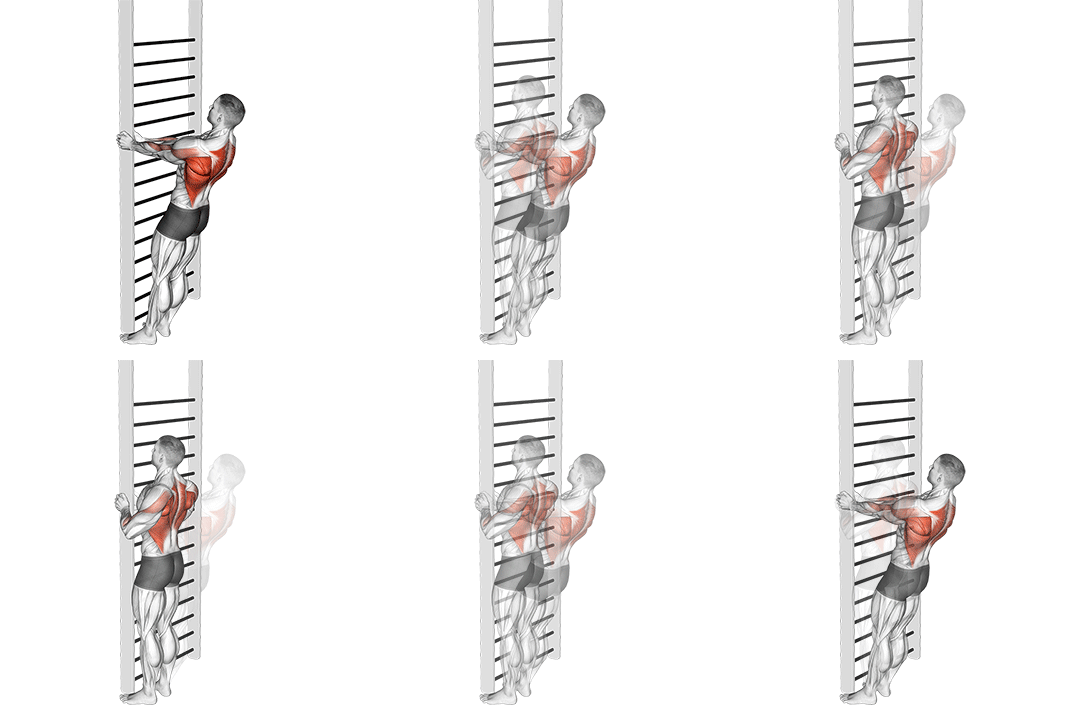
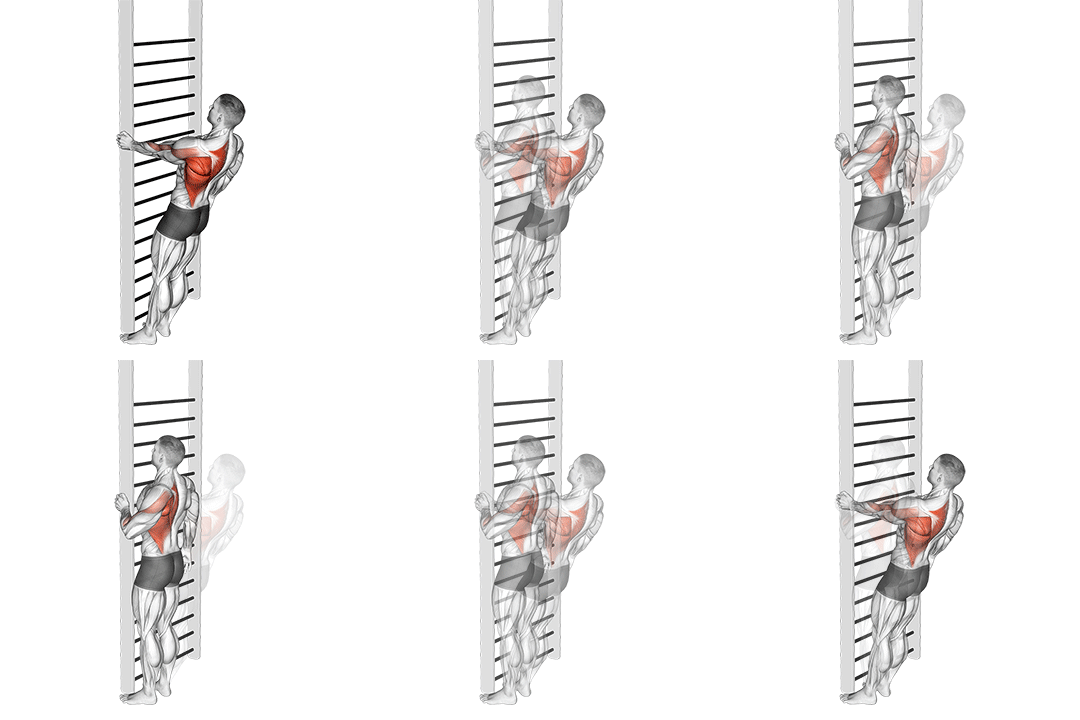
Bodyweight Standing Close-grip Row
Head-to-Head Comparison
| Attribute | Bodyweight Squatting Row (with Towel) | Bodyweight Standing Close-grip Row |
|---|---|---|
| Target Muscle |
Lats
|
Lats
|
| Body Part |
Back
|
Back
|
| Equipment |
Body-weight
|
Body-weight
|
| Difficulty |
Intermediate
|
Beginner
|
| Movement Type |
Compound
|
Compound
|
| Secondary Muscles |
2
|
2
|
Secondary Muscles Activated
Bodyweight Squatting Row (with Towel)
Bodyweight Standing Close-grip Row
Visual Comparison
Overview
Bodyweight Squatting Row (with Towel) vs Bodyweight Standing Close-grip Row — two bodyweight rows that both target the lats but do it with different angles, tensions, and technical demands. If you want clear guidance on which to pick, this comparison breaks down muscle activation, equipment needs, difficulty, progression options, and when one beats the other for hypertrophy or strength. Read on and you’ll get specific technique cues, rep ranges (8–15 for hypertrophy, 4–6 for strength-focused sets), and biomechanical reasons to choose one over the other.
Key Differences
- Difficulty levels differ: Bodyweight Squatting Row (with Towel) is intermediate, while Bodyweight Standing Close-grip Row is beginner.
- Both exercises target the Lats using Body-weight. The main differences are in their movement patterns and muscle activation angles.
Pros & Cons
Bodyweight Squatting Row (with Towel)
+ Pros
- Greater lat stretch and time under tension due to increased hip and trunk flexion
- Incorporates lower-body stabilization (quads/glutes) for more systemic demand
- Easy to increase range of motion by adjusting squat depth and towel length
- Good for hypertrophy with slow eccentrics (3–5 s) and 8–15 rep ranges
− Cons
- Requires a secure overhead anchor and durable towel
- Higher shoulder stability demands; poor technique risks strain
- More technical—needs coordination of squat depth, torso angle, and pull
Bodyweight Standing Close-grip Row
+ Pros
- Simple setup and easy to teach for beginners
- Narrow grip increases biceps and forearm recruitment for strong elbow flexion
- Lower injury risk with controlled tempo and upright torso
- Highly accessible for home workouts (table, low bar)
− Cons
- Shorter lat stretch at the start of the pull limits peak length-tension stimulus
- Less variety in body angle adjustments compared with the squatting version
- Can be limited by hand/grip strength unless you modify tempo or foot position
When Each Exercise Wins
The squatting row puts the lats at a longer starting length and increases time under tension when you combine deeper squat positions with 3–5 second eccentrics and 8–15 reps. That longer length-tension exposure and greater ROM favors muscle growth when progressive overload is applied.
Standing close-grip rows allow stronger, more consistent horizontal force production and easier loading of the pulling pattern (lower technical noise). You can focus on low-rep, high-tension sets (4–6 reps, slow eccentrics) or elevated-feet variations to overload the movement for strength.
Its upright torso and narrower grip reduce coordination demands and shoulder complexity, letting beginners build scapular retraction and elbow flexion strength before moving to the more technical squatting row.
It needs simpler anchors (table edge or low bar) and less setup. The standing row is easier to scale safely in tight spaces without an overhead anchor capable of dynamic loading.
Frequently Asked Questions
Can I do both Bodyweight Squatting Row (with Towel) and Bodyweight Standing Close-grip Row in the same workout?
Yes — pair them intelligently: use the standing close-grip row early for heavier, strength-focused sets (4–6 reps) and the squatting row later for hypertrophy work (8–15 reps, slow eccentrics). Keep total volume controlled and watch shoulder fatigue to avoid form breakdown.
Which exercise is better for beginners?
The Bodyweight Standing Close-grip Row is better for beginners because its upright torso and reduced lever arms make scapular retraction and elbow flexion easier to perform and coach. Start here to build base pulling strength before progressing to the squatting row.
How do the muscle activation patterns differ?
Squatting rows place the lats at a longer initial length and maintain tension through a larger range by combining hip/knee flexion with the pull, increasing eccentric lat load. Standing close-grip rows create a more horizontal force vector that shifts emphasis to the elbow flexors and forearms with a shorter lat length-tension window.
Can Bodyweight Standing Close-grip Row replace Bodyweight Squatting Row (with Towel)?
It can replace it for beginners or when you lack an overhead anchor, but it won’t replicate the same lat stretch and time under tension. If hypertrophy of the lats is your priority, keep the squatting row in the rotation when you have the setup and capacity.
Expert Verdict
Use the Bodyweight Squatting Row (with Towel) when your goal is lat hypertrophy and you can control trunk and shoulder position—focus on deeper squat positions, 8–15 reps per set, and slow 3–5 second eccentrics to exploit the lat length-tension advantage. Choose the Bodyweight Standing Close-grip Row if you’re a beginner, need a low-setup home option, or want to emphasize strength and elbow flexor recruitment with lower reps (4–6) and harder isometric holds. Both are valuable: pick the squatting row for ROM and TUT, and the standing close-grip row for accessibility and straightforward force production.
Also Compare
More comparisons with Bodyweight Squatting Row (with Towel)
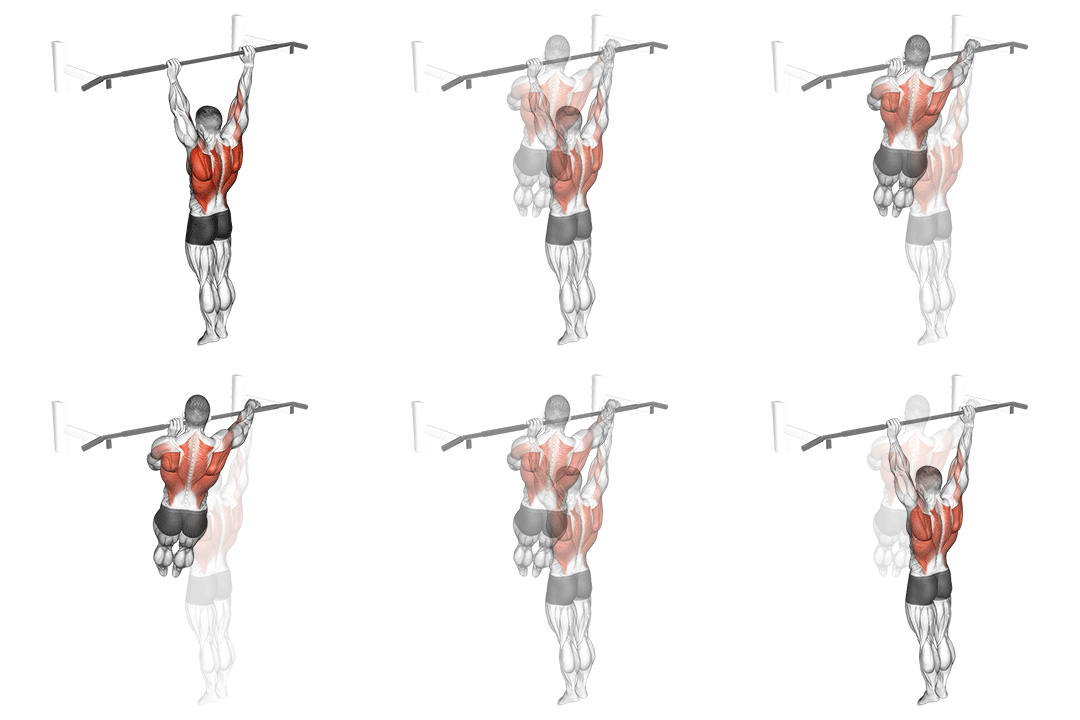
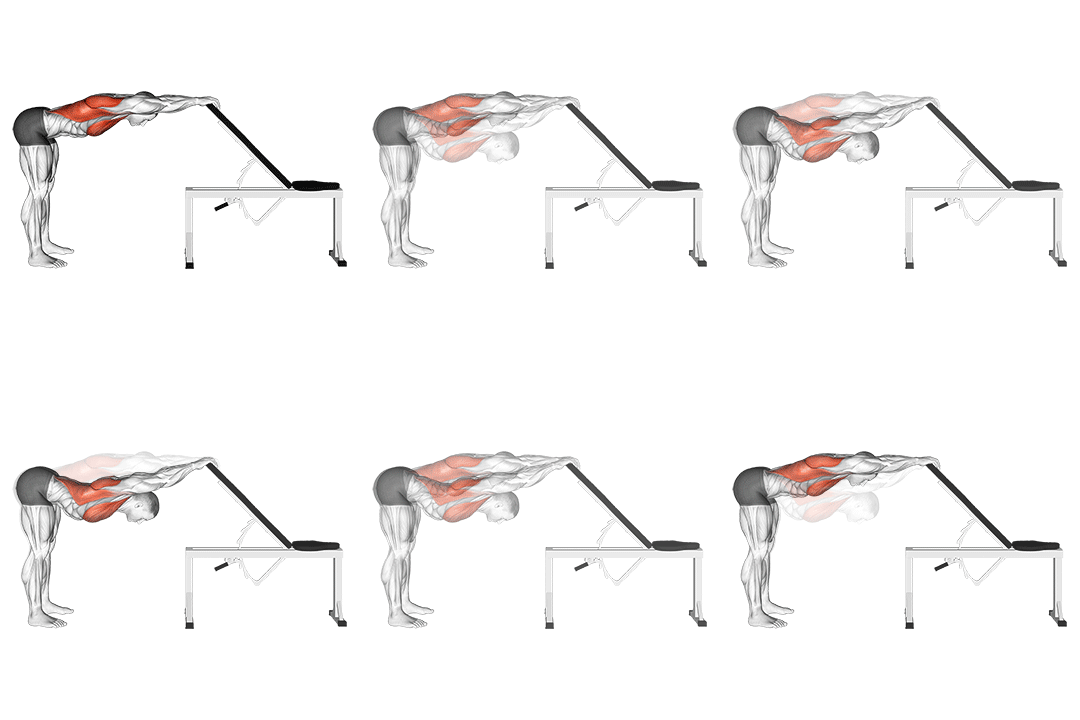
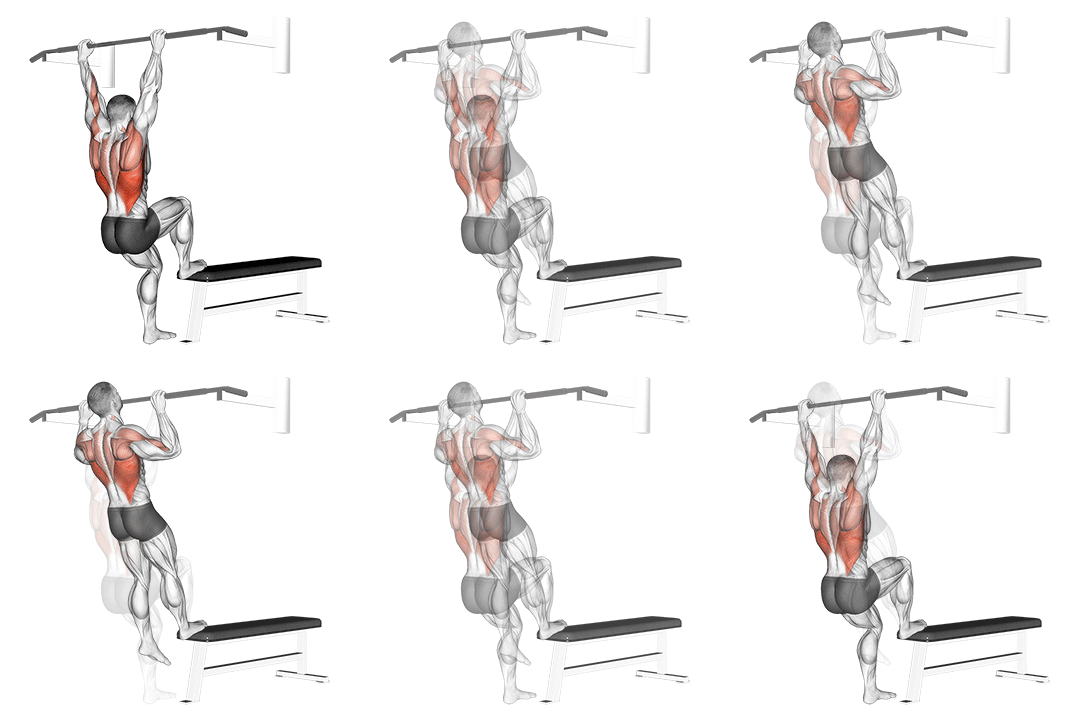
More comparisons with Bodyweight Standing Close-grip Row
Compare More Exercises
Use our free comparison tool to analyze any two exercises head-to-head.
Compare Exercises