

Bodyweight Squatting Row (with Towel) vs Pull-up: Complete Comparison Guide
Bodyweight Squatting Row (with Towel) vs Pull-up — two bodyweight back moves that both hit the lats but through different force vectors and ranges of motion. You’ll get clear comparisons of primary muscle activation, secondary recruitment, equipment needs, difficulty, and progression strategies. I’ll give technique cues (scapular control, elbow path, spine alignment), rep ranges for hypertrophy and strength, plus when to choose one over the other based on your goals and training environment.
Exercise Comparison
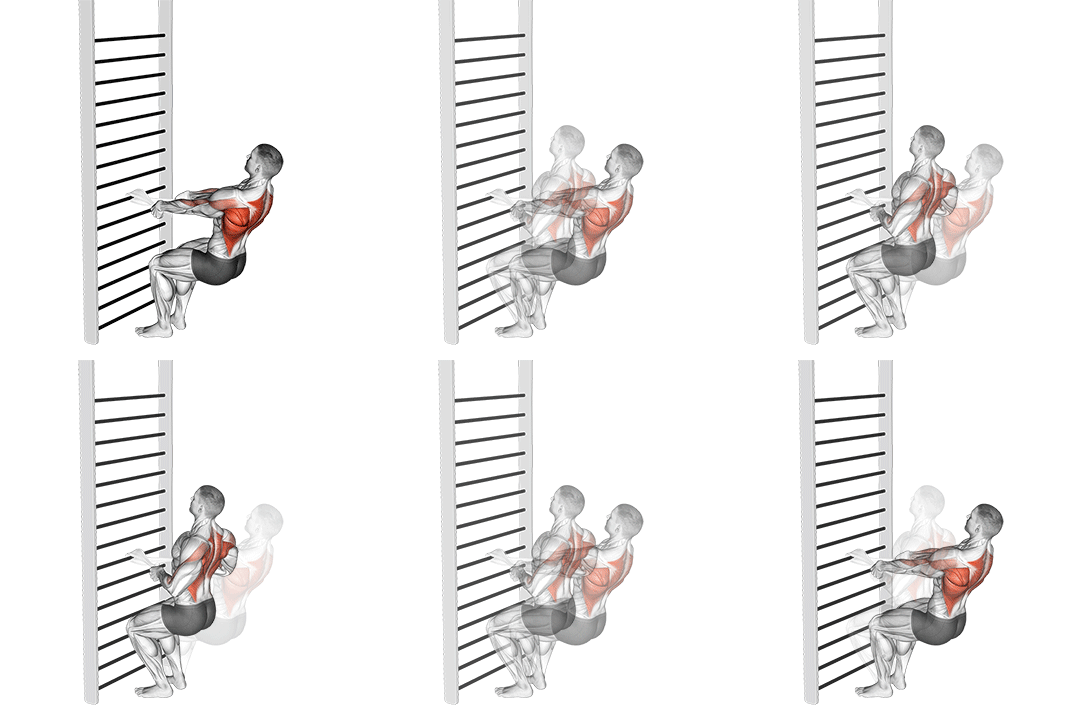
Bodyweight Squatting Row (with Towel)
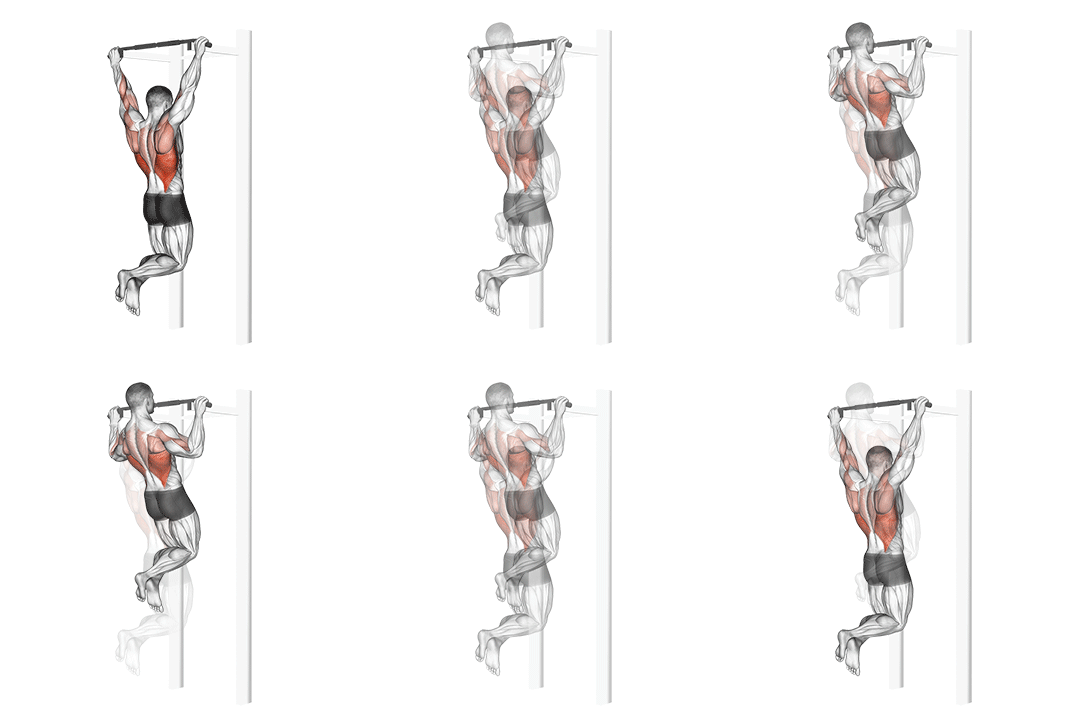
Pull-up
Head-to-Head Comparison
| Attribute | Bodyweight Squatting Row (with Towel) | Pull-up |
|---|---|---|
| Target Muscle |
Lats
|
Lats
|
| Body Part |
Back
|
Back
|
| Equipment |
Body-weight
|
Body-weight
|
| Difficulty |
Intermediate
|
Advanced
|
| Movement Type |
Compound
|
Compound
|
| Secondary Muscles |
2
|
2
|
Secondary Muscles Activated
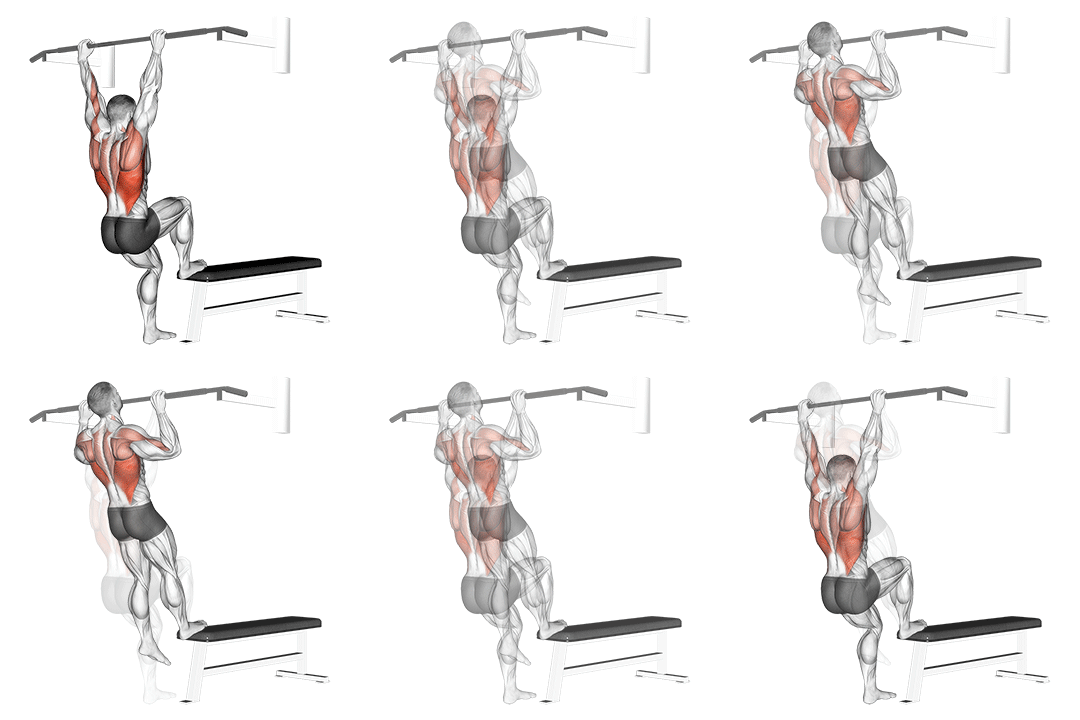
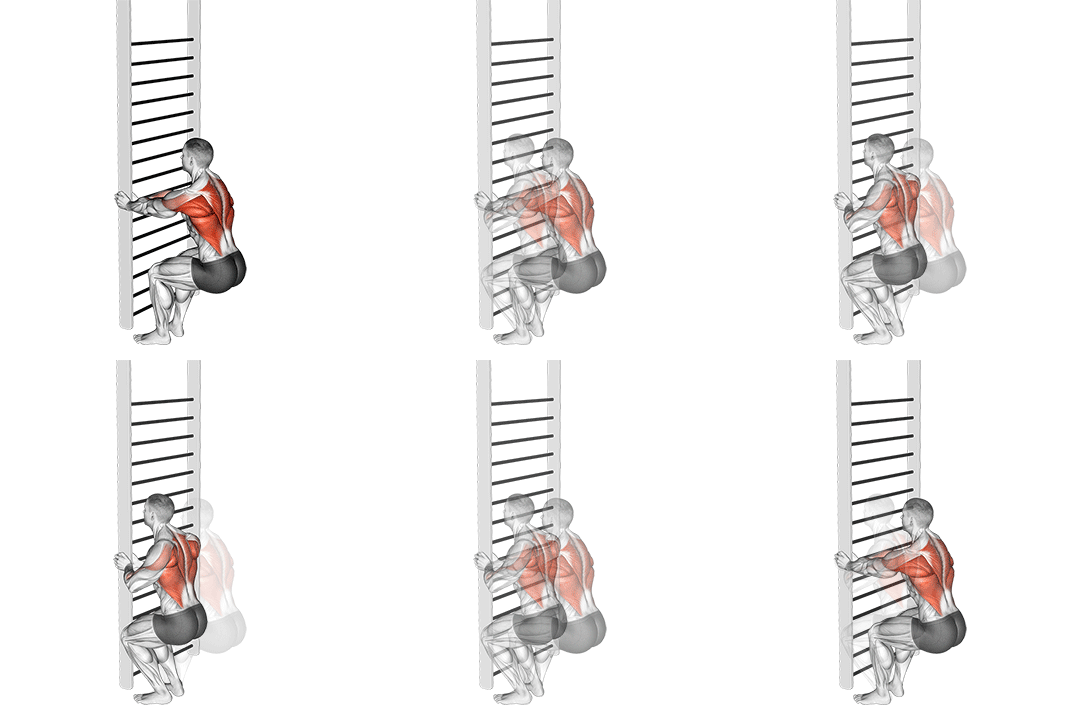
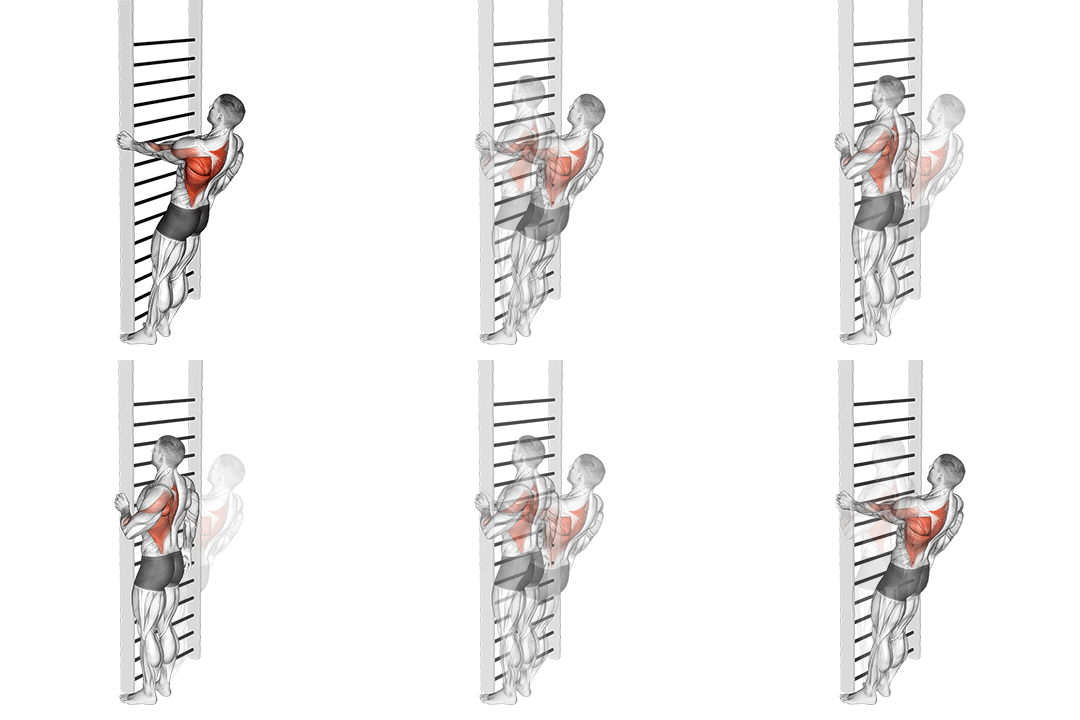
Bodyweight Squatting Row (with Towel)
Pull-up
Visual Comparison
Overview
Bodyweight Squatting Row (with Towel) vs Pull-up — two bodyweight back moves that both hit the lats but through different force vectors and ranges of motion. You’ll get clear comparisons of primary muscle activation, secondary recruitment, equipment needs, difficulty, and progression strategies. I’ll give technique cues (scapular control, elbow path, spine alignment), rep ranges for hypertrophy and strength, plus when to choose one over the other based on your goals and training environment.
Key Differences
- Difficulty levels differ: Bodyweight Squatting Row (with Towel) is intermediate, while Pull-up is advanced.
- Both exercises target the Lats using Body-weight. The main differences are in their movement patterns and muscle activation angles.
Pros & Cons
Bodyweight Squatting Row (with Towel)
+ Pros
- Easy to scale by changing body angle and foot position
- Keeps lats under continuous mid-range tension for hypertrophy
- Lower grip/forearm demand than strict pull-ups
- Highly accessible for home setups using a towel and anchor
− Cons
- Harder to add large absolute load for maximal strength
- Requires a safe, stable anchor to avoid failure
- Less forearm and grip development compared with pull-ups
Pull-up
+ Pros
- Superior for building vertical pulling strength and measurable PRs
- Develops forearm and grip strength alongside lats
- Wide progression ladder (assistance, negatives, added weight)
- High mechanical tension at end range for strong lat engagement
− Cons
- Steeper learning curve for unassisted full reps
- Requires a durable overhead anchor and more shoulder stability
- Greater risk of elbow/shoulder irritation with bad technique
When Each Exercise Wins
Its horizontal vector keeps the lats under continuous mid-range tension, allowing longer time under tension and higher rep ranges (8–15 reps) without early grip failure—beneficial for hypertrophy.
Pull-ups permit clear progressive overload (weighted sets, strict 3–6 rep work) and train vertical pulling mechanics, producing greater maximal strength improvements in the lat and scapular depressor complex.
You can reduce intensity simply by standing more upright and practice scapular retraction and elbow path safely before attempting full pull-ups.
Requires minimal, improvable equipment and allows full-volume back training without a permanent overhead bar; it’s easy to set up and scale to your space.
Frequently Asked Questions
Can I do both Bodyweight Squatting Row (with Towel) and Pull-up in the same workout?
Yes. Pair them strategically: use towel rows for higher-volume sets (3–4 sets of 8–15) to pre-exhaust the lats, then perform 2–4 heavy pull-up sets (3–6 reps) for strength. Keep total weekly volume and fatigue in mind to avoid overuse.
Which exercise is better for beginners?
The bodyweight squatting towel row is better for beginners because you can lower the intensity by standing more upright, practice scapular retraction, and avoid the high grip and shoulder demands of unassisted pull-ups.
How do the muscle activation patterns differ?
Pull-ups produce peak lat activation near full shoulder extension and demand stronger grip and forearm engagement; towel rows create continuous mid-range lat tension with greater biceps and posterior deltoid involvement due to a more horizontal pull and sustained scapular retraction.
Can Pull-up replace Bodyweight Squatting Row (with Towel)?
Pull-ups can replace towel rows for strength-focused programs, but they don’t fully replicate the long mid-range tension and lower forearm demand of horizontal rows. If hypertrophy or volume with less grip fatigue is the goal, keep towel rows in the program.
Expert Verdict
Use the squatting towel row when you want accessible, scalable back work that emphasizes continuous tension and hypertrophy with minimal gear. It’s ideal for higher-rep sets (8–15), tempo control (2–3 s concentric, 2–3 s eccentric), and training around grip or elbow sensitivities. Choose pull-ups when your goal is raw pulling strength, grip development, and measurable overload—focus on low-rep strength blocks (3–6 reps), weighted progressions, and controlled negatives of 3–5 seconds. If possible, include both in your program: rows for volume and technique, pull-ups for heavy strength and end-range lat development.
Also Compare
More comparisons with Bodyweight Squatting Row (with Towel)
Compare More Exercises
Use our free comparison tool to analyze any two exercises head-to-head.
Compare Exercises