

Bodyweight Standing Calf Raise vs Donkey Calf Raise: Complete Comparison Guide
Bodyweight Standing Calf Raise vs Donkey Calf Raise — both isolate the calves but they place load and stabilizing demands on your lower body differently. You'll get a clear breakdown of primary muscle activation, secondary recruitment (ankles, hamstrings, glutes), equipment needs, technique cues, rep ranges (8–25), and straightforward recommendations for hypertrophy, strength, beginners, and home workouts. Read on to learn which move to prioritize based on biomechanics like length-tension relationships, ankle moment arms, and how to progress each safely.
Exercise Comparison
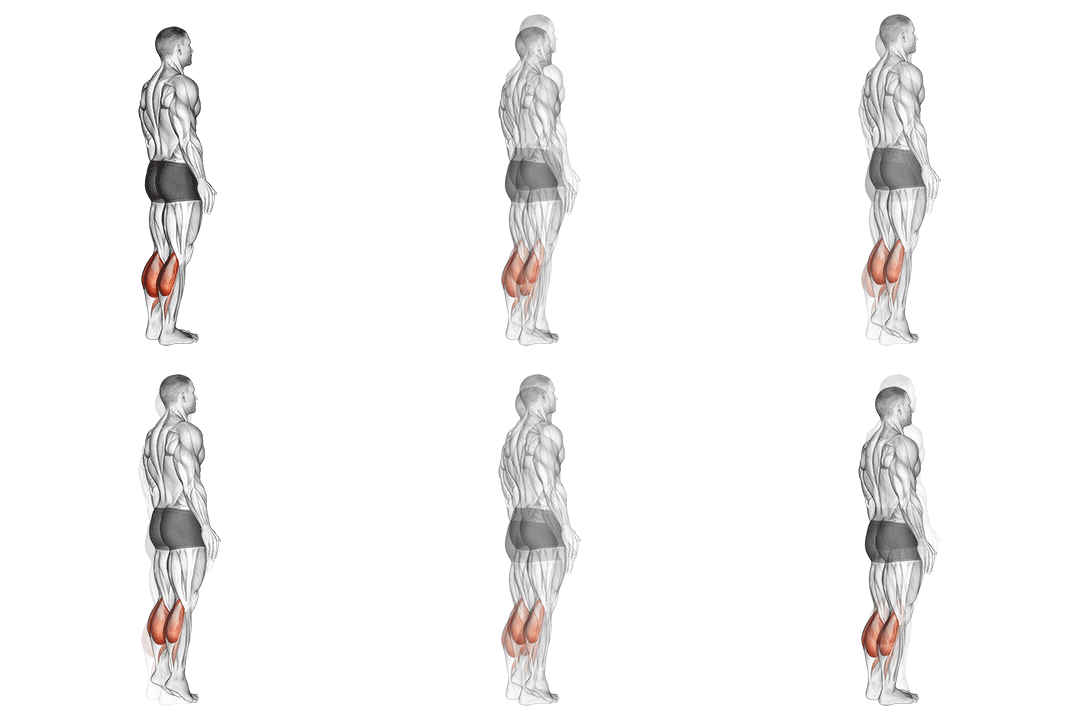
Bodyweight Standing Calf Raise
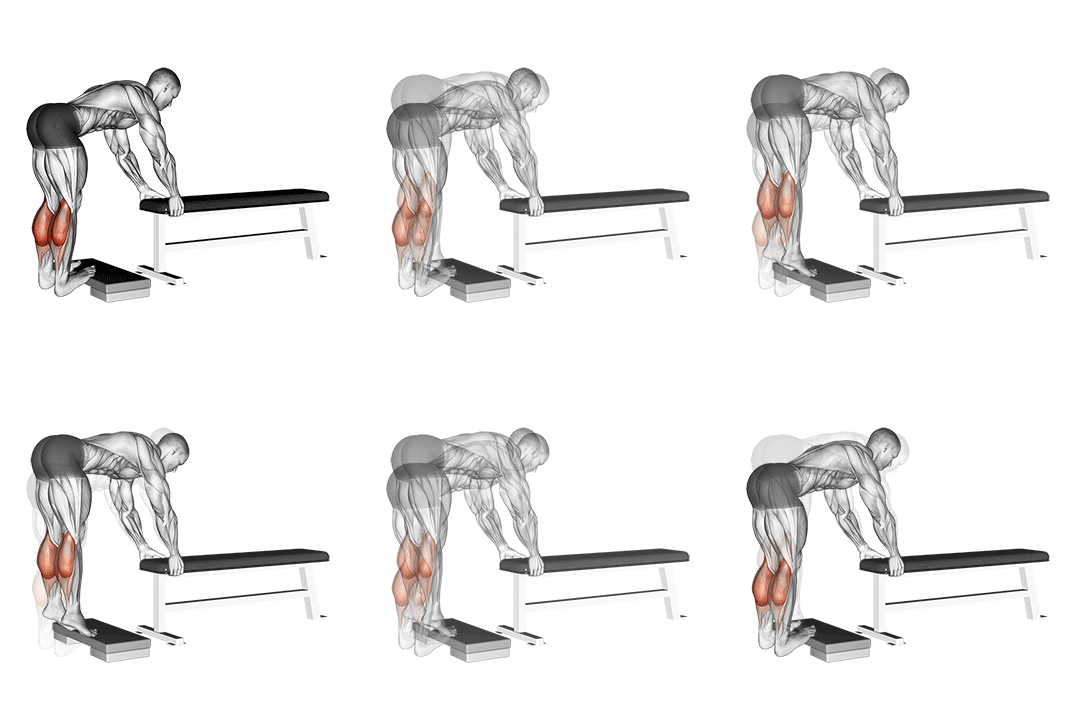
Donkey Calf Raise
Head-to-Head Comparison
| Attribute | Bodyweight Standing Calf Raise | Donkey Calf Raise |
|---|---|---|
| Target Muscle |
Calves
|
Calves
|
| Body Part |
Lower-legs
|
Lower-legs
|
| Equipment |
Body-weight
|
Body-weight
|
| Difficulty |
Beginner
|
Beginner
|
| Movement Type |
Isolation
|
Isolation
|
| Secondary Muscles |
2
|
2
|
Secondary Muscles Activated
Bodyweight Standing Calf Raise
Donkey Calf Raise
Visual Comparison
Overview
Bodyweight Standing Calf Raise vs Donkey Calf Raise — both isolate the calves but they place load and stabilizing demands on your lower body differently. You'll get a clear breakdown of primary muscle activation, secondary recruitment (ankles, hamstrings, glutes), equipment needs, technique cues, rep ranges (8–25), and straightforward recommendations for hypertrophy, strength, beginners, and home workouts. Read on to learn which move to prioritize based on biomechanics like length-tension relationships, ankle moment arms, and how to progress each safely.
Key Differences
- Both exercises target the Calves using Body-weight. The main differences are in their movement patterns and muscle activation angles.
Pros & Cons
Bodyweight Standing Calf Raise
+ Pros
- Requires minimal equipment — can be done anywhere with a floor or step
- Easy to learn and safe for beginners
- Single-leg variation provides strong overload without weights
- Excellent for balance and ankle stability work
− Cons
- Limited external overload unless you do single-leg reps or add weight
- Smaller range of posterior chain engagement
- May plateau if not progressed with tempo, reps, or unilateral work
Donkey Calf Raise
+ Pros
- Simple to add external resistance (weight on hips or partner)
- Creates a larger ankle stretch and time under tension for calves
- Engages posterior chain as stabilizers, improving transfer to lifts
- Effective for building both strength and muscle growth when loaded
− Cons
- Requires an elevated surface or partner for best effect
- Higher demand on torso and lower-back stability when loaded
- Slightly more technical setup and coordination for beginners
When Each Exercise Wins
Donkey raises allow easier external loading on the hips and typically create a larger ankle stretch and longer time under tension, which promotes muscle growth. Aim for 8–15 reps, 3–5 sets, controlled eccentrics (2–3 s) and 1–2 s peak holds.
Adding progressive external load to donkey raises yields higher absolute force through plantarflexors, which favors strength development. Use lower reps (4–8) with heavier added load and long rest (2–3 minutes).
Standing raises teach isolated ankle plantarflexion and build foot/ankle stability with low coordination demands. Start with double-leg sets (12–20 reps) and progress to single-leg once control and range improve.
Standing raises need only a step or flat surface and no partner, making them ideal for limited-space or equipment-free home sessions. Use tempo and unilateral progressions to increase stimulus.
Frequently Asked Questions
Can I do both Bodyweight Standing Calf Raise and Donkey Calf Raise in the same workout?
Yes. Pairing them works well: start with weighted donkey raises for heavy loading (4–8 reps) or hypertrophy sets (8–15), then finish with standing raises for single-leg stability and metabolic fatigue (12–20 reps). Keep total volume reasonable (6–12 sets total per session).
Which exercise is better for beginners?
Bodyweight Standing Calf Raise is better for beginners because it teaches pure plantarflexion with minimal coordination and lower back demand. Begin double-leg, focus on full ROM and controlled eccentrics before progressing.
How do the muscle activation patterns differ?
Standing raises load gastrocnemius strongly when the knee is extended and stress ankle stabilizers due to balance demands. Donkey raises keep the ankle moving through a larger dorsiflexion-to-plantarflexion arc with added posterior-chain stabilization, increasing time under tension for the calf muscles.
Can Donkey Calf Raise replace Bodyweight Standing Calf Raise?
Donkey raises can replace standing raises if you prioritize heavy loading and hypertrophy, but you may lose some single-leg balance and foot-stability benefits. For a balanced plan, rotate or combine both across training blocks.
Expert Verdict
Use standing calf raises as your base movement: they're low-risk, simple to scale, great for ankle stability, and perfect for home or beginner programs. Program 3–4 sets of 12–20 reps, emphasize a controlled 2–3 s eccentric, pause 1 s at peak, and progress to single-leg work. Use donkey calf raises when you want to overload the calves and increase muscle growth or strength — add weight to the hips, aim for 4–15 reps depending on your goal, and maintain a neutral spine. Combine both across phases: standing raises for conditioning and balance, donkey raises for heavy stimulus and targeted hypertrophy.
Also Compare
More comparisons with Bodyweight Standing Calf Raise
More comparisons with Donkey Calf Raise
Compare More Exercises
Use our free comparison tool to analyze any two exercises head-to-head.
Compare Exercises