

Bodyweight Standing Close-grip One Arm Row vs Bodyweight Standing Close-grip Row: Complete Compariso
Bodyweight Standing Close-grip One Arm Row vs Bodyweight Standing Close-grip Row — two bodyweight pulling variations that both target the lats but deliver different loading patterns and skill demands. You’ll get clear, practical guidance on muscle activation, equipment needs, technique cues, progression options, and who should pick which move. I’ll break down biomechanics like force vectors and length-tension relationships, give rep ranges (6–15), and show how to safely progress so you can choose the best row for your back development and training setting.
Exercise Comparison
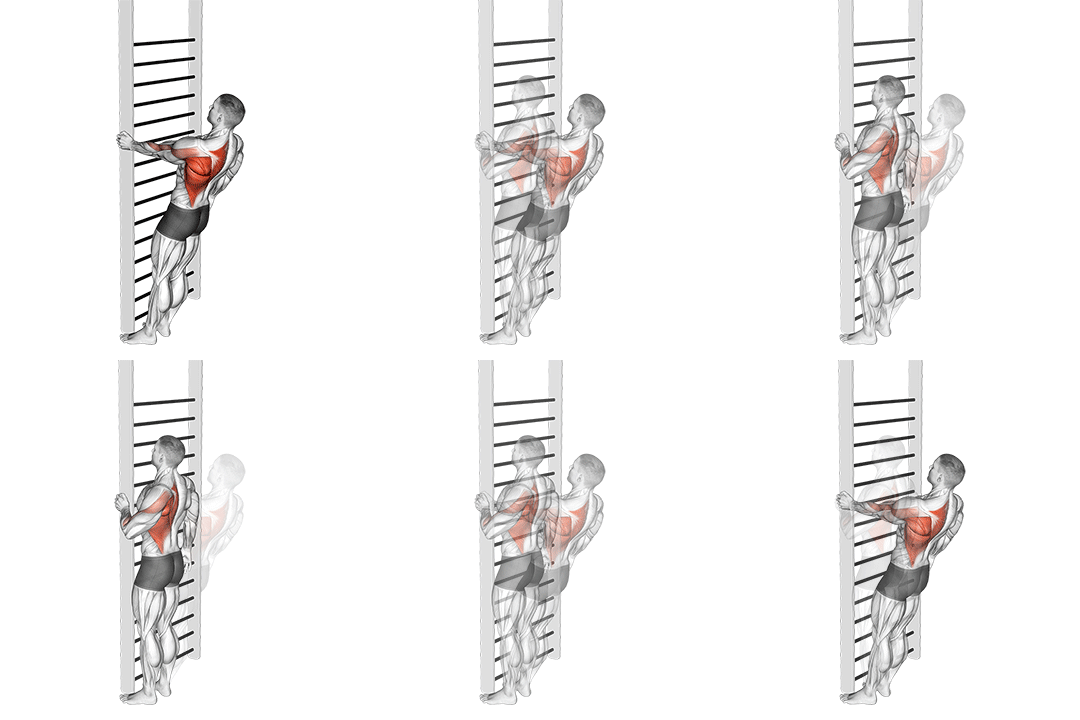
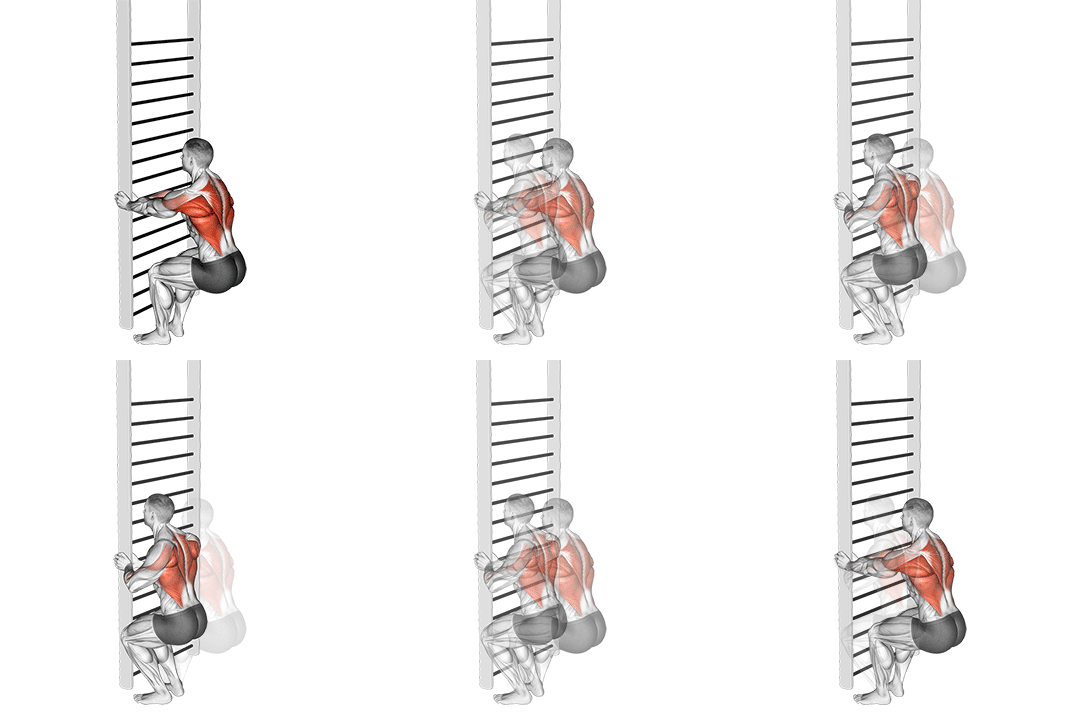
Bodyweight Standing Close-grip One Arm Row
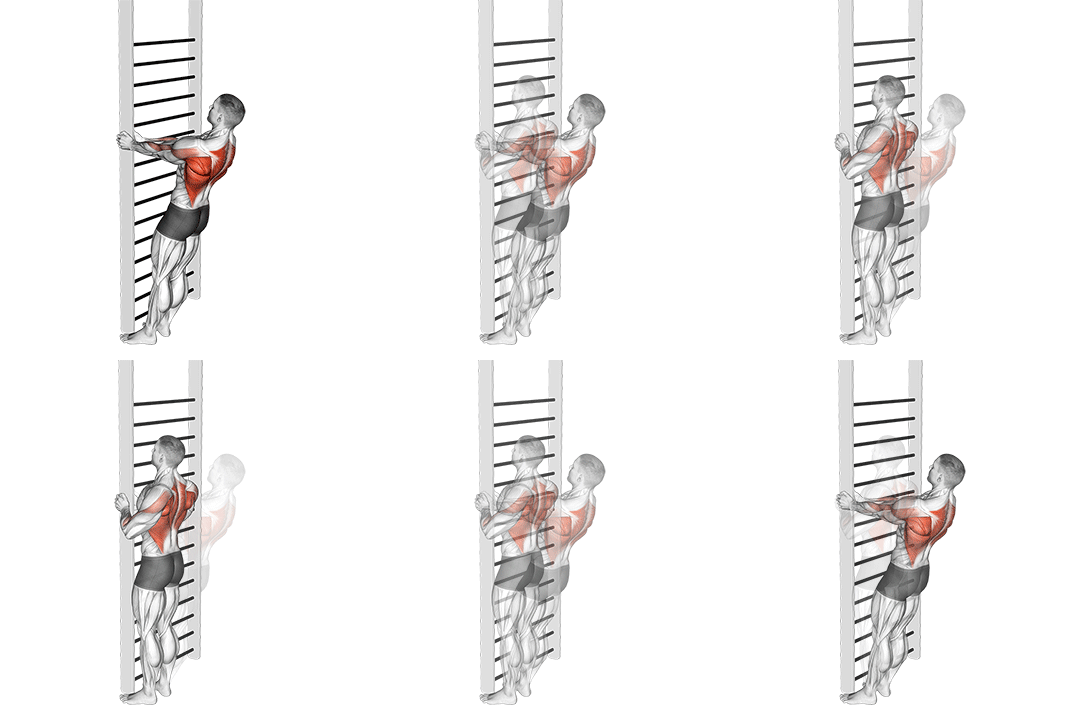
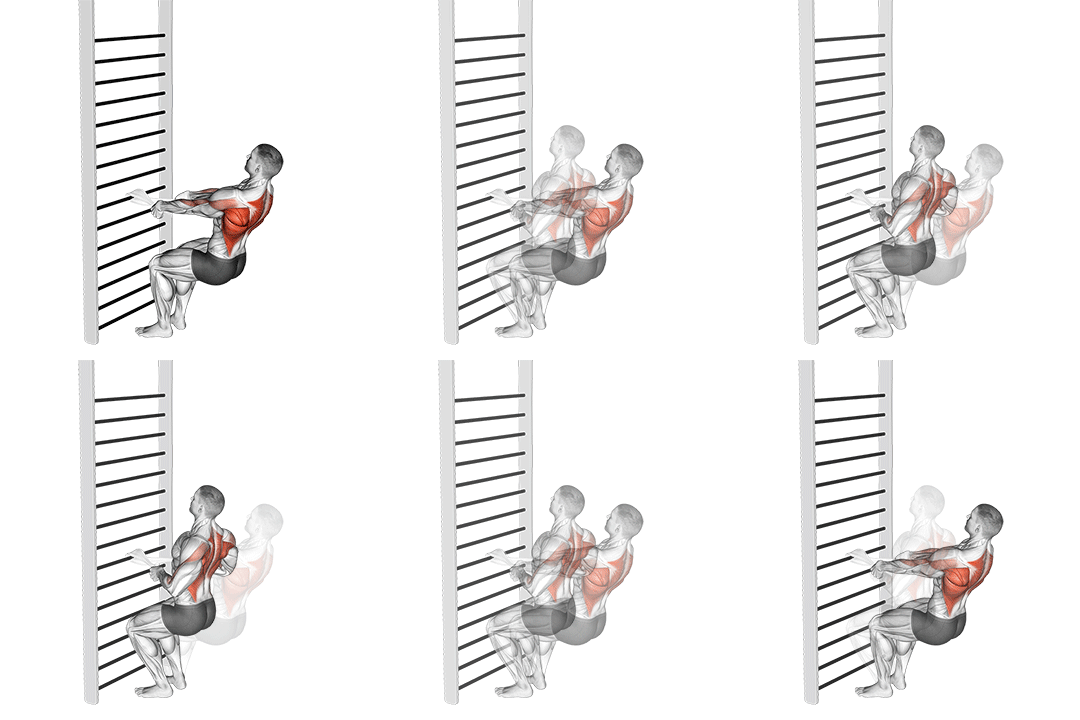
Bodyweight Standing Close-grip Row
Head-to-Head Comparison
| Attribute | Bodyweight Standing Close-grip One Arm Row | Bodyweight Standing Close-grip Row |
|---|---|---|
| Target Muscle |
Lats
|
Lats
|
| Body Part |
Back
|
Back
|
| Equipment |
Body-weight
|
Body-weight
|
| Difficulty |
Intermediate
|
Beginner
|
| Movement Type |
Compound
|
Compound
|
| Secondary Muscles |
2
|
2
|
Secondary Muscles Activated
Bodyweight Standing Close-grip One Arm Row
Bodyweight Standing Close-grip Row
Visual Comparison
Overview
Bodyweight Standing Close-grip One Arm Row vs Bodyweight Standing Close-grip Row — two bodyweight pulling variations that both target the lats but deliver different loading patterns and skill demands. You’ll get clear, practical guidance on muscle activation, equipment needs, technique cues, progression options, and who should pick which move. I’ll break down biomechanics like force vectors and length-tension relationships, give rep ranges (6–15), and show how to safely progress so you can choose the best row for your back development and training setting.
Key Differences
- Difficulty levels differ: Bodyweight Standing Close-grip One Arm Row is intermediate, while Bodyweight Standing Close-grip Row is beginner.
- Both exercises target the Lats using Body-weight. The main differences are in their movement patterns and muscle activation angles.
Pros & Cons
Bodyweight Standing Close-grip One Arm Row
+ Pros
- Higher unilateral lat stimulus — often increases peak activation by ~10–25%
- Better for fixing left/right strength imbalances
- Greater progression options through angle and leverage changes
- Enhances core anti-rotation and single-leg stability
− Cons
- Requires stronger core bracing to resist rotation
- Higher technical demand — steeper learning curve
- Can overload lower back if form breaks (lumbar shear risk)
Bodyweight Standing Close-grip Row
+ Pros
- Easier to learn and coach for beginners
- Lower anti-rotation demand — safer for lower back
- Works both lats simultaneously for even development
- Requires minimal equipment and anchor precision
− Cons
- Less effective at isolating unilateral imbalances
- May cap unilateral strength progress sooner
- Can feel easier, limiting overload for more advanced trainees
When Each Exercise Wins
Unilateral loading allows a greater time under tension per lat and larger peak force on the working side. Use 6–12 controlled reps per side with a 2-0-2 tempo and 3–5 sets to maximize hypertrophic stimulus.
The one-arm row creates a larger moment arm and higher single-limb torque, which develops raw pulling strength and unilateral control. Progress by increasing body horizontalization or adding paused holds at peak contraction.
Two-handed close-grip rows reduce coordination and anti-rotation demands, letting you learn scapular retraction, hinge angle (30–45° torso to floor), and elbow tracking before progressing to unilateral work.
It works with simpler anchors and safer balance requirements, so you can train effectively with a table edge or low bar. It's easier to scale by changing your body angle without extra gear.
Frequently Asked Questions
Can I do both Bodyweight Standing Close-grip One Arm Row and Bodyweight Standing Close-grip Row in the same workout?
Yes. Pair them by doing the bilateral close-grip row first as a warm-up and motor pattern recruiter, then perform one-arm rows for heavier unilateral loading. Keep total volume sensible — for example, 3 sets bilateral (8–12 reps) then 3 sets per side unilateral (6–10 reps).
Which exercise is better for beginners?
The Bodyweight Standing Close-grip Row is better for beginners because it has a gentler learning curve and lower anti-rotation demand. It lets you master hinge angle, scapular retraction, and elbow tracking before attempting unilateral loading.
How do the muscle activation patterns differ?
The one-arm row produces higher peak activation on the working lat and greater recruitment of stabilizers due to unilateral torque and anti-rotation; the bilateral close-grip row creates more symmetric, simultaneous activation with slightly higher biceps contribution across both arms. The difference stems from varying moment arms and torso angles.
Can Bodyweight Standing Close-grip Row replace Bodyweight Standing Close-grip One Arm Row?
It can replace it if your priority is safety, motor learning, or limited equipment, but it won’t provide the same unilateral overload or imbalance correction. For maximal lat hypertrophy or unilateral strength, keep the one-arm row in your program.
Expert Verdict
Choose the Bodyweight Standing Close-grip Row if you’re new to horizontal pulling or need a low-skill, low-risk way to build lat strength and work capacity. It’s the better starter move for learning scapular control and biceps-assisted pulls at a 30–45° torso angle. Opt for the Bodyweight Standing Close-grip One Arm Row once you can maintain a neutral spine and solid core brace — this version delivers more unilateral lat stimulus, helps correct imbalances, and allows greater progressive overload via angle and leverage changes. Use 3–5 sets of 6–12 reps for one-arm work and 8–15 reps for bilateral rows, and prioritize scapular retraction and elbow tuck to protect the shoulder.
Also Compare
More comparisons with Bodyweight Standing Close-grip One Arm Row
More comparisons with Bodyweight Standing Close-grip Row
Compare More Exercises
Use our free comparison tool to analyze any two exercises head-to-head.
Compare Exercises