

Box Jump Down With One Leg Stabilization vs Donkey Calf Raise: Complete Comparison Guide
Box Jump Down With One Leg Stabilization vs Donkey Calf Raise — two body-weight moves that stress your calves in very different ways. This guide helps you pick which to use based on your goals, equipment, and training level. You’ll get clear technique cues, rep ranges (3–6 for power work, 8–20 for hypertrophy), and biomechanical explanations—how force vectors, ankle dorsiflexion (~20–30° at landing), and the stretch‑shortening cycle change activation. By the end you’ll know which exercise to prioritize for strength, muscle growth, or safe progression.
Exercise Comparison
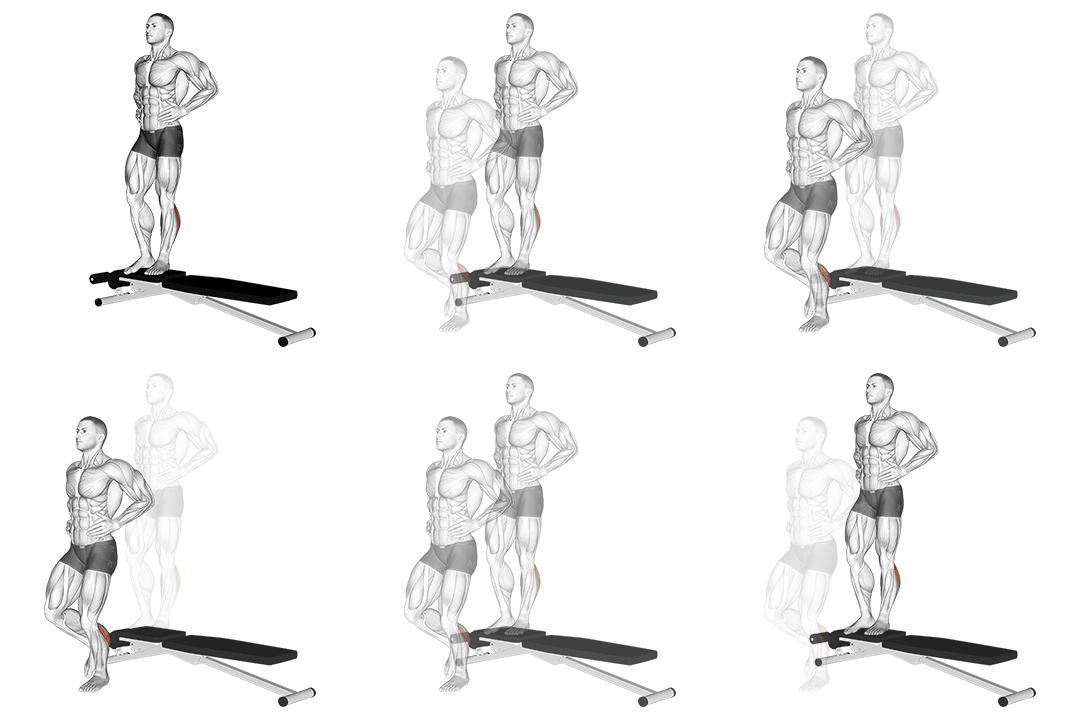
Box Jump Down With One Leg Stabilization
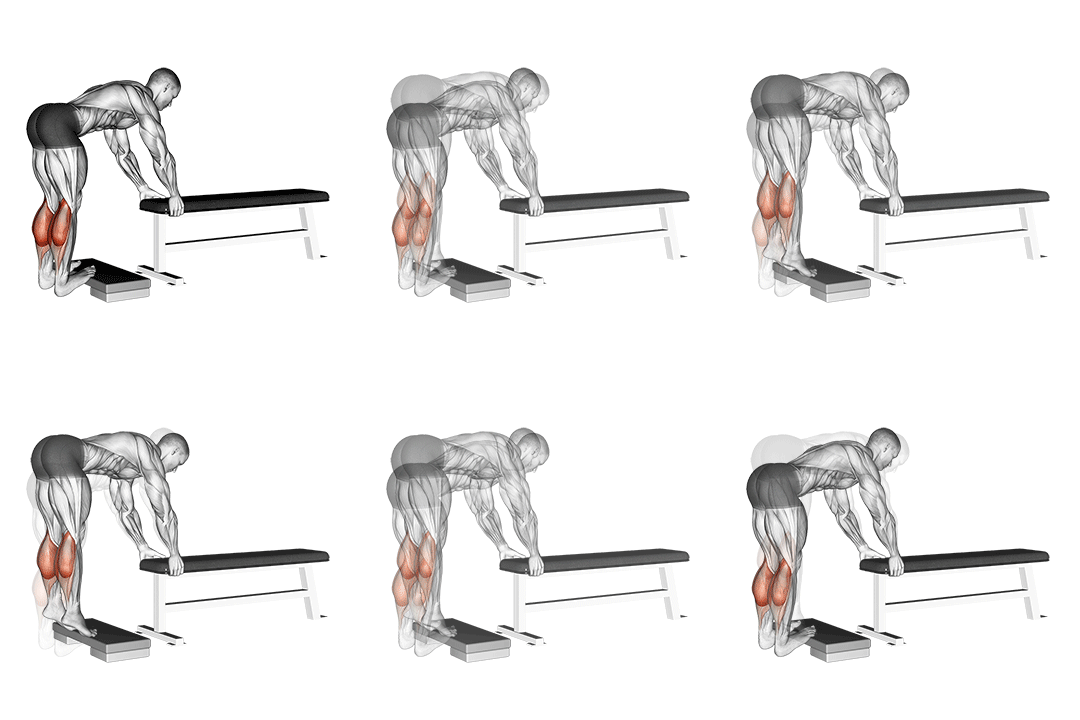
Donkey Calf Raise
Head-to-Head Comparison
| Attribute | Box Jump Down With One Leg Stabilization | Donkey Calf Raise |
|---|---|---|
| Target Muscle |
Calves
|
Calves
|
| Body Part |
Lower-legs
|
Lower-legs
|
| Equipment |
Body-weight
|
Body-weight
|
| Difficulty |
Intermediate
|
Beginner
|
| Movement Type |
Compound
|
Isolation
|
| Secondary Muscles |
3
|
2
|
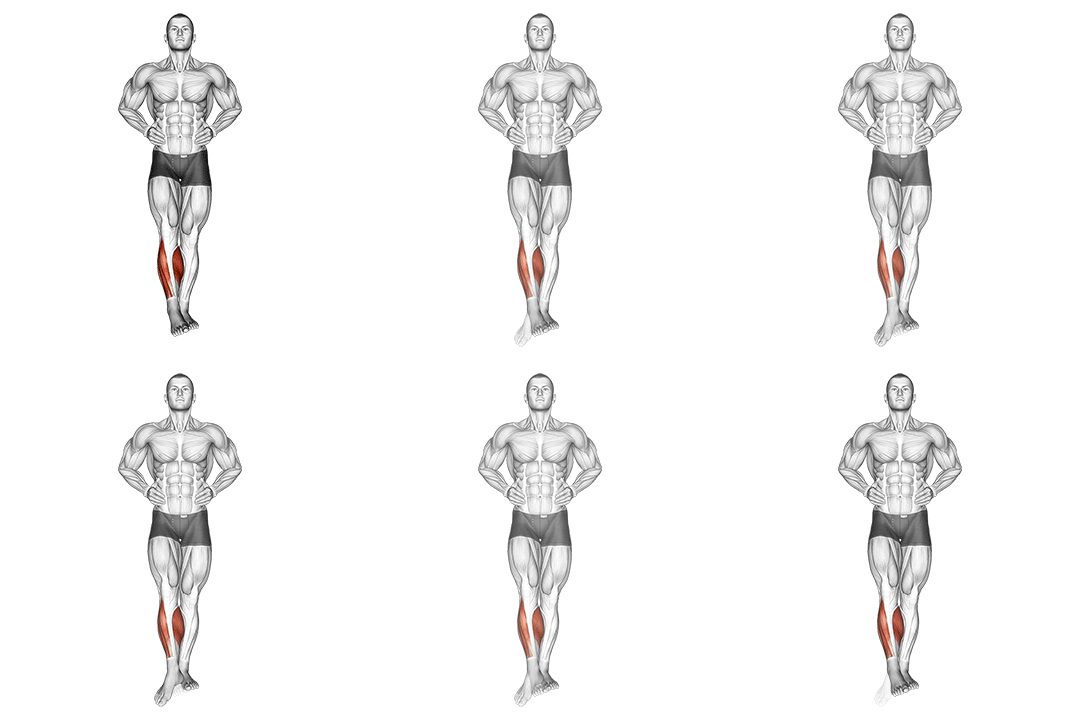
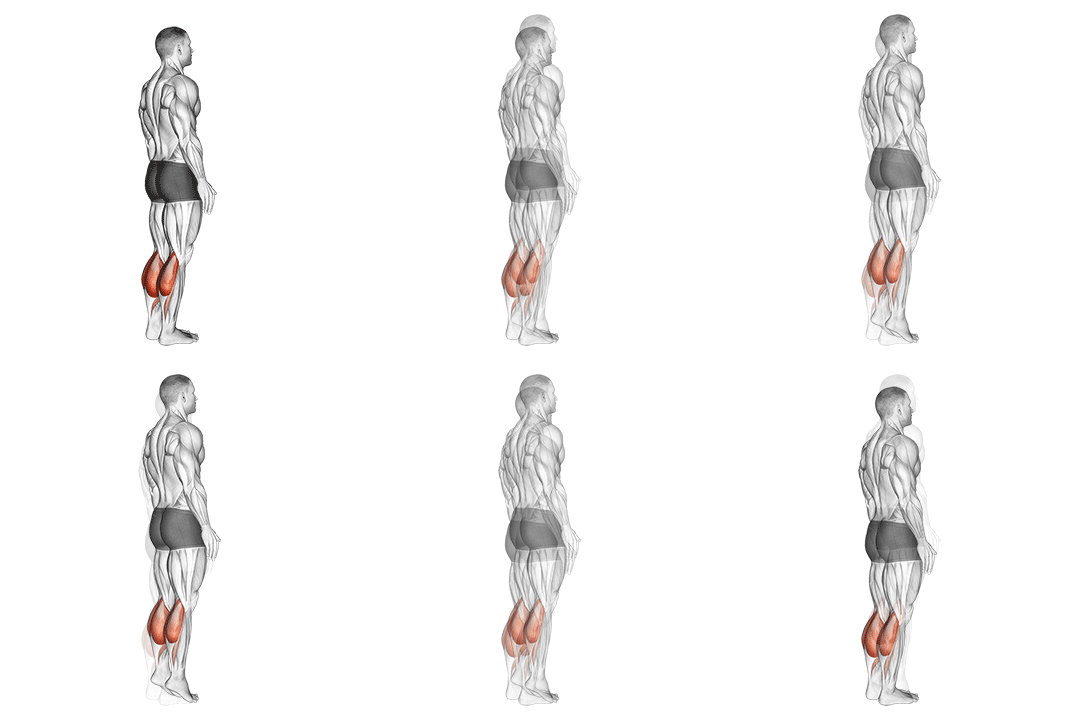
Secondary Muscles Activated
Box Jump Down With One Leg Stabilization
Donkey Calf Raise
Visual Comparison
Overview
Box Jump Down With One Leg Stabilization vs Donkey Calf Raise — two body-weight moves that stress your calves in very different ways. This guide helps you pick which to use based on your goals, equipment, and training level. You’ll get clear technique cues, rep ranges (3–6 for power work, 8–20 for hypertrophy), and biomechanical explanations—how force vectors, ankle dorsiflexion (~20–30° at landing), and the stretch‑shortening cycle change activation. By the end you’ll know which exercise to prioritize for strength, muscle growth, or safe progression.
Key Differences
- Box Jump Down With One Leg Stabilization is a compound movement, while Donkey Calf Raise is an isolation exercise.
- Difficulty levels differ: Box Jump Down With One Leg Stabilization is intermediate, while Donkey Calf Raise is beginner.
- Both exercises target the Calves using Body-weight. The main differences are in their movement patterns and muscle activation angles.
Pros & Cons
Box Jump Down With One Leg Stabilization
+ Pros
- Develops rate of force development and reactive strength through a rapid stretch‑shortening cycle
- Recruits calves along with quads, hamstrings, and glutes for full lower‑limb integration
- Improves single‑leg stability, balance, and motor control under eccentric load
- Effective for power and athletic performance when done for 3–6 explosive reps
− Cons
- Higher technical demand and fall/injury risk if landing mechanics are poor
- Requires a sturdy box and space, limiting home accessibility
- Less consistent time under tension, so less optimal for pure hypertrophy
Donkey Calf Raise
+ Pros
- Simple to learn and low equipment requirement—ideal for beginners
- Increases time under tension for calf hypertrophy with reps in the 8–20+ range
- Easy to manipulate tempo, reps, and unilateral variations for progressive overload
- Lower acute injury risk compared with high-impact plyometrics
− Cons
- Limited by body-weight unless you add external resistance or partner loading
- Less carryover to explosive, high‑rate movements because it lacks a fast stretch‑shortening phase
- Secondary muscle recruitment is minimal, so it won’t develop full lower‑limb power
When Each Exercise Wins
Donkey Calf Raise wins because it produces longer time under tension and repeatable peak plantarflexion loading—rep ranges of 8–20+ and slow negatives maximize metabolic stress and mechanical tension on both gastrocnemius and soleus.
Box Jump Down With One Leg Stabilization is superior for developing strength expressed as rate of force development and eccentric control; performing 3–6 explosive reps improves neural drive and fast‑twitch recruitment needed for powerful plantarflexion.
Donkey Calf Raise is easier to learn and safer: simple plantarflexion mechanics, lower impact, and clear progression paths make it the better starting point for new trainees.
Donkey Calf Raise requires minimal space and no special platform; you can do single-leg reps, tempo variations, or use household weight to progress, making it the most practical home option.
Frequently Asked Questions
Can I do both Box Jump Down With One Leg Stabilization and Donkey Calf Raise in the same workout?
Yes—pair them smartly: do Box Jump Down With One Leg Stabilization early for neural and power work (3–6 reps) then finish with Donkey Calf Raise for hypertrophy (8–20 reps). Keep volume manageable to avoid Achilles overload and schedule at most 6–8 total hard sets for calves per session.
Which exercise is better for beginners?
Donkey Calf Raise is better for beginners because it has lower technical demand and impact. Start with bilateral then progress to single‑leg reps and add tempo control before attempting single‑leg depth landings.
How do the muscle activation patterns differ?
Box Jump Down With One Leg Stabilization produces a rapid eccentric loading phase that elicits greater fast‑twitch gastrocnemius activation and involves quads/hamstrings/glutes concentrically and eccentrically. Donkey Calf Raise produces steady concentric/eccentric cycles with higher time‑under‑tension, engaging both gastrocnemius and soleus more uniformly for hypertrophy.
Can Donkey Calf Raise replace Box Jump Down With One Leg Stabilization?
Donkey Calf Raise can replace Box Jump Down With One Leg Stabilization if your goal is pure hypertrophy or you lack a safe box, but it won’t develop reactive power or single‑leg eccentric control to the same degree. If you need athletic power, keep box jumps or other plyometrics in the program.
Expert Verdict
Use Box Jump Down With One Leg Stabilization when your goal is power, single‑leg stability, and improving the stretch‑shortening capacity of the calves and posterior chain. Program it for 3–6 explosive reps, 2–5 sets, focusing on soft, controlled single‑leg landings with ~20–30° ankle dorsiflexion on descent. Choose Donkey Calf Raise when your priority is hypertrophy or low‑risk volume: do 8–20 reps, 3–4 sets, slower eccentrics and a 1–2 second pause at full plantarflexion. For most trainees, alternate both across phases—power blocks with box jumps and hypertrophy blocks with donkey raises—to cover both RFD and muscle growth.
Also Compare
More comparisons with Box Jump Down With One Leg Stabilization
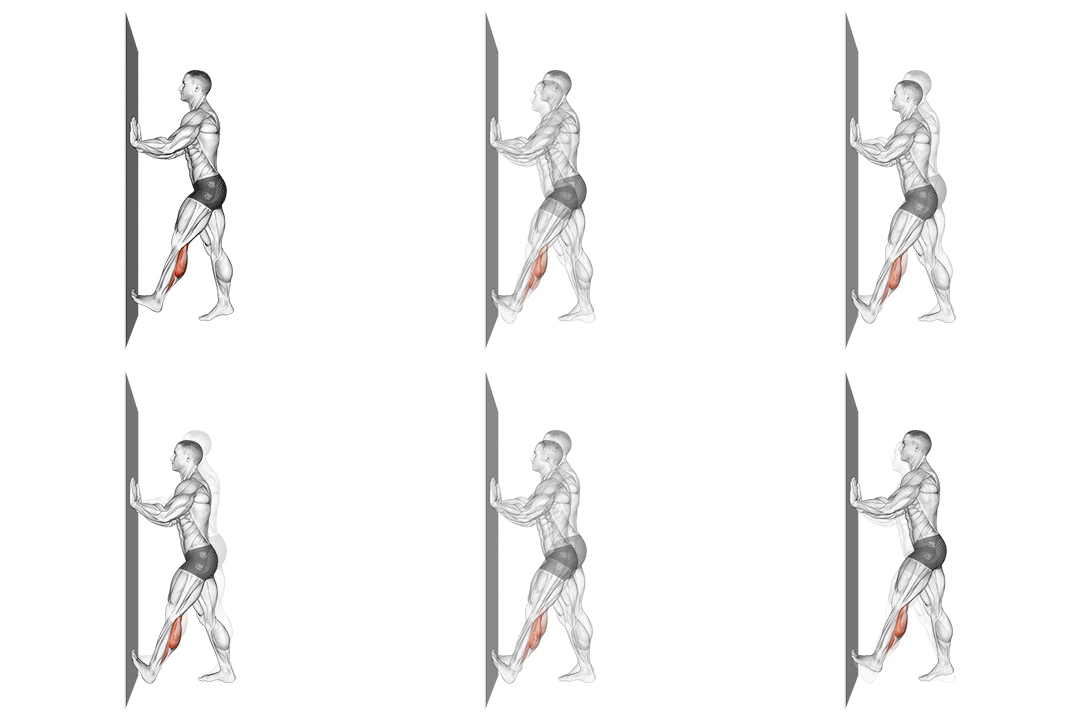
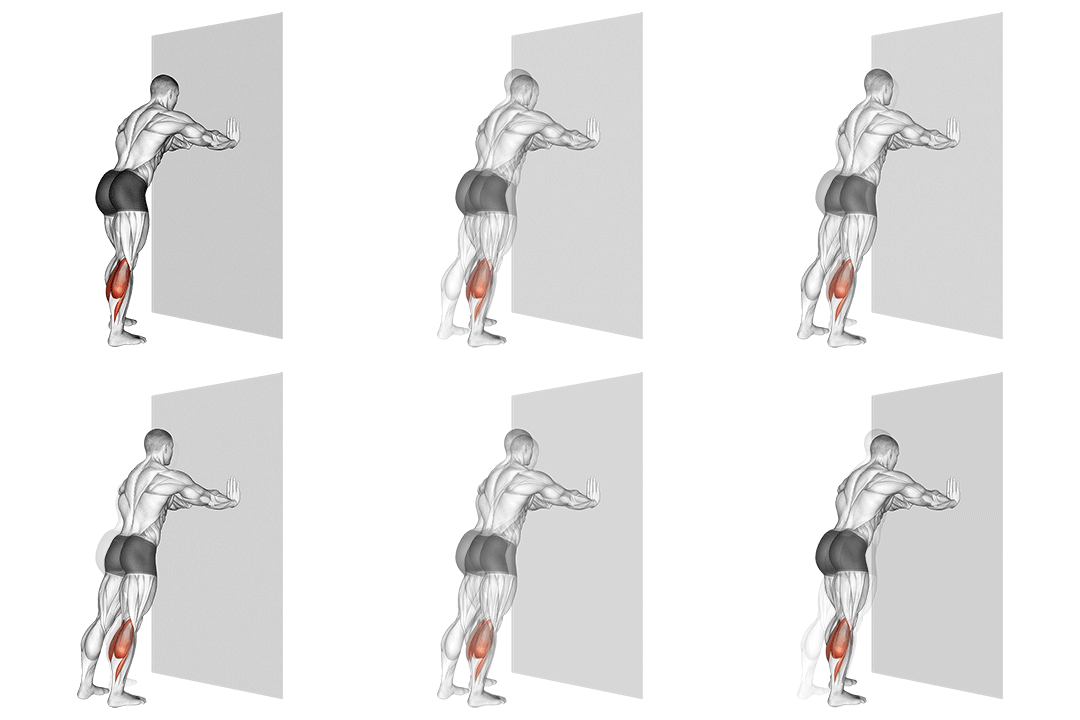
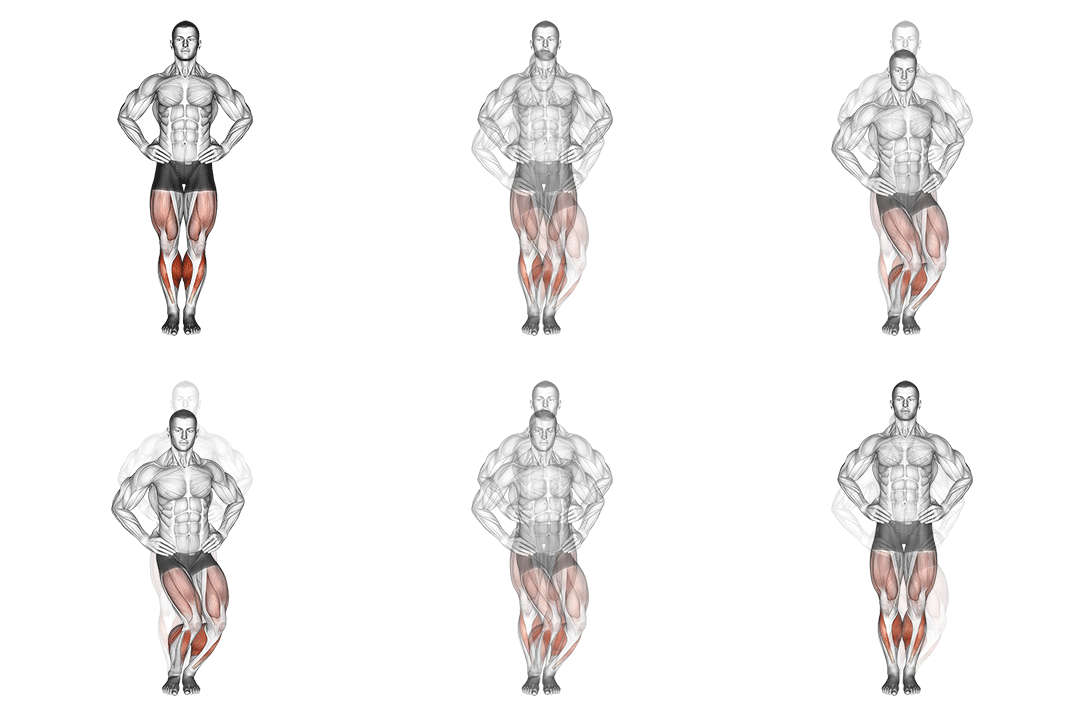
More comparisons with Donkey Calf Raise
Compare More Exercises
Use our free comparison tool to analyze any two exercises head-to-head.
Compare Exercises