

Cable Bar Lateral Pulldown vs Cable Cross-over Lateral Pulldown: Complete Comparison Guide
Cable Bar Lateral Pulldown vs Cable Cross-over Lateral Pulldown — two cable variations that both aim at wider, stronger lats. If you want clearer rules for when to pick one over the other, this guide has your back. You’ll get side-by-side technique cues, biomechanical differences (force vectors, length-tension, scapular mechanics), equipment needs, pros and cons, and rep-range recommendations for strength and hypertrophy. Read on to learn which exercise fits your goals, how to perform each with precise angles and tempo, and simple progressions you can apply next session.
Exercise Comparison
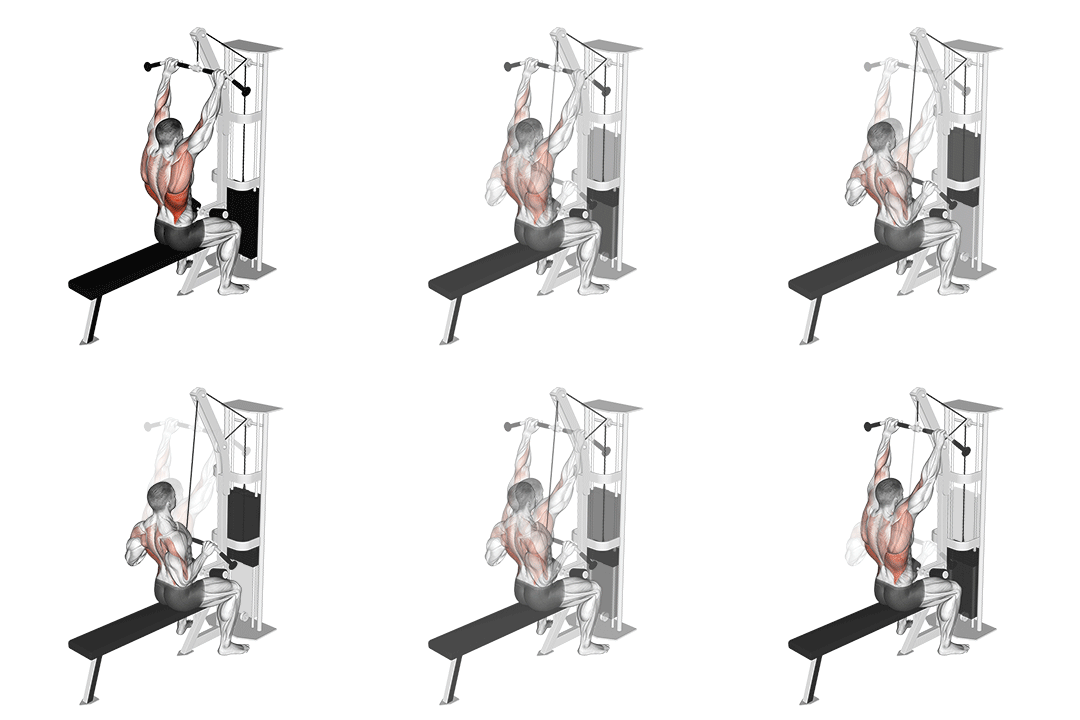
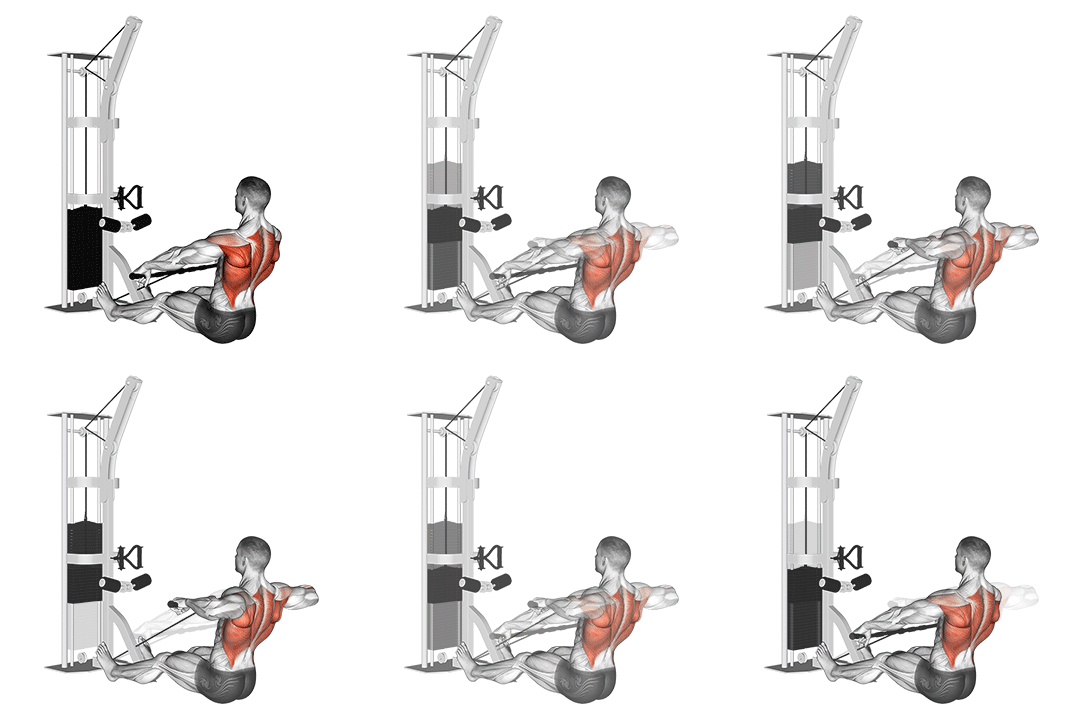
Cable Bar Lateral Pulldown
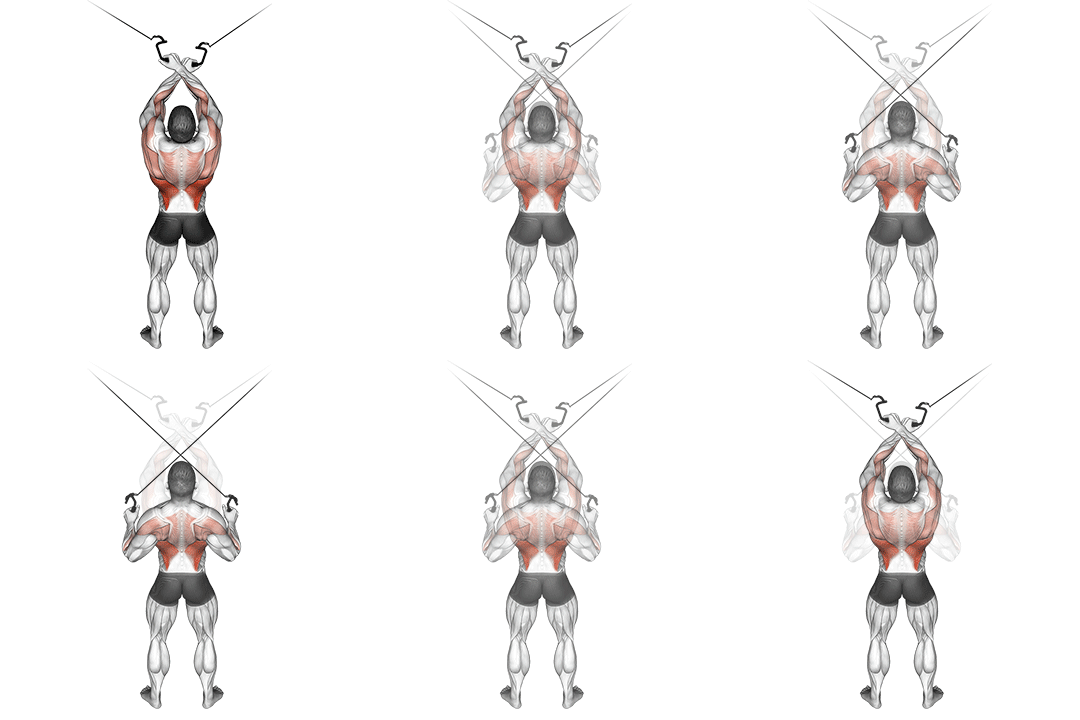
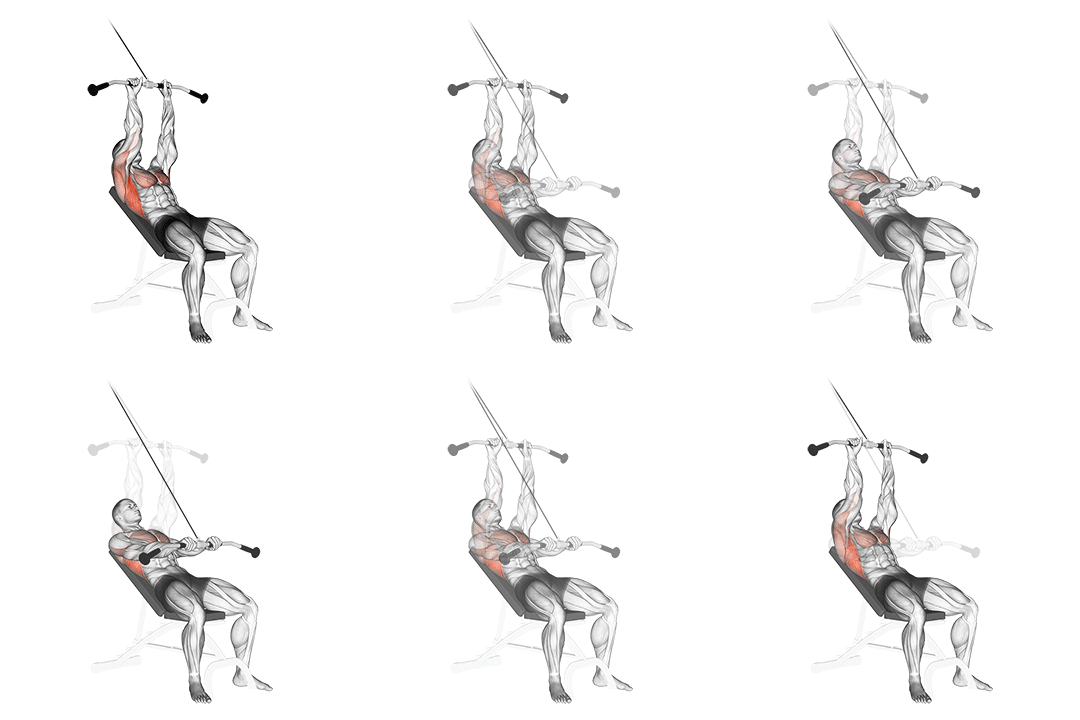
Cable Cross-over Lateral Pulldown
Head-to-Head Comparison
| Attribute | Cable Bar Lateral Pulldown | Cable Cross-over Lateral Pulldown |
|---|---|---|
| Target Muscle |
Lats
|
Lats
|
| Body Part |
Back
|
Back
|
| Equipment |
Cable
|
Cable
|
| Difficulty |
Intermediate
|
Intermediate
|
| Movement Type |
Compound
|
Compound
|
| Secondary Muscles |
3
|
3
|
Secondary Muscles Activated
Cable Bar Lateral Pulldown
Cable Cross-over Lateral Pulldown
Visual Comparison
Overview
Cable Bar Lateral Pulldown vs Cable Cross-over Lateral Pulldown — two cable variations that both aim at wider, stronger lats. If you want clearer rules for when to pick one over the other, this guide has your back. You’ll get side-by-side technique cues, biomechanical differences (force vectors, length-tension, scapular mechanics), equipment needs, pros and cons, and rep-range recommendations for strength and hypertrophy. Read on to learn which exercise fits your goals, how to perform each with precise angles and tempo, and simple progressions you can apply next session.
Key Differences
- Both exercises target the Lats using Cable. The main differences are in their movement patterns and muscle activation angles.
Pros & Cons
Cable Bar Lateral Pulldown
+ Pros
- Easier to load heavy—simple linear progression for strength (4–6 reps to 6–10 reps).
- Stable bar path simplifies motor pattern and coaching cues.
- Strong vertical force vector efficiently targets lat width.
- Easily replicated with bands or single-pulley home setups.
− Cons
- Less ability to create oblique force vectors that emphasize mid-back.
- Fixed grip limits hand-placement variety and unilateral work.
- May under-emphasize lower lat fibres if range stops high on the chest.
Cable Cross-over Lateral Pulldown
+ Pros
- Greater ROM and peak contraction potential—good for hypertrophy (8–12 reps).
- Oblique force path increases rear delt and rhomboid recruitment.
- Allows unilateral variations to correct side-to-side imbalances.
- Constant tension through movement improves time under tension control.
− Cons
- Requires dual-pulley/crossover equipment and more setup.
- More technical timing and coordination required—steeper learning curve.
- Harder to safely load maximally for raw strength work.
When Each Exercise Wins
The cross-over produces a longer lat arc and a larger horizontal force component, increasing time under tension and peak contraction. Use 8–12 reps with a 2–3s eccentric and a short 0.5–1s squeeze at the bottom to exploit length-tension for muscle growth.
The bar provides a stable vertical force vector that lets you load heavier with safer mechanics, ideal for low-rep strength work (4–6 reps). Its fixed path reduces wasted stabilizer input so your lats can accept more absolute load.
Simpler motor pattern and clear external cues (knees locked, 10°–15° torso lean, lead with elbows) make it easier to teach scapular control and correct pulling mechanics in 2–3 practice sets.
You can mimic the bar pulldown with a single high pulley or resistance bands anchored overhead, and it needs less specialized dual-pulley hardware than the cross-over.
Frequently Asked Questions
Can I do both Cable Bar Lateral Pulldown and Cable Cross-over Lateral Pulldown in the same workout?
Yes. Start with the heavier, strength-focused Cable Bar sets (4–6 reps) to move more load, then finish with cross-over sets (8–12 reps) to increase time under tension and finish the lats. Limit total volume to avoid excessive shoulder fatigue—keep 8–12 working sets per back session.
Which exercise is better for beginners?
Cable Bar Lateral Pulldown is better for beginners because its fixed bar path simplifies motor learning and helps teach scapular depression and elbow-dominant pulling. Use lighter loads and 10–15 reps while focusing on control and full ROM.
How do the muscle activation patterns differ?
The bar version directs a more vertical force vector, emphasizing pure shoulder adduction and allowing heavier loads with more biceps contribution. The cross-over adds a horizontal component that increases rear delt and rhomboid engagement and creates a slightly longer lat contraction path.
Can Cable Cross-over Lateral Pulldown replace Cable Bar Lateral Pulldown?
It can for hypertrophy-focused routines because it increases ROM and peak contraction, but it won’t replace the bar if your priority is maximal strength progression or you need a simpler pattern to teach beginners. Match the choice to your goal: strength → bar; hypertrophy/shape → cross-over.
Expert Verdict
Choose Cable Bar Lateral Pulldown when you want straightforward strength progression, easier coaching, and equipment flexibility—use 4–6 reps for strength and 6–10 for heavier hypertrophy sets. Opt for Cable Cross-over Lateral Pulldown when your goal is targeted hypertrophy, better scapular retraction training, and unilateral control—use 8–12 reps with deliberate eccentrics and a 1s peak contraction. Technique cues for both: keep a 10°–15° torso lean, lead with the elbows (not the hands), depress and retract the scapula before the pull, and control the eccentric for 2–3 seconds. Both are valid; pick the one that matches your loading needs and available equipment.
Also Compare
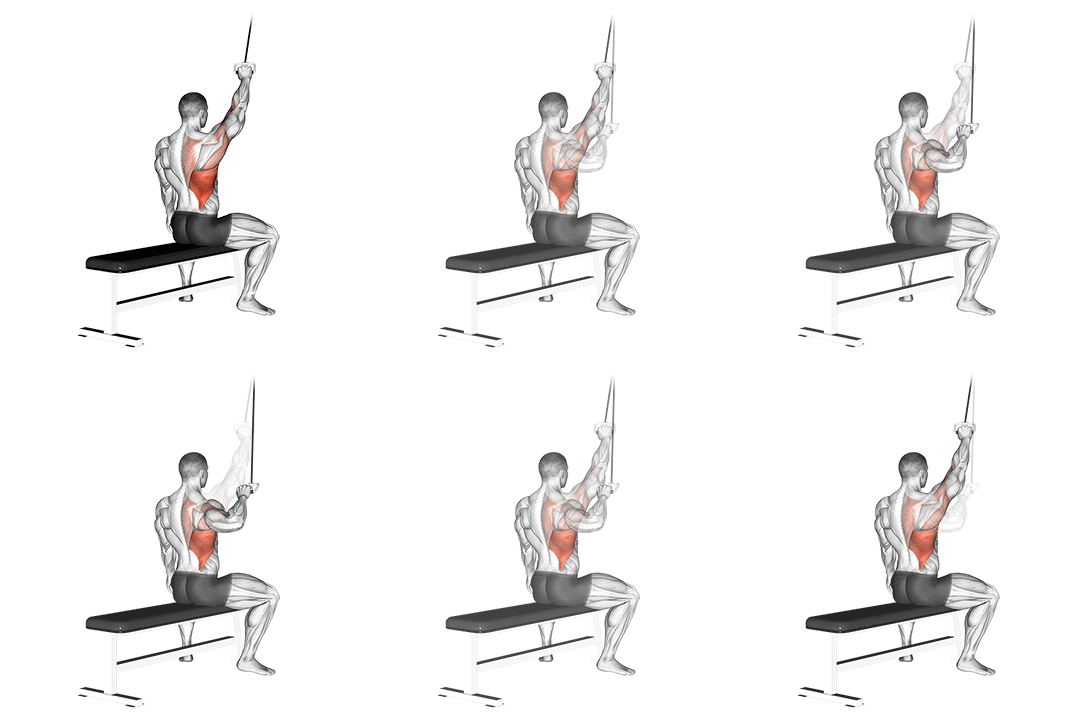
More comparisons with Cable Bar Lateral Pulldown
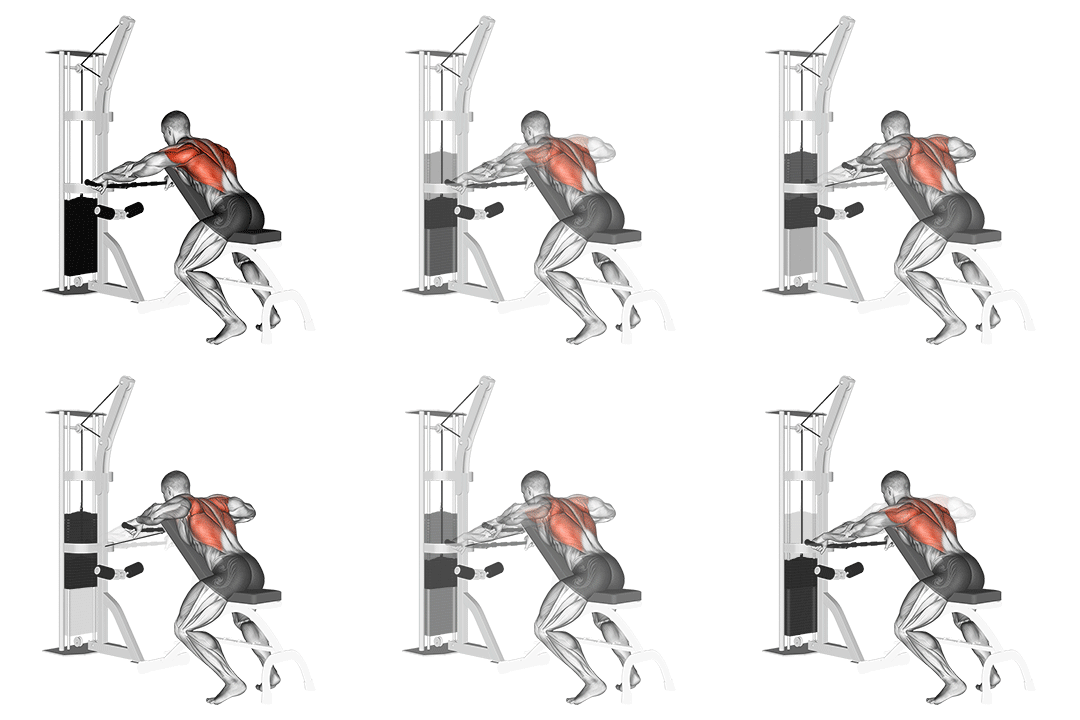
More comparisons with Cable Cross-over Lateral Pulldown
Compare More Exercises
Use our free comparison tool to analyze any two exercises head-to-head.
Compare Exercises