

Cable Bar Lateral Pulldown vs Cable Decline Seated Wide-grip Row: Complete Comparison Guide
Cable Bar Lateral Pulldown vs Cable Decline Seated Wide-grip Row — two cable staples that both target the lats but load them differently. If you want clear guidance on which to use, you’re in the right place. I’ll walk you through primary and secondary muscle activation, equipment needs, technique cues (including joint angles and force vectors), progression options, and safety considerations. By the end you’ll know which exercise suits hypertrophy, strength, beginners, or limited-equipment sessions and how to program each with rep ranges and concrete biomechanical tips.
Exercise Comparison
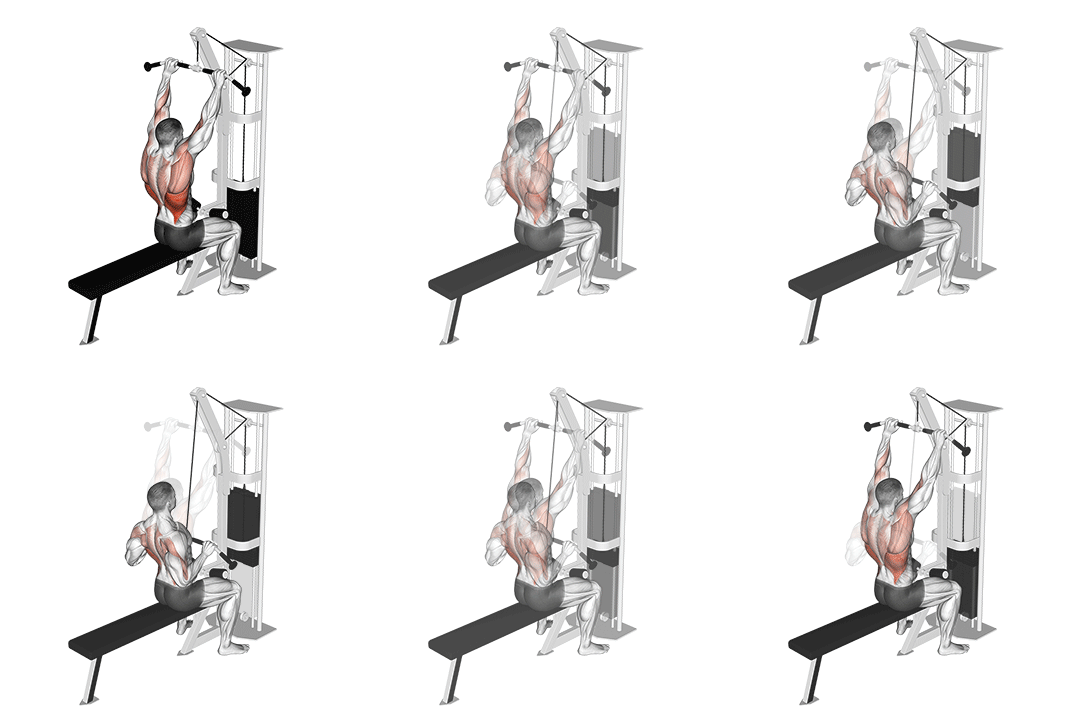
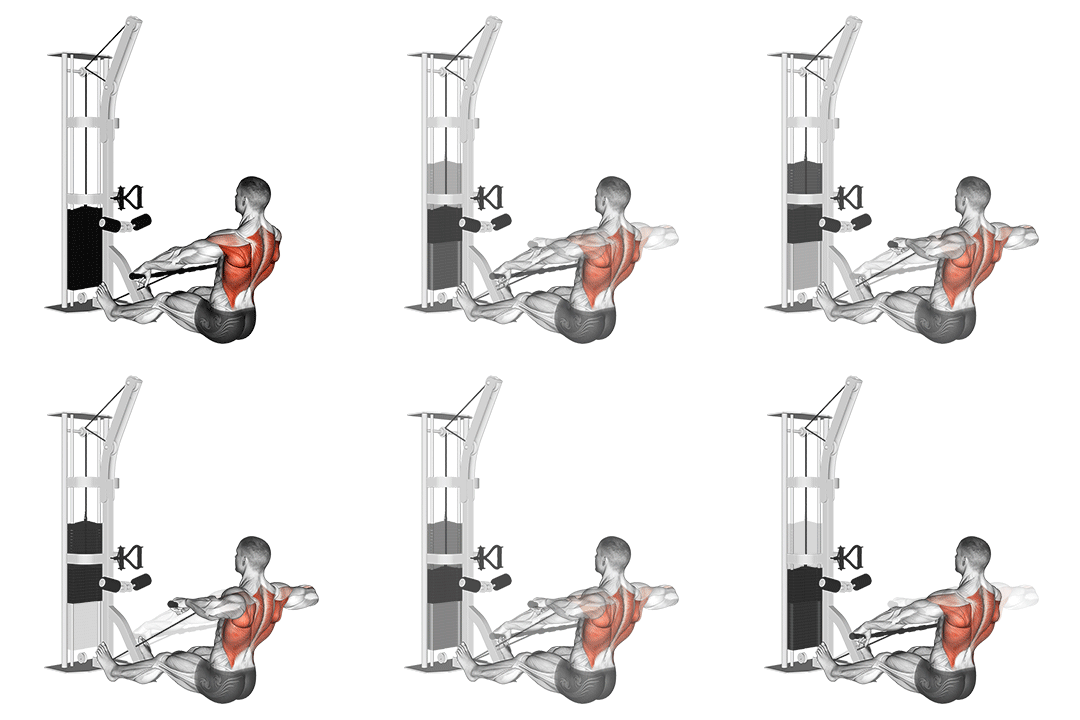
Cable Bar Lateral Pulldown
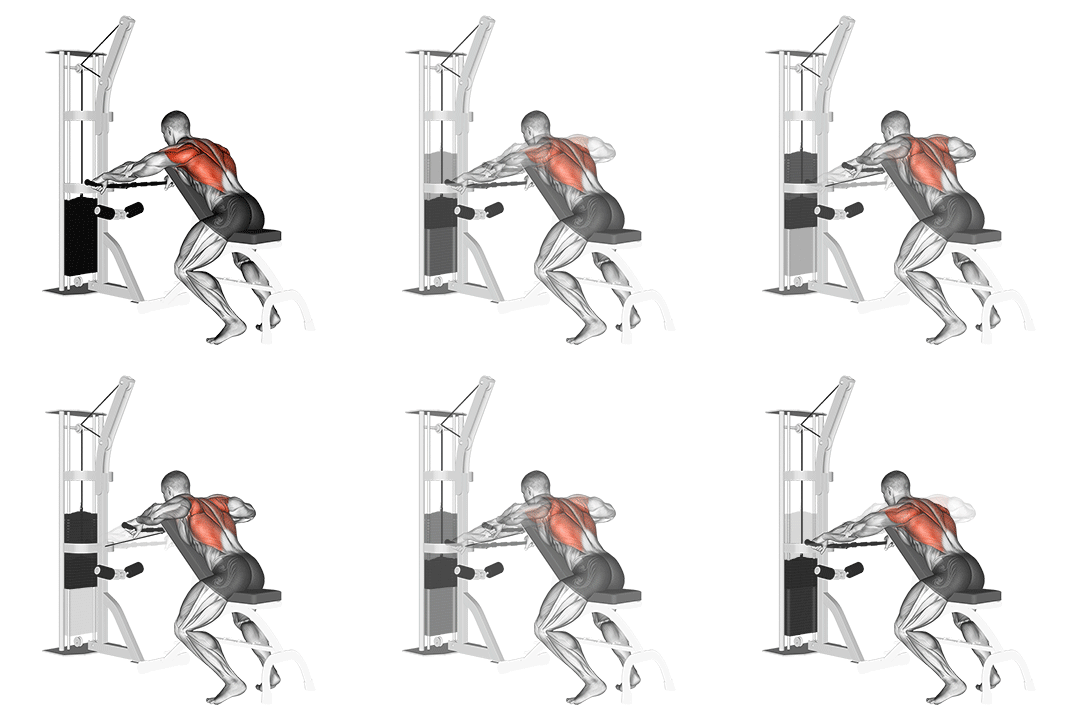
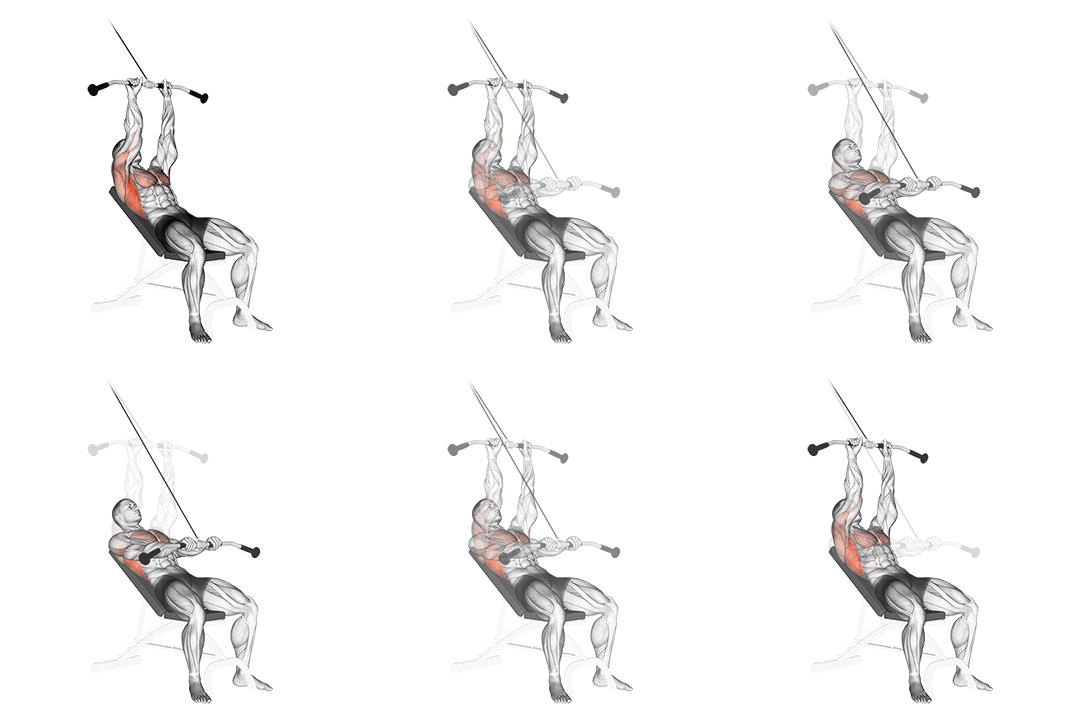
Cable Decline Seated Wide-grip Row
Head-to-Head Comparison
| Attribute | Cable Bar Lateral Pulldown | Cable Decline Seated Wide-grip Row |
|---|---|---|
| Target Muscle |
Lats
|
Lats
|
| Body Part |
Back
|
Back
|
| Equipment |
Cable
|
Cable
|
| Difficulty |
Intermediate
|
Intermediate
|
| Movement Type |
Compound
|
Compound
|
| Secondary Muscles |
3
|
2
|
Secondary Muscles Activated
Cable Bar Lateral Pulldown
Cable Decline Seated Wide-grip Row
Visual Comparison
Overview
Cable Bar Lateral Pulldown vs Cable Decline Seated Wide-grip Row — two cable staples that both target the lats but load them differently. If you want clear guidance on which to use, you’re in the right place. I’ll walk you through primary and secondary muscle activation, equipment needs, technique cues (including joint angles and force vectors), progression options, and safety considerations. By the end you’ll know which exercise suits hypertrophy, strength, beginners, or limited-equipment sessions and how to program each with rep ranges and concrete biomechanical tips.
Key Differences
- Both exercises target the Lats using Cable. The main differences are in their movement patterns and muscle activation angles.
Pros & Cons
Cable Bar Lateral Pulldown
+ Pros
- Strong lat stretch and peak contraction through vertical pull
- Easy to cue: pull to chest, retract scapula, avoid leaning back
- Widely available in most gyms with a high pulley
- Good for precise tempo and rep-range manipulation (6–12 reps ideal)
− Cons
- Less forearm and grip demand than rows
- Can cause shoulder impingement if taken behind the neck
- Limited horizontal scapular retraction compared with rows
Cable Decline Seated Wide-grip Row
+ Pros
- Greater mid-back and rhomboid recruitment via horizontal pull
- Higher grip and forearm activation—builds pulling durability
- Braced decline position can allow heavier loading
- Good carryover to horizontal-pull strength and posture
− Cons
- Requires a decline bench or specific set-up, reducing accessibility
- Easier to cheat with torso momentum if not braced
- May shorten lat length-tension range compared with pulldown
When Each Exercise Wins
Pulldowns produce a larger lat stretch at the top of the rep and a clear vertical force vector that maximizes length-tension relationship. Use controlled 6–12 rep sets with a 2–3 second eccentric to exploit stretch-mediated hypertrophy.
The decline row allows heavier loading and greater bracing, improving raw horizontal pull strength and grip tolerance. Train in lower rep ranges (3–6) with long rests to build pulling strength and neural adaptations.
Pulldowns have a gentler learning curve: the path is guided, torso is stable, and you can prioritize scapular control without complex bench set-up. Start with 8–12 reps focusing on scapular depression and full ROM.
High-pulley stations or lat pulldown machines are more common in multi-use home gyms than a decline bench plus low-pulley set-up. If you lack a cable tower, resistance-band pulldowns replicate the vertical vector reasonably well.
Frequently Asked Questions
Can I do both Cable Bar Lateral Pulldown and Cable Decline Seated Wide-grip Row in the same workout?
Yes. Pair them by using pulldowns early for stretch-focused volume (3–4 sets of 6–12) and rows later for heavier loading or finishing superset work. Keep total volume in check—aim for 10–20 hard sets for the back per workout depending on your recovery.
Which exercise is better for beginners?
The pulldown is better for most beginners because it’s easier to learn and puts less demand on bracing and bench set-up. Focus on pulling to the chest with scapular control and 8–12 reps to build a reliable foundation.
How do the muscle activation patterns differ?
Pulldowns emphasize lat lengthening and vertical shoulder extension with more stretch at the top, while decline seated rows emphasize horizontal pulling, greater scapular retraction, and higher forearm activation. That shifts peak activation timing from the eccentric/top phase in pulldowns to the mid-concentric phase in rows.
Can Cable Decline Seated Wide-grip Row replace Cable Bar Lateral Pulldown?
It can substitute for general lat work, but you’ll lose some of the lat stretch and vertical force-vector benefits of pulldowns. If your goal is maximal lat hypertrophy, include pulldowns or a vertical-pull variant alongside rows rather than replacing them outright.
Expert Verdict
Choose the Cable Bar Lateral Pulldown when your goal is targeted lat development, clean tempo work, and accessibility. Its vertical force vector and larger lat stretch make it ideal for hypertrophy and for lifters who need a guided pattern to dial in scapular mechanics. Pick the Cable Decline Seated Wide-grip Row when you want heavier horizontal loading, increased mid-back and forearm work, and direct carryover to raw pulling strength. Program both across a mesocycle if possible: use pulldowns for volume and stretch-focused sets (6–12 reps) and rows for heavy strength or density blocks (3–6 or 8–10 reps).
Also Compare
More comparisons with Cable Bar Lateral Pulldown
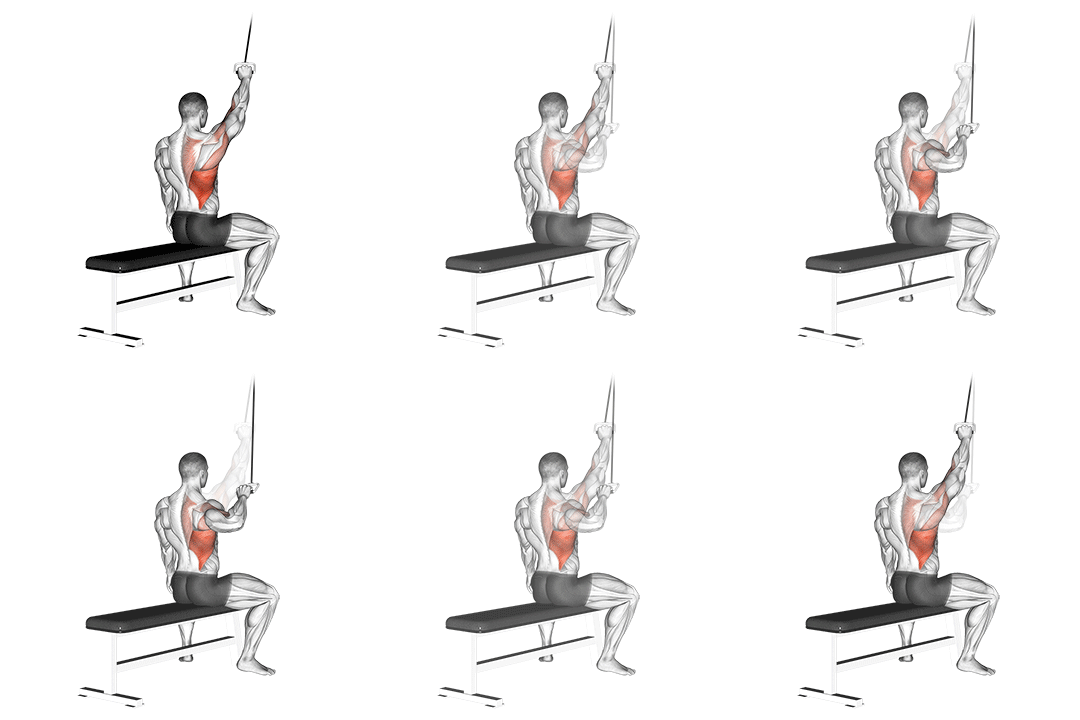
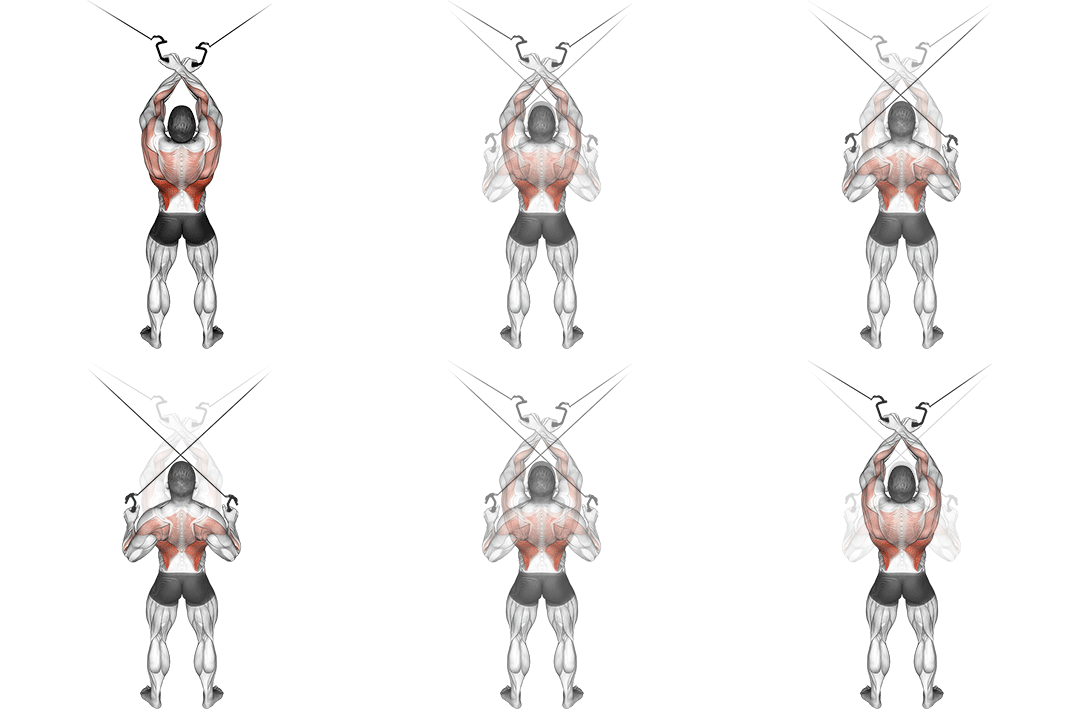
More comparisons with Cable Decline Seated Wide-grip Row
Compare More Exercises
Use our free comparison tool to analyze any two exercises head-to-head.
Compare Exercises