

Cable Bar Lateral Pulldown vs Cable Floor Seated Wide-grip Row: Complete Comparison Guide
Cable Bar Lateral Pulldown vs Cable Floor Seated Wide-grip Row — if you want a thicker, wider back you’re looking at two solid cable-based options. In this head-to-head guide you’ll get clear technique cues, biomechanical breakdowns (force vectors, length-tension, joint angles), equipment lists, and definitive recommendations based on hypertrophy, strength, beginner skill, and home training. I’ll show you which move stretches the lats more, which recruits scapular retractors and biceps, and exactly how to load and progress each exercise for measurable muscle growth and strength.
Exercise Comparison
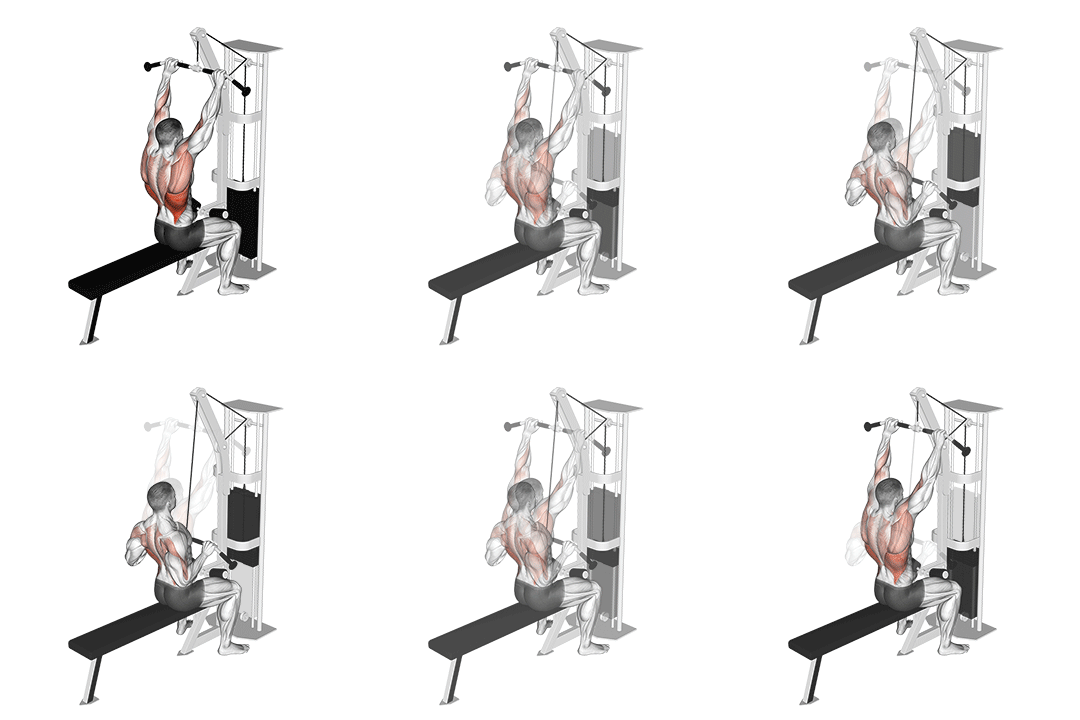
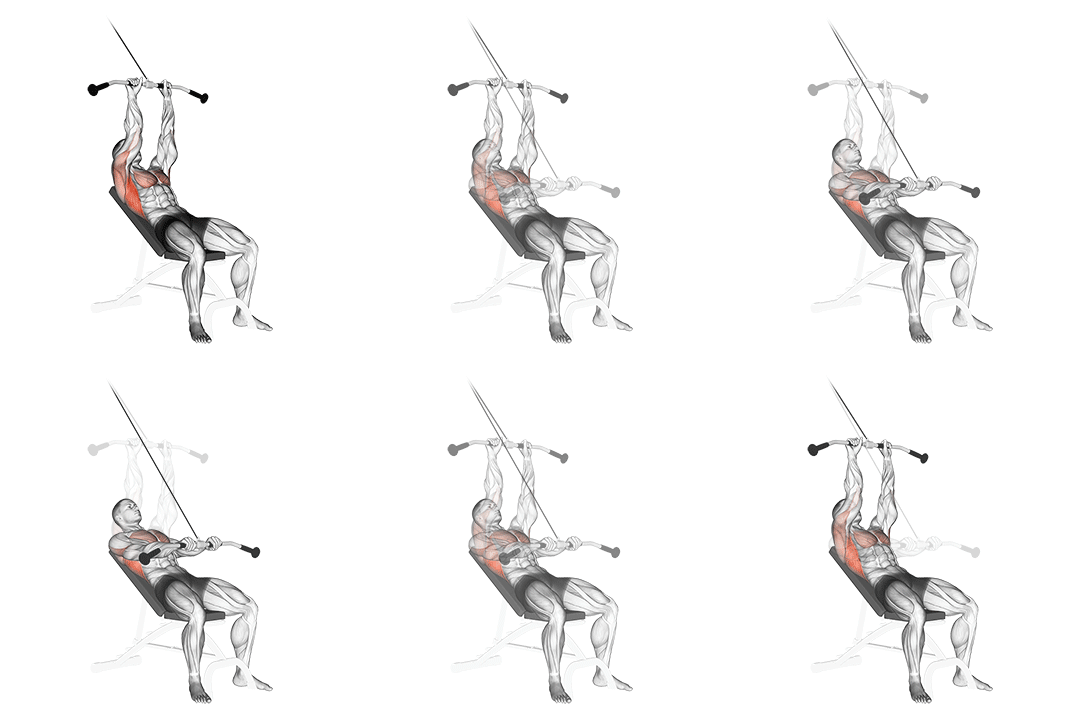
Cable Bar Lateral Pulldown
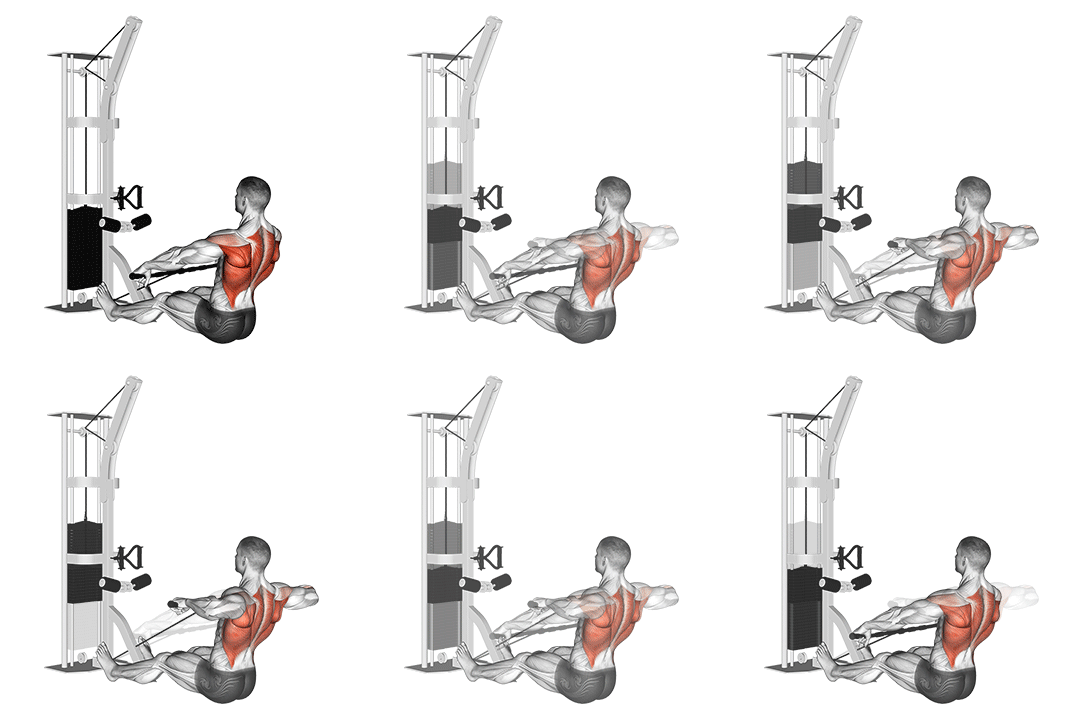
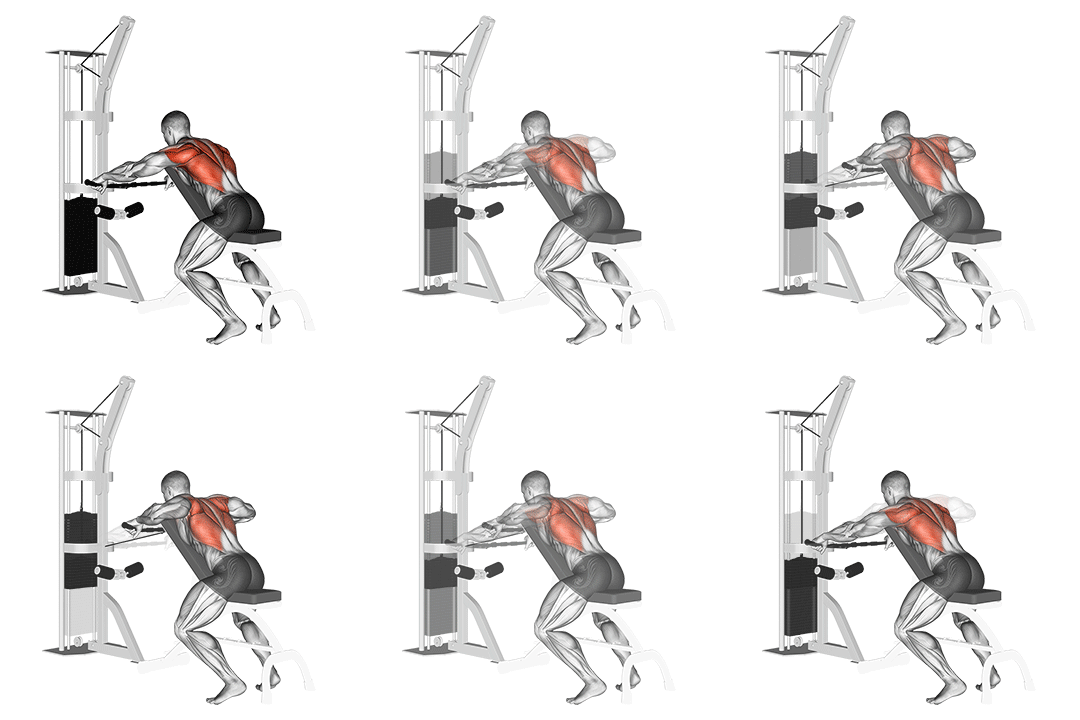
Cable Floor Seated Wide-grip Row
Head-to-Head Comparison
| Attribute | Cable Bar Lateral Pulldown | Cable Floor Seated Wide-grip Row |
|---|---|---|
| Target Muscle |
Lats
|
Lats
|
| Body Part |
Back
|
Back
|
| Equipment |
Cable
|
Cable
|
| Difficulty |
Intermediate
|
Intermediate
|
| Movement Type |
Compound
|
Compound
|
| Secondary Muscles |
3
|
2
|
Secondary Muscles Activated
Cable Bar Lateral Pulldown
Cable Floor Seated Wide-grip Row
Visual Comparison
Overview
Cable Bar Lateral Pulldown vs Cable Floor Seated Wide-grip Row — if you want a thicker, wider back you’re looking at two solid cable-based options. In this head-to-head guide you’ll get clear technique cues, biomechanical breakdowns (force vectors, length-tension, joint angles), equipment lists, and definitive recommendations based on hypertrophy, strength, beginner skill, and home training. I’ll show you which move stretches the lats more, which recruits scapular retractors and biceps, and exactly how to load and progress each exercise for measurable muscle growth and strength.
Key Differences
- Both exercises target the Lats using Cable. The main differences are in their movement patterns and muscle activation angles.
Pros & Cons
Cable Bar Lateral Pulldown
+ Pros
- Long lat stretch at start position increases length‑tension advantage for hypertrophy
- Stable vertical force vector makes consistent loading and technique easier
- Easier to teach and cue: chest up, scapula down-and-back, drive elbows to ribs
- Lower lumbar stress when performed seated with knee pads
− Cons
- Requires a high pulley or lat tower that some home setups lack
- Risk of shoulder impingement if you pull behind the neck or flare elbows excessively
- Less direct forearm/grip challenge compared with horizontal rows
Cable Floor Seated Wide-grip Row
+ Pros
- Stronger stimulus for scapular retractors and mid‑back thickness
- Greater forearm and grip demand improves pulling endurance
- Highly adaptable to home setups using low pulleys or bands
- Horizontal force vector complements deadlift/row strength development
− Cons
- Harder to keep lumbar spine neutral without a seat or tight bracing
- Less initial lat stretch compared with overhead pulldown
- Floor setup can limit range of motion and body positioning options
When Each Exercise Wins
The pulldown provides a larger overhead-to-chest ROM and a stronger length-tension stretch on the lats, which promotes muscle fiber recruitment across the lat’s long head. Use 6–12 reps with controlled 2–3s eccentrics to exploit the stretch-mediated hypertrophy effect.
Rows train the horizontal pulling pattern and scapular retractors under heavy load, which transfers well to overall pulling strength. Load heavy triples to fives while maintaining neutral spine and full scapular retraction to build raw pulling force.
Pulldowns have a more guided vertical path and simpler cues (chest up, elbows down), so beginners can learn lat activation faster and avoid lumbar rounding. Start with light sets of 8–12 to learn the movement.
A low-pulley or band-based horizontal row is easier to set up at home than a high-lat tower. The floor row adapts well to bands or a low anchor and still provides consistent tension on the lats and mid-back.
Frequently Asked Questions
Can I do both Cable Bar Lateral Pulldown and Cable Floor Seated Wide-grip Row in the same workout?
Yes — pairing them is effective. Start with a heavier compound (e.g., pulldown or row depending on your goal), then use the other as a secondary movement for 8–12 reps. Keep total volume balanced (12–20 working sets for back per week) and watch fatigue to preserve form.
Which exercise is better for beginners?
Cable Bar Lateral Pulldown is generally better for beginners because the vertical path and knee stabilization simplify technique and reduce lumbar strain. Beginners should focus on mind-muscle connection and controlled eccentrics for 8–12 reps.
How do the muscle activation patterns differ?
Pulldowns create a vertical force vector with the lats working from a longer starting length, emphasizing shoulder extension and lat length-tension. Floor rows produce a horizontal vector that emphasizes scapular retraction and mid‑lat/rhomboid activation while increasing forearm involvement.
Can Cable Floor Seated Wide-grip Row replace Cable Bar Lateral Pulldown?
It can replace pulldowns if your goal is mid-back thickness or you lack a high pulley, but it won’t replicate the lat stretch and vertical pull mechanics. For full lat development rotate both or prioritize the pulldown for width and the row for thickness.
Expert Verdict
Both moves deserve a place in a smart back program. Choose Cable Bar Lateral Pulldown when your priority is lat width and controlled length‑tension—it’s best for hypertrophy and learning lat-focused pulling with lower spinal stress. Use Cable Floor Seated Wide-grip Row when you want mid‑back thickness, stronger scapular retraction, and a horizontal pulling pattern that builds pulling strength and grip. If you can, rotate both across training blocks: emphasize pulldowns for 6–8 weeks of higher-volume hypertrophy (8–12 reps), then switch to rows for a strength-focused block (3–6 sets of 4–6 reps) to address different force vectors and promote balanced back development.
Also Compare
More comparisons with Cable Bar Lateral Pulldown
More comparisons with Cable Floor Seated Wide-grip Row
Compare More Exercises
Use our free comparison tool to analyze any two exercises head-to-head.
Compare Exercises