

Cable Bar Lateral Pulldown vs Cable Incline Pushdown: Complete Comparison Guide
Cable Bar Lateral Pulldown vs Cable Incline Pushdown — two cable variations that target your lats but load the back differently. If you want practical guidance, you’re in the right place: I’ll compare primary and secondary muscle activation, technique cues, equipment needs, progression options, and injury considerations. You’ll get specific rep ranges, setup angles, and movement cues so you can pick the better option for hypertrophy, strength, rehab, or limited-equipment training. Read on to figure out which move to prioritize in your program and how to perform each with proper biomechanics.
Exercise Comparison
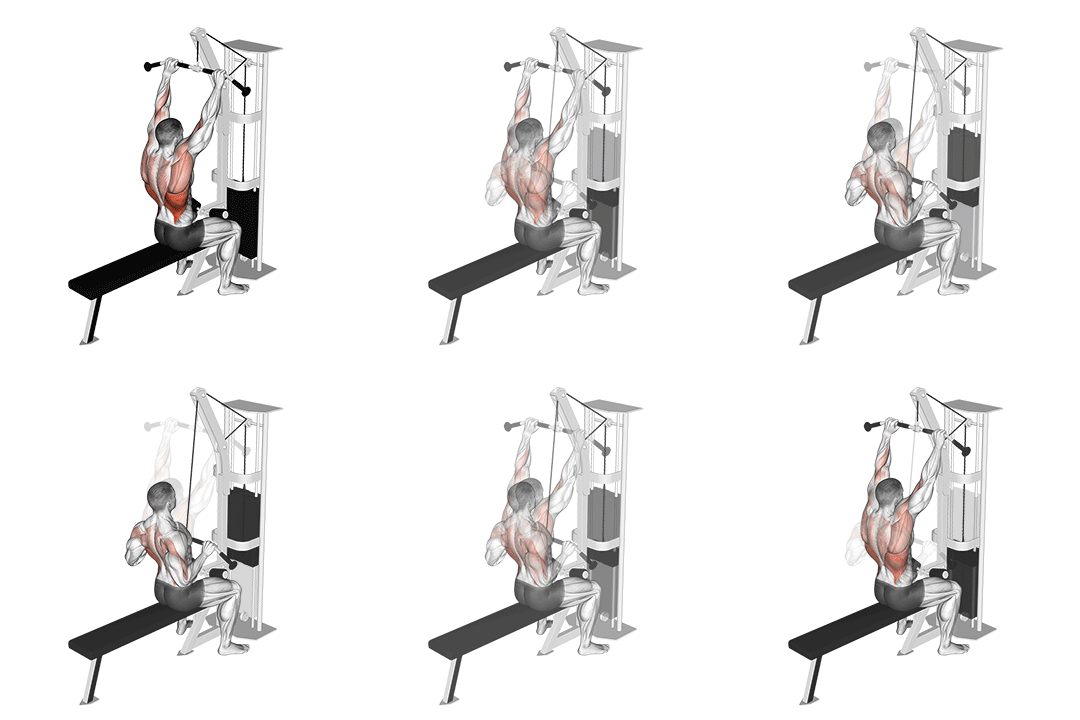
Cable Bar Lateral Pulldown
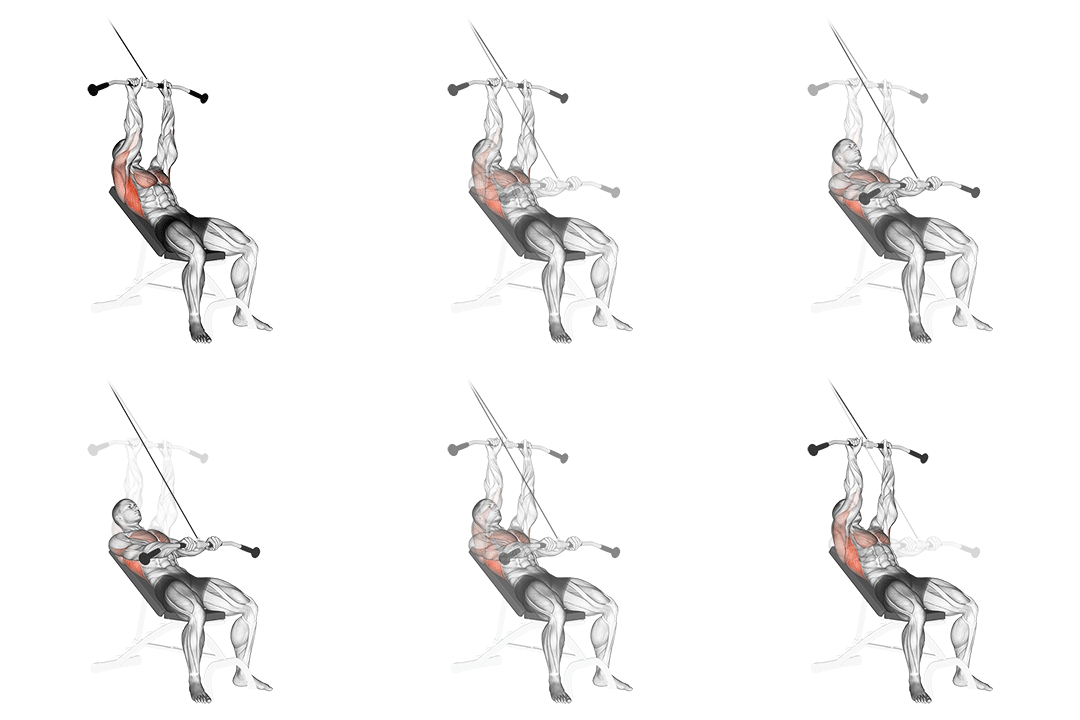
Cable Incline Pushdown
Head-to-Head Comparison
| Attribute | Cable Bar Lateral Pulldown | Cable Incline Pushdown |
|---|---|---|
| Target Muscle |
Lats
|
Lats
|
| Body Part |
Back
|
Back
|
| Equipment |
Cable
|
Cable
|
| Difficulty |
Intermediate
|
Intermediate
|
| Movement Type |
Compound
|
Compound
|
| Secondary Muscles |
3
|
2
|
Secondary Muscles Activated
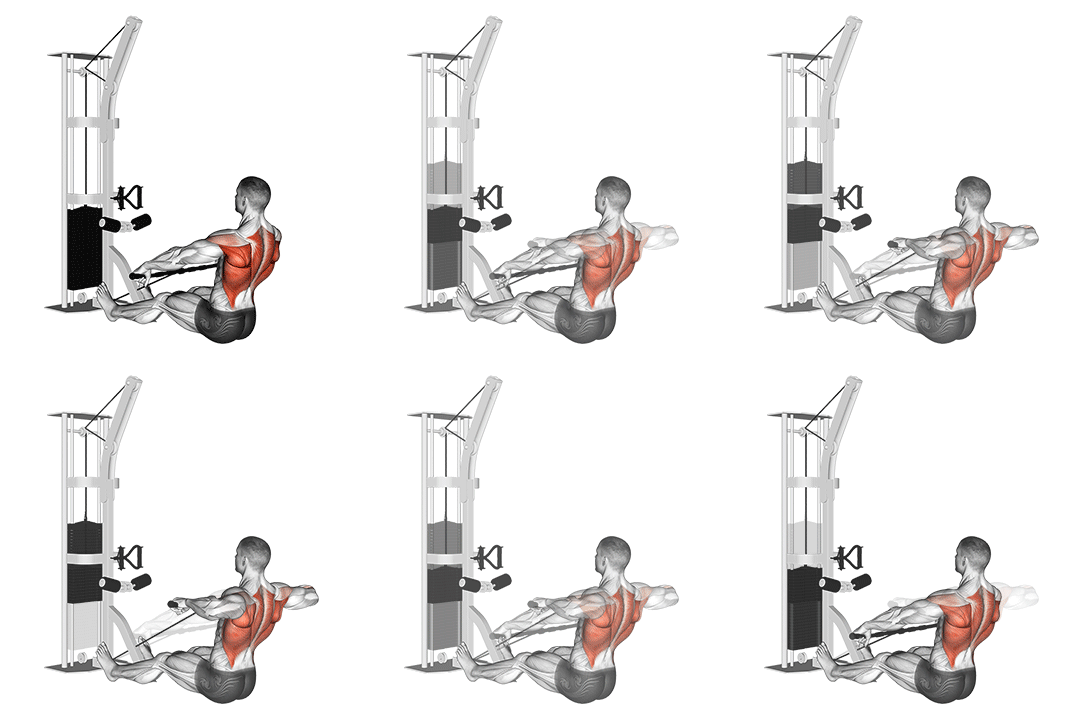
Cable Bar Lateral Pulldown
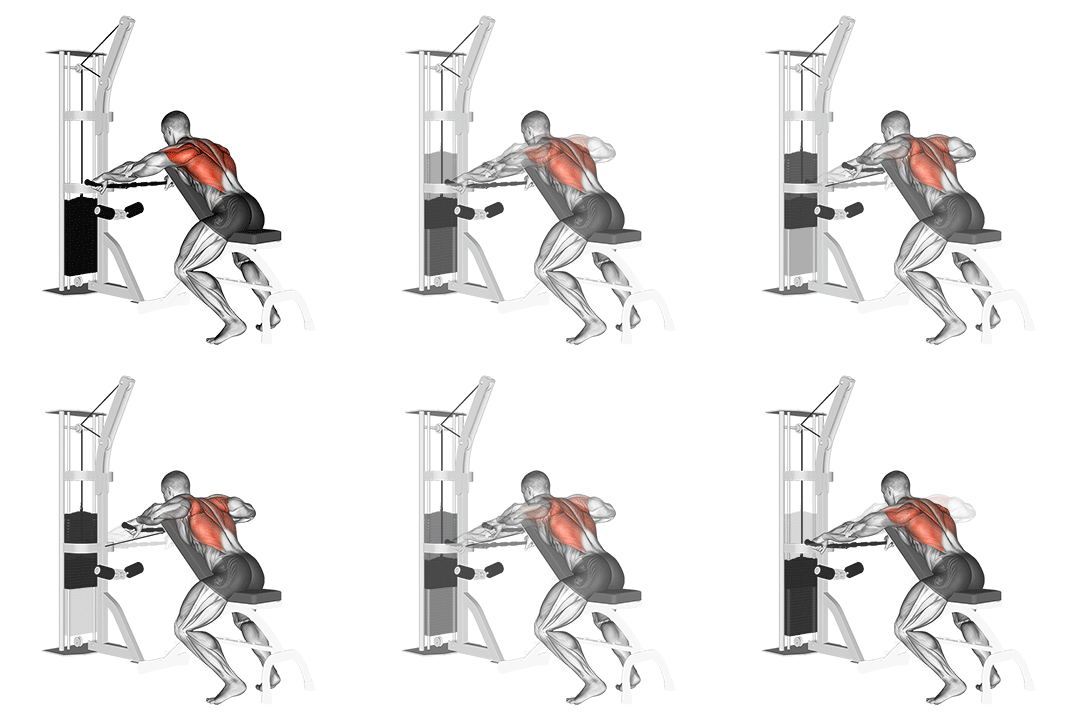
Cable Incline Pushdown
Visual Comparison
Overview
Cable Bar Lateral Pulldown vs Cable Incline Pushdown — two cable variations that target your lats but load the back differently. If you want practical guidance, you’re in the right place: I’ll compare primary and secondary muscle activation, technique cues, equipment needs, progression options, and injury considerations. You’ll get specific rep ranges, setup angles, and movement cues so you can pick the better option for hypertrophy, strength, rehab, or limited-equipment training. Read on to figure out which move to prioritize in your program and how to perform each with proper biomechanics.
Key Differences
- Both exercises target the Lats using Cable. The main differences are in their movement patterns and muscle activation angles.
Pros & Cons
Cable Bar Lateral Pulldown
+ Pros
- Direct vertical pull that maximizes lat width and peak concentric tension
- Stronger recruitment of biceps and rear delts for balanced posterior chain development
- Easily progressed with heavier loads, grip variations, and tempo work
- Effective for strength-oriented sets in 4–8 rep ranges and hypertrophy in 8–15 reps
− Cons
- Requires good scapular control and trunk positioning to avoid shoulder strain
- Less stable for beginners—requires knee pads or foot bracing
- Higher chance of cheating with body swing if fatigued
Cable Incline Pushdown
+ Pros
- Bench support enforces consistent trunk angle and simplifies learning
- Creates strong initial stretch of the lats at longer muscle lengths
- Lower shoulder impingement risk compared to behind-neck pulls
- Useful for strict hypertrophy work in 8–15 rep ranges and slow eccentrics
− Cons
- Shifts some load to triceps and shoulders, reducing pure lat stimulus
- Less capacity for very heavy loading compared to pulldowns
- Can place stress on elbows if you rely on rapid, heavy extensions
When Each Exercise Wins
The pulldown creates greater concentric lat tension and allows heavier loads and grip variation for progressive overload. Use 8–12 rep sets with 2–3 second eccentrics to emphasize muscle growth.
It supports heavier absolute loading and closer replication of compound pulling mechanics, making it better for building back strength in the 4–8 rep range with sets of 3–6 and longer rest.
The incline bench stabilizes the torso and limits compensatory motion, so beginners can learn to feel the lats and build scapular control before advancing to freeform pulldowns.
If you have a single high pulley and an adjustable bench you can perform incline pushdowns with minimal space; a full lat tower or secure knee bracing for heavy pulldowns is less common at home.
Frequently Asked Questions
Can I do both Cable Bar Lateral Pulldown and Cable Incline Pushdown in the same workout?
Yes. Pairing them back-to-back can be effective: start with heavy Cable Bar Lateral Pulldowns for strength (3–5 sets of 4–8 reps), then use Cable Incline Pushdowns for 2–3 higher-volume sets of 8–15 reps to increase time under tension and stretch the lats.
Which exercise is better for beginners?
Cable Incline Pushdown is usually better for beginners because the bench stabilizes the trunk and reduces compensatory movement. It helps you learn lat engagement before progressing to pulldowns that demand more scapular control.
How do the muscle activation patterns differ?
Pulldowns show peak concentric lat activation as the elbows drive down/back with scapular depression and retraction, while incline pushdowns produce greater initial stretch with earlier isometric lat involvement and increased triceps contribution as the elbows extend.
Can Cable Incline Pushdown replace Cable Bar Lateral Pulldown?
It can replace pulldowns for certain goals like controlled hypertrophy or when equipment is limited, but it won’t match pulldowns for maximal loading and pure width-focused strength development. Use it as a complement or substitute depending on your training phase.
Expert Verdict
Choose Cable Bar Lateral Pulldown when your priority is lat width and progressive overload. Its vertical pull pattern and greater range of load and grip variations make it the go-to for strength and hypertrophy focused on the back. Pick Cable Incline Pushdown when you want a more controlled, stretch-focused lat stimulus, fewer shoulder impingement concerns, or a simpler exercise for beginners and limited-equipment settings. For balanced development, include both across training blocks: emphasize pulldowns in heavy phases (4–8 reps) and use incline pushdowns for higher-volume, technique-focused phases (8–15 reps) to exploit different length-tension and force-vector advantages.
Also Compare
More comparisons with Cable Bar Lateral Pulldown
More comparisons with Cable Incline Pushdown
Compare More Exercises
Use our free comparison tool to analyze any two exercises head-to-head.
Compare Exercises