

Cable Bench Press vs Cable Cross-over Variation: Complete Comparison Guide
Cable Bench Press vs Cable Cross-over Variation is the comparison you need if you want clearer chest development and exercise choice. You’ll get a direct breakdown of how each move loads the pectorals, which secondary muscles take the load, and practical cues for form, rep ranges, and progression. I’ll cover biomechanics (force vectors, length-tension), equipment needs, injury risk, and real-world recommendations so you can pick the best press or fly variation for hypertrophy, strength, or home training.
Exercise Comparison
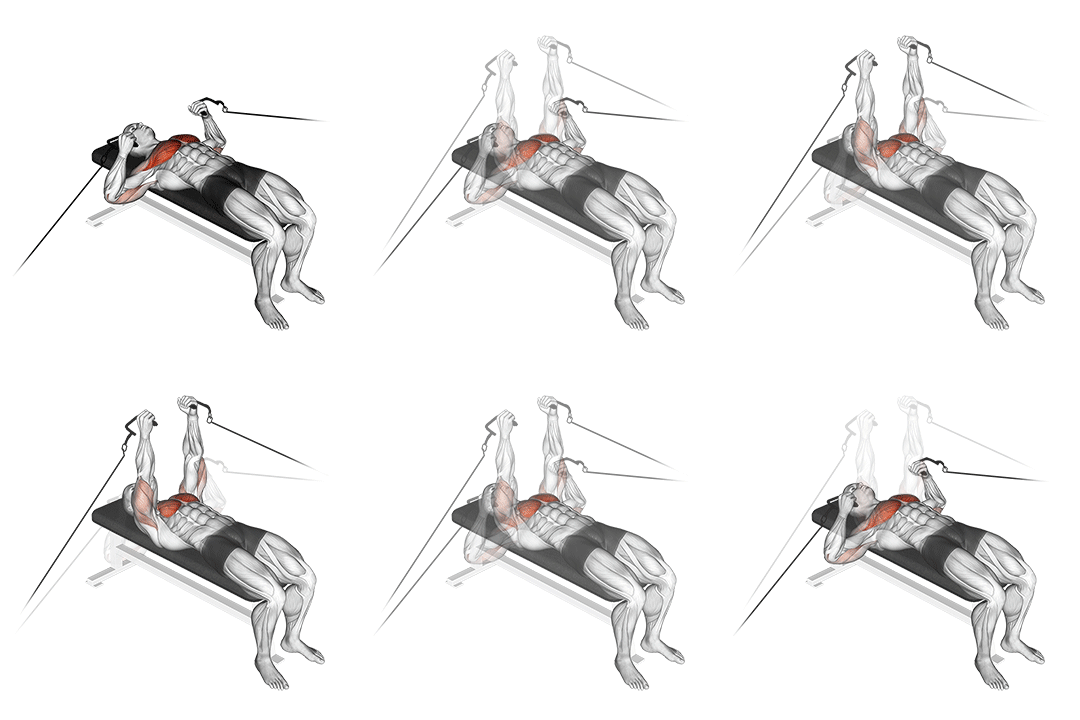
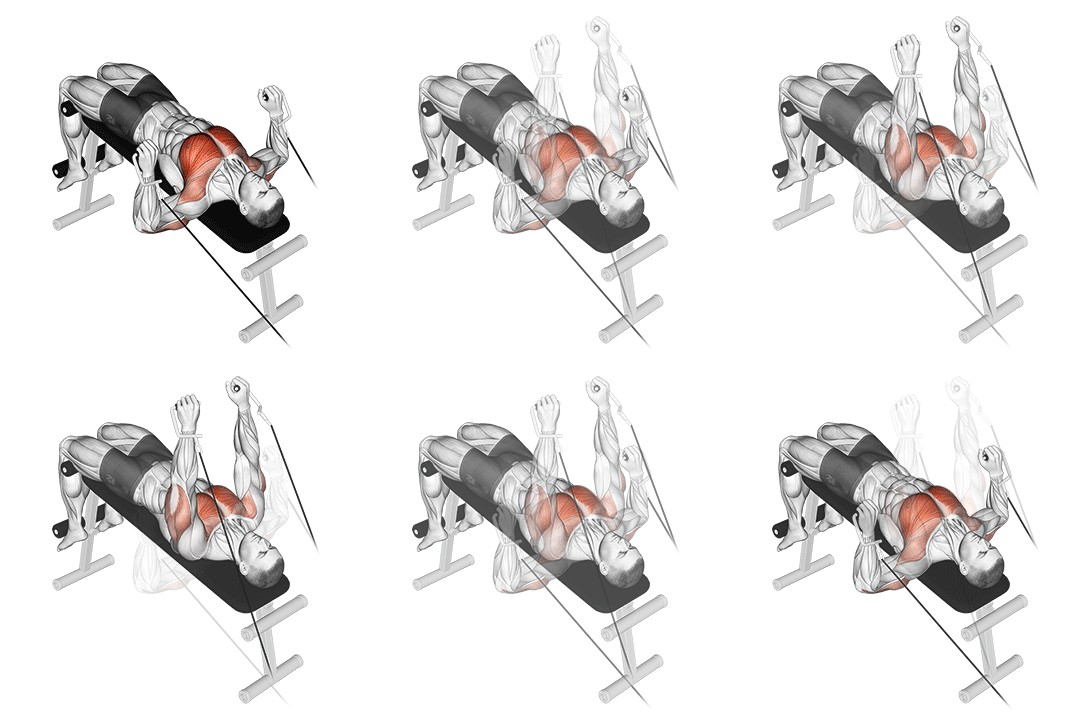
Cable Bench Press
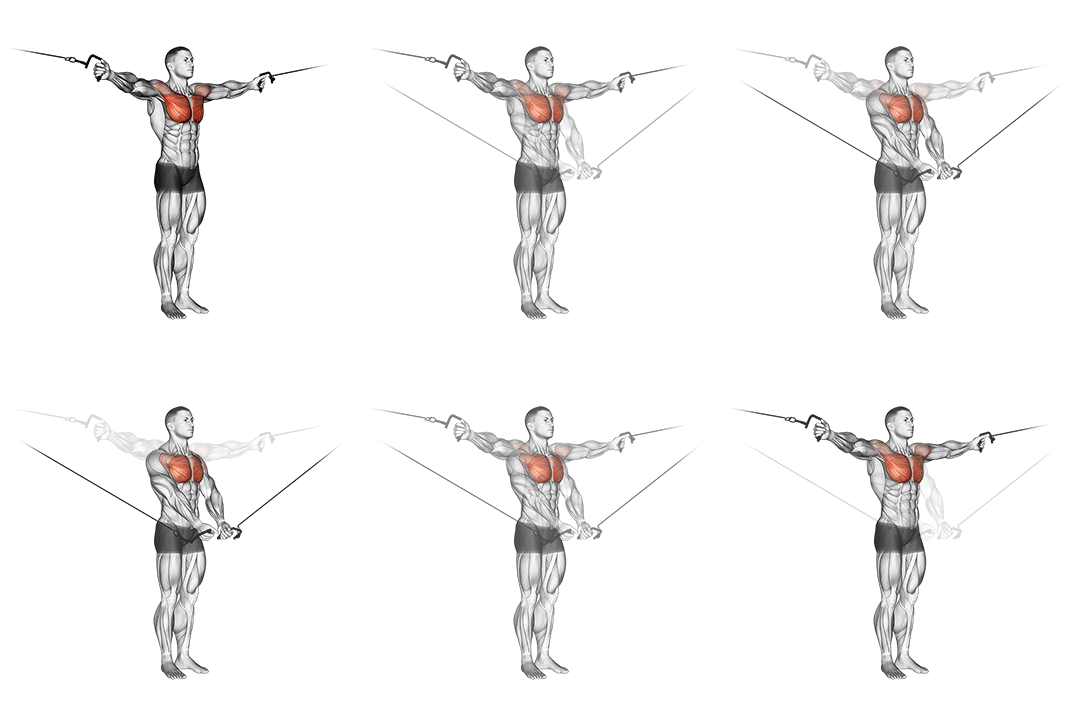
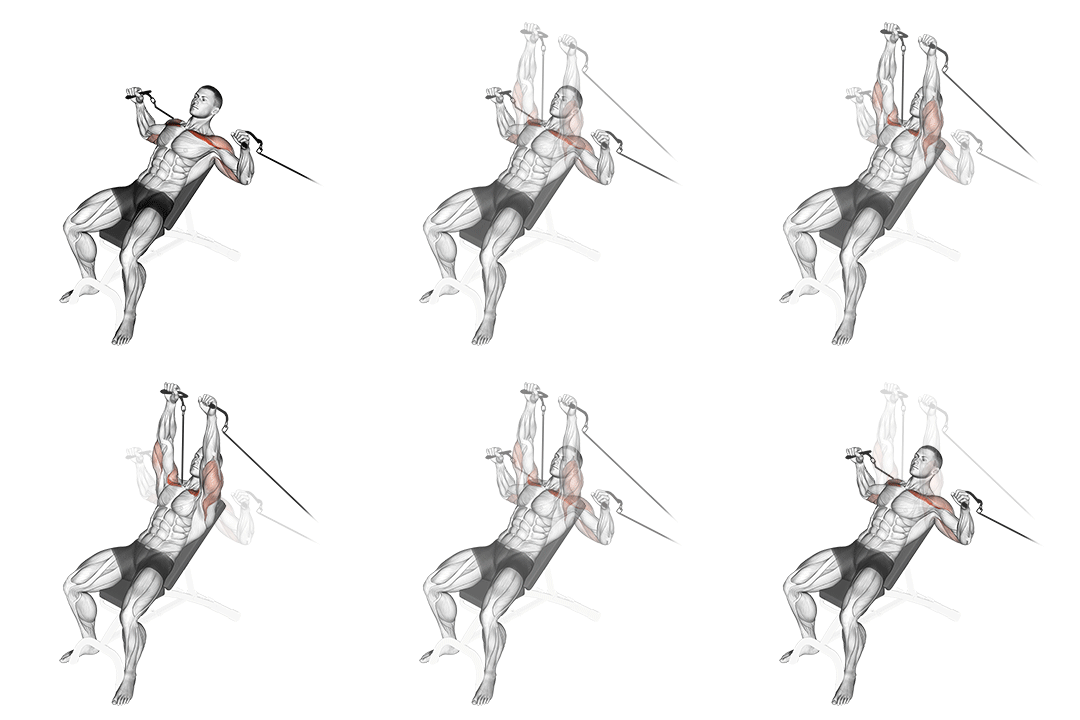
Cable Cross-over Variation
Head-to-Head Comparison
| Attribute | Cable Bench Press | Cable Cross-over Variation |
|---|---|---|
| Target Muscle |
Pectorals
|
Pectorals
|
| Body Part |
Chest
|
Chest
|
| Equipment |
Cable
|
Cable
|
| Difficulty |
Intermediate
|
Intermediate
|
| Movement Type |
Compound
|
Isolation
|
| Secondary Muscles |
2
|
2
|
Secondary Muscles Activated
Cable Bench Press
Cable Cross-over Variation
Visual Comparison
Overview
Cable Bench Press vs Cable Cross-over Variation is the comparison you need if you want clearer chest development and exercise choice. You’ll get a direct breakdown of how each move loads the pectorals, which secondary muscles take the load, and practical cues for form, rep ranges, and progression. I’ll cover biomechanics (force vectors, length-tension), equipment needs, injury risk, and real-world recommendations so you can pick the best press or fly variation for hypertrophy, strength, or home training.
Key Differences
- Cable Bench Press is a compound movement, while Cable Cross-over Variation is an isolation exercise.
- Both exercises target the Pectorals using Cable. The main differences are in their movement patterns and muscle activation angles.
Pros & Cons
Cable Bench Press
+ Pros
- Higher mechanical tension for the whole chest and stronger triceps involvement for lockout strength
- Better for progressive overload using heavier loads and lower rep ranges (3–8 reps)
- Stable bench position reduces need for core stabilization, simplifying technique
- Versatile: adjust bench angle (flat/incline) to shift emphasis to clavicular or sternal fibers
− Cons
- Requires a bench plus cable station—less practical for home-only setups
- Increased elbow extension demand stresses triceps and elbows under heavy loads
- Less peak pec isolation compared with dedicated fly/crossover variations
Cable Cross-over Variation
+ Pros
- Constant tension through the full ROM yields strong peak contraction and time under tension
- Easy to change line-of-pull (high-to-low, low-to-high) to target upper or lower pec fibers
- More accessible to simulate with resistance bands for home workouts
- Lower reliance on triceps allows focused pec overload and metabolic stress (8–20 reps)
− Cons
- Limited ability to steadily increase external load compared with compound presses
- Requires precise scapular control to avoid shoulder impingement at end-range
- Standing variations demand more core and balance, which can complicate pure chest focus
When Each Exercise Wins
Cable Bench Press wins due to higher potential for mechanical tension and straightforward progressive overload in the 6–12 rep range; use it as your heavy compound chest builder and add crossovers for peak contraction and finishers.
The compound pressing pattern allows heavier loads and better transfer to barbell pressing strength. You can progressively load 3–6 rep sets to increase force production and neural adaptation.
Beginners learn a simple horizontal pressing pattern with a bench to stabilize the torso and develop pressing mechanics before introducing cable-dependent coordination.
Cross-over mechanics are easier to replicate with resistance bands and anchors, letting you train constant tension and targeted pec work without a bench-based cable setup.
Frequently Asked Questions
Can I do both Cable Bench Press and Cable Cross-over Variation in the same workout?
Yes. Start with Cable Bench Press as your heavy compound movement (3–6 sets of 4–12 reps), then finish with Cable Cross-over Variation for 2–4 sets of 8–20 reps to increase metabolic stress and peak contraction. That sequencing uses mechanical tension first, then isolation for hypertrophy.
Which exercise is better for beginners?
Cable Bench Press is generally better for beginners because the bench stabilizes the torso and the pressing pattern is easier to learn. Begin with controlled sets and focus on elbow path (45-degree tuck) and scapular retraction before adding complex crossover variations.
How do the muscle activation patterns differ?
Bench-style cables load the pecs across a broad ROM with peak force during mid-to-end concentric motion and greater triceps activation during lockout. Cross-over variations shift the force vector so peak pec activation occurs at maximal horizontal adduction, increasing mid-contractile tension while reducing triceps torque.
Can Cable Cross-over Variation replace Cable Bench Press?
Not entirely. Cross-overs can replace presses when your goal is isolation and shaping, especially for higher reps, but they don’t offer the same progressive overload capacity or triceps/lockout strength benefits that the Cable Bench Press provides.
Expert Verdict
Use Cable Bench Press as your foundational chest builder when you need progressive overload, strength development, and broad pec recruitment—aim for 4–6 sets of 4–12 reps with controlled 1–2 second eccentrics. Add Cable Cross-over Variation as a secondary tool to refine peak contraction, address lagging inner/upper/lower pec fibers, or as a high-rep finisher (8–20 reps) to increase time under tension. If your priority is raw pressing strength or structured progression, favor the bench press. If you want isolation, shape, or a band-friendly home option, favor targeted crossovers.
Also Compare
More comparisons with Cable Bench Press
More comparisons with Cable Cross-over Variation
Compare More Exercises
Use our free comparison tool to analyze any two exercises head-to-head.
Compare Exercises