

Cable Bench Press vs Cable Decline Fly: Complete Comparison Guide
Cable Bench Press vs Cable Decline Fly — if you want a clear pick for chest development, you’re in the right place. I’ll walk you through how each exercise loads the pectorals, which movement gives you more mechanical tension, the equipment and setup you need, and practical cues so you can perform each safely. You’ll get a direct comparison of muscle activation, recommended rep ranges (3–6 for strength, 6–12 for hypertrophy, 10–15 for isolation work), and when to program each in your workouts.
Exercise Comparison
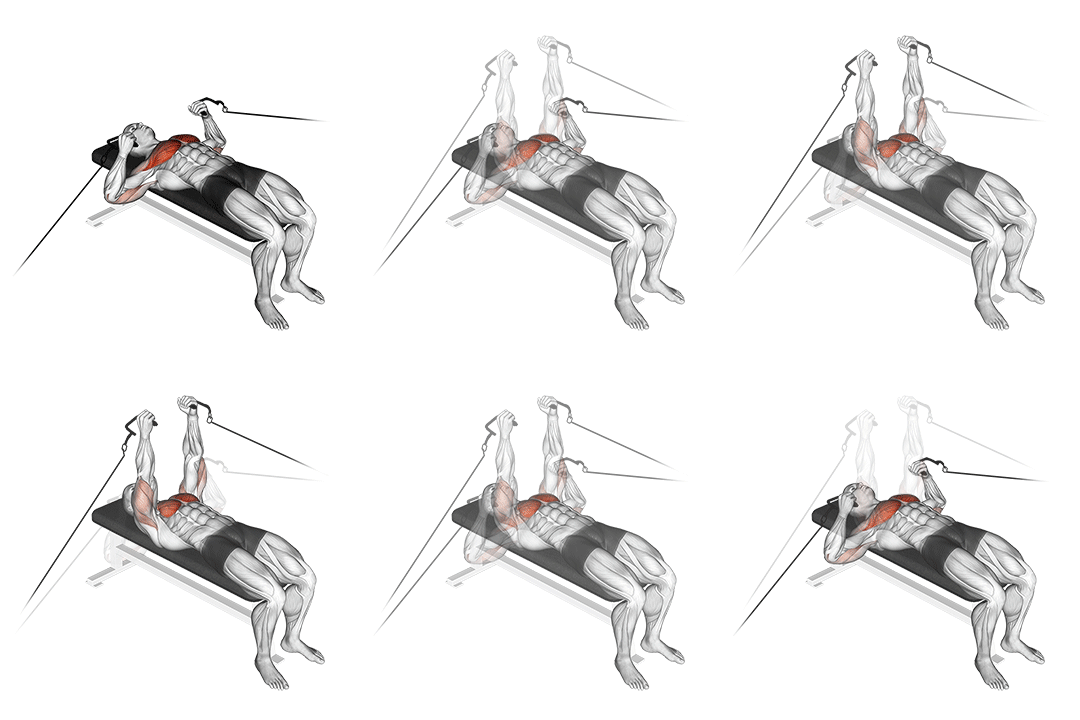
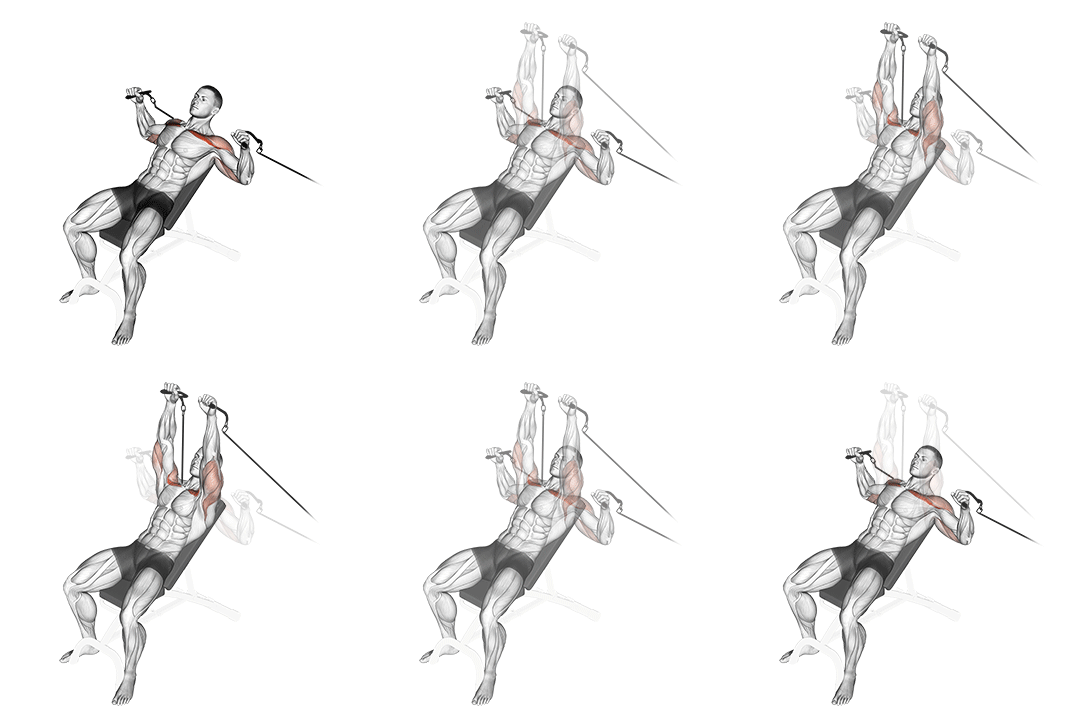
Cable Bench Press
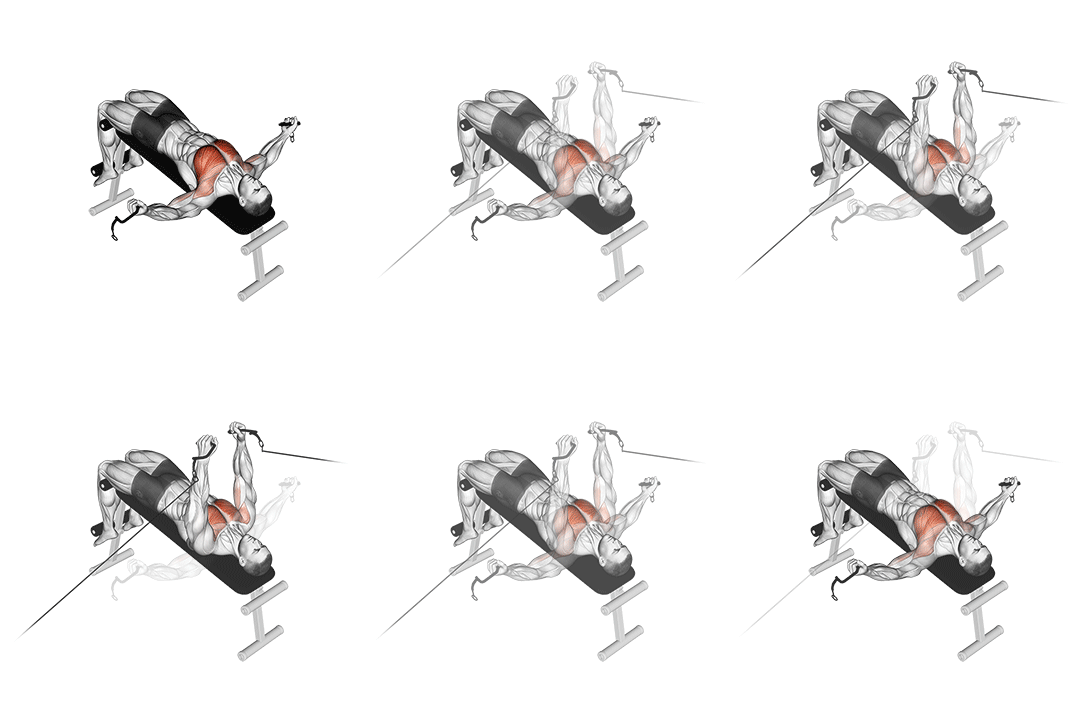
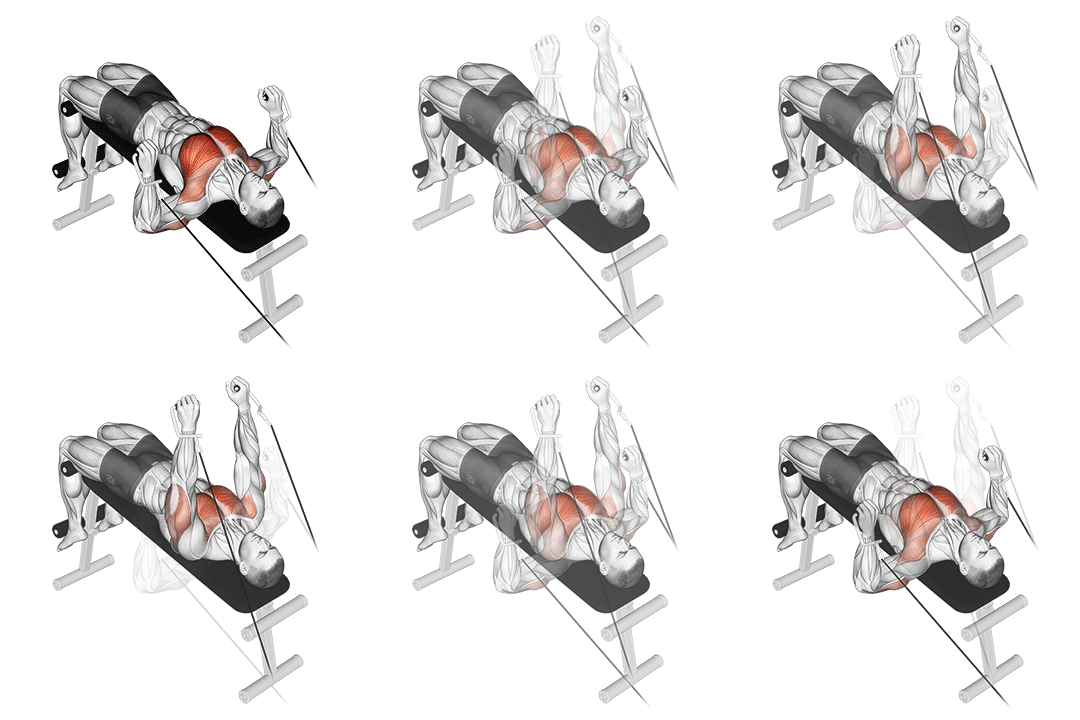
Cable Decline Fly
Head-to-Head Comparison
| Attribute | Cable Bench Press | Cable Decline Fly |
|---|---|---|
| Target Muscle |
Pectorals
|
Pectorals
|
| Body Part |
Chest
|
Chest
|
| Equipment |
Cable
|
Cable
|
| Difficulty |
Intermediate
|
Intermediate
|
| Movement Type |
Compound
|
Isolation
|
| Secondary Muscles |
2
|
2
|
Secondary Muscles Activated
Cable Bench Press
Cable Decline Fly
Visual Comparison
Overview
Cable Bench Press vs Cable Decline Fly — if you want a clear pick for chest development, you’re in the right place. I’ll walk you through how each exercise loads the pectorals, which movement gives you more mechanical tension, the equipment and setup you need, and practical cues so you can perform each safely. You’ll get a direct comparison of muscle activation, recommended rep ranges (3–6 for strength, 6–12 for hypertrophy, 10–15 for isolation work), and when to program each in your workouts.
Key Differences
- Cable Bench Press is a compound movement, while Cable Decline Fly is an isolation exercise.
- Both exercises target the Pectorals using Cable. The main differences are in their movement patterns and muscle activation angles.
Pros & Cons
Cable Bench Press
+ Pros
- Compound movement that lets you use heavier loads for progressive overload
- Simultaneously trains pectorals, triceps, and anterior deltoids
- Clear rep-range versatility (3–6 strength, 6–12 hypertrophy)
- Stable setup with easier technique cues (scapular retraction, elbow tuck)
− Cons
- Less pure chest isolation — triceps can dominate at lockout
- Requires careful elbow positioning to protect shoulders
- Pressing pattern may mask weak lower-pec activation
Cable Decline Fly
+ Pros
- Excellent isolation of the lower pectorals and strong end-range stretch
- Minimizes triceps involvement so you can target chest contractile work
- Useful for sculpting a peak contraction and muscle-length tension
- Decline angle shifts emphasis to muscle fibers often underloaded in flat presses
− Cons
- Limited absolute load — harder to progressively overload with big weight jumps
- Higher risk of overstretching the pec and anterior shoulder if uncontrolled
- Requires a decline bench and precise cable placement, reducing accessibility
When Each Exercise Wins
Cable Bench Press wins because it enables heavier loads and clear progressive overload in the 6–12 rep range while still hitting the pecs. Use Cable Decline Flys as a follow-up set (10–15 reps) to increase time under tension and emphasize stretch-mediated muscle growth.
Strength requires loading the neuromuscular system with heavy resistance; the compound press pattern lets you apply higher absolute loads and practice forceful elbow extension, making it the superior choice for increasing pressing strength.
Beginners build foundational pressing mechanics and teach coordinated scapular control with the Cable Bench Press. It provides more obvious progress markers (weight increments) and transfers better to other compound lifts.
If you have limited equipment, a flat bench plus resistance bands or a single cable tower lets you replicate pressing patterns more readily than a true decline fly setup. Press variations are easier to scale with bands or adjustable benches at home.
Frequently Asked Questions
Can I do both Cable Bench Press and Cable Decline Fly in the same workout?
Yes — pair them by doing Cable Bench Press first as your heavy compound movement (3–6 or 6–12 reps), then follow with Cable Decline Flys for 2–4 sets of 8–15 reps as an isolation finisher to increase time under tension and target the lower pecs.
Which exercise is better for beginners?
Cable Bench Press is generally better for beginners because the pressing pattern is more intuitive, easier to load progressively, and helps build scapular control. Start with light weight, retract the scapula, tuck elbows ~30–45°, and focus on stable foot drive before increasing load.
How do the muscle activation patterns differ?
Bench pressing produces peak force in mid-range where lever arms and muscle length-tension align, recruiting pecs plus triceps and delts. Decline flys maximize tension at end-range by stretching the pecs and emphasizing horizontal adduction, increasing passive and active tension in the lower pec fibers.
Can Cable Decline Fly replace Cable Bench Press?
Not if your primary goal is strength or heavy progressive overload — flies are an isolation tool with limited absolute loading. Replace the bench press with flies only when you specifically need lower-pec emphasis or are using them as accessory work within a program that still includes compound pressing.
Expert Verdict
Use the Cable Bench Press as your primary chest builder when you want mechanical tension and clear progression — it’s the better all-around choice for muscle growth and strength because it recruits pectorals through a broad range while engaging triceps and delts. Add Cable Decline Flys as an isolation finisher to bias the lower pecs and create a long-length stretch stimulus; program flies for 10–15 reps focusing on a slow 2–4 second eccentric and a controlled squeeze. If you must pick one, prioritize the press for foundational progress and sprinkle in flies to shape and fatigue the pec fibers you otherwise underload.
Also Compare
More comparisons with Cable Bench Press
Compare More Exercises
Use our free comparison tool to analyze any two exercises head-to-head.
Compare Exercises