

Cable Bench Press vs Cable Decline One Arm Press: Complete Comparison Guide
Cable Bench Press vs Cable Decline One Arm Press — which should you add to your chest day? If you want clear direction, this guide breaks down muscle targeting, joint mechanics, equipment needs, difficulty, and programming. You’ll get technique cues (scapular set, elbow path, 15–30° decline), rep ranges for hypertrophy (6–12 or 8–15) and strength, plus who benefits most from each move. Read on and you’ll know which press fits your goals, whether you prioritize bilateral load, unilateral control, or correcting left-right imbalances.
Exercise Comparison
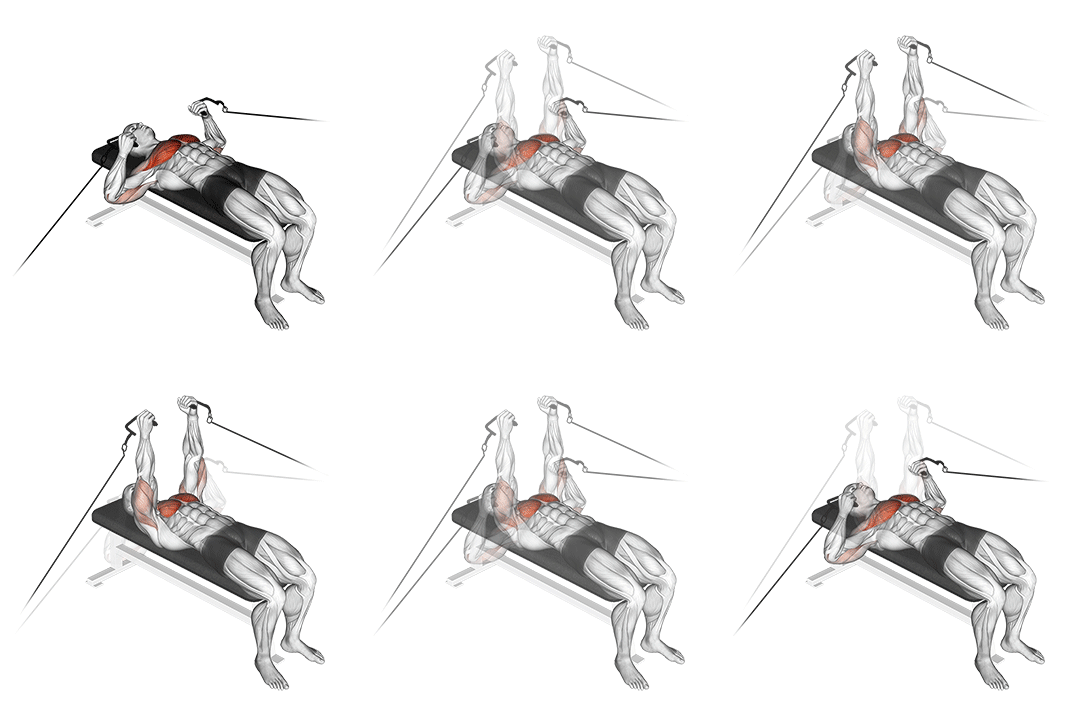
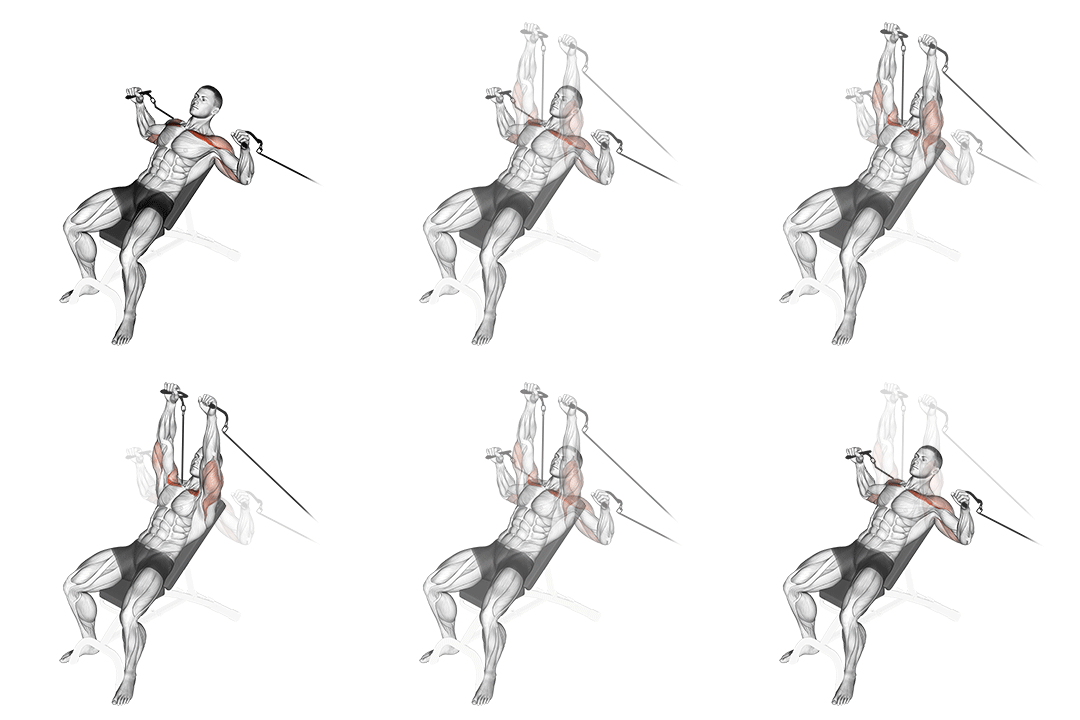
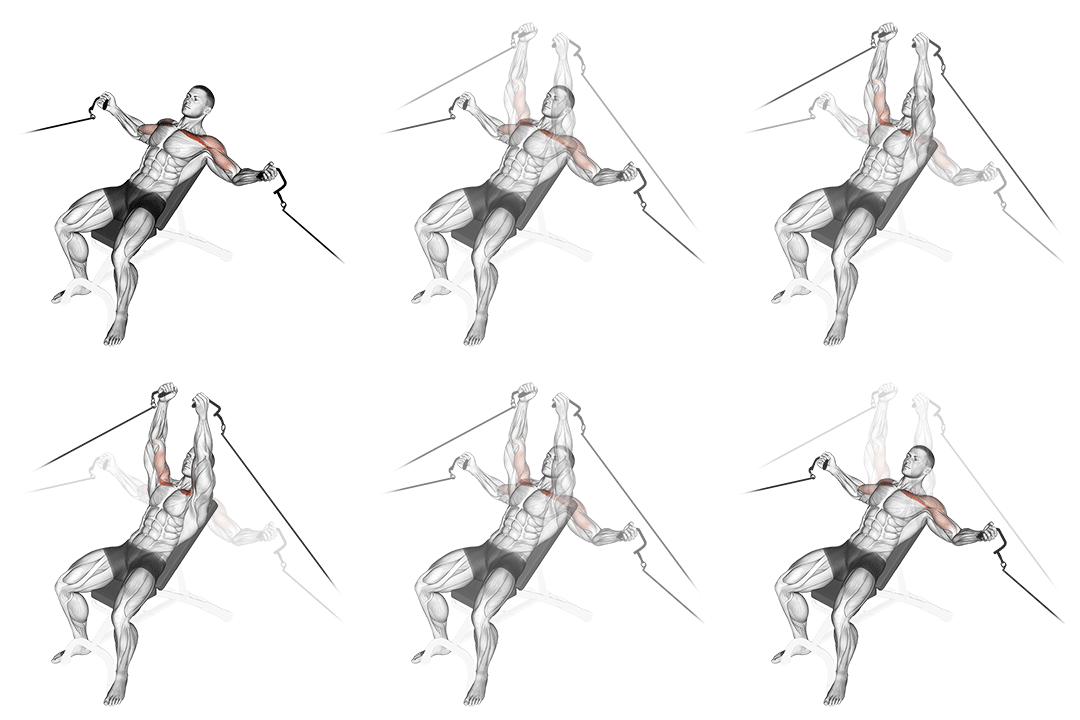
Cable Bench Press
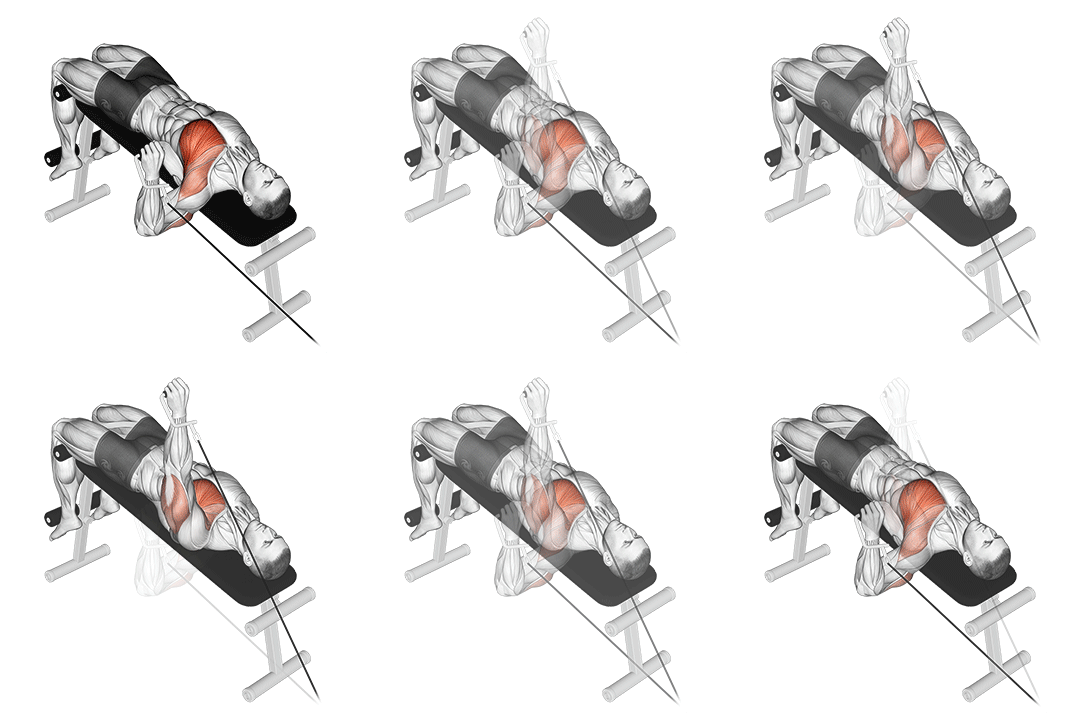
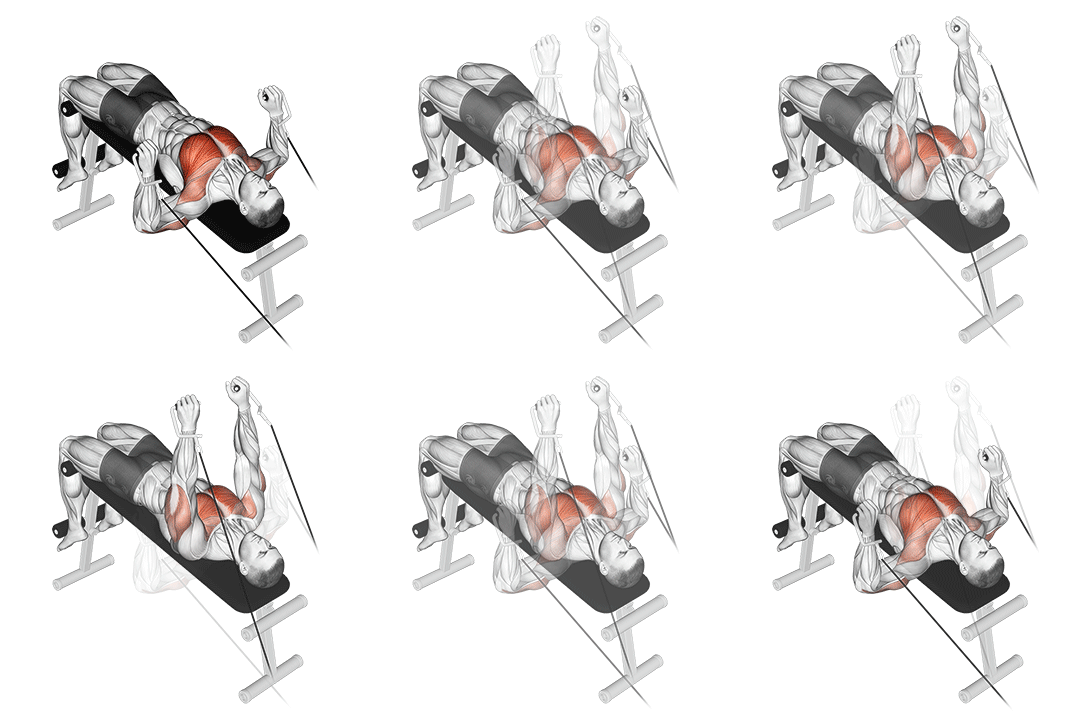
Cable Decline One Arm Press
Head-to-Head Comparison
| Attribute | Cable Bench Press | Cable Decline One Arm Press |
|---|---|---|
| Target Muscle |
Pectorals
|
Pectorals
|
| Body Part |
Chest
|
Chest
|
| Equipment |
Cable
|
Cable
|
| Difficulty |
Intermediate
|
Intermediate
|
| Movement Type |
Compound
|
Compound
|
| Secondary Muscles |
2
|
2
|
Secondary Muscles Activated
Cable Bench Press
Cable Decline One Arm Press
Visual Comparison
Overview
Cable Bench Press vs Cable Decline One Arm Press — which should you add to your chest day? If you want clear direction, this guide breaks down muscle targeting, joint mechanics, equipment needs, difficulty, and programming. You’ll get technique cues (scapular set, elbow path, 15–30° decline), rep ranges for hypertrophy (6–12 or 8–15) and strength, plus who benefits most from each move. Read on and you’ll know which press fits your goals, whether you prioritize bilateral load, unilateral control, or correcting left-right imbalances.
Key Differences
- Both exercises target the Pectorals using Cable. The main differences are in their movement patterns and muscle activation angles.
Pros & Cons
Cable Bench Press
+ Pros
- Allows heavier bilateral loading for greater mechanical tension
- Easier to teach and learn — straightforward groove
- Consistent cable tension through full range improves time under tension
- Flexible pulley height lets you target different pec fibers
− Cons
- Less carryover to unilateral stability and anti-rotation strength
- Can encourage flared elbows and shoulder strain if scapula not set
- Requires two cable handles and bench space
Cable Decline One Arm Press
+ Pros
- Stronger emphasis on lower pec fibers due to downward force vector
- Improves unilateral control and corrects left-right imbalances
- Engages core and serratus anterior for anti-rotation stability
- Good for targeted shaping and isolation of a weak side
− Cons
- Harder to load heavily — limits maximal mechanical tension
- Requires decline bench setup and higher technical skill
- Greater shoulder/rotator cuff demand if performed incorrectly
When Each Exercise Wins
Cable Bench Press lets you apply higher bilateral load and maintain constant tension through the range, which increases mechanical tension — the primary driver of muscle growth. Use 6–12 reps, controlled 2–3 second eccentrics, and varying pulley heights to hit fibers.
Because you can load both arms and focus on progressive overload, the bilateral Cable Bench Press supports higher absolute force production and better strength progression. Pair heavier sets of 3–6 reps with stable scapular positioning.
Beginners benefit from the symmetrical pattern and simpler motor demands of the Cable Bench Press, which makes teaching scapular retraction and elbow path easier before introducing unilateral complexity.
Most home cable stations or adjustable pulley systems can be set for a flat-bench press more easily than a decline one-arm setup, so the Cable Bench Press is generally the more practical home option.
Frequently Asked Questions
Can I do both Cable Bench Press and Cable Decline One Arm Press in the same workout?
Yes. Start with the Cable Bench Press for heavy bilateral work (3–5 sets of 6–10 reps), then use the Cable Decline One Arm Press as a unilateral accessory for 2–4 sets of 8–12 reps to address imbalances and increase core stability.
Which exercise is better for beginners?
Cable Bench Press is better for beginners because its bilateral, symmetrical pattern is easier to learn and allows safer progressive loading while you build scapular control and pressing mechanics.
How do the muscle activation patterns differ?
The Cable Bench Press produces a more horizontal force vector, activating mid-pec fibers strongly through mid- to end-range. The decline one-arm press reorients the vector downward, lengthening and biasing lower-pec fibers and increasing unilateral stabilizer and core activation.
Can Cable Decline One Arm Press replace Cable Bench Press?
Not completely. The one-arm decline is excellent for unilateral control and lower-pec emphasis but limits absolute load. Use it to complement the Cable Bench Press rather than replace it if your goal is maximal hypertrophy or strength.
Expert Verdict
Use the Cable Bench Press as your primary cable-based chest builder when you want to maximize mechanical tension, load progression, and efficient hypertrophy or strength work. Cue scapular retraction, keep elbows roughly 30–45° from the torso, press through a neutral wrist, and work 6–12 reps with controlled eccentrics. Add the Cable Decline One Arm Press as an accessory when you need to correct asymmetries, emphasize lower-pec development, or train anti-rotation stability. For the one-arm decline, set the bench 15–30°, brace the ribs down, and prioritize strict form over heavy weight.
Also Compare
More comparisons with Cable Bench Press
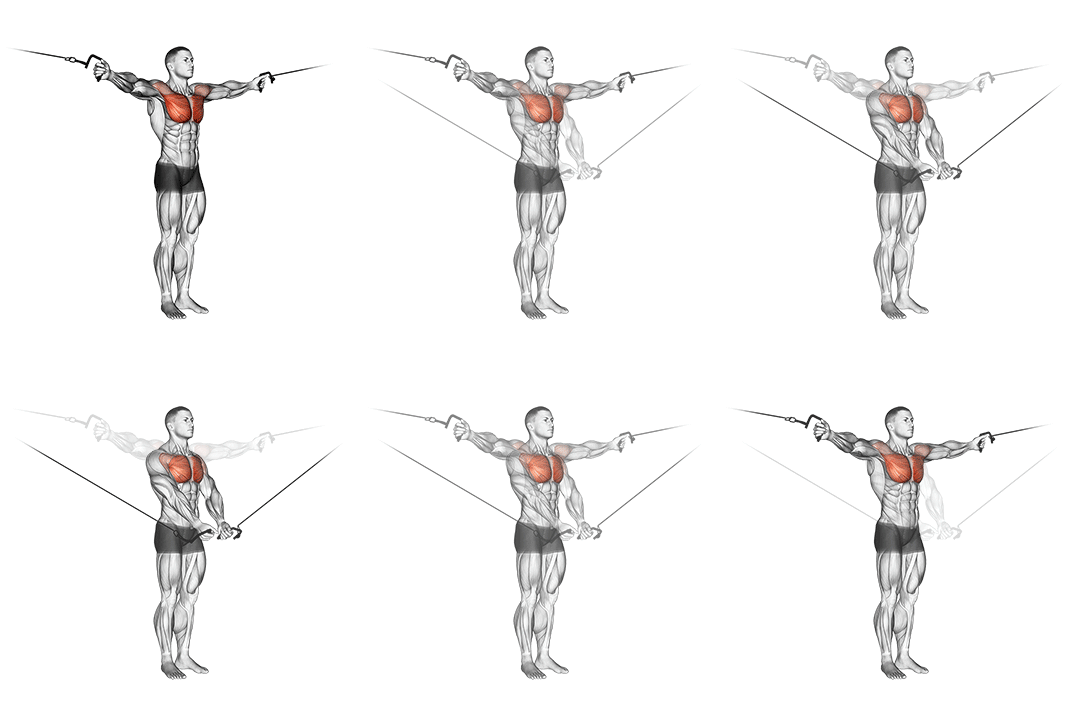
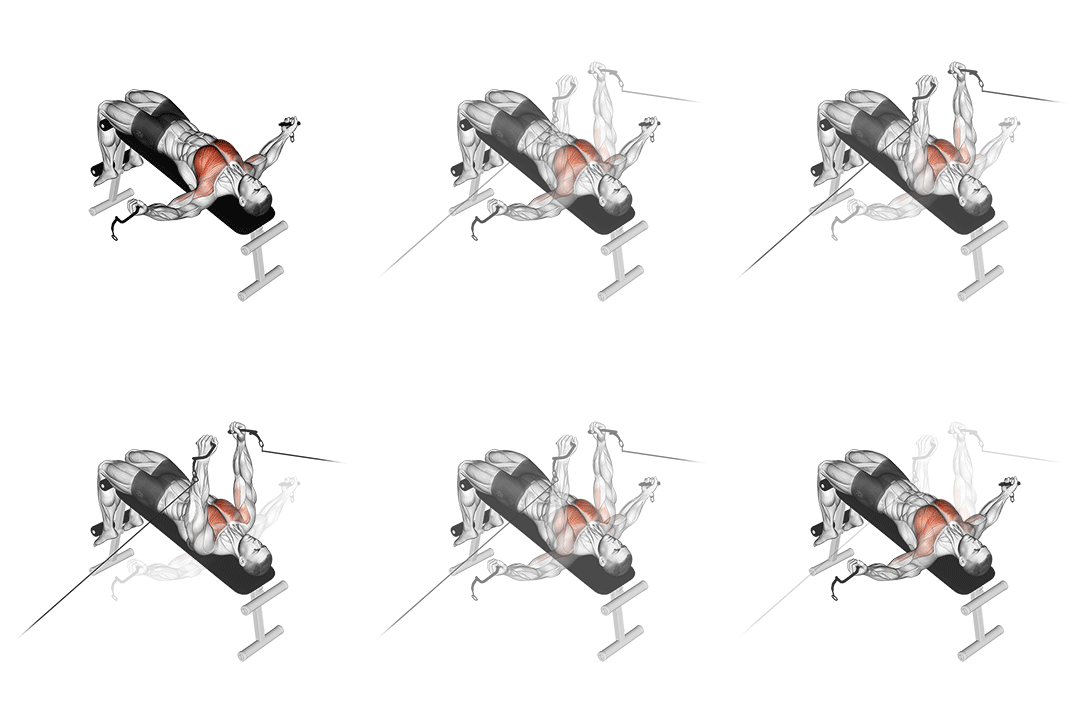
More comparisons with Cable Decline One Arm Press
Compare More Exercises
Use our free comparison tool to analyze any two exercises head-to-head.
Compare Exercises