

Cable Bench Press vs Cable Decline Press: Complete Comparison Guide
Cable Bench Press vs Cable Decline Press — you want chest work that builds muscle without unnecessary shoulder strain. I’ll walk you through how the flat cable press and the decline cable press differ in muscle focus, joint mechanics, setup, technique cues, and programming. You’ll get clear recommendations for hypertrophy, strength, beginners, and home setups plus concrete rep ranges, angle guidance (15–30° for decline), and cues to improve pec activation and protect your shoulders.
Exercise Comparison
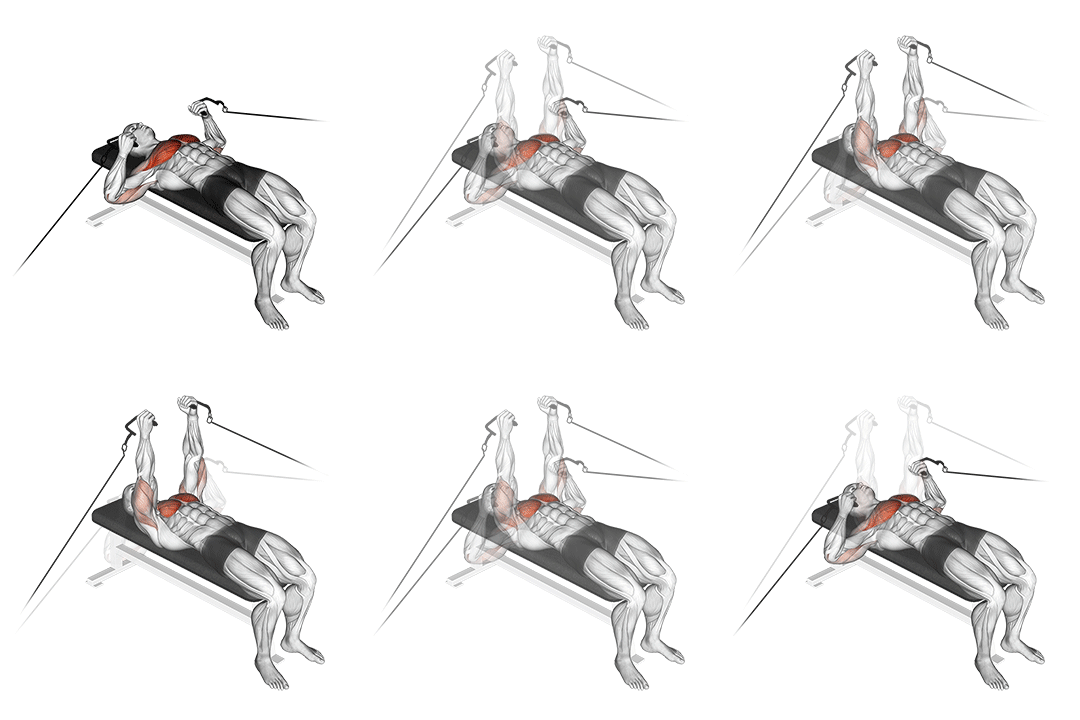
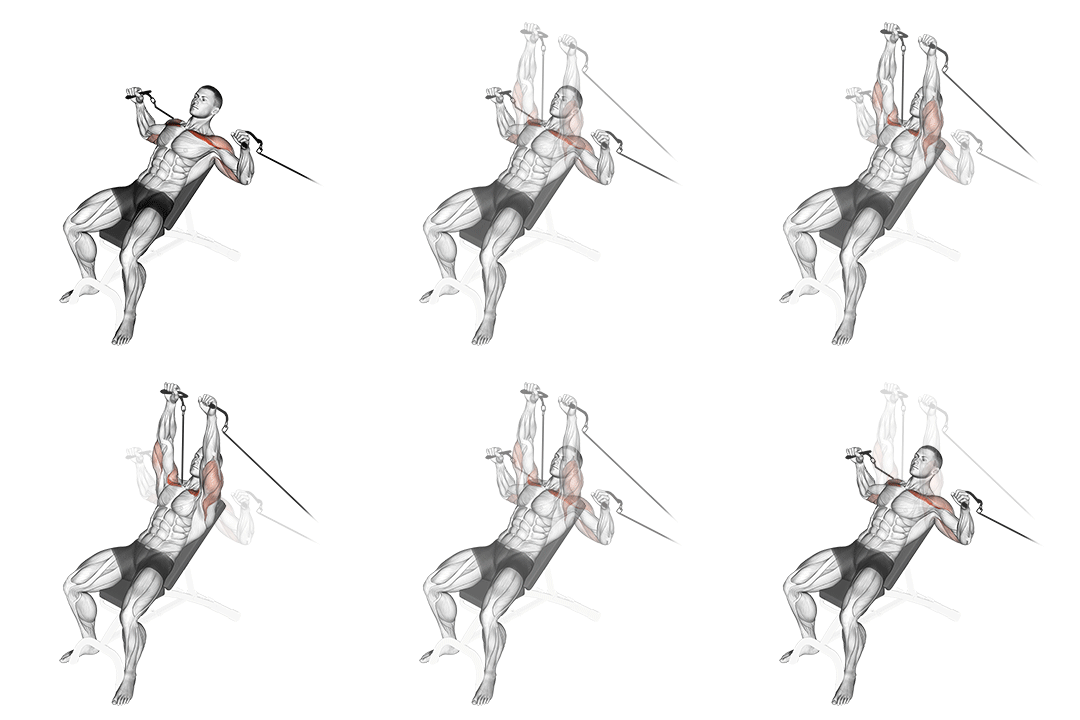
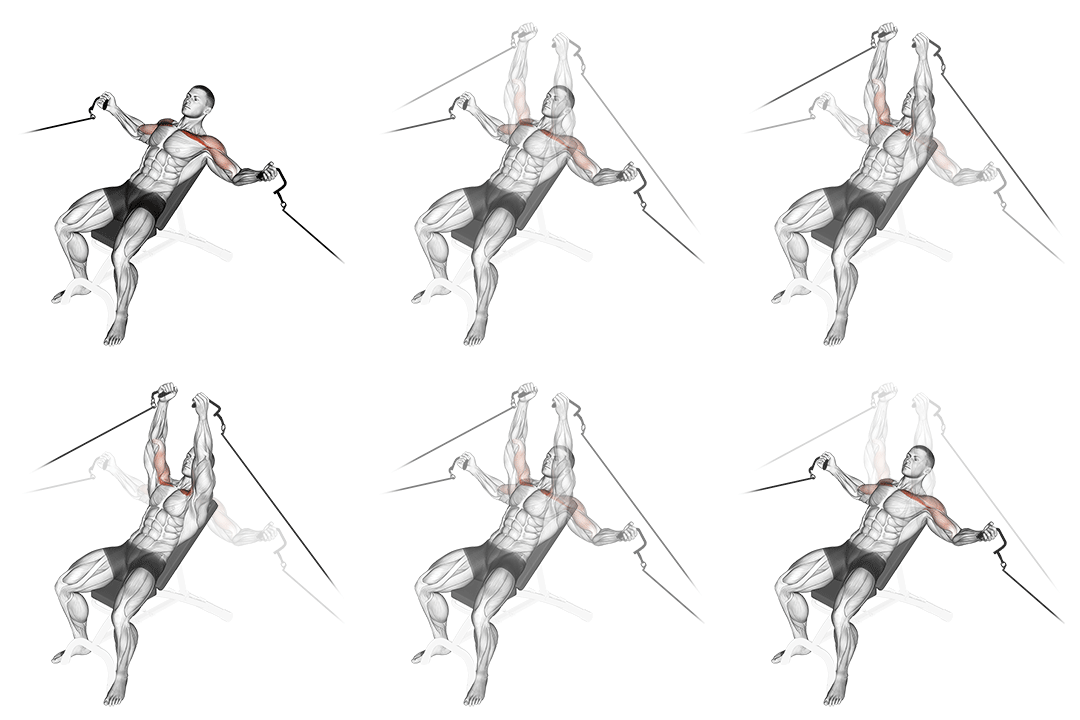
Cable Bench Press
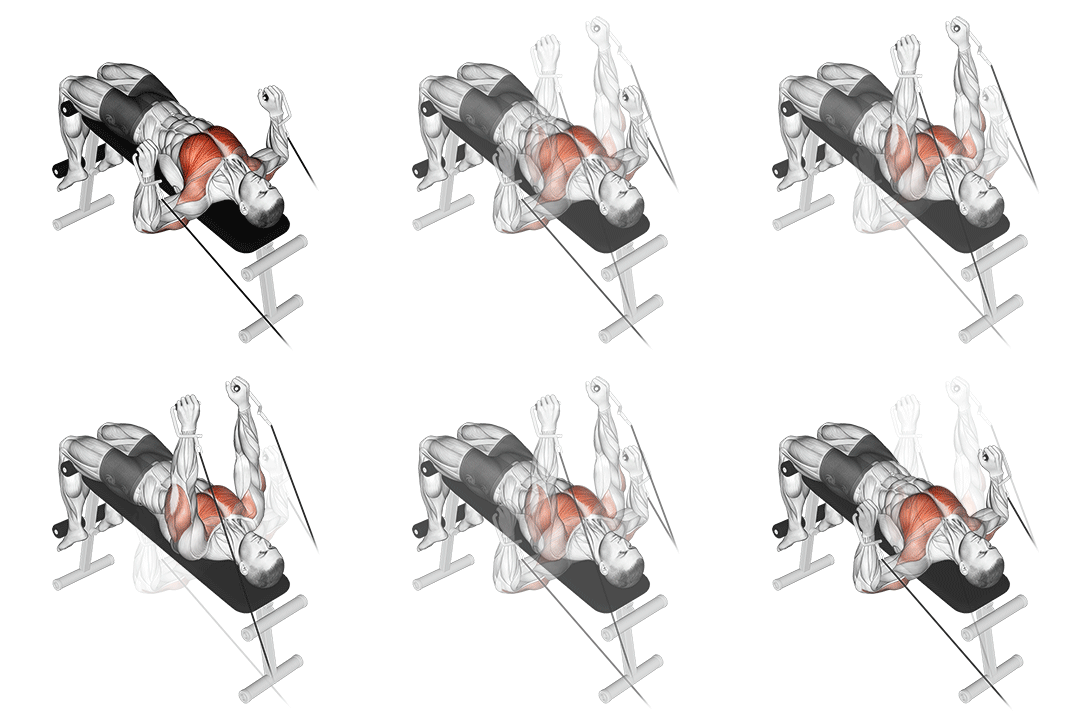
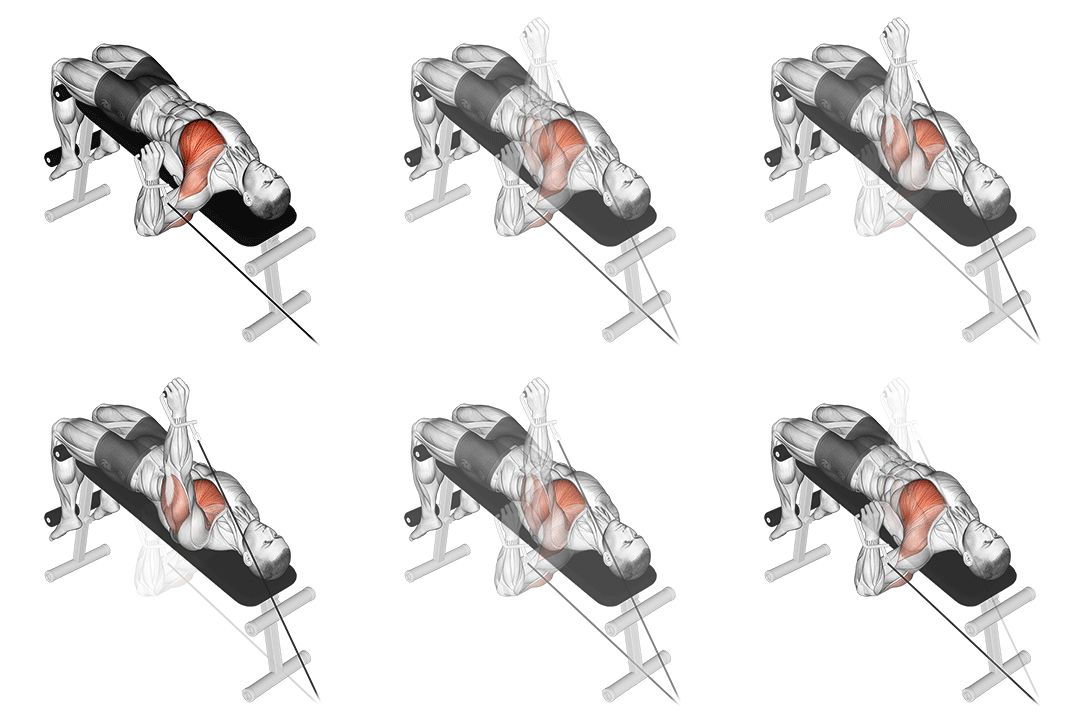
Cable Decline Press
Head-to-Head Comparison
| Attribute | Cable Bench Press | Cable Decline Press |
|---|---|---|
| Target Muscle |
Pectorals
|
Pectorals
|
| Body Part |
Chest
|
Chest
|
| Equipment |
Cable
|
Cable
|
| Difficulty |
Intermediate
|
Intermediate
|
| Movement Type |
Compound
|
Compound
|
| Secondary Muscles |
2
|
2
|
Secondary Muscles Activated
Cable Bench Press
Cable Decline Press
Visual Comparison
Overview
Cable Bench Press vs Cable Decline Press — you want chest work that builds muscle without unnecessary shoulder strain. I’ll walk you through how the flat cable press and the decline cable press differ in muscle focus, joint mechanics, setup, technique cues, and programming. You’ll get clear recommendations for hypertrophy, strength, beginners, and home setups plus concrete rep ranges, angle guidance (15–30° for decline), and cues to improve pec activation and protect your shoulders.
Key Differences
- Both exercises target the Pectorals using Cable. The main differences are in their movement patterns and muscle activation angles.
Pros & Cons
Cable Bench Press
+ Pros
- Even mid-pec development with balanced clavicular and sternal fiber recruitment
- Easier setup and more accessible in most gyms
- Greater variety of progression cues (single-arm, tempo, pulley height)
- Cable tension provides constant load and improved peak contraction
− Cons
- Can place more load on anterior deltoids if elbows flare
- Less focused lower-pec emphasis compared with decline
- Requires good bench stability to resist pulley torque
Cable Decline Press
+ Pros
- Stronger emphasis on lower pectoral fibers for targeted development
- Often reduces shoulder flexion torque, which can feel safer for some lifters
- Good option to balance upper chest work from inclines
- Maintains constant tension from cables while changing fiber emphasis
− Cons
- Requires an adjustable/decline bench and secure foot support
- Setup is more technical — hip bracing and angle control matter
- May over-stretch lower pec if decline angle is too steep or ROM is uncontrolled
When Each Exercise Wins
Cable Bench Press gives more even pectoral stimulation and a wider range of progression options (single-arm, tempo, pulley height) that support progressive overload. Use 6–12 reps, 3–5 sets, controlled 2–3s eccentrics, and peak contraction holds to maximize hypertrophy across the whole chest.
Decline alignment shifts force vectors to favor triceps and lower pec fibers, often allowing higher peak force and safer shoulder mechanics at heavier loads. Program 3–6 reps, 3–6 sets, and focus on explosive concentric drive with tight bracing to build pressing strength.
Flat cable pressing is simpler to learn, requires less specialized equipment, and encourages safer elbow positioning (30–45°) to protect the shoulder. Start with light loads, practice scapular retraction, and work 8–12 reps for technique and hypertrophy.
Flat pressing can be approximated with resistance bands or a single pulley plus a flat bench, while decline setups are harder to recreate safely at home. Bands or low pulleys let you mimic constant tension and progress effectively.
Frequently Asked Questions
Can I do both Cable Bench Press and Cable Decline Press in the same workout?
Yes — pairing them works well if you program intensity and volume. Do one as a heavier compound (3–6 reps) and the other as a higher-rep finisher (8–12 reps), or alternate them across weeks to avoid over-fatiguing the pecs in a single session.
Which exercise is better for beginners?
Cable Bench Press is better for beginners because it's easier to set up and teaches horizontal pressing mechanics with less positional complexity. Focus on mastering scapular retraction, a 30–45° elbow tuck, and controlled tempo before adding decline variations.
How do the muscle activation patterns differ?
Decline shifts the force vector down, increasing lower pectoral fiber recruitment and triceps contribution due to altered moment arms and length–tension relationships. Flat cable pressing distributes load more evenly across clavicular and sternal fibers, with slightly higher anterior deltoid activation when elbows run wider.
Can Cable Decline Press replace Cable Bench Press?
It can replace flat pressing if your goal is specifically lower-chest development or shoulder offloading, but decline won’t match the flat press’s balanced chest stimulus. For comprehensive chest development, keep both in your rotation rather than permanently substituting one for the other.
Expert Verdict
Use the Cable Bench Press when you want a versatile, accessible chest mover that stimulates the whole pectoralis major and offers lots of progression choices — ideal for hypertrophy, unilateral control, and home-friendly setups. Choose the Cable Decline Press when your goal is to emphasize lower-pec thickness and reduce shoulder flexion torque for heavier pressing; keep the decline angle modest (15–30°), brace hips, and control the eccentric to avoid overstretch. Both exercises benefit from 2–3s eccentrics, 30–45° elbow path, and a focus on full horizontal adduction. Rotate them across cycles: emphasize flat pressing for general development and bring in decline blocks for targeted lower-chest focus or strength phases.
Also Compare
More comparisons with Cable Bench Press
Compare More Exercises
Use our free comparison tool to analyze any two exercises head-to-head.
Compare Exercises