

Cable Bench Press vs Cable Incline Bench Press: Complete Comparison Guide
Cable Bench Press vs Cable Incline Bench Press — if you're focused on building a fuller chest, you need to know how these two cable variations differ. In this guide you'll get a direct comparison of primary and secondary muscle activation, equipment setup, technical cues, and which move to pick for hypertrophy, strength, or beginner training. I'll cover biomechanics (force vectors, length-tension), recommended angles (incline 30–45°), rep ranges (6–12 for hypertrophy, 3–6 for strength), and clear progression tips so you can choose the best press for your goals.
Exercise Comparison
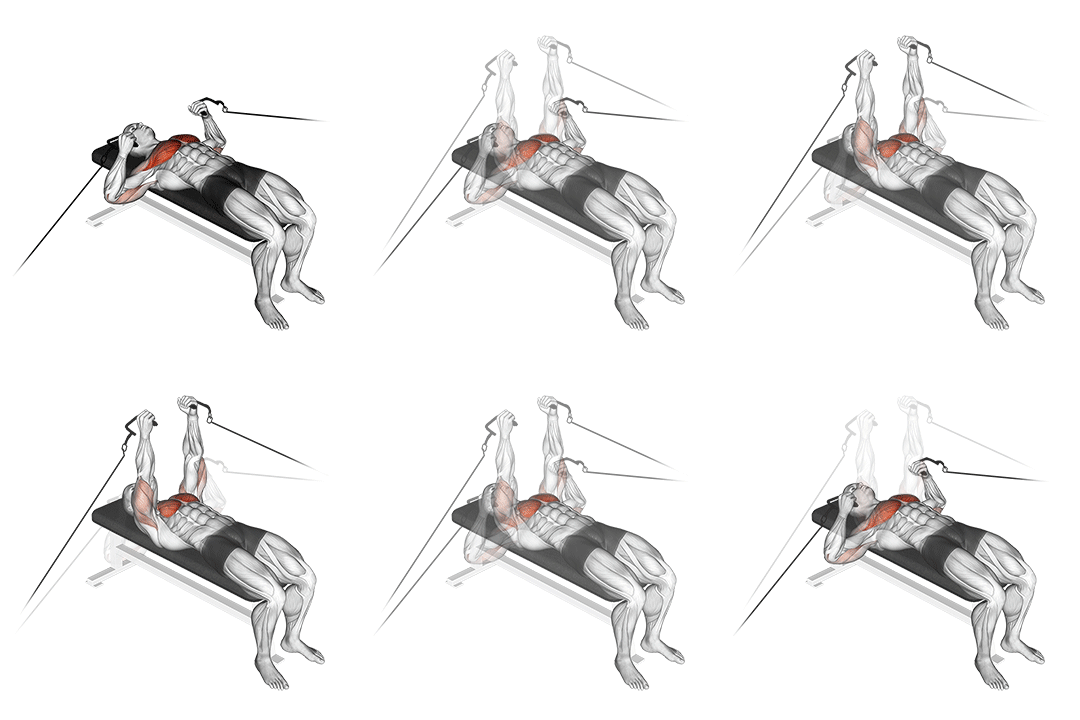
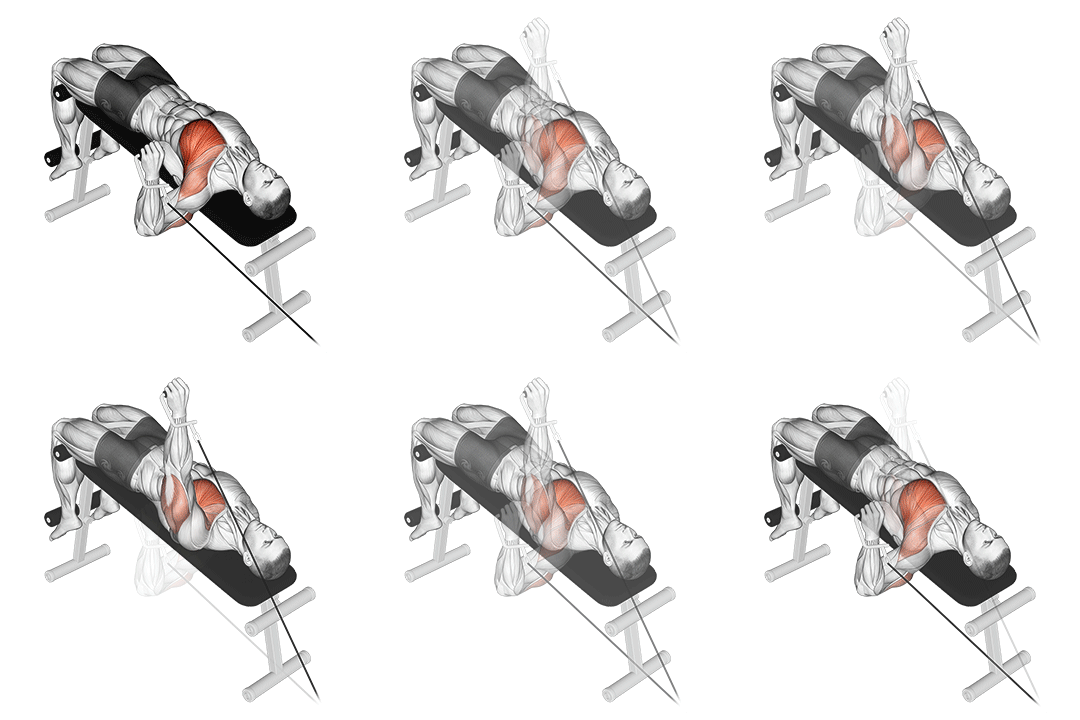
Cable Bench Press
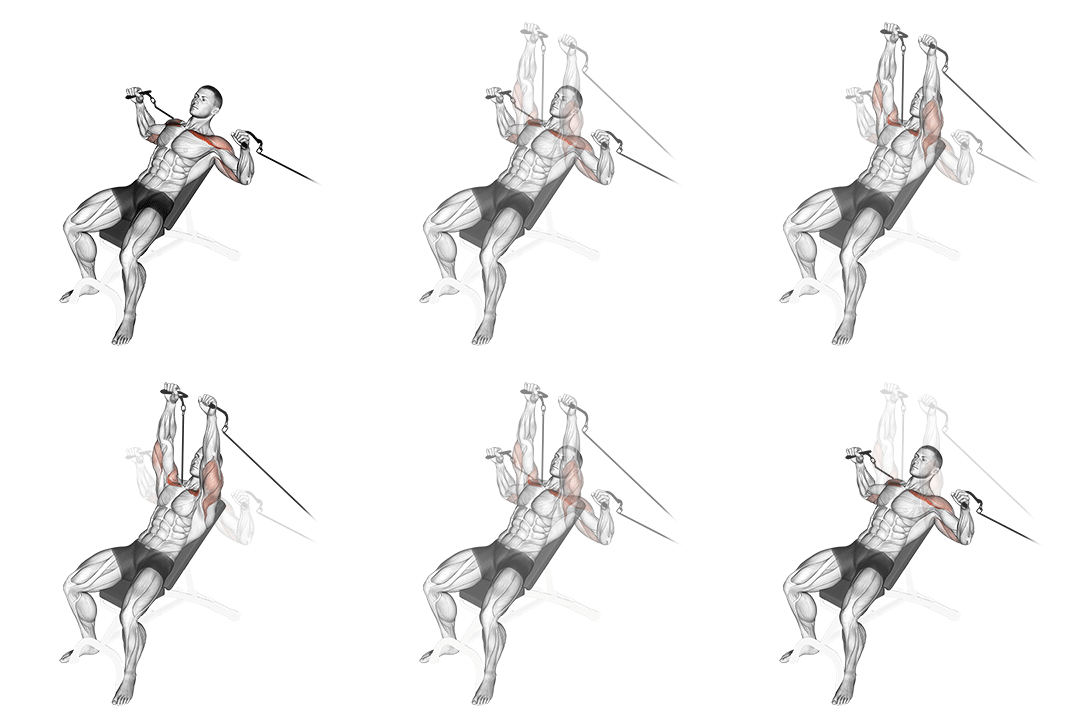
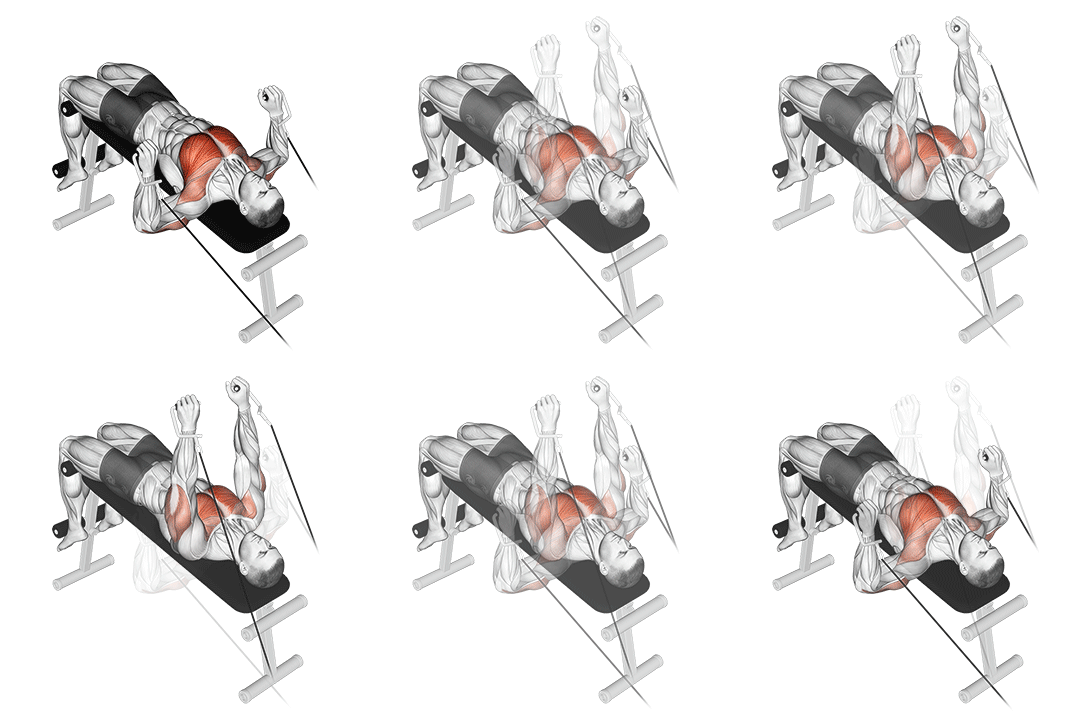
Cable Incline Bench Press
Head-to-Head Comparison
| Attribute | Cable Bench Press | Cable Incline Bench Press |
|---|---|---|
| Target Muscle |
Pectorals
|
Pectorals
|
| Body Part |
Chest
|
Chest
|
| Equipment |
Cable
|
Cable
|
| Difficulty |
Intermediate
|
Intermediate
|
| Movement Type |
Compound
|
Compound
|
| Secondary Muscles |
2
|
2
|
Secondary Muscles Activated
Cable Bench Press
Cable Incline Bench Press
Visual Comparison
Overview
Cable Bench Press vs Cable Incline Bench Press — if you're focused on building a fuller chest, you need to know how these two cable variations differ. In this guide you'll get a direct comparison of primary and secondary muscle activation, equipment setup, technical cues, and which move to pick for hypertrophy, strength, or beginner training. I'll cover biomechanics (force vectors, length-tension), recommended angles (incline 30–45°), rep ranges (6–12 for hypertrophy, 3–6 for strength), and clear progression tips so you can choose the best press for your goals.
Key Differences
- Both exercises target the Pectorals using Cable. The main differences are in their movement patterns and muscle activation angles.
Pros & Cons
Cable Bench Press
+ Pros
- Even sternal head development and broader mid‑chest stimulus
- Easier setup and more accessible in most gyms
- Simpler technique cues: retract scapula, press slightly upward, elbows ~45°
- Great for heavier loading and progressive overload
− Cons
- Less emphasis on upper (clavicular) pec fibers
- Can plateau accessory upper‑chest development if used exclusively
- May overload triceps if lockout mechanics are poor
Cable Incline Bench Press
+ Pros
- Stronger activation of upper‑chest (clavicular) fibers at 30–45°
- Better for improving chest shape and upper‑chest fullness
- Targets anterior deltoid as a stabilizer and mover for balanced shoulder development
- Allows angle manipulation to emphasize different pec fibers
− Cons
- Requires adjustable bench and precise pulley setup
- Greater anterior shoulder stress—needs strict scapular control
- Harder to load as heavily as flat cable presses for maximal strength
When Each Exercise Wins
Cable Bench Press delivers broad sternal head stimulus and allows heavier, more consistent loading across sets in the 6–12 rep range, maximizing overall chest hypertrophy. Use it as a staple and add incline variations to target upper chest periodically.
The flatter line of pull produces a larger horizontal moment arm and makes it easier to apply progressive overload and lower‑rep work (3–6 reps). This translates better to raw pressing strength and lockout power than the incline variation.
Flat cable pressing has simpler setup and more intuitive mechanics—retract scapula, drive through the chest, control eccentrics—so novices can learn pressing patterns faster with lower injury risk.
Most home cable stations or functional trainers are set up for mid‑level pulleys and a flat bench is more common than a quality adjustable incline bench. The flat cable press is easier to configure and still provides constant tension.
Frequently Asked Questions
Can I do both Cable Bench Press and Cable Incline Bench Press in the same workout?
Yes. Start with the variation you prioritize (usually the heavier flat sets for strength) then follow with 2–4 sets of incline at higher reps (8–15) to target the upper pecs. Watch total volume to avoid overtraining—aim for 12–20 total working sets for the chest per week.
Which exercise is better for beginners?
Cable Bench Press is better for beginners because it has simpler setup and a more intuitive horizontal pressing path. It lets new lifters learn scapular control and pressing mechanics before adding the coordination demands of an incline.
How do the muscle activation patterns differ?
Flat cable pressing emphasizes pectoral horizontal adduction and the sternal fibers due to a horizontal force vector and larger moment arm. Incline shifts the vector upward, increasing shoulder flexion and recruiting the clavicular fibers and anterior deltoid more—EMG trends show roughly a 10–20% boost in upper‑pec activation at 30–45°.
Can Cable Incline Bench Press replace Cable Bench Press?
If your goal is full chest development you should not replace flat presses entirely; incline can substitute for some flat work to emphasize upper pecs, but flat pressing remains superior for overall mid‑chest mass and maximal loading. Use incline as a complement, not a full replacement.
Expert Verdict
Use the Cable Bench Press as your default chest press when you want broad mid‑chest development, reliable progressive overload, and an easier setup—especially for strength and general hypertrophy (6–12 reps). Reserve the Cable Incline Bench Press at 30–45° to specifically target the clavicular head and improve upper‑chest fullness; include it 1–2 times weekly or rotate bench angle to avoid imbalances. Prioritize scapular retraction, controlled eccentrics, and elbow positions around 30–50° from the torso to protect the shoulder. For complete chest development, program both: heavier flat sets for strength and volume‑oriented inclines for upper‑pec shaping.
Also Compare
More comparisons with Cable Bench Press
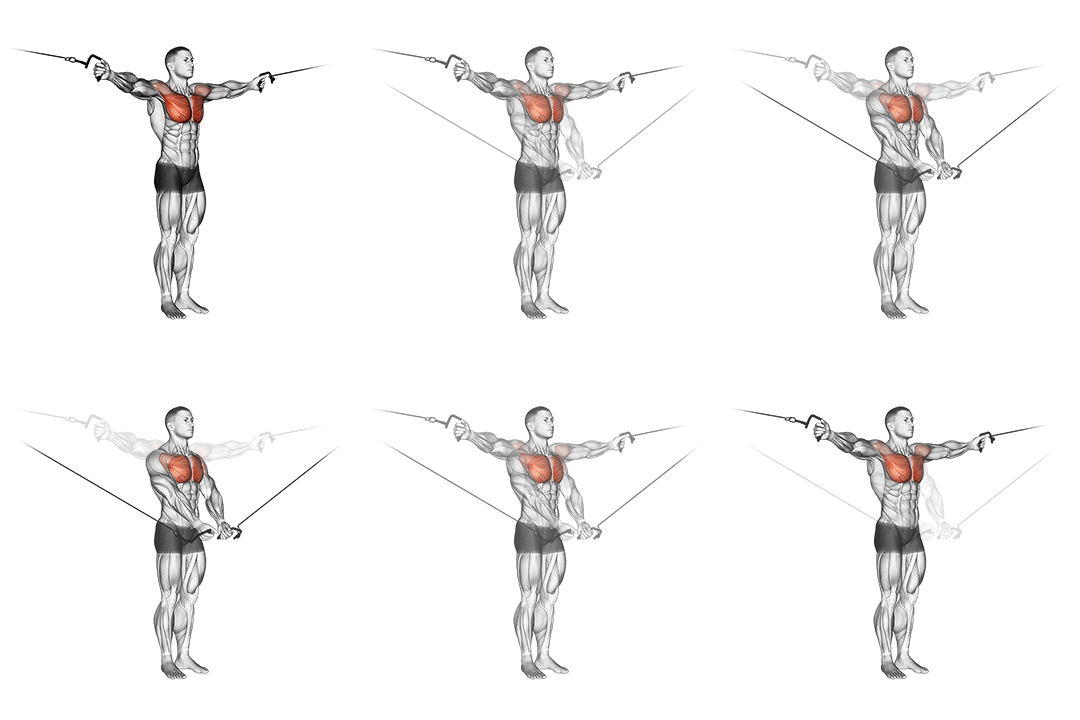
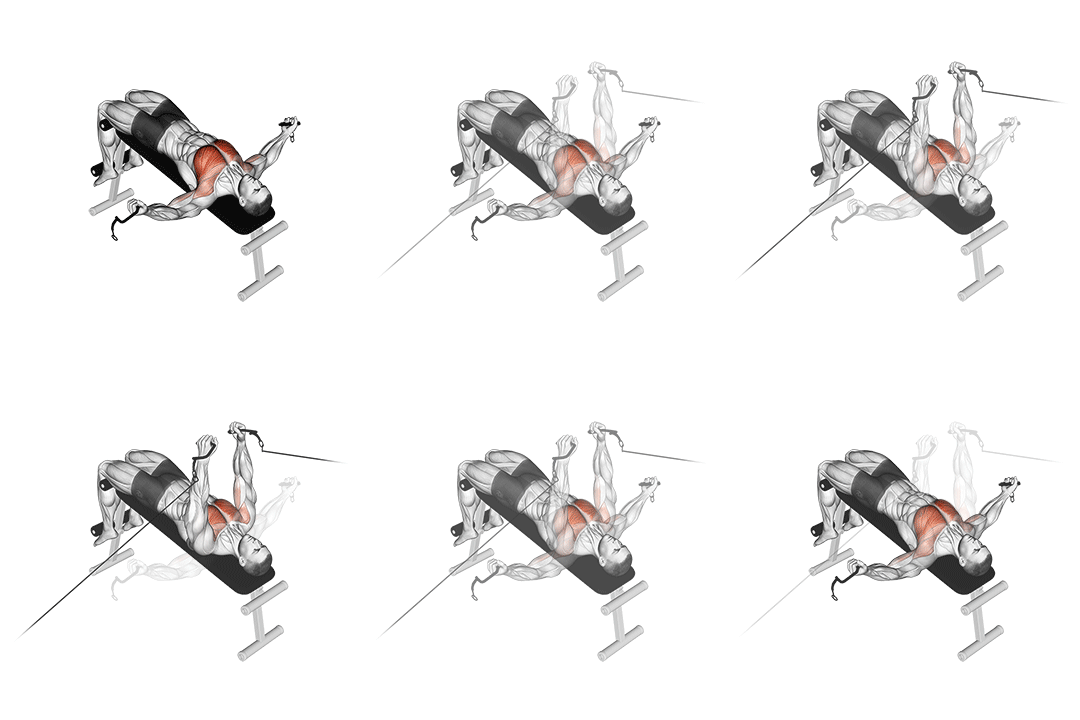
More comparisons with Cable Incline Bench Press
Compare More Exercises
Use our free comparison tool to analyze any two exercises head-to-head.
Compare Exercises