

Cable Bench Press vs Cable Incline Fly: Complete Comparison Guide
Cable Bench Press vs Cable Incline Fly — if you want a clearer route to chest development, you need to know how these two cable movements differ. I’ll walk you through muscle targeting, joint mechanics, setup and technique cues, progression options, and injury considerations so you can pick the right move for your goals. Expect specific rep ranges, recommended incline angles, and practical tips for pairing these exercises in the same session.
Exercise Comparison
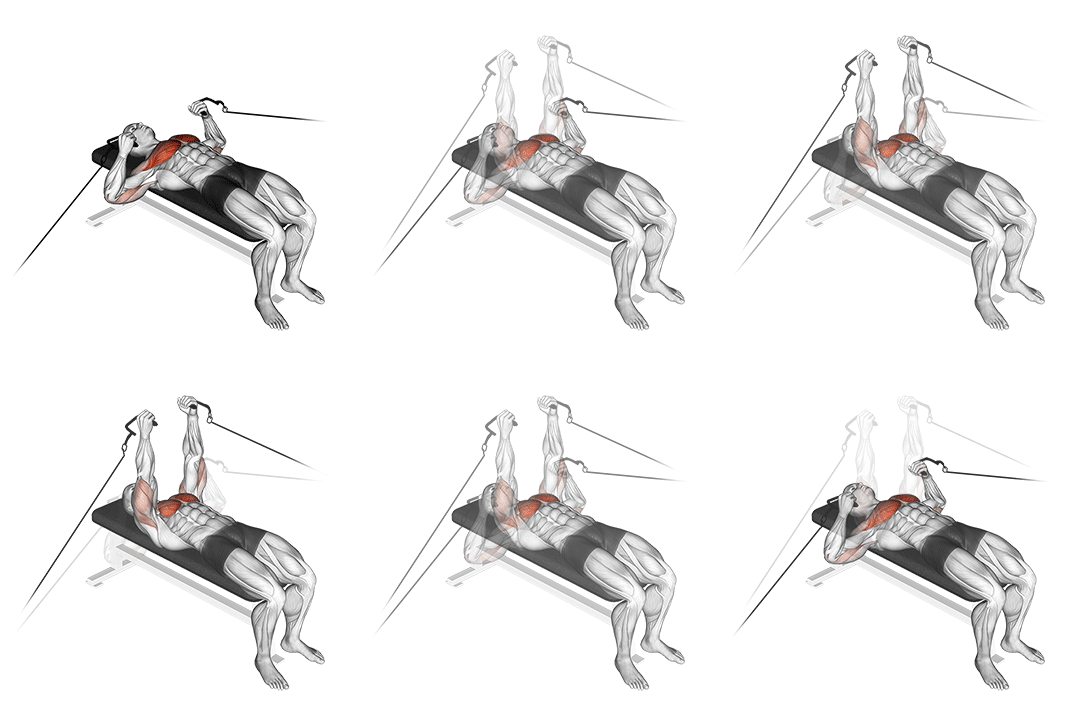
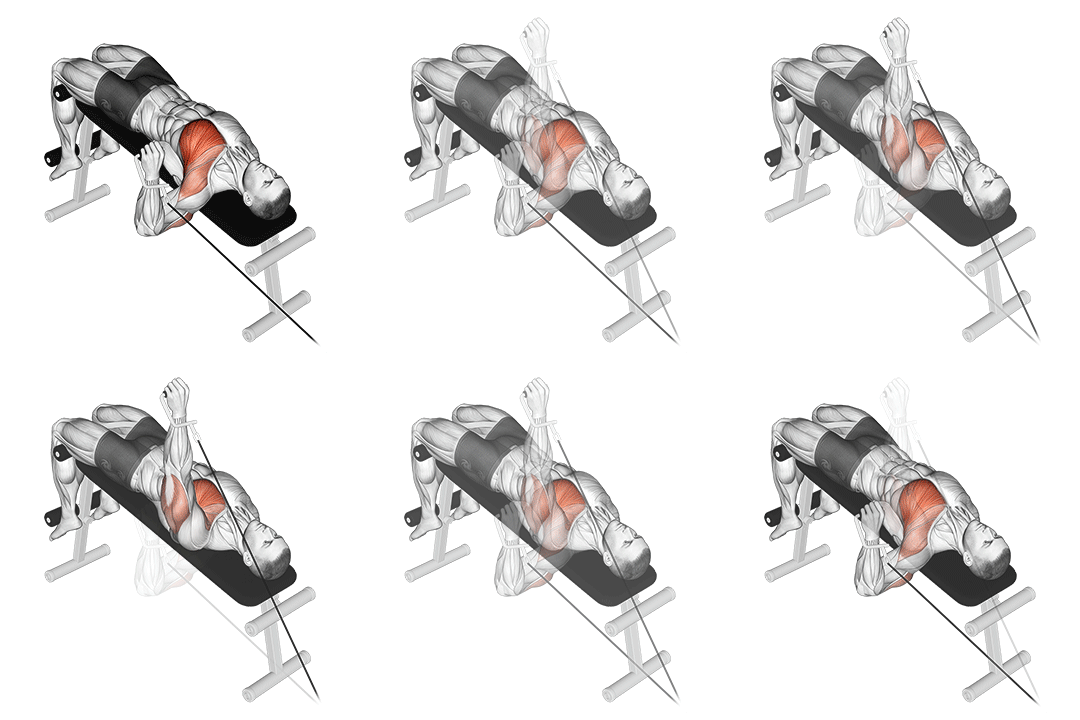
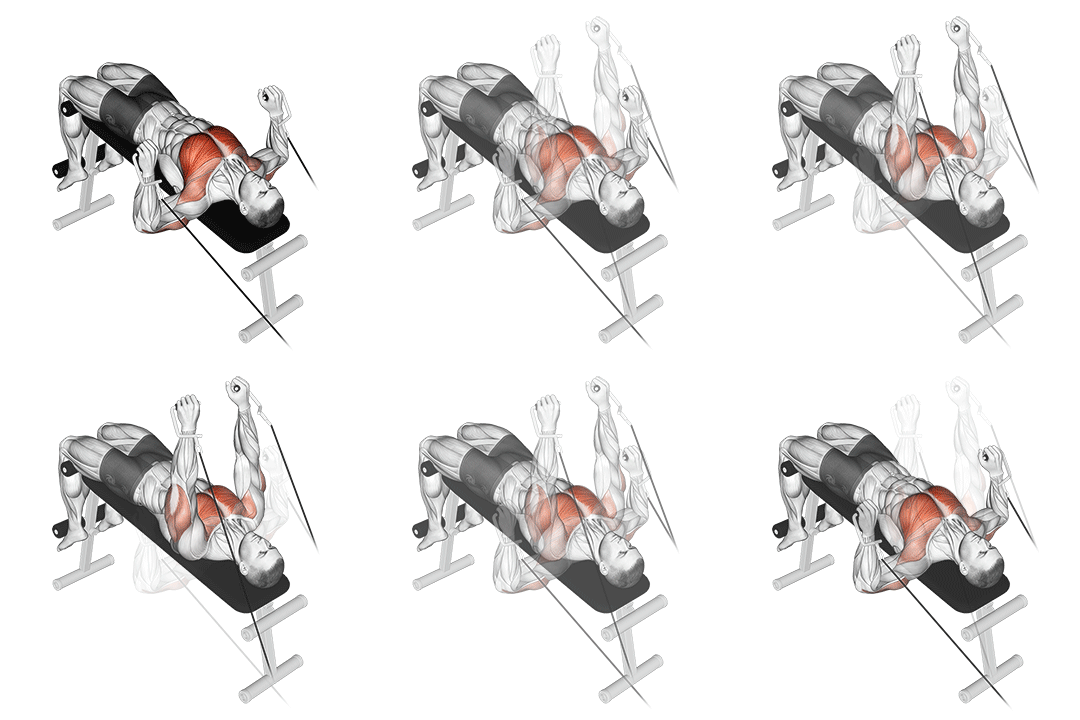
Cable Bench Press
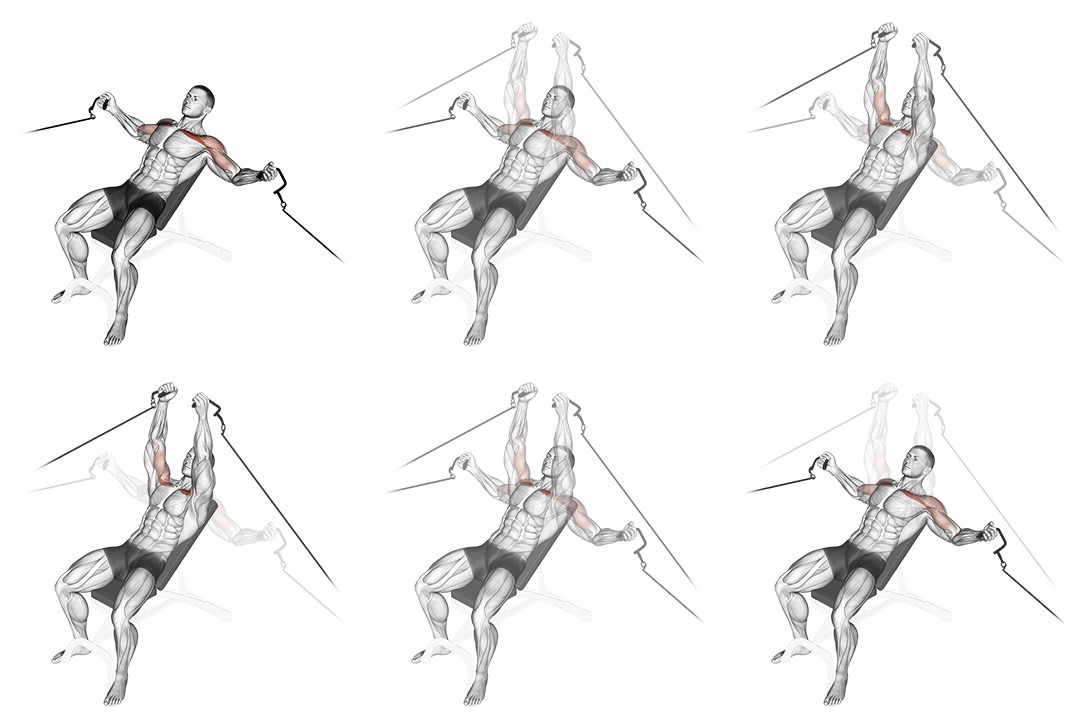
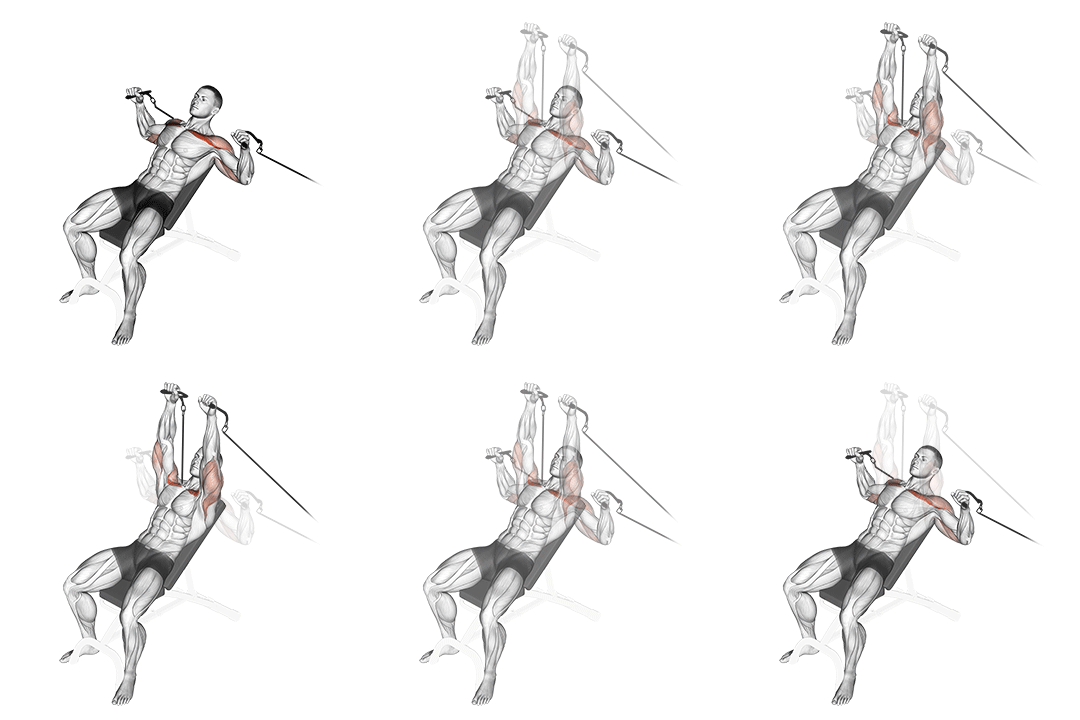
Cable Incline Fly
Head-to-Head Comparison
| Attribute | Cable Bench Press | Cable Incline Fly |
|---|---|---|
| Target Muscle |
Pectorals
|
Pectorals
|
| Body Part |
Chest
|
Chest
|
| Equipment |
Cable
|
Cable
|
| Difficulty |
Intermediate
|
Intermediate
|
| Movement Type |
Compound
|
Isolation
|
| Secondary Muscles |
2
|
2
|
Secondary Muscles Activated
Cable Bench Press
Cable Incline Fly
Visual Comparison
Overview
Cable Bench Press vs Cable Incline Fly — if you want a clearer route to chest development, you need to know how these two cable movements differ. I’ll walk you through muscle targeting, joint mechanics, setup and technique cues, progression options, and injury considerations so you can pick the right move for your goals. Expect specific rep ranges, recommended incline angles, and practical tips for pairing these exercises in the same session.
Key Differences
- Cable Bench Press is a compound movement, while Cable Incline Fly is an isolation exercise.
- Both exercises target the Pectorals using Cable. The main differences are in their movement patterns and muscle activation angles.
Pros & Cons
Cable Bench Press
+ Pros
- Compound movement builds overall chest strength and size under heavier load
- Better for progressive overload and measurable strength gains
- Greater triceps and anterior deltoid recruitment for total upper-body development
- Straightforward setup and safer loading options with cables
− Cons
- Less isolated upper-pec emphasis compared with incline fly
- Requires careful scapular retraction to protect shoulders
- Can mask muscular imbalances if dominant side compensates
Cable Incline Fly
+ Pros
- Directly isolates upper-pec (clavicular head) when set at 30–45°
- Maintains constant tension and a long eccentric stretch for muscle remodeling
- Low triceps involvement lets you fatigue pecs without limiting by elbow extensors
- Easy to vary angle and pulley height for targeted stimulus
− Cons
- Lower absolute loading limits progression compared with compound presses
- Higher technical demand to protect the anterior shoulder during stretch
- Requires adjustable bench and precise pulley placement
When Each Exercise Wins
Cable Bench Press allows heavier loading and recruits more muscle mass per rep, creating greater total mechanical tension. Use 3–5 sets of 6–12 reps as a primary hypertrophy driver, then add flies as an accessory for targeted fiber recruitment.
As a compound pressing pattern, it trains force production across multiple joints and supports heavier progressive overload. Aim for lower rep ranges (3–6 reps) and controlled tempo to build maximal strength.
The press is more intuitive and teaches coordinated pushing mechanics while building baseline strength. Start light to learn scapular set and elbow path before adding load or accessory flies.
Bench press variations are easier to replicate at home with resistance bands or dumbbells for a similar horizontal pressing vector. Incline flies need an adjustable bench and cable-style resistance to match the same force vector.
Frequently Asked Questions
Can I do both Cable Bench Press and Cable Incline Fly in the same workout?
Yes. Use Cable Bench Press as the main compound lift (3–5 sets of 6–12 reps) then follow with Cable Incline Fly as an accessory (2–4 sets of 8–15 reps) to target the upper pec and increase time under tension.
Which exercise is better for beginners?
Cable Bench Press is better for beginners because it teaches horizontal pressing mechanics and allows safer progression with heavier loads. Start light to learn scapular retraction and elbow path before adding flies.
How do the muscle activation patterns differ?
Bench press produces a pressing vector that combines horizontal flexion and elbow extension, engaging mid-pec fibers, triceps, and deltoids under heavier loads. Incline fly is pure horizontal adduction with greater eccentric stretch on the clavicular head and more anterior deltoid assistance.
Can Cable Incline Fly replace Cable Bench Press?
Not completely. Incline fly isolates the upper pec and is excellent for shaping, but it cannot match the compound loading and strength benefits of the Cable Bench Press. Use flies as a complementary isolation exercise rather than a full replacement.
Expert Verdict
Use Cable Bench Press as your foundation if your priority is overall chest muscle growth, strength, and progressive overload — it lets you apply heavier loads and trains triceps and anterior delts too. Add Cable Incline Fly as a targeted finisher or specialty move when you want to emphasize the upper pec and exploit a long eccentric stretch; perform flies at a 30–45° incline for 2–4 sets of 8–15 reps with slow eccentrics. For balanced development, alternate priorities across phases: focus on compound presses for 6–12 weeks, then introduce higher-volume flies to refine upper-chest shape and fiber recruitment.
Also Compare
More comparisons with Cable Bench Press
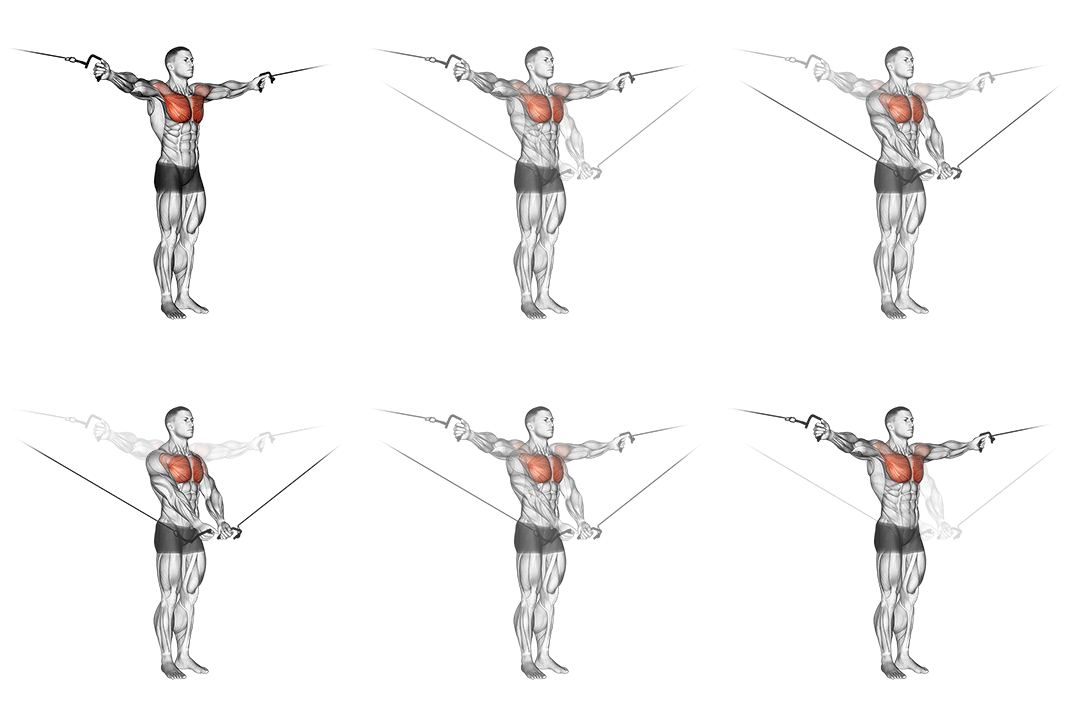
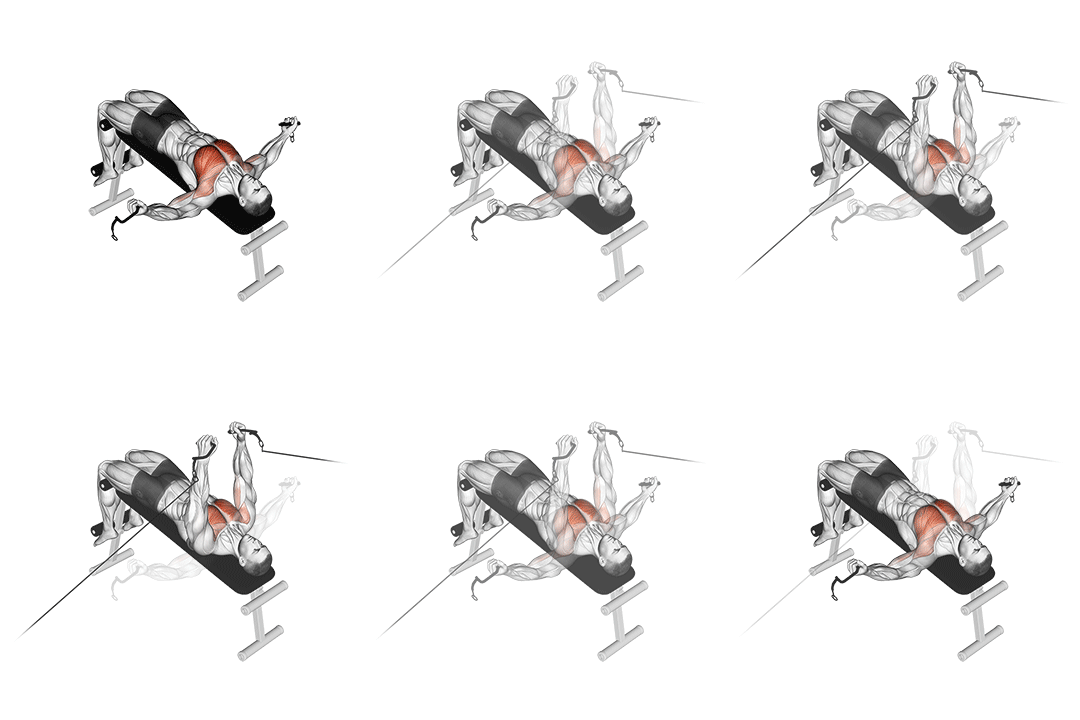
Compare More Exercises
Use our free comparison tool to analyze any two exercises head-to-head.
Compare Exercises