

Cable Cross-over Lateral Pulldown vs Cable Decline Seated Wide-grip Row: Complete Comparison Guide
Cable Cross-over Lateral Pulldown vs Cable Decline Seated Wide-grip Row — if you want bigger, stronger lats you need to pick the right movement for your plan. I’ll walk you through how each exercise loads the lats, which secondary muscles get involved, the biomechanics behind the movement, and clear technique cues you can use today. You’ll learn which one favors hypertrophy versus strength, which is easier to teach a client, and how to program rep ranges (3–6 for strength, 6–12 for muscle growth) and progression steps so you get measurable progress.
Exercise Comparison
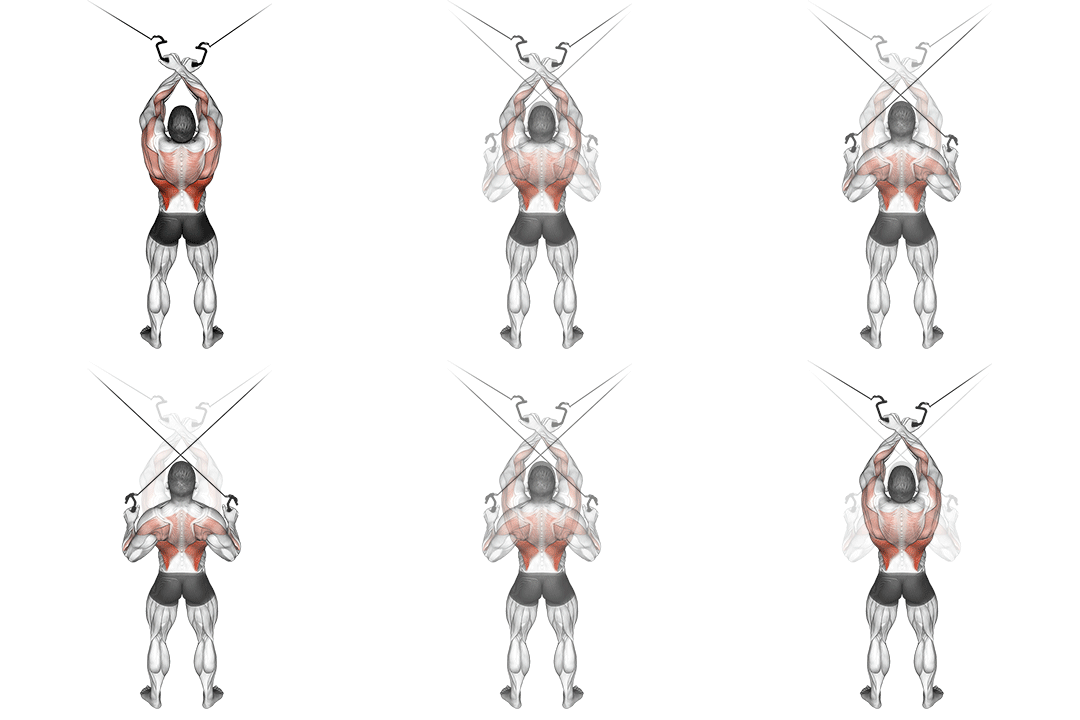
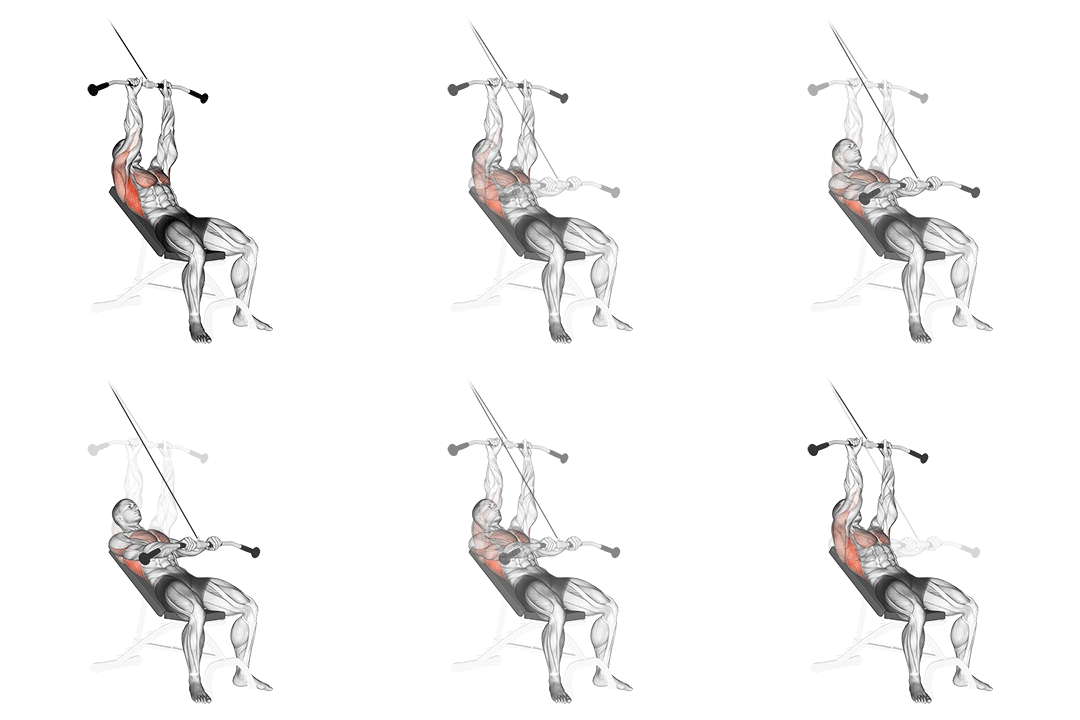
Cable Cross-over Lateral Pulldown
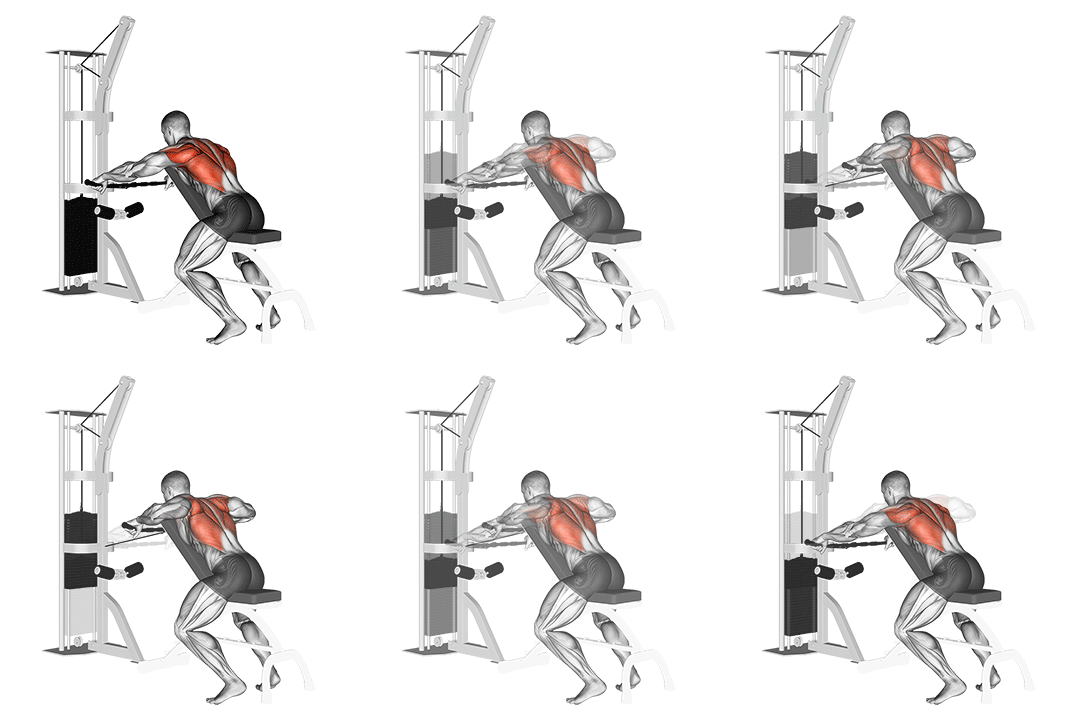
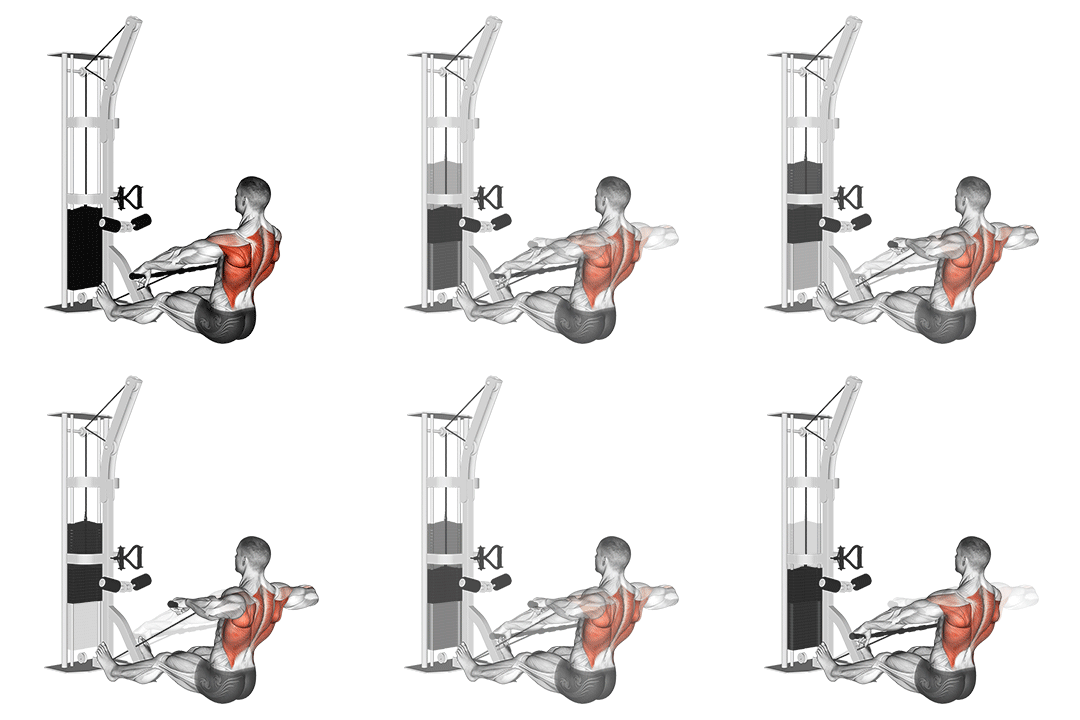
Cable Decline Seated Wide-grip Row
Head-to-Head Comparison
| Attribute | Cable Cross-over Lateral Pulldown | Cable Decline Seated Wide-grip Row |
|---|---|---|
| Target Muscle |
Lats
|
Lats
|
| Body Part |
Back
|
Back
|
| Equipment |
Cable
|
Cable
|
| Difficulty |
Intermediate
|
Intermediate
|
| Movement Type |
Compound
|
Compound
|
| Secondary Muscles |
3
|
2
|
Secondary Muscles Activated
Cable Cross-over Lateral Pulldown
Cable Decline Seated Wide-grip Row
Visual Comparison
Overview
Cable Cross-over Lateral Pulldown vs Cable Decline Seated Wide-grip Row — if you want bigger, stronger lats you need to pick the right movement for your plan. I’ll walk you through how each exercise loads the lats, which secondary muscles get involved, the biomechanics behind the movement, and clear technique cues you can use today. You’ll learn which one favors hypertrophy versus strength, which is easier to teach a client, and how to program rep ranges (3–6 for strength, 6–12 for muscle growth) and progression steps so you get measurable progress.
Key Differences
- Both exercises target the Lats using Cable. The main differences are in their movement patterns and muscle activation angles.
Pros & Cons
Cable Cross-over Lateral Pulldown
+ Pros
- Places lats into a longer length-tension position for strong mid-range tension
- Easier setup and more common in commercial gyms
- Better for isolating lats with vertical force vector and controlled tempo
- Safer spine loading when performed seated with knee anchors
− Cons
- Less mid-back thickness stimulus compared with horizontal rows
- Can cause shoulder impingement if pulled behind the head
- Limited grip variety unless using separate handles
Cable Decline Seated Wide-grip Row
+ Pros
- Strong horizontal force vector increases mid-back thickness (rhomboids, mid-traps)
- Wide grip emphasizes scapular retraction and creates a powerful finish
- Forearm and grip strength development is higher
- Easy to load heavier for strength-focused sets
− Cons
- Requires strict trunk positioning to avoid lumbar rounding
- Less lat stretch at start compared with overhead pulldown
- Setup (decline bench + low pulley) is less common in some gyms
When Each Exercise Wins
The pulldown puts the lats into a longer length at the start and lets you control tempo and peak contraction (2–3 second eccentrics, 1–2 second holds). That sustained tension across the range (6–12 reps) favors muscle growth, especially for the lower-lat sweep.
The horizontal force vector and ability to load heavier weight makes the decline wide-grip row better for raw pulling strength and increasing back thickness. Use lower reps (3–6) with strict posture to drive neural adaptations and progressive overload.
Beginners learn vertical pulling patterns more safely on the pulldown with easier spine loading and simpler cueing (drive elbows down, retract scapula). You can build scapular control and biceps strength before introducing more technical rows.
Most home setups with resistance bands or a single high anchor can replicate the pulldown more easily than a decline-row setup. Bands or anchored pulleys let you approximate the vertical vector and progressive resistance with minimal kit.
Frequently Asked Questions
Can I do both Cable Cross-over Lateral Pulldown and Cable Decline Seated Wide-grip Row in the same workout?
Yes — pairing them is effective: do the pulldown first for a fresh lat stretch and controlled reps, then the row for heavy horizontal loading. Keep total volume sensible (e.g., 3–4 sets each) and manage fatigue to maintain technique.
Which exercise is better for beginners?
Cable Cross-over Lateral Pulldown is better for most beginners because it teaches a simple vertical pull pattern and reduces spinal load. It’s easier to progress while maintaining scapular control before introducing more technical rows.
How do the muscle activation patterns differ?
Pulldowns emphasize lat lengthening and downward rotation of the scapula with strong eccentric tension, while decline rows emphasize scapular retraction and horizontal extension, increasing mid-trap and rhomboid activation. Force vector and scapular motion dictate which fibers are stressed most.
Can Cable Decline Seated Wide-grip Row replace Cable Cross-over Lateral Pulldown?
It can replace the pulldown when your priority is mid-back thickness or strength, but it won’t replicate the same lat stretch and vertical force vector needed for full lower-lat development. For balanced development, rotating both across training blocks is the best approach.
Expert Verdict
Use the Cable Cross-over Lateral Pulldown when you want targeted lat development, controlled rep tempos, and lower spinal loading—ideal for hypertrophy blocks or rehab-focused sessions. Choose the Cable Decline Seated Wide-grip Row when your goal is thicker mid-back and higher raw pulling strength; it loads the rhomboids and mid-traps more and allows heavier weight. Program pulldowns for 6–12 reps with slow eccentrics and contraction holds, and rows for 3–6 reps for strength or 6–10 for density. Alternate both across phases to cover length-tension and horizontal force-vector needs and maximize overall back progress.
Also Compare
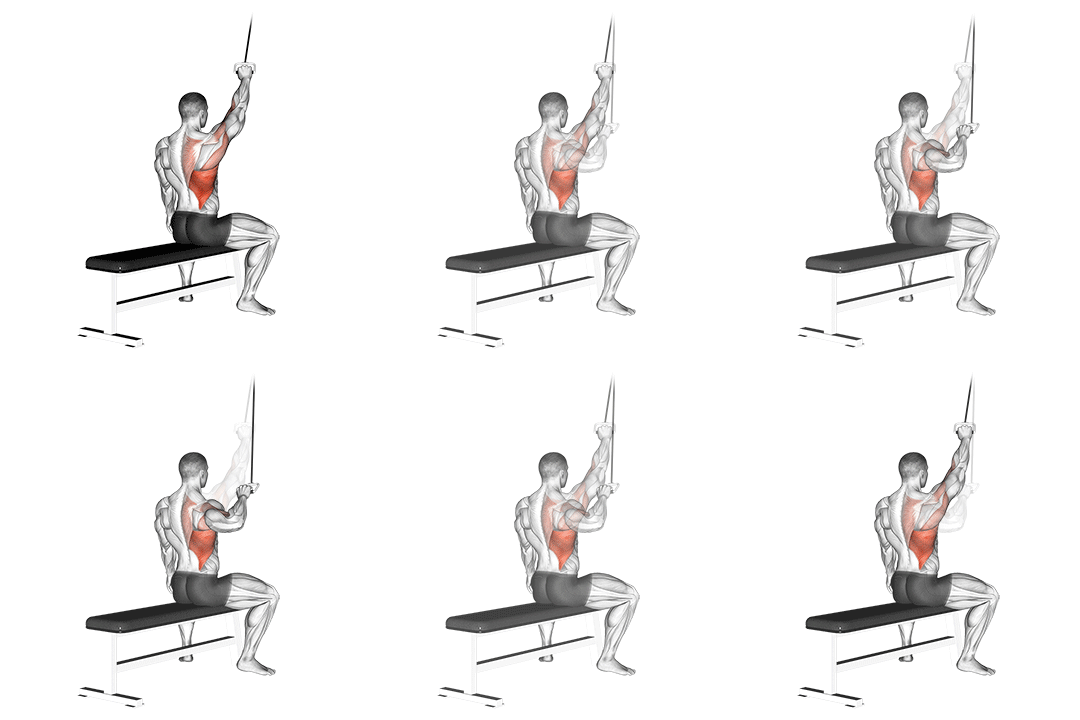
More comparisons with Cable Cross-over Lateral Pulldown
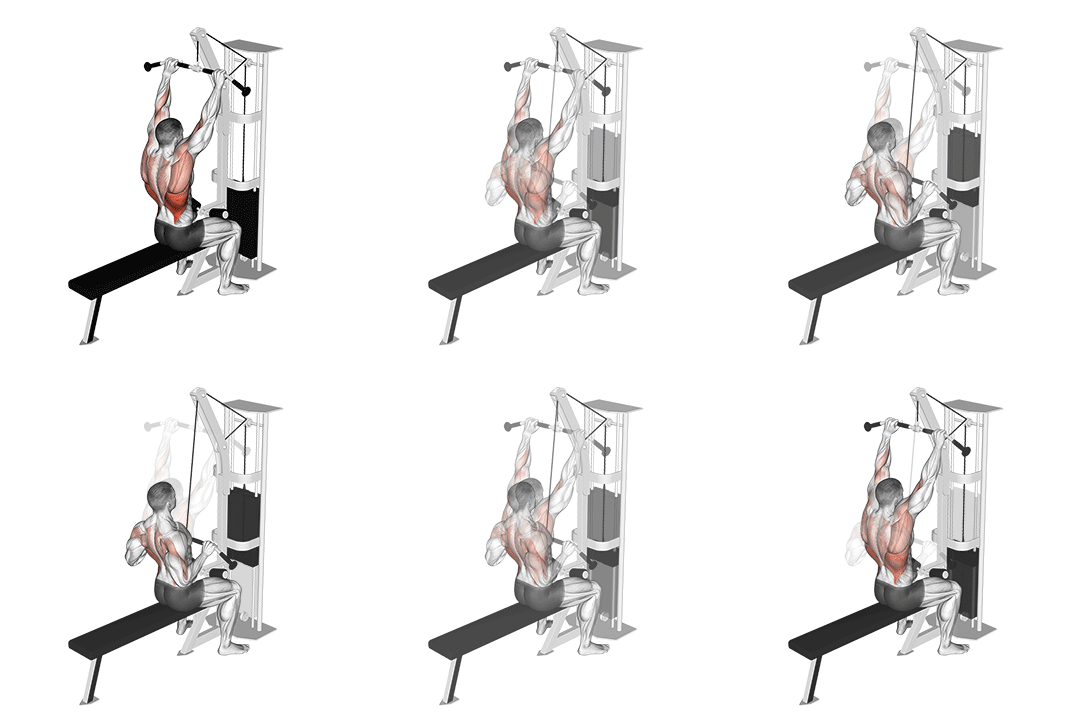
More comparisons with Cable Decline Seated Wide-grip Row
Compare More Exercises
Use our free comparison tool to analyze any two exercises head-to-head.
Compare Exercises