

Cable Cross-over Lateral Pulldown vs Cable Floor Seated Wide-grip Row: Complete Comparison Guide
Cable Cross-over Lateral Pulldown vs Cable Floor Seated Wide-grip Row — two cable-based back moves that both target the lats but deliver different force vectors and muscle emphases. You’ll get a clear breakdown of primary and secondary muscle activation, step-by-step technique cues, equipment needs, learning curves, and programming recommendations (rep ranges and progression). Read on to decide which one fits your goals: hypertrophy, strength, beginner training, or home workouts, and pick the drill that gives you the best mechanical tension and movement pattern for the results you want.
Exercise Comparison
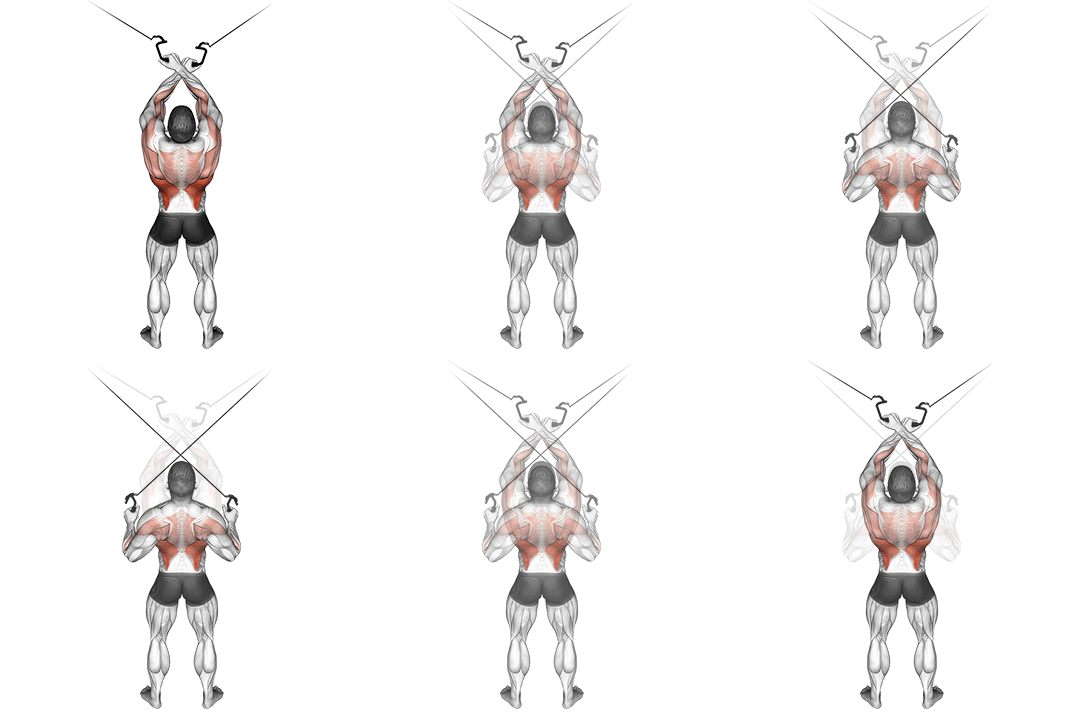
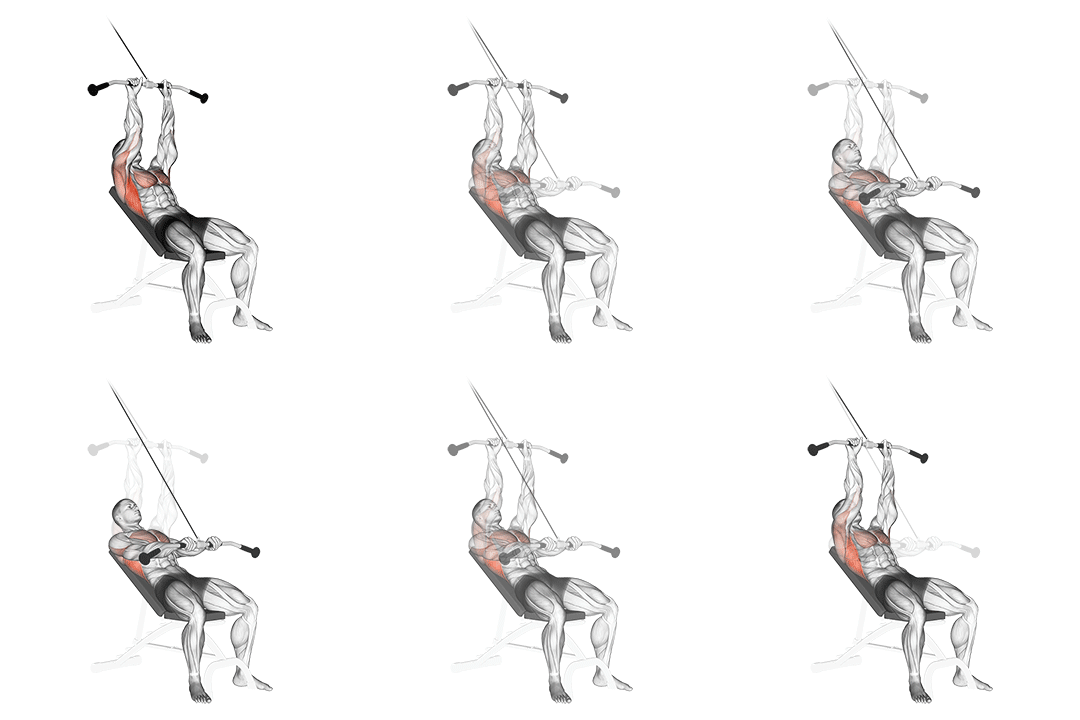
Cable Cross-over Lateral Pulldown
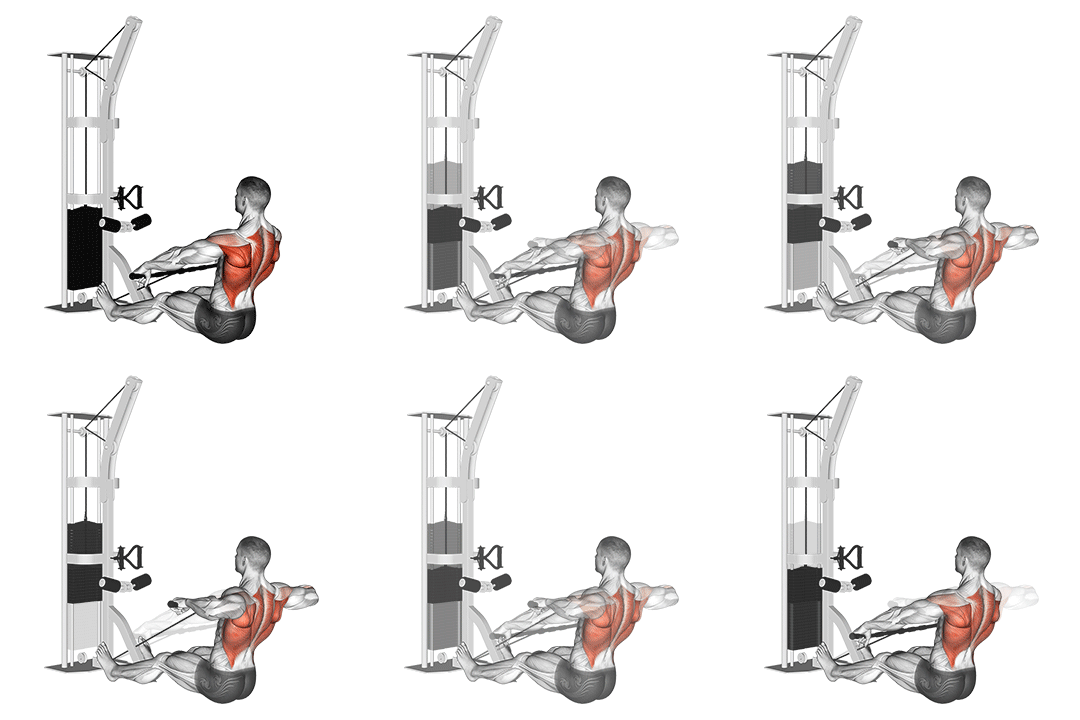
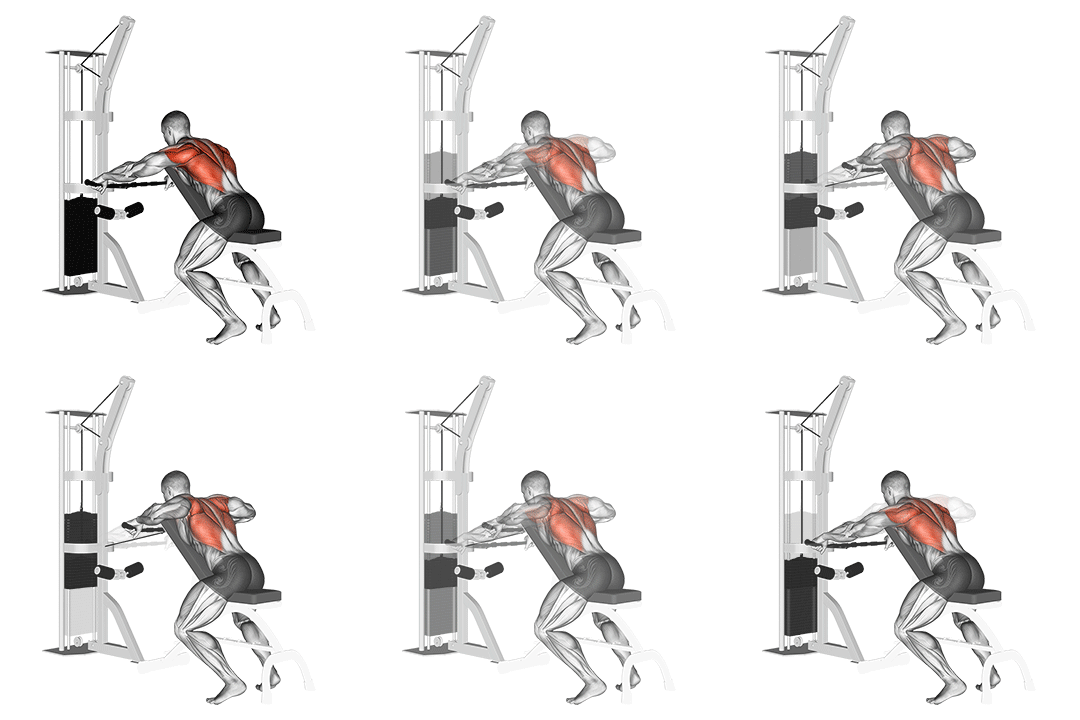
Cable Floor Seated Wide-grip Row
Head-to-Head Comparison
| Attribute | Cable Cross-over Lateral Pulldown | Cable Floor Seated Wide-grip Row |
|---|---|---|
| Target Muscle |
Lats
|
Lats
|
| Body Part |
Back
|
Back
|
| Equipment |
Cable
|
Cable
|
| Difficulty |
Intermediate
|
Intermediate
|
| Movement Type |
Compound
|
Compound
|
| Secondary Muscles |
3
|
2
|
Secondary Muscles Activated
Cable Cross-over Lateral Pulldown
Cable Floor Seated Wide-grip Row
Visual Comparison
Overview
Cable Cross-over Lateral Pulldown vs Cable Floor Seated Wide-grip Row — two cable-based back moves that both target the lats but deliver different force vectors and muscle emphases. You’ll get a clear breakdown of primary and secondary muscle activation, step-by-step technique cues, equipment needs, learning curves, and programming recommendations (rep ranges and progression). Read on to decide which one fits your goals: hypertrophy, strength, beginner training, or home workouts, and pick the drill that gives you the best mechanical tension and movement pattern for the results you want.
Key Differences
- Both exercises target the Lats using Cable. The main differences are in their movement patterns and muscle activation angles.
Pros & Cons
Cable Cross-over Lateral Pulldown
+ Pros
- Delivers strong lat stretch at overhead start, boosting mechanical tension for muscle growth
- Vertical vector emphasizes shoulder extension and lower-lat fibers
- Easily manipulated tempo (slow eccentric) to increase time under tension
- Several grip options (neutral, supinated, wide) to shift emphasis
− Cons
- Requires a tall pulley or crossover rig
- Can provoke shoulder impingement if performed behind the neck or with poor scapular control
- Dual-handle coordination can be tricky for beginners
Cable Floor Seated Wide-grip Row
+ Pros
- Stable, horizontal pull that strongly targets mid-back and forearms
- Easier to replicate with low anchors or bands for home training
- Typically allows higher absolute loads for progressive strength work
- Clear cueing: drive elbows back and squeeze the scapulae
− Cons
- Less lat stretch at the start, which can reduce peak length-tension stimulus
- Floor setup limits hip drive and may reduce torso leverage for some lifters
- Grip and forearm fatigue can limit loading before the lats are fully taxed
When Each Exercise Wins
The vertical pull places the lats in a more lengthened position at the top of the movement, increasing eccentric tension and muscle fiber recruitment. Use 8–12 reps with a 2–3 second eccentric and full scapular control to maximize hypertrophy.
The horizontal vector and seated position allow you to handle higher loads and train heavy sets (4–6 reps) with strong scapular retraction, which builds pulling strength and improves mid-back capacity. Heavier rows translate well to compound pulling movements.
A pulldown offers a clearer vertical pattern with less demand for low-back stabilization and easier incremental loading. Teach the pulldown cue: chest up, lead with elbows, scapula down-and-back, and start at 8–12 reps.
Low-anchor horizontal rows are simple to replicate with resistance bands or a low pulley, require minimal footprint, and produce strong mid-back and forearm activation without a full cable tower.
Frequently Asked Questions
Can I do both Cable Cross-over Lateral Pulldown and Cable Floor Seated Wide-grip Row in the same workout?
Yes. Pairing them in the same session addresses both vertical and horizontal vectors for the lats and mid-back. Start with the heavier or priority movement (e.g., rows for strength, pulldowns for hypertrophy) and use 2–4 sets of each with 1–2 accessory sets for overlap.
Which exercise is better for beginners?
Cable Cross-over Lateral Pulldown is generally easier for new trainees because it demands less low-back stabilization and has a simpler vertical pulling pattern. Teach scapular depression and elbow-led pulling, then progress load and tempo as technique solidifies.
How do the muscle activation patterns differ?
Pulldowns emphasize lat stretch and shoulder extension, producing high eccentric tension at longer muscle lengths, while rows emphasize scapular retraction and mid-trap/rhomboid activation with higher forearm involvement. The force vector (vertical vs horizontal) drives these differences in activation.
Can Cable Floor Seated Wide-grip Row replace Cable Cross-over Lateral Pulldown?
Not completely—rows can substitute when you lack a tall pulley and will still hit the lats, but they provide less initial lat stretch and a different mid-back emphasis. For balanced development, program both or use rows as an effective alternative focused on strength and mid-trap density.
Expert Verdict
Choose the Cable Cross-over Lateral Pulldown when your priority is lat-focused muscle growth and maximizing length-tension through an overhead start — program it in 8–12 rep sets with controlled 2–3 second eccentrics and full scapular control. Pick the Cable Floor Seated Wide-grip Row when you want heavier loading, stronger scapular retraction, and a movement that’s easy to replicate at home or with bands; program heavy 4–6 rep sets for strength or 6–10 for combined strength and size. Both work well together in a program: pulldowns for vertical tension and rows for horizontal compression and mid-back density.
Also Compare
More comparisons with Cable Cross-over Lateral Pulldown
More comparisons with Cable Floor Seated Wide-grip Row
Compare More Exercises
Use our free comparison tool to analyze any two exercises head-to-head.
Compare Exercises