

Cable Cross-over Variation vs Cable Decline Fly: Complete Comparison Guide
Cable Cross-over Variation vs Cable Decline Fly — you want a clear call on which chest isolation move to add to your training. I’ll break down how each targets the pectorals, the exact movement cues and angles to use, the equipment you need, plus rep ranges and progression options (8–15 reps, 3–5 sets). You’ll get practical technique tips for better muscle tension and reduced shoulder stress, plus scenarios showing when to pick one exercise over the other based on your goal: hypertrophy, strength carryover, or convenience.
Exercise Comparison
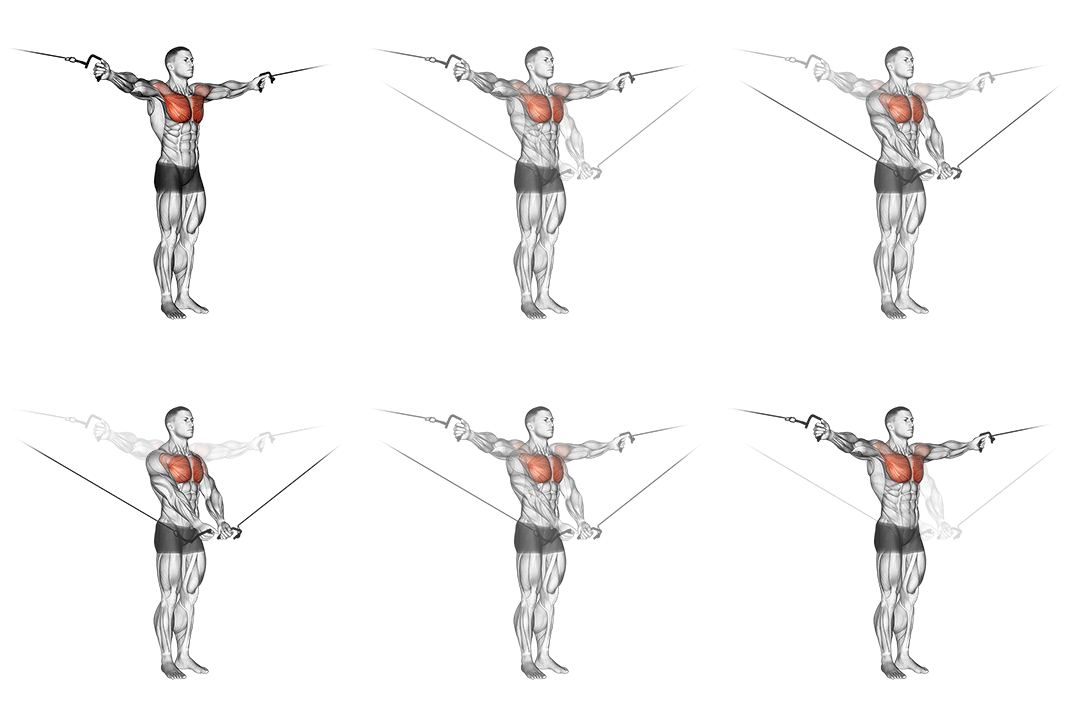
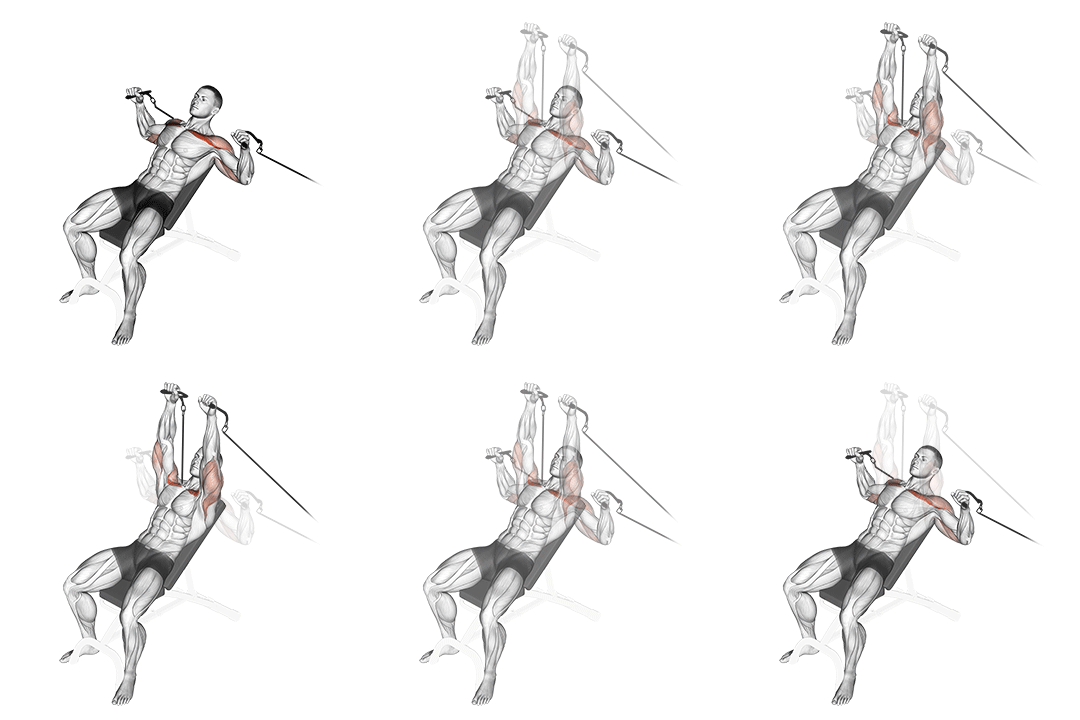
Cable Cross-over Variation
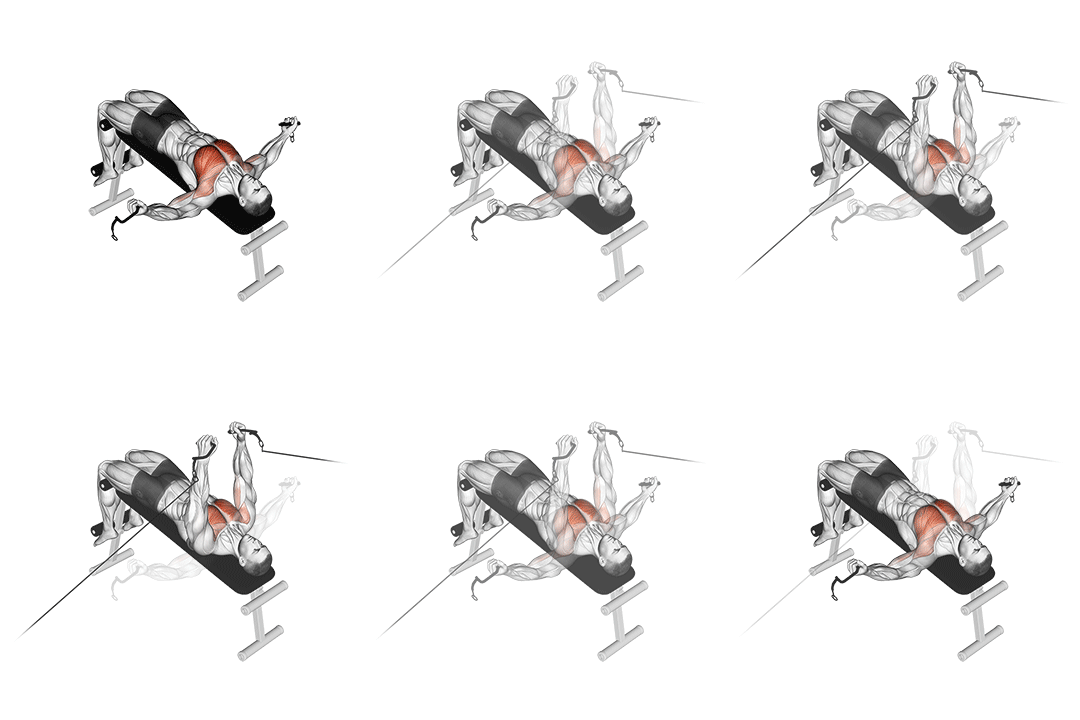
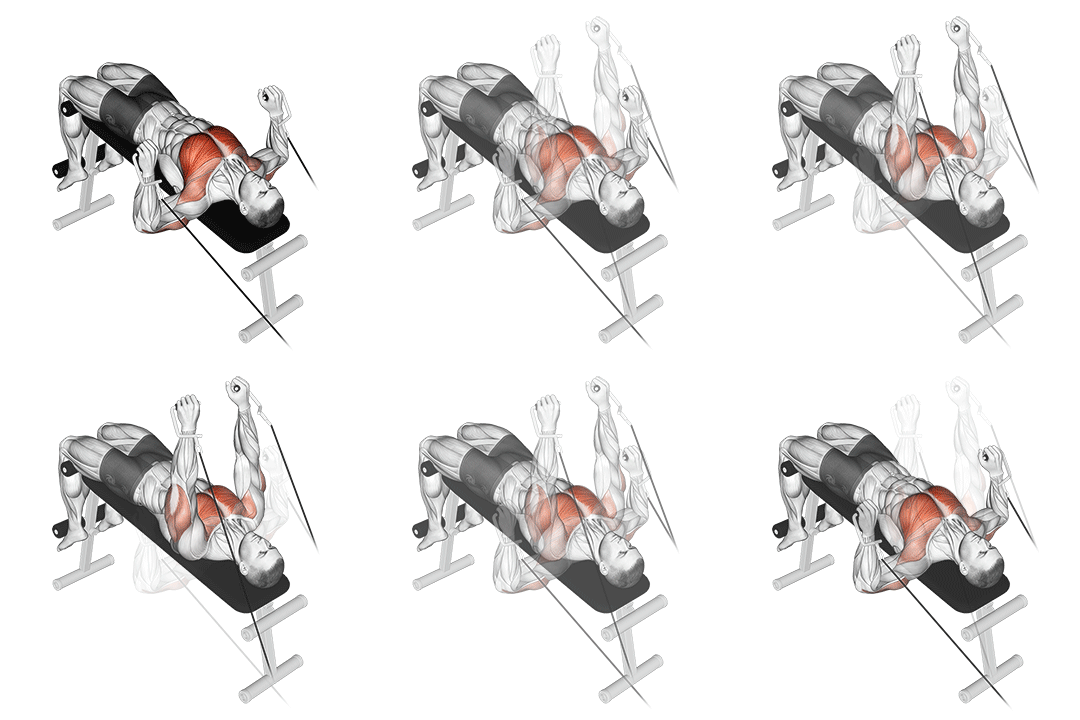
Cable Decline Fly
Head-to-Head Comparison
| Attribute | Cable Cross-over Variation | Cable Decline Fly |
|---|---|---|
| Target Muscle |
Pectorals
|
Pectorals
|
| Body Part |
Chest
|
Chest
|
| Equipment |
Cable
|
Cable
|
| Difficulty |
Intermediate
|
Intermediate
|
| Movement Type |
Isolation
|
Isolation
|
| Secondary Muscles |
2
|
2
|
Secondary Muscles Activated
Cable Cross-over Variation
Cable Decline Fly
Visual Comparison
Overview
Cable Cross-over Variation vs Cable Decline Fly — you want a clear call on which chest isolation move to add to your training. I’ll break down how each targets the pectorals, the exact movement cues and angles to use, the equipment you need, plus rep ranges and progression options (8–15 reps, 3–5 sets). You’ll get practical technique tips for better muscle tension and reduced shoulder stress, plus scenarios showing when to pick one exercise over the other based on your goal: hypertrophy, strength carryover, or convenience.
Key Differences
- Both exercises target the Pectorals using Cable. The main differences are in their movement patterns and muscle activation angles.
Pros & Cons
Cable Cross-over Variation
+ Pros
- Constant tension through full range and easy angle manipulation
- Works standing or single-arm for unilateral balance and core engagement
- Lower shoulder strain when performed with controlled ROM
- Broad progression options: pulley height, tempo, single-arm, partials
− Cons
- Requires good motor control to avoid shoulder impingement on end-range
- Less natural bracing compared to lying variations, which can limit absolute load
- Can under-emphasize lower pec fibers without specific low-high or decline angles
Cable Decline Fly
+ Pros
- Direct emphasis on lower pec fibers due to decline angle (20–35°)
- Bench provides body stability allowing focused chest isolation
- Longer initial stretch can enhance muscle length-tension stimulus
- Simple setup once bench and pulley alignment are correct
− Cons
- Greater passive stretch increases shoulder and biceps tendon stress if overloaded
- Less angle variability — harder to shift emphasis without different bench angles
- Requires decline bench space and careful setup, reducing accessibility
When Each Exercise Wins
It delivers constant tension and easier angle manipulation to target the whole pec across 8–15 rep ranges. You can use unilateral work and tempo control to increase time under tension and fatigue specific fibers effectively.
While both are isolation moves, decline fly lets you stabilize on a bench and load the lower pec fibers in a way that transfers better to decline pressing patterns. Bracing allows slightly heavier load application for improving mechanical tension in that specific vector.
Standing variations are easier to teach and progress; you can start with light load and neutral pulley height to learn horizontal adduction without the additional complexity of bench setup and pelvic bracing.
Many home setups include a single adjustable pulley or resistance bands that mimic cable angles; decline fly needs a decline bench and space, making it less practical at home.
Frequently Asked Questions
Can I do both Cable Cross-over Variation and Cable Decline Fly in the same workout?
Yes — do the cross-over earlier to pre-exhaust and set tension patterns, then finish with 2–3 sets of decline fly at lighter loads to emphasize the lower pecs. Keep total volume per session within 12–20 working sets for the chest to avoid overtraining.
Which exercise is better for beginners?
Cable Cross-over Variation is better for beginners because you can start standing with light resistance and simpler pulley heights. It teaches horizontal adduction and scapular control without the extra coordination of a decline bench.
How do the muscle activation patterns differ?
Cross-overs keep a perpendicular force vector to the torso for constant tension and peak contraction near end-range horizontal adduction, favoring mid-sternal fibers when angled appropriately. Decline fly shifts the line-of-pull lower, increasing stretch and loading of the lower pec fibers during the initial phase of the rep.
Can Cable Decline Fly replace Cable Cross-over Variation?
Not entirely — decline flys specialize the lower pec and offer different length-tension cues, but they lack the angle versatility and unilateral options of cross-overs. If you must pick one, choose cross-overs for overall chest development and decline flys as a targeted supplemental exercise.
Expert Verdict
Use Cable Cross-over Variation when you want versatile chest shaping, constant tension, and safer angle adjustments — ideal for hypertrophy, unilateral work, and training variety. Choose Cable Decline Fly when your goal is to overload the lower pec fibers specifically and you have a decline bench to brace on; it provides a longer initial stretch and direct mechanical tension in the lower chest vector. Program both: prioritize cross-overs for regular volume (8–15 reps, 3–5 sets) and add decline flys periodically as a focused lower-chest finisher using lower reps or controlled eccentrics to avoid shoulder stress.
Also Compare
More comparisons with Cable Cross-over Variation
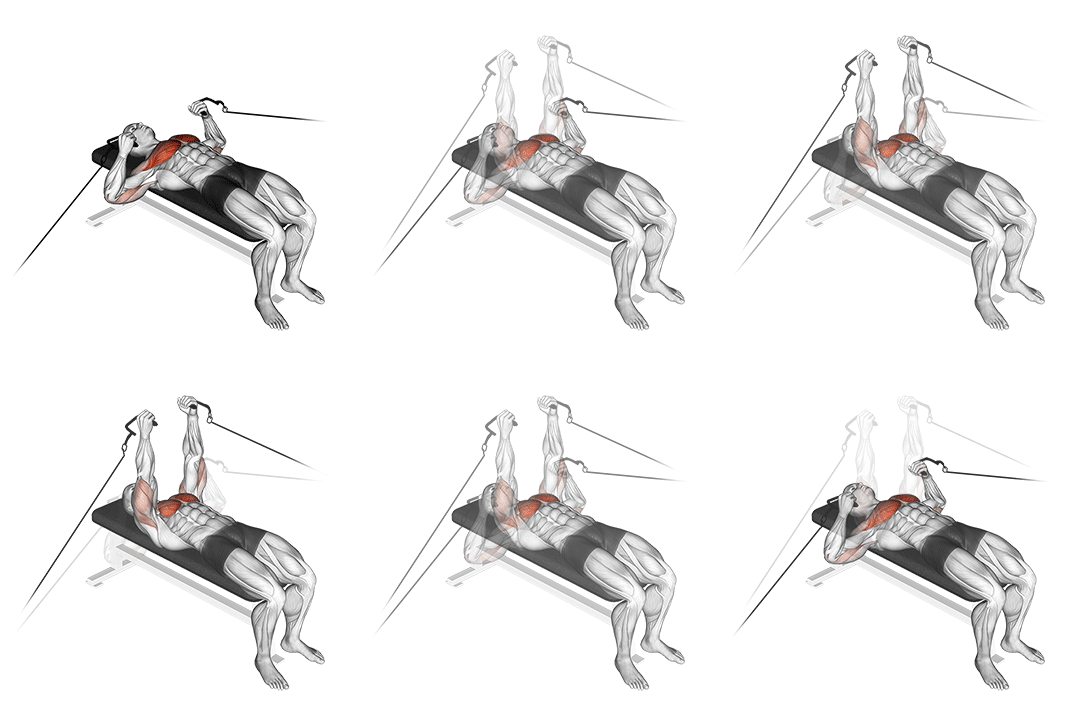
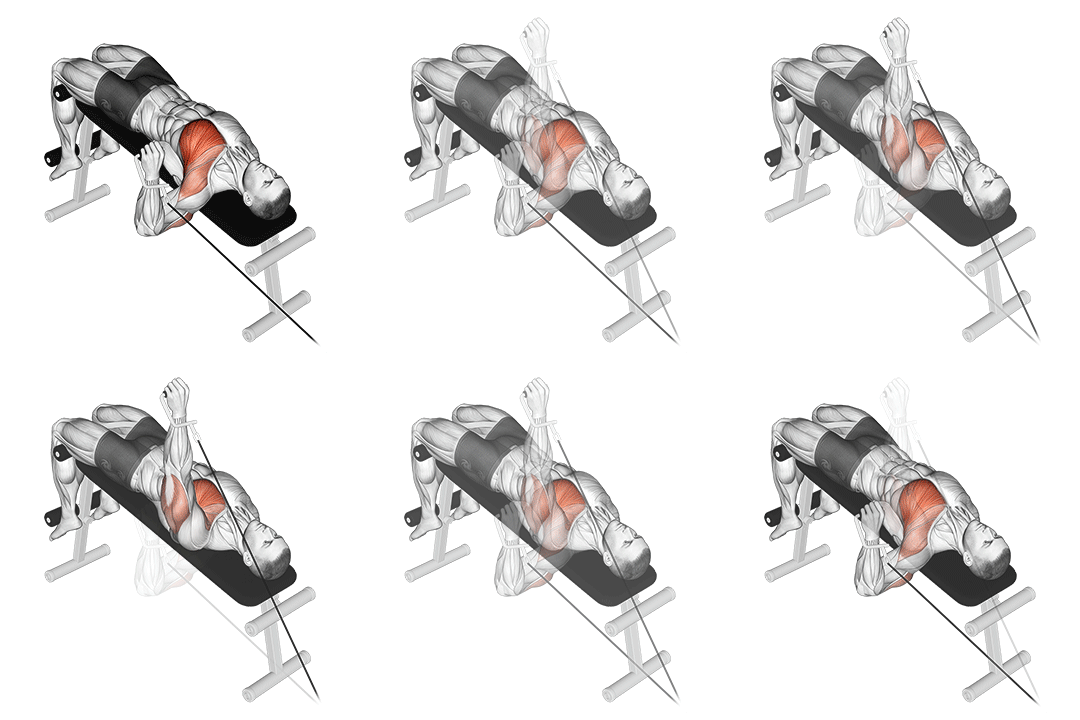
Compare More Exercises
Use our free comparison tool to analyze any two exercises head-to-head.
Compare Exercises