

Cable Cross-over Variation vs Cable Decline One Arm Press: Complete Comparison Guide
Cable Cross-over Variation vs Cable Decline One Arm Press — two cable-based chest moves that look similar on paper but load your pecs very differently. If you want clear guidance on which to use, this guide gives you the how, the why, and the when. You’ll get technique cues, biomechanical breakdowns (force vectors, length-tension, joint angles), programming tips with rep ranges, and specific scenarios where one exercise outperforms the other. Read on so you can pick the right chest tool for hypertrophy, strength, or practical training constraints.
Exercise Comparison
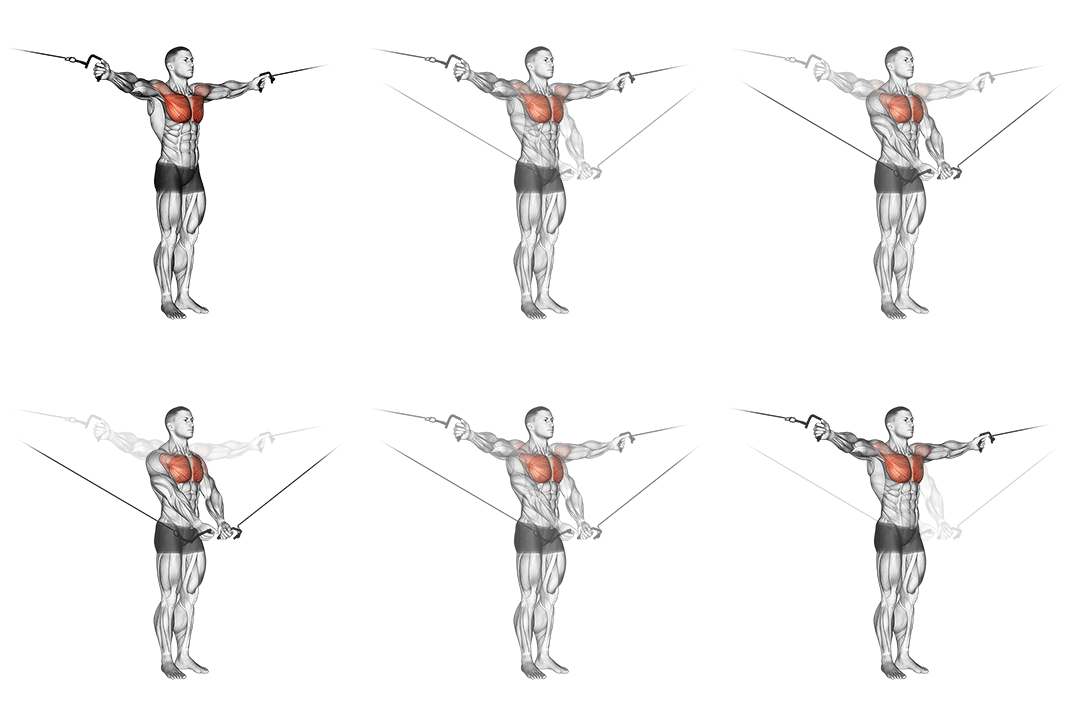
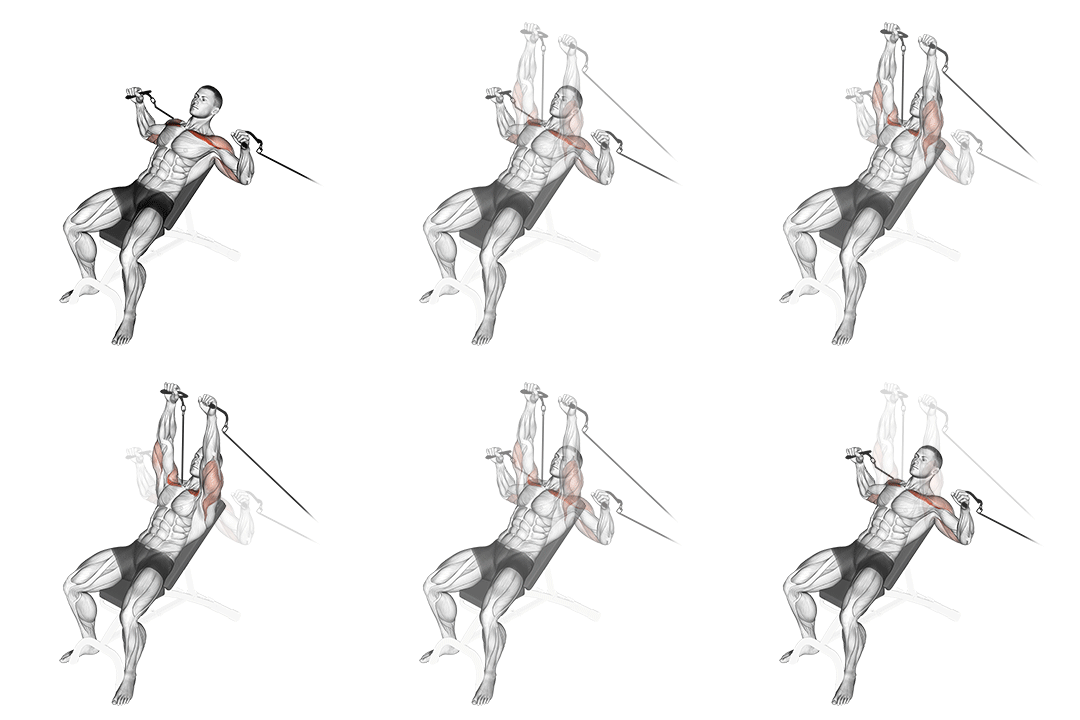
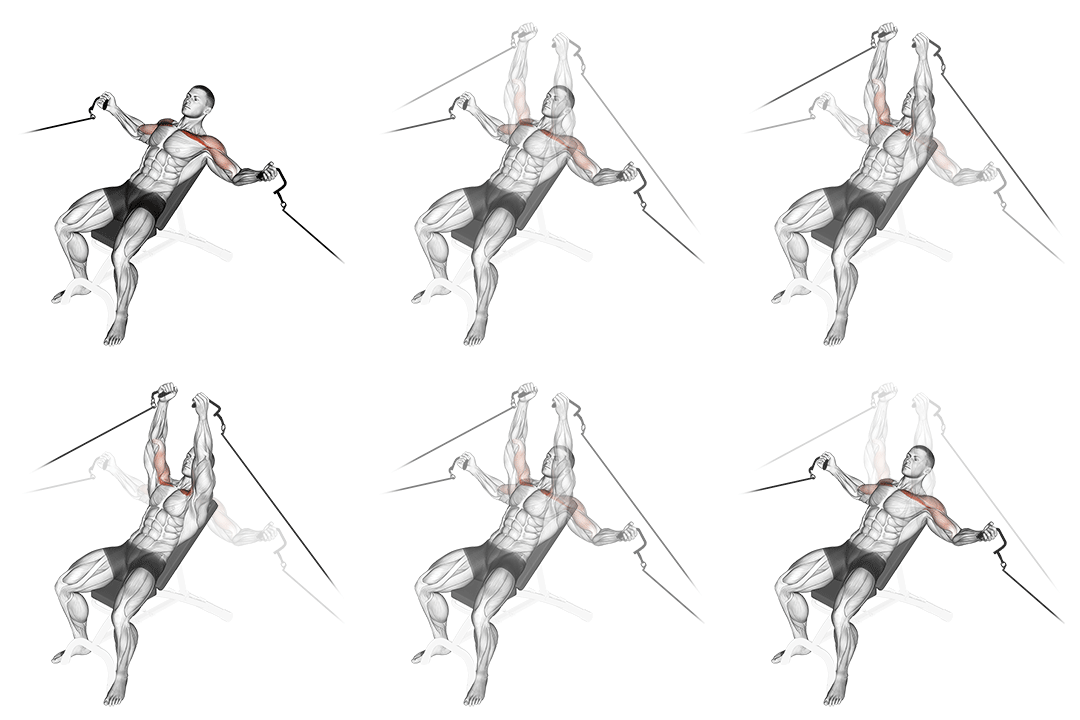
Cable Cross-over Variation
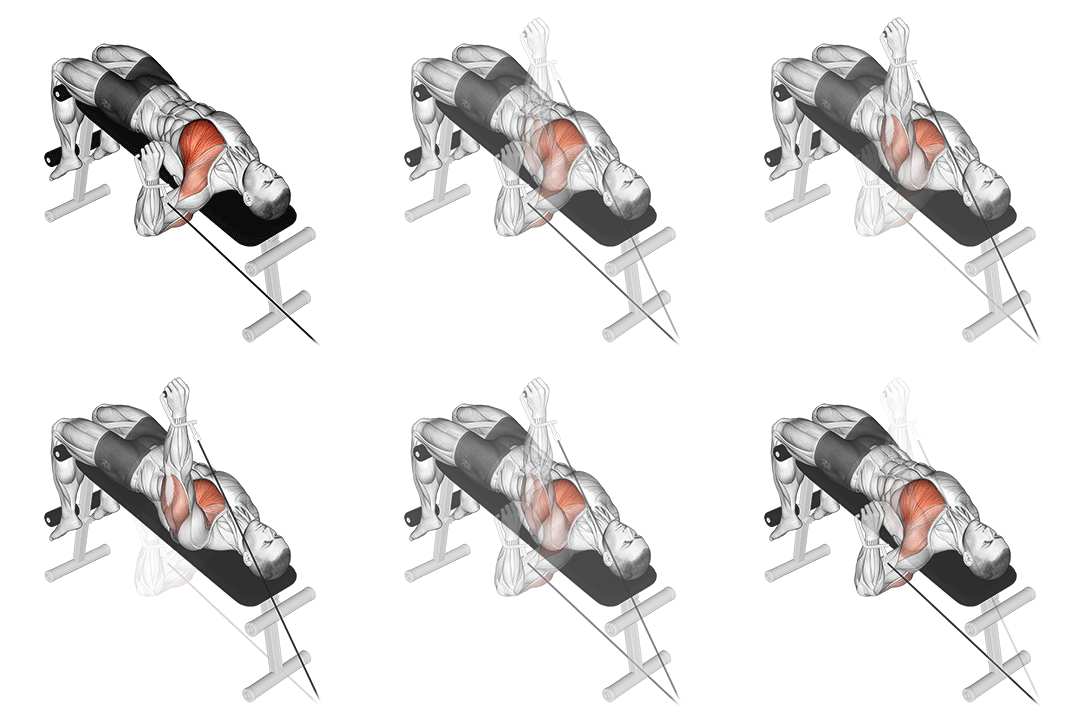
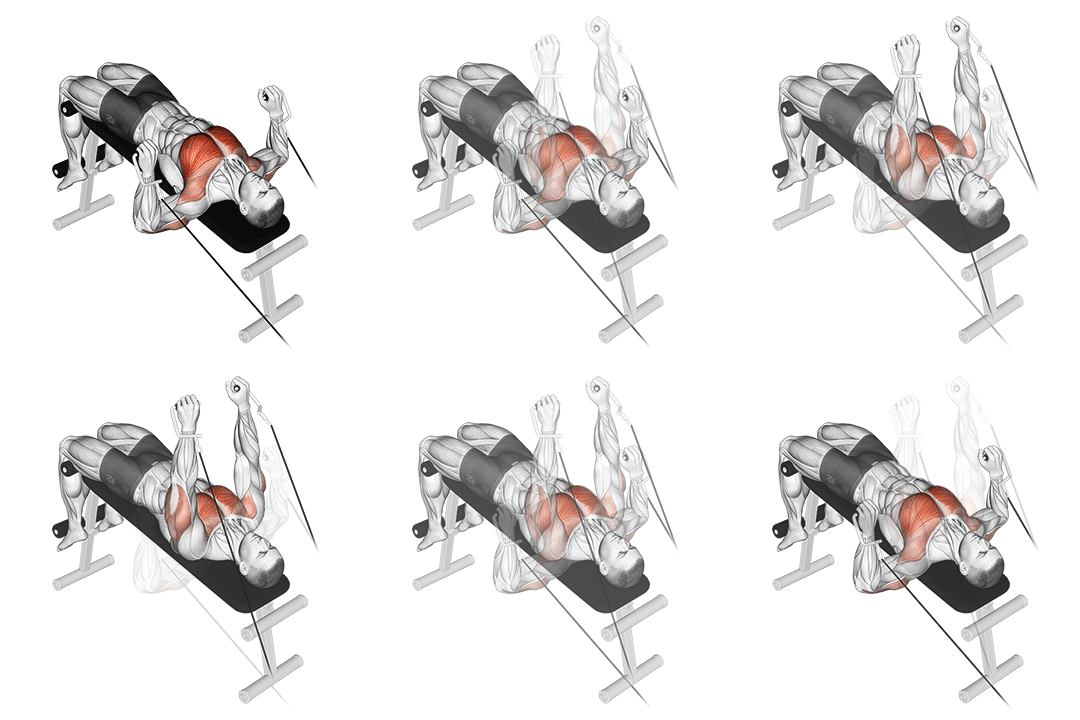
Cable Decline One Arm Press
Head-to-Head Comparison
| Attribute | Cable Cross-over Variation | Cable Decline One Arm Press |
|---|---|---|
| Target Muscle |
Pectorals
|
Pectorals
|
| Body Part |
Chest
|
Chest
|
| Equipment |
Cable
|
Cable
|
| Difficulty |
Intermediate
|
Intermediate
|
| Movement Type |
Isolation
|
Compound
|
| Secondary Muscles |
2
|
2
|
Secondary Muscles Activated
Cable Cross-over Variation
Cable Decline One Arm Press
Visual Comparison
Overview
Cable Cross-over Variation vs Cable Decline One Arm Press — two cable-based chest moves that look similar on paper but load your pecs very differently. If you want clear guidance on which to use, this guide gives you the how, the why, and the when. You’ll get technique cues, biomechanical breakdowns (force vectors, length-tension, joint angles), programming tips with rep ranges, and specific scenarios where one exercise outperforms the other. Read on so you can pick the right chest tool for hypertrophy, strength, or practical training constraints.
Key Differences
- Cable Cross-over Variation is an isolation exercise, while Cable Decline One Arm Press is a compound movement.
- Both exercises target the Pectorals using Cable. The main differences are in their movement patterns and muscle activation angles.
Pros & Cons
Cable Cross-over Variation
+ Pros
- Direct pec isolation with strong peak contraction for hypertrophy
- Easily dial in range of motion and squeeze at end-range
- Low systemic fatigue — good as a finisher
- Minimal need for a decline bench or heavy loading
− Cons
- Less carryover to pressing strength since it’s not a compound movement
- Requires a dual-pulley cable setup that some home gyms lack
- Can overstretch the shoulder if technique or weight selection is poor
Cable Decline One Arm Press
+ Pros
- Compound unilateral press builds pressing strength and stability
- Stronger recruitment of triceps and anterior deltoid for overall pressing transfer
- Decline angle targets lower pec fibers effectively
- Progresses well via increased load, tempo changes, and unilateral overloads
− Cons
- Higher coordination and anti-rotation demand — harder to master
- Greater shoulder and elbow loading increases injury risk under heavy load
- Requires a decline bench plus aligned cable column, limiting accessibility
When Each Exercise Wins
Choose the crossover when your goal is targeted chest hypertrophy — it produces a strong peak contraction and allows precise tensioning across the mid-chest. Use higher reps (8–20), short rests, and tempo control to maximize time under tension and metabolic stress.
The decline one-arm press is better for building unilateral pressing strength because it’s a compound movement that loads the triceps and deltoid more and lets you progressively increase resistance. Work in lower rep ranges (3–8) with heavier loads and controlled bracing.
Beginners can more quickly learn controlled horizontal adduction and the mind–muscle connection with crossovers, with less need for anti-rotation stability. Start light, focus on form and a 2–1–2 tempo to build motor control before adding complex unilateral presses.
If you don’t have a cable tower at home, you can more easily substitute a single-dumbbell decline press or decline push-up to target lower pecs, making the decline pattern more practical. Crossovers rely on a functional trainer that many home setups lack.
Frequently Asked Questions
Can I do both Cable Cross-over Variation and Cable Decline One Arm Press in the same workout?
Yes — use the decline one-arm press earlier as a compound strength mover (3–6 sets of 3–8 reps) and finish with crossovers as an isolation finisher (2–4 sets of 10–20 reps). This sequence leverages strength first, then metabolic and contractile stimulus for hypertrophy.
Which exercise is better for beginners?
Cable Cross-over Variation is generally better for beginners because it’s simpler to control and teaches chest horizontal adduction and contraction. Start light, focus on full range and tempo, and only add unilateral compound presses after building basic stability.
How do the muscle activation patterns differ?
Crossovers produce a high-tension peak at end-range horizontal adduction, emphasizing medial pec fibers and squeezing under short to mid muscle length. Decline one-arm presses load the pec across a longer concentric path with an inferior-to-anterior force vector, engaging lower pec fibers plus more triceps and anterior deltoid work.
Can Cable Decline One Arm Press replace Cable Cross-over Variation?
Not entirely — the decline press can substitute when you want strength and lower-pec emphasis, but it won’t provide the same peak contraction and isolation the crossover does. If your priority is targeted hypertrophy, keep crossovers in the program as a dedicated isolation movement.
Expert Verdict
Use the Cable Cross-over Variation when you want precise pec isolation, peak contractions, and hypertrophy-focused work—ideal for finishers and high-volume cycles (8–20 reps, tempo emphasis). Choose the Cable Decline One Arm Press when you want to build unilateral pressing strength, shoulder stability, and lower-pec development; load it heavier and train in the 3–8 rep range while maintaining strict bracing. Both are intermediate moves: pair them strategically—use crossovers to sculpt and polish the chest and decline one-arm presses to build strength and unilateral control. Pick the tool that matches your immediate training block and program the other as an accessory.
Also Compare
More comparisons with Cable Cross-over Variation
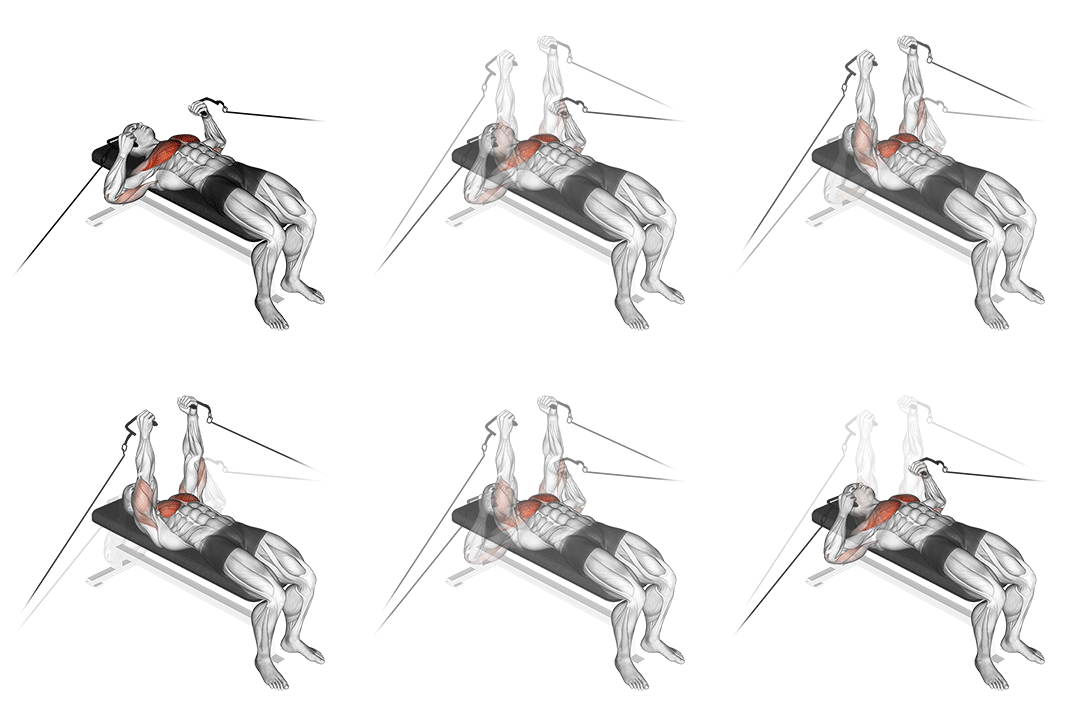
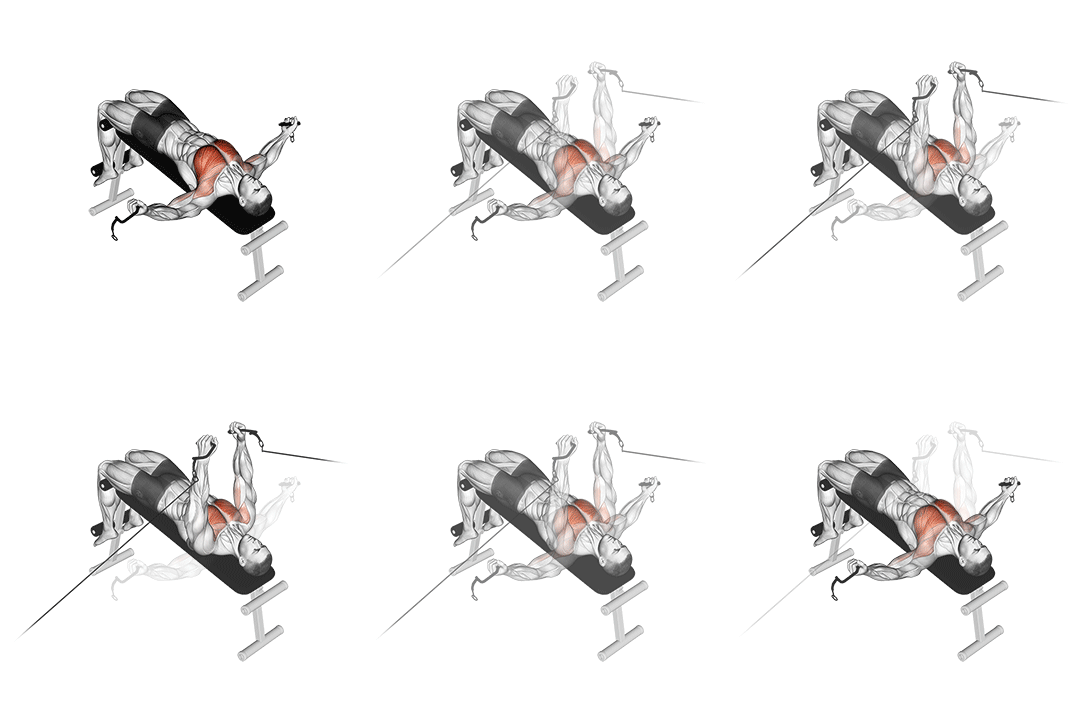
More comparisons with Cable Decline One Arm Press
Compare More Exercises
Use our free comparison tool to analyze any two exercises head-to-head.
Compare Exercises