

Cable Cross-over Variation vs Cable Decline Press: Complete Comparison Guide
Cable Cross-over Variation vs Cable Decline Press — you want a chest move that fits your goals, equipment, and movement pattern. I’ll break down how each targets the pectorals, how secondary muscles contribute, the equipment and setup you need, and which to pick for hypertrophy, strength, beginners, or limited-equipment sessions. Read technique cues, biomechanical reasoning (force vectors, length-tension), rep ranges, and clear recommendations so you can pick the right exercise and program it into your workouts.
Exercise Comparison
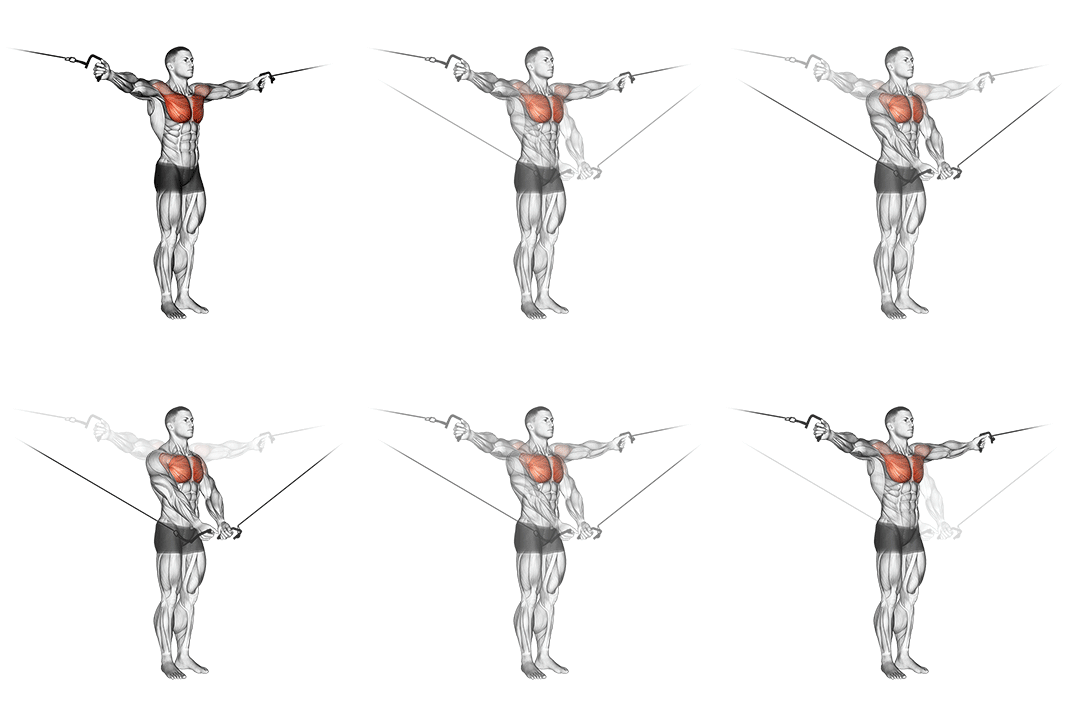
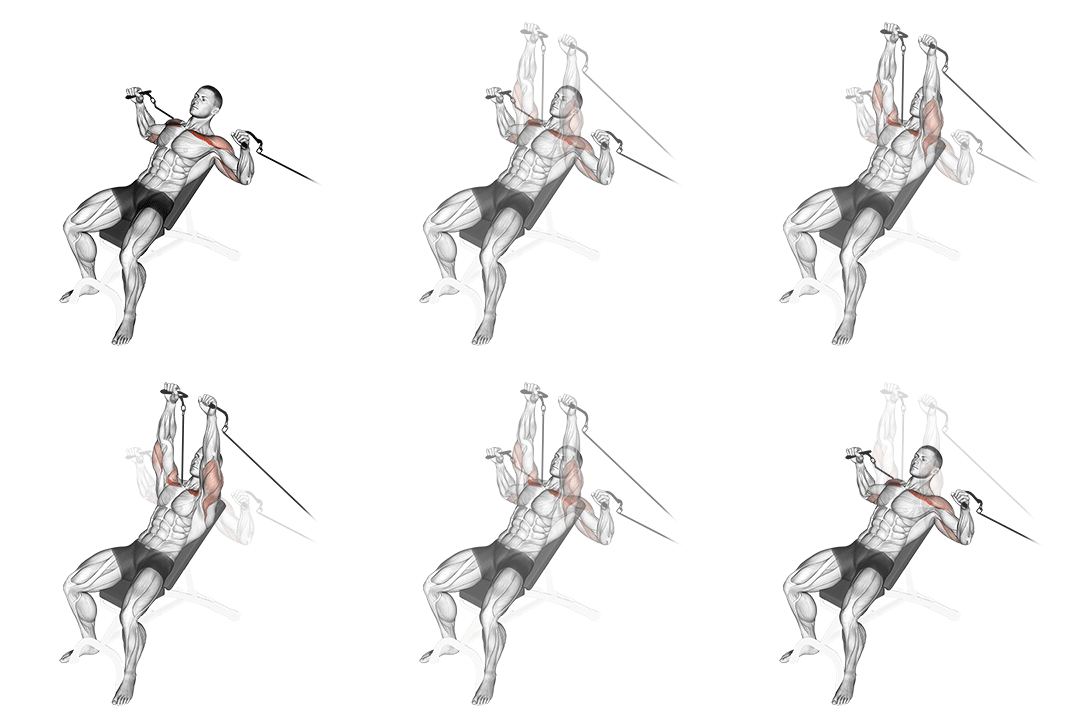
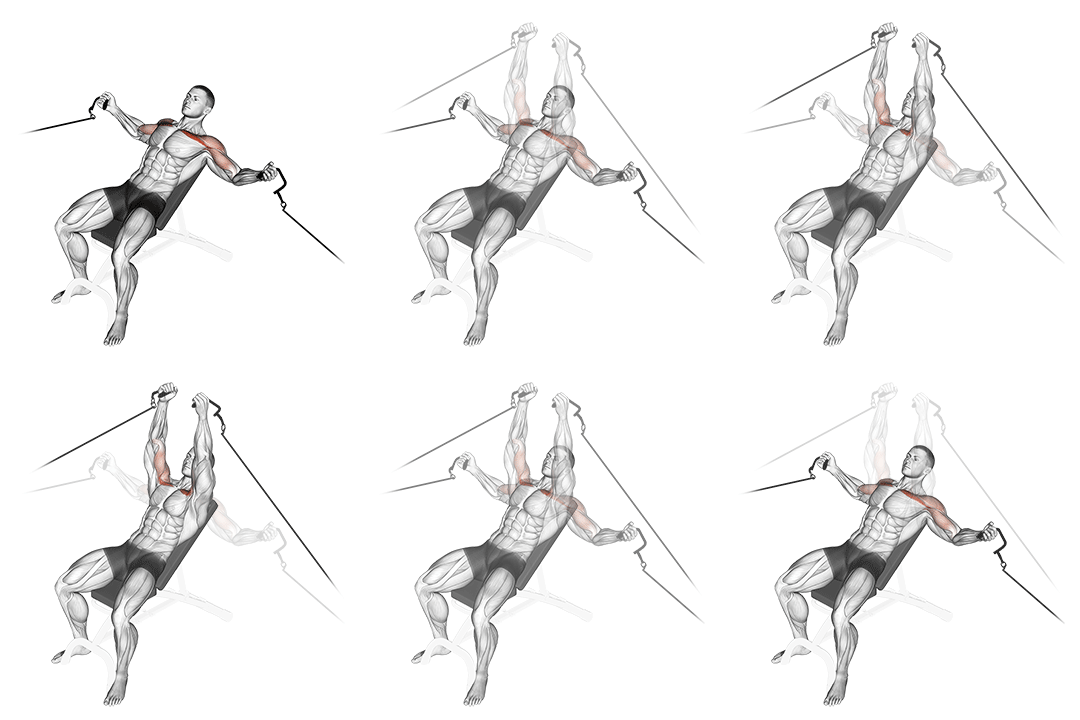
Cable Cross-over Variation
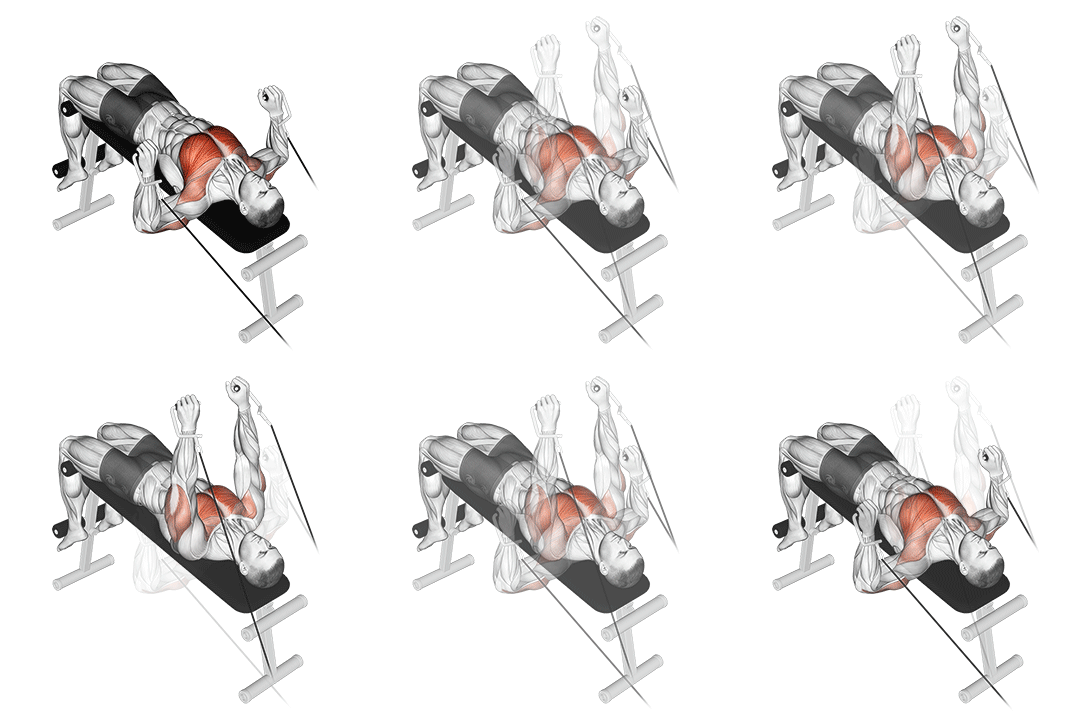
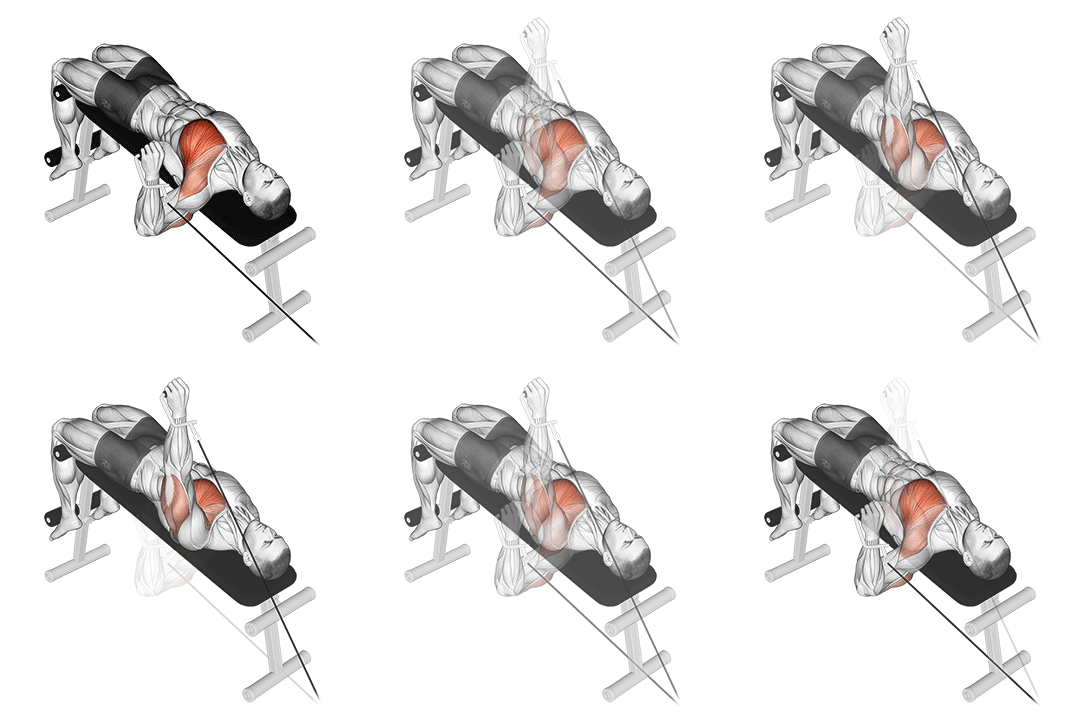
Cable Decline Press
Head-to-Head Comparison
| Attribute | Cable Cross-over Variation | Cable Decline Press |
|---|---|---|
| Target Muscle |
Pectorals
|
Pectorals
|
| Body Part |
Chest
|
Chest
|
| Equipment |
Cable
|
Cable
|
| Difficulty |
Intermediate
|
Intermediate
|
| Movement Type |
Isolation
|
Compound
|
| Secondary Muscles |
2
|
2
|
Secondary Muscles Activated
Cable Cross-over Variation
Cable Decline Press
Visual Comparison
Overview
Cable Cross-over Variation vs Cable Decline Press — you want a chest move that fits your goals, equipment, and movement pattern. I’ll break down how each targets the pectorals, how secondary muscles contribute, the equipment and setup you need, and which to pick for hypertrophy, strength, beginners, or limited-equipment sessions. Read technique cues, biomechanical reasoning (force vectors, length-tension), rep ranges, and clear recommendations so you can pick the right exercise and program it into your workouts.
Key Differences
- Cable Cross-over Variation is an isolation exercise, while Cable Decline Press is a compound movement.
- Both exercises target the Pectorals using Cable. The main differences are in their movement patterns and muscle activation angles.
Pros & Cons
Cable Cross-over Variation
+ Pros
- Excellent isolation and peak contraction for the pecs and shaping the chest
- Constant tension through the concentric and eccentric phases
- Highly adjustable pulley height lets you target specific pec fibers (upper/mid/lower)
- Can be scaled with bands or single-arm variations for unilateral work and imbalance correction
− Cons
- Harder to progressively overload with large weight jumps
- Greater demand on shoulder stabilizers and rotator cuff
- Less transfer to maximal pressing strength compared to compound presses
Cable Decline Press
+ Pros
- Compound movement allows heavier loading for strength development
- Strong lower-pec emphasis at a -15° to -30° decline angle
- Triceps and anterior delts assist, improving pressing carryover
- Clear linear progression by increasing load and lowering rep ranges
− Cons
- Requires a decline bench or specific cable setup
- Can reduce peak adduction/contractile isolation compared to cross-overs
- Higher spinal or shoulder strain risk if technique or bench angle is poor
When Each Exercise Wins
Cross-overs let you maximize time under tension and peak contraction, ideal for 8–15 rep ranges and 30–60 seconds TUT per set. The ability to change pulley height precisely targets specific pec fibers for balanced hypertrophy.
Decline pressing is a compound pattern that accepts higher absolute loads and suits 3–6 rep strength blocks. The pressing vector allows more force production and better carryover to heavier horizontal press variations.
Beginners benefit from the simpler, familiar press motor pattern and straightforward progression. With coach-led technique (scapular set, elbow path), it teaches pressing mechanics with less coordination demand than controlled cross-overs.
Cross-over mechanics can be approximated with resistance bands anchored high or single-handle setups, making it easier to replicate at home. Decline presses require a bench and fixed cable geometry that many home gyms lack.
Frequently Asked Questions
Can I do both Cable Cross-over Variation and Cable Decline Press in the same workout?
Yes. A solid sequence is to perform Cable Decline Press first for heavy, compound loading (3–6 or 6–8 reps), then use Cable Cross-over Variation as a finisher for 8–15 reps to maximize time under tension and peak contraction.
Which exercise is better for beginners?
Cable Decline Press is generally better for beginners because it follows a familiar pressing pattern and is easier to overload progressively. Ensure a proper scapular set and a moderate decline (-15° to -20°) to reduce shoulder strain.
How do the muscle activation patterns differ?
Cross-overs emphasize horizontal adduction and peak shortening of the pecs with long time under tension, while decline presses shift the force vector to favor mid-range force production and lower sternal fibers, recruiting more triceps and anterior deltoid during the concentric phase.
Can Cable Decline Press replace Cable Cross-over Variation?
If your priority is maximal loading and strength transfer, decline presses can replace cross-overs for compound stimulus. For fiber-specific shaping and peak contraction, keep cross-overs in your program as a complementary isolation movement.
Expert Verdict
Use the Cable Cross-over Variation when your goal is targeted chest development, muscle shape, and high time under tension—apply 8–15 reps, slow eccentrics (2–4 seconds), and adjustable pulley heights to hit specific fibers. Choose Cable Decline Press when you want to increase pressing strength and load the lower pecs under heavier resistance; program 3–6 reps for strength or 6–12 for heavy hypertrophy sets with strict scapular control and a -15° to -30° decline. For a balanced program, pair them: use decline presses early for heavy work and finish with cross-overs for fiber-specific fatigue and metabolic stimulus.
Also Compare
More comparisons with Cable Cross-over Variation
Compare More Exercises
Use our free comparison tool to analyze any two exercises head-to-head.
Compare Exercises