

Cable Cross-over Variation vs Cable Incline Bench Press: Complete Comparison Guide
Cable Cross-over Variation vs Cable Incline Bench Press — you’re deciding which cable chest move deserves a regular spot in your program. I’ll show you how each exercise loads the pectorals, how secondary muscles (deltoids and triceps) contribute, what equipment and angles matter, and which one fits specific goals like hypertrophy, strength, or home training. You’ll get clear technique cues for safer execution, rep-range recommendations (6–12 for strength, 8–15 for hypertrophy), and practical progression tips so you can pick the right chest staple and apply it immediately.
Exercise Comparison
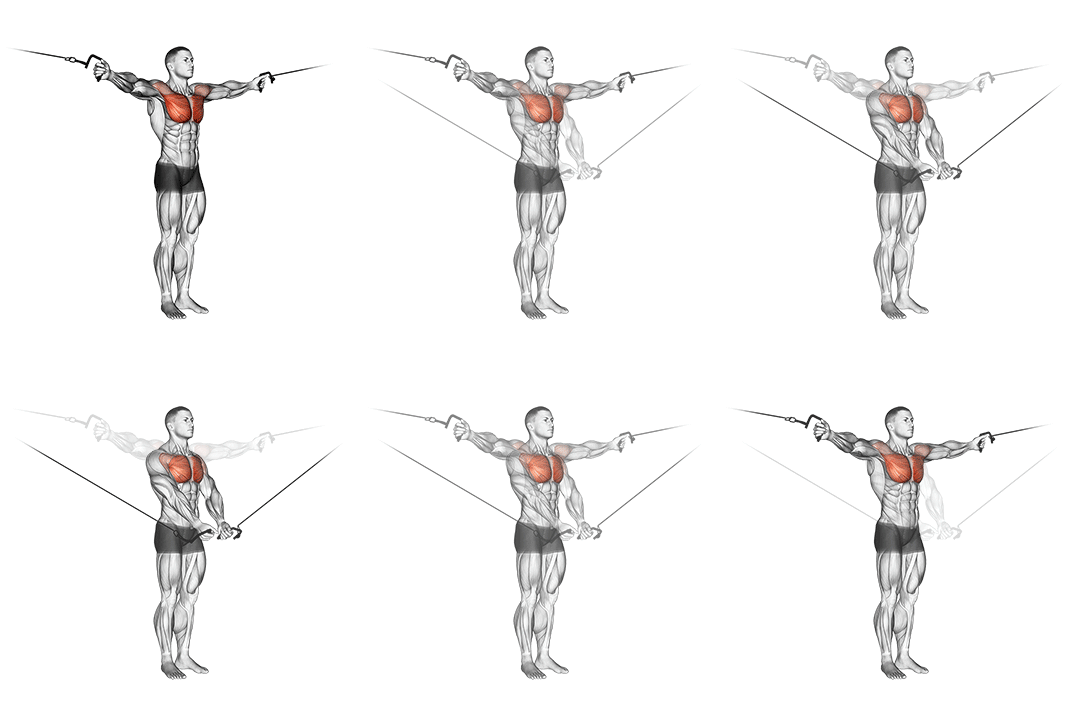
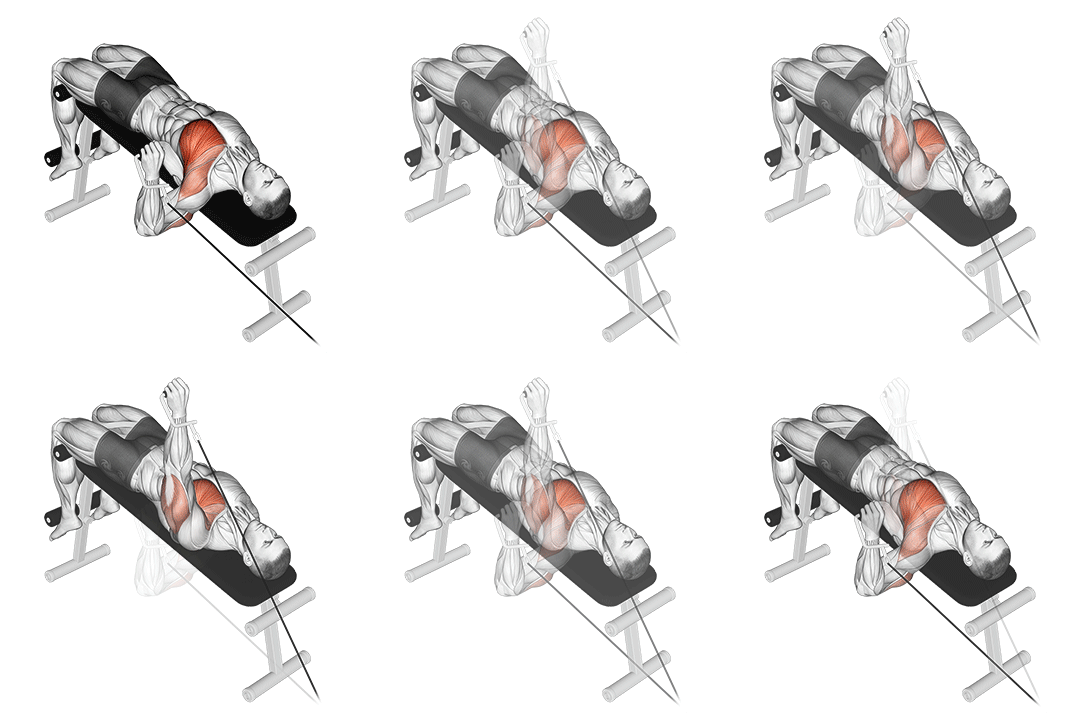
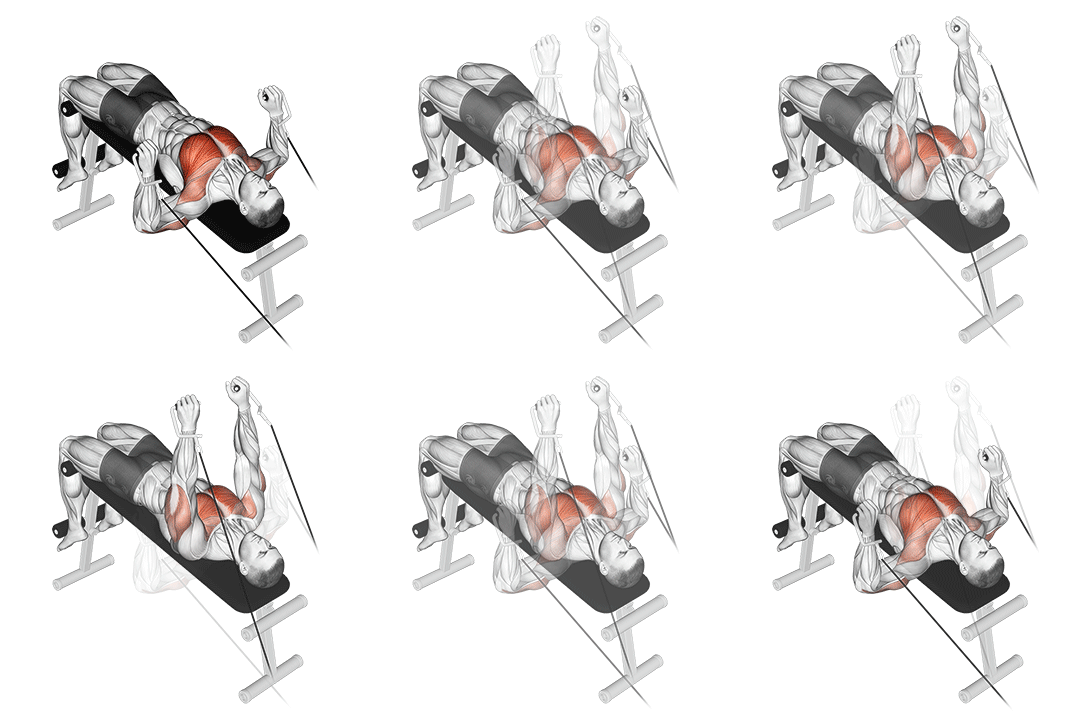
Cable Cross-over Variation
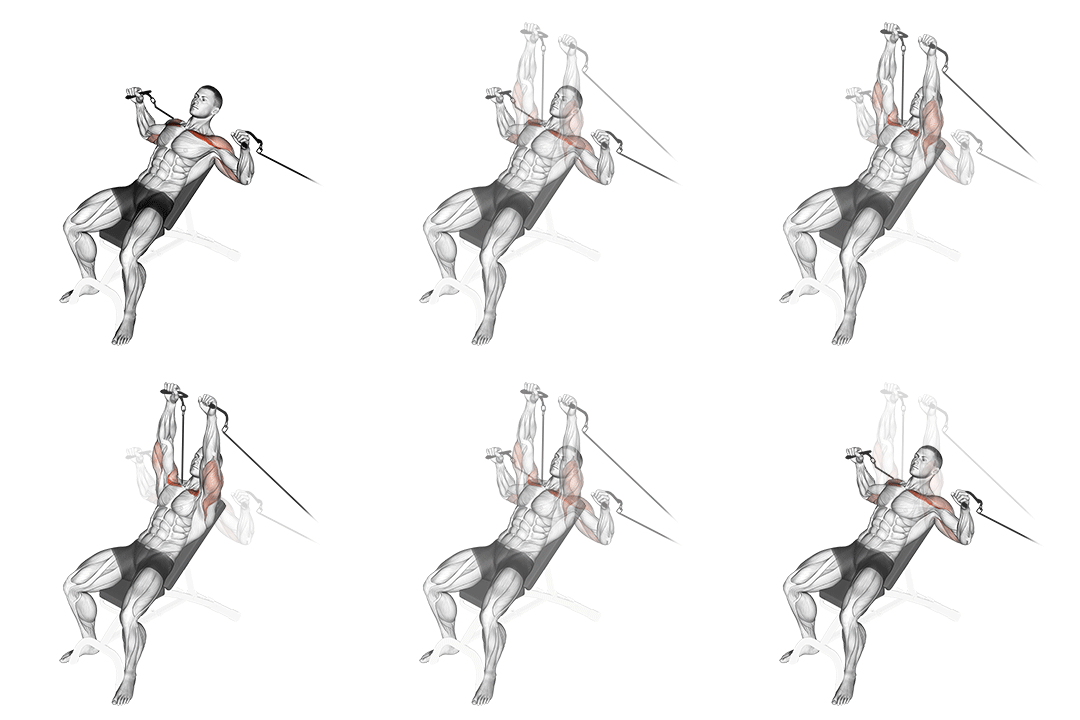
Cable Incline Bench Press
Head-to-Head Comparison
| Attribute | Cable Cross-over Variation | Cable Incline Bench Press |
|---|---|---|
| Target Muscle |
Pectorals
|
Pectorals
|
| Body Part |
Chest
|
Chest
|
| Equipment |
Cable
|
Cable
|
| Difficulty |
Intermediate
|
Intermediate
|
| Movement Type |
Isolation
|
Compound
|
| Secondary Muscles |
2
|
2
|
Secondary Muscles Activated
Cable Cross-over Variation
Cable Incline Bench Press
Visual Comparison
Overview
Cable Cross-over Variation vs Cable Incline Bench Press — you’re deciding which cable chest move deserves a regular spot in your program. I’ll show you how each exercise loads the pectorals, how secondary muscles (deltoids and triceps) contribute, what equipment and angles matter, and which one fits specific goals like hypertrophy, strength, or home training. You’ll get clear technique cues for safer execution, rep-range recommendations (6–12 for strength, 8–15 for hypertrophy), and practical progression tips so you can pick the right chest staple and apply it immediately.
Key Differences
- Cable Cross-over Variation is an isolation exercise, while Cable Incline Bench Press is a compound movement.
- Both exercises target the Pectorals using Cable. The main differences are in their movement patterns and muscle activation angles.
Pros & Cons
Cable Cross-over Variation
+ Pros
- High peak contraction and constant tension for chest shaping
- Easily adjust force vector by changing pulley height (high/low/mid)
- Lower spinal compression—no bench setup required
- Easily replicated with bands for home or travel training
− Cons
- Limited absolute loading limits maximal strength development
- Requires good scapular control and symmetry to avoid imbalances
- Less carryover to heavy compound pressing strength
Cable Incline Bench Press
+ Pros
- Compound movement allows greater mechanical tension and overload
- Better for building pressing strength and upper pec mass (incline 30–45°)
- Stronger carryover to other pressing movements (barbell/dumbbell)
- Stable path with bench support helps control heavy loads
− Cons
- Requires adjustable bench and more setup
- Higher compressive and shear forces on the shoulder if performed poorly
- Less pure isolation—triceps and deltoids can limit chest stimulus
When Each Exercise Wins
Cable cross-overs provide constant tension and a stronger peak contraction, which increases time under tension and muscle fiber recruitment at shortened lengths. Use 8–15 reps, varied pulley heights, and slow eccentrics (2–3s) to maximize chest hypertrophy.
The incline cable press lets you load the movement heavier and train higher mechanical tension across a longer muscle length, supporting neural adaptations and maximal force production. Aim for 4–8 reps with solid bracing and an incline of 30–45° to target upper chest strength.
Beginners benefit from the simpler, compound pressing pattern and greater auto-stability provided by pressing from a bench, which teaches forceful horizontal adduction and bracing. Start with light weight for 8–12 reps while developing technique and scapular control.
Cross-over mechanics can be replicated with resistance bands or a single-home pulley, and it doesn’t need an incline bench, so you get targeted chest work with minimal equipment. Use band cross-overs and 10–20 rep sets to maintain tension and muscle stimulus.
Frequently Asked Questions
Can I do both Cable Cross-over Variation and Cable Incline Bench Press in the same workout?
Yes. A good template is to perform Cable Incline Bench Press first for heavy compound loading (3–5 sets of 4–8 reps), then finish with Cable Cross-overs for isolation (3–4 sets of 10–15 reps) to exhaust the pecs while protecting the spine.
Which exercise is better for beginners?
Cable Incline Bench Press is generally better for beginners because it teaches a core pressing pattern and lets you progressively add load safely on a bench. Start light to groove technique and build scapular stability before adding isolation work.
How do the muscle activation patterns differ?
Incline pressing loads pecs at longer muscle lengths with more anterior deltoid and triceps involvement, increasing mechanical tension across the eccentric. Cross-overs bias peak contraction and medial pec fibers with continuous horizontal adduction and less elbow torque, increasing time under tension at shortened lengths.
Can Cable Incline Bench Press replace Cable Cross-over Variation?
Only partially. The incline press can load the upper chest strongly, but it won’t replicate the same peak contraction or isolation stimulus of cross-overs. If your goal is targeted chest shaping, keep cross-overs in rotation as a complementary isolation movement.
Expert Verdict
Use Cable Cross-over Variation when your priority is chest shape and targeted hypertrophy: it delivers constant tension, precise force-vector tuning (adjust pulleys by 45° increments), and safe spine loading for high-rep work. Choose Cable Incline Bench Press when you want to build pressing strength and add upper-pec mass using heavier loads; set the bench at 30–45° and follow 4–8 rep blocks for strength or 6–12 for mixed hypertrophy. Best practice: rotate both across a training cycle—use incline press blocks to raise maximal tension and cross-overs as a follow-up finisher for peak contraction and muscle growth.
Also Compare
More comparisons with Cable Cross-over Variation
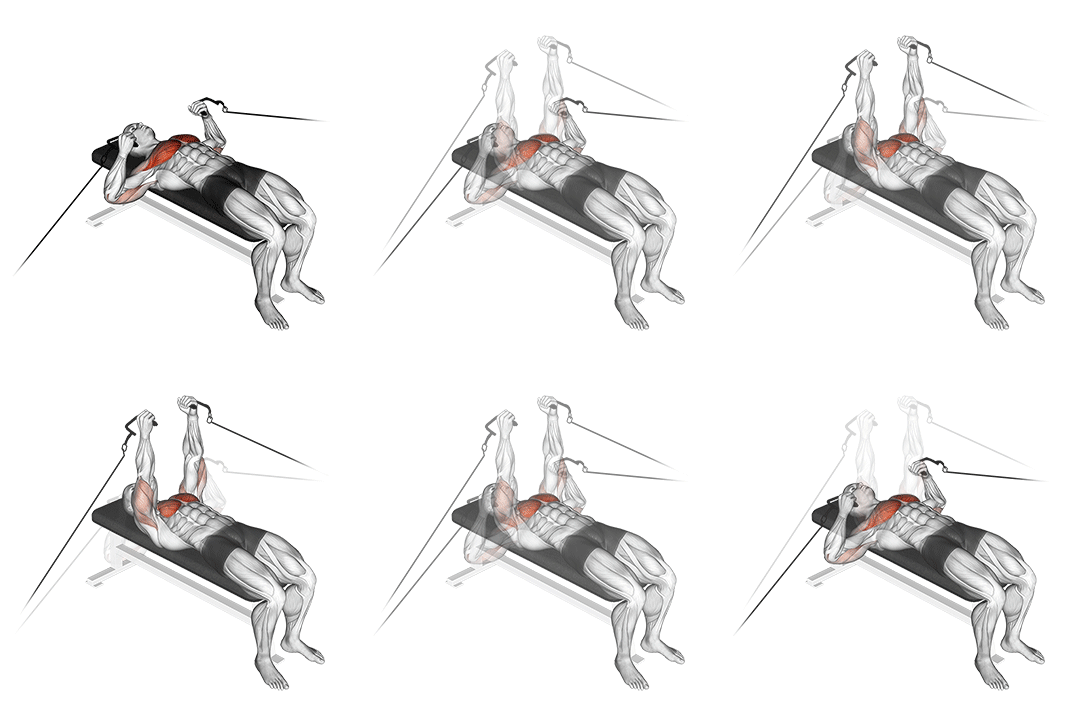
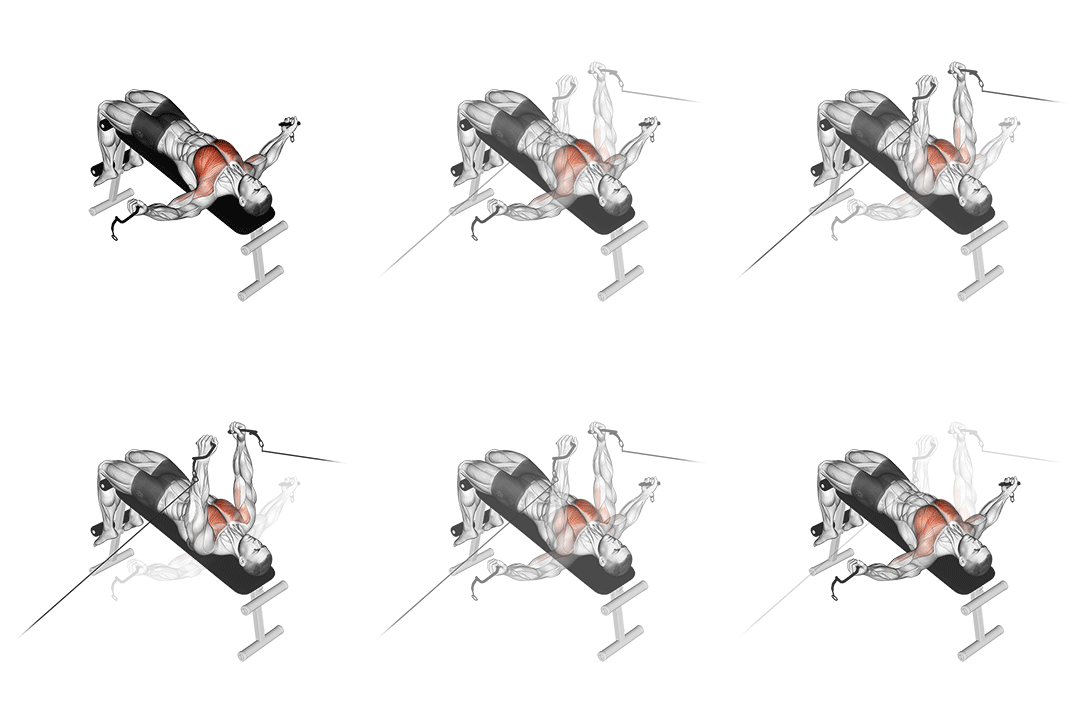
More comparisons with Cable Incline Bench Press
Compare More Exercises
Use our free comparison tool to analyze any two exercises head-to-head.
Compare Exercises