

Cable Cross-over Variation vs Cable Incline Fly: Complete Comparison Guide
Cable Cross-over Variation vs Cable Incline Fly — two cable isolation moves that both target the pectorals but load the chest differently. If you want to shape the mid and upper chest, improve peak contraction, or reduce shoulder stress, this guide has your back. You’ll get a side-by-side look at primary and secondary muscle recruitment, required equipment, technical cues (elbow angle, bench incline, cable height), rep ranges for hypertrophy and strength, and clear recommendations based on goals so you can pick the right movement for your program.
Exercise Comparison
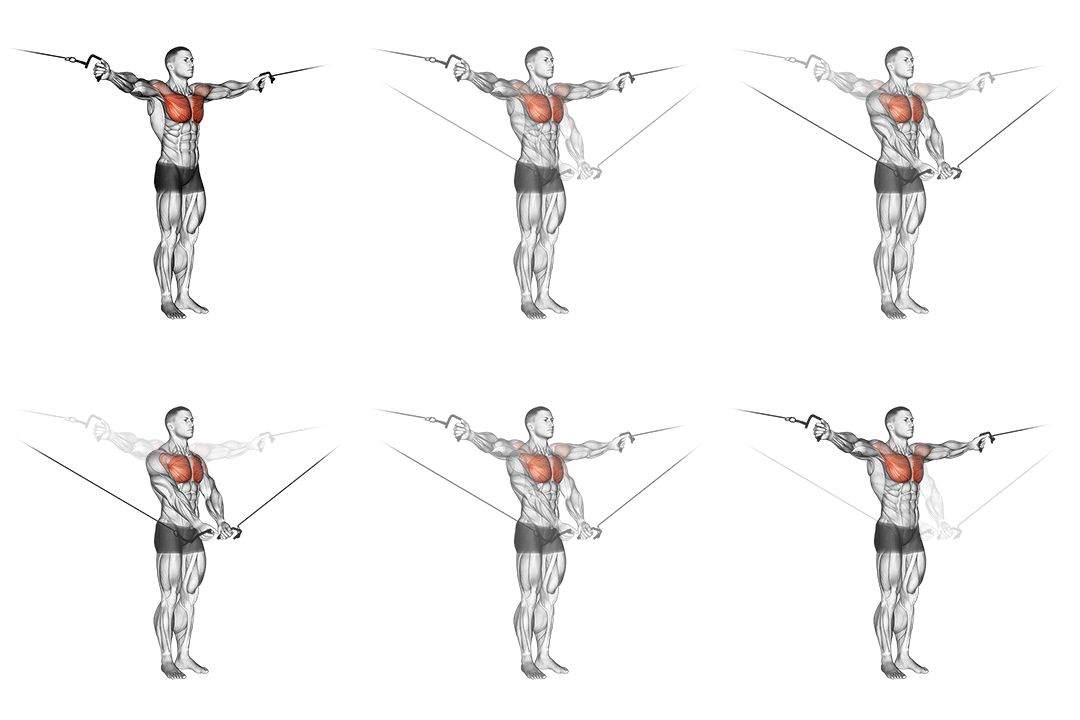
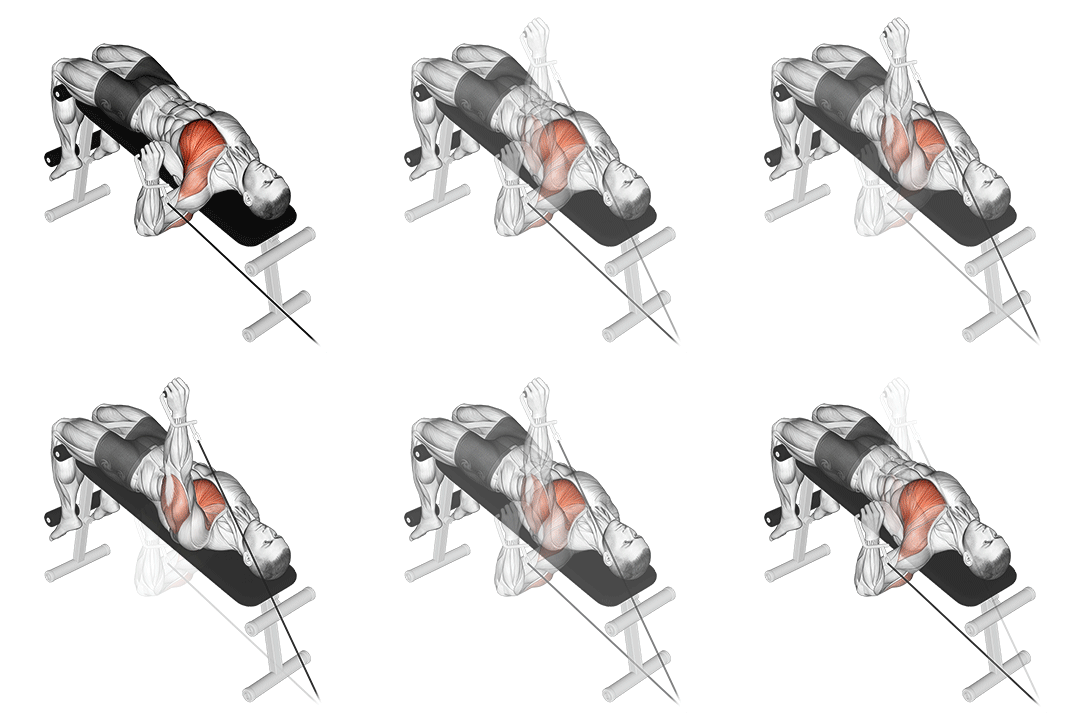
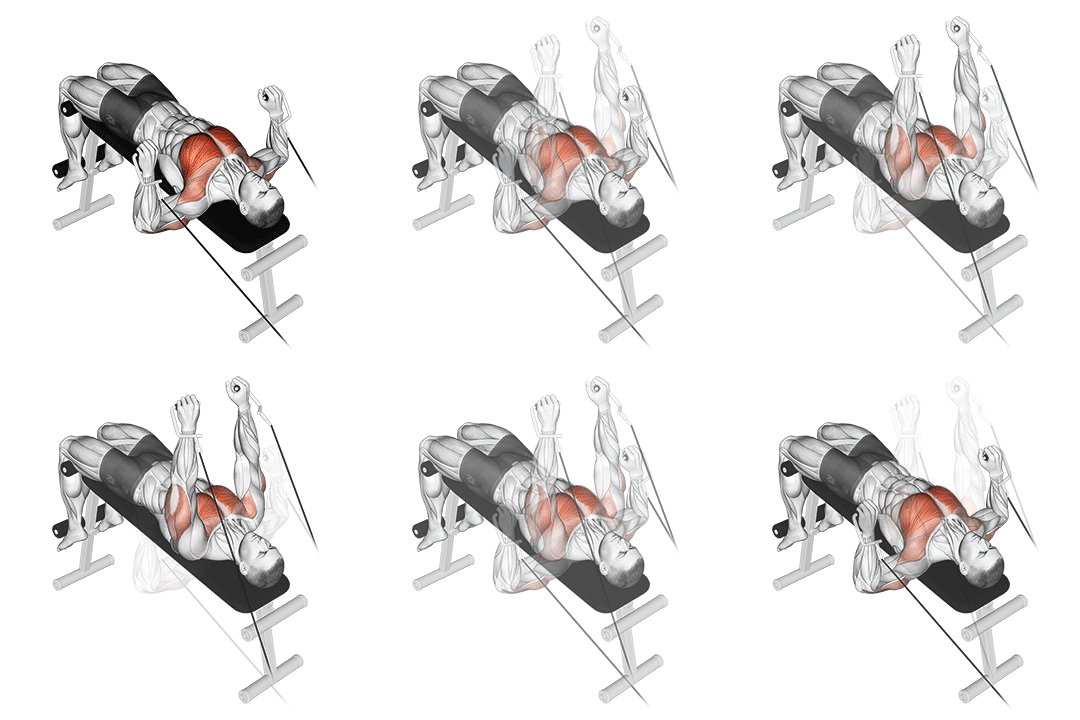
Cable Cross-over Variation
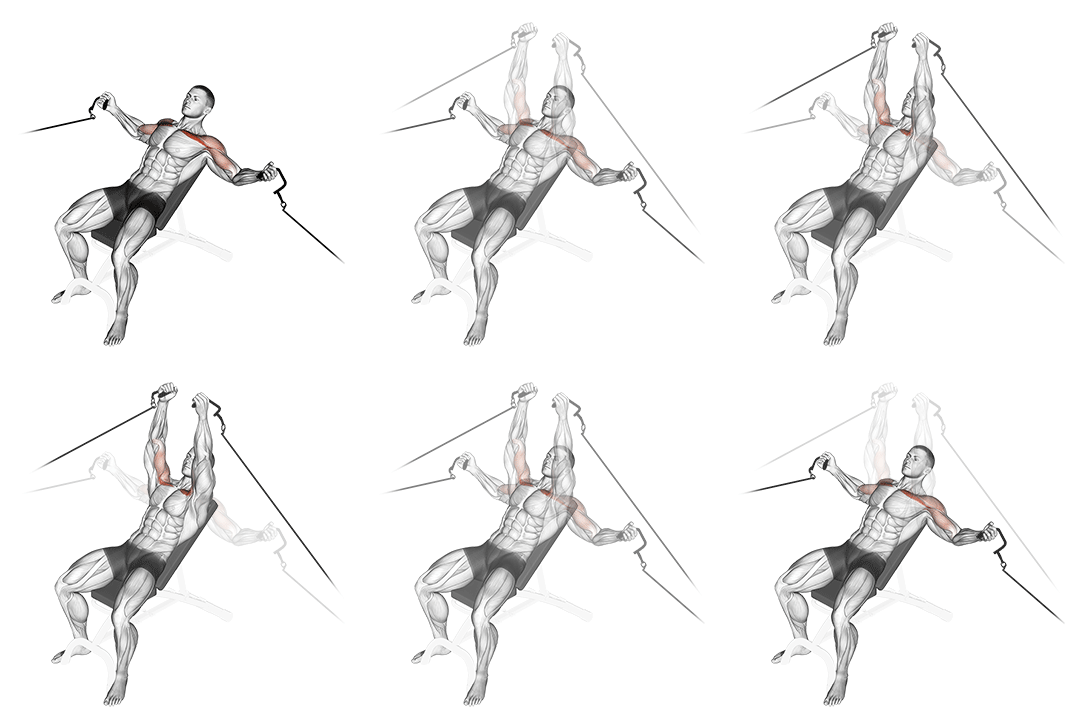
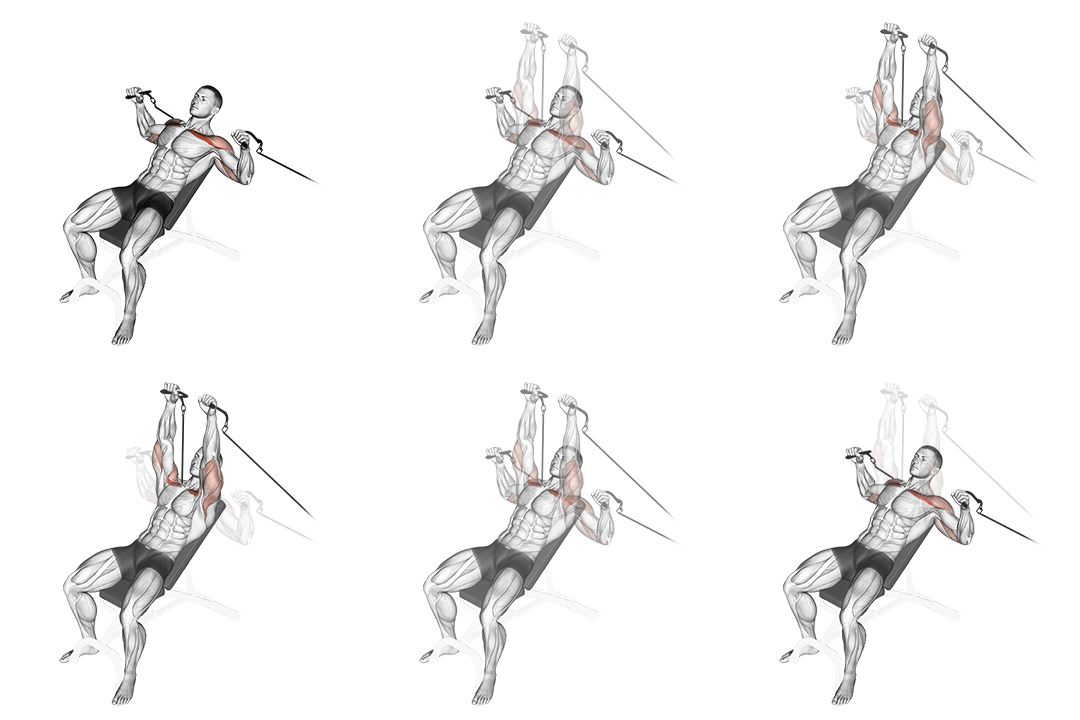
Cable Incline Fly
Head-to-Head Comparison
| Attribute | Cable Cross-over Variation | Cable Incline Fly |
|---|---|---|
| Target Muscle |
Pectorals
|
Pectorals
|
| Body Part |
Chest
|
Chest
|
| Equipment |
Cable
|
Cable
|
| Difficulty |
Intermediate
|
Intermediate
|
| Movement Type |
Isolation
|
Isolation
|
| Secondary Muscles |
2
|
2
|
Secondary Muscles Activated
Cable Cross-over Variation
Cable Incline Fly
Visual Comparison
Overview
Cable Cross-over Variation vs Cable Incline Fly — two cable isolation moves that both target the pectorals but load the chest differently. If you want to shape the mid and upper chest, improve peak contraction, or reduce shoulder stress, this guide has your back. You’ll get a side-by-side look at primary and secondary muscle recruitment, required equipment, technical cues (elbow angle, bench incline, cable height), rep ranges for hypertrophy and strength, and clear recommendations based on goals so you can pick the right movement for your program.
Key Differences
- Both exercises target the Pectorals using Cable. The main differences are in their movement patterns and muscle activation angles.
Pros & Cons
Cable Cross-over Variation
+ Pros
- High peak contraction and continuous tension through full ROM
- Easily alter line of pull (high-to-low, low-to-high) to bias different pec regions
- Excellent unilateral and anti-rotation progressions
- Great for drop sets and long time-under-tension protocols
− Cons
- Requires a cable station and adequate floor space
- Higher coordination and stabilizer demand
- Can over-stretch the anterior shoulder if performed with excessive ROM
Cable Incline Fly
+ Pros
- Bench provides stability so you can load the pecs safely
- Direct emphasis on clavicular (upper) pec fibers at 30–45° incline
- Easier to teach and cue for beginners
- Can be mimicked with resistance bands for home use
− Cons
- Less variable line of pull compared with standing cable cross-overs
- Slightly reduced peak contraction compared to crossover meeting point
- Bench limits some unilateral and anti-rotation progressions
When Each Exercise Wins
The cross-over allows longer time under tension and more precise peak contraction by bringing handles across midline; use 8–15 reps with slow 2–3 s eccentrics and partial lockouts to maximize fiber recruitment.
The bench stabilizes the torso so you can handle slightly heavier loads and focus force through the clavicular fibers; pair 6–10 rep sets with compound presses for better overall chest strength.
The supported position reduces balance demands and simplifies motor pattern learning, letting you dial in elbow angle (~10–20° bend) and scapular retraction before advancing to standing cross-overs.
You can replicate incline fly mechanics with bands and a bench at a lower cost and smaller footprint, whereas true cable cross-overs typically require a gym's functional trainer.
Frequently Asked Questions
Can I do both Cable Cross-over Variation and Cable Incline Fly in the same workout?
Yes. Sequence incline flys earlier to load the upper pecs when you’re freshest (3–4 sets of 6–10 reps), then use cable cross-overs as a finisher for 2–4 sets of 10–15 reps focusing on peak contraction and tempo.
Which exercise is better for beginners?
Cable Incline Fly is better for most beginners because the bench stabilizes your torso and reduces coordination demands, making it easier to learn scapular retraction and safe elbow positioning.
How do the muscle activation patterns differ?
Cross-overs create higher peak contraction and variable fiber recruitment by changing cable height and crossing midline, increasing short-range tension. Incline flys hold the clavicular fibers at an optimal length-tension angle (about 30–45° shoulder flexion), giving steadier loading of the upper pecs.
Can Cable Incline Fly replace Cable Cross-over Variation?
It can replace it for upper-pectoral emphasis or when equipment is limited, but you’ll lose some variable vector options and peak midline contraction. If your goal is full chest sculpting, keep both in rotation.
Expert Verdict
Use Cable Cross-over Variation when your goal is hypertrophy and sculpting: it gives superior peak contraction, constant tension, and the ability to vary force vectors to hit upper, middle, or lower pec fibers. Prioritize 8–15 reps, controlled eccentrics, and slight elbow flexion. Choose Cable Incline Fly when you want stability, simpler technique, and focused upper-pectoral loading; set the bench to 30–45° and keep a 10–20° elbow bend to protect the shoulder. For balanced development, rotate both into your program—incline flys early in the workout for heavier loading, cross-overs later for finishers and volume.
Also Compare
More comparisons with Cable Cross-over Variation
Compare More Exercises
Use our free comparison tool to analyze any two exercises head-to-head.
Compare Exercises