

Cable Decline Fly vs Cable Decline One Arm Press: Complete Comparison Guide
Cable Decline Fly vs Cable Decline One Arm Press — two decline cable moves that both target the pectorals but reward different priorities. If you want clear guidance on which to add to your chest day, you’re in the right place. I’ll compare primary and secondary muscle activation, equipment needs, learning curve, injury considerations, and provide practical cues, rep ranges, and when to prioritize each lift. By the end you’ll know which exercise better serves hypertrophy, strength, beginners, and at-home training, plus actionable technique tips to protect your shoulders and maximize pec loading.
Exercise Comparison
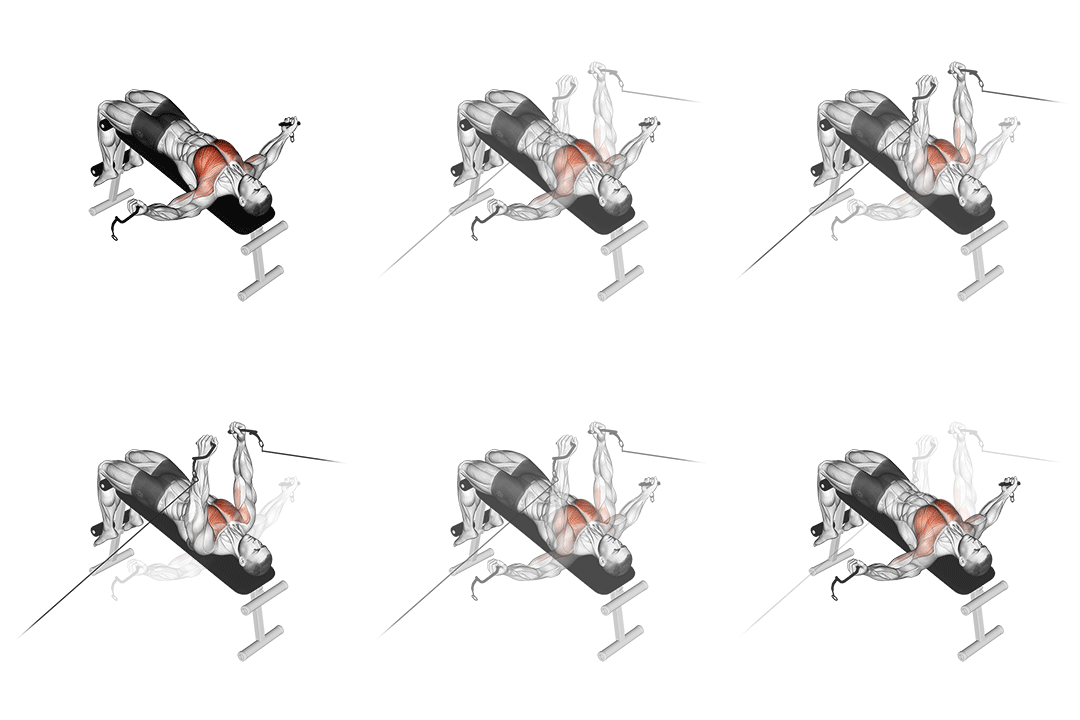
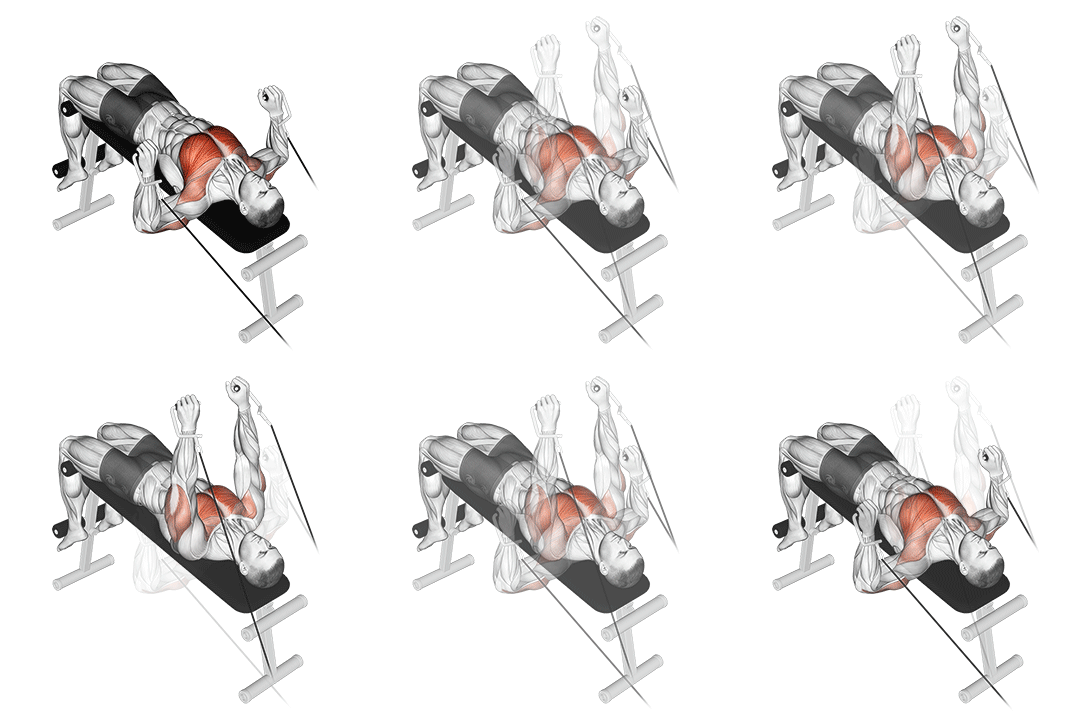
Cable Decline Fly
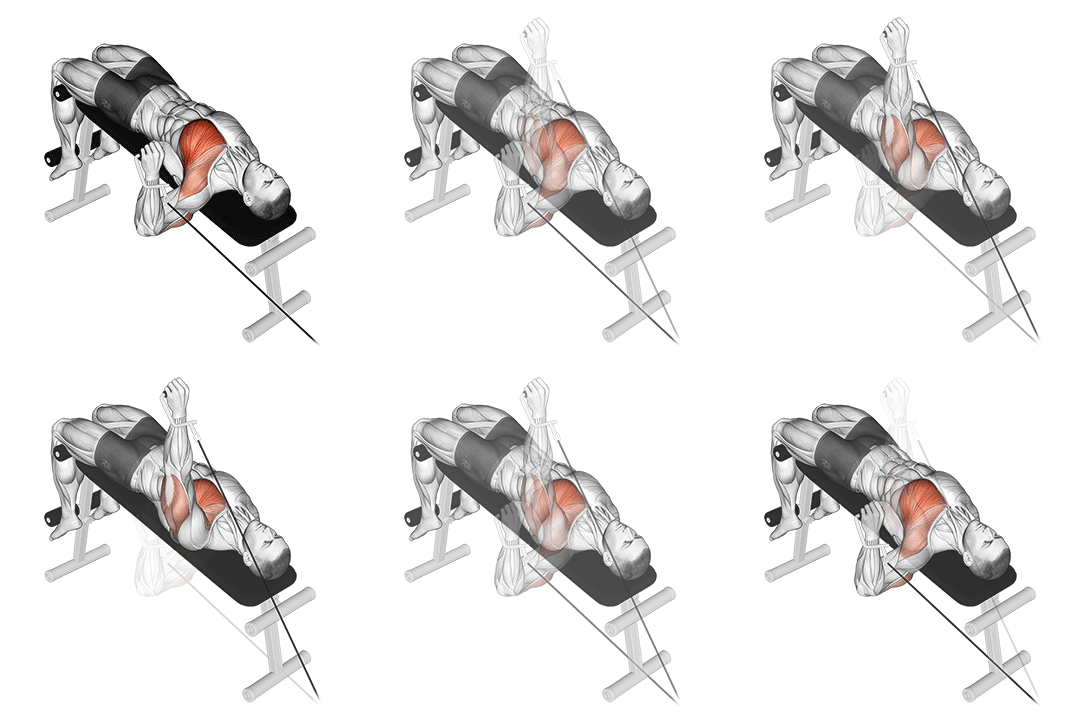
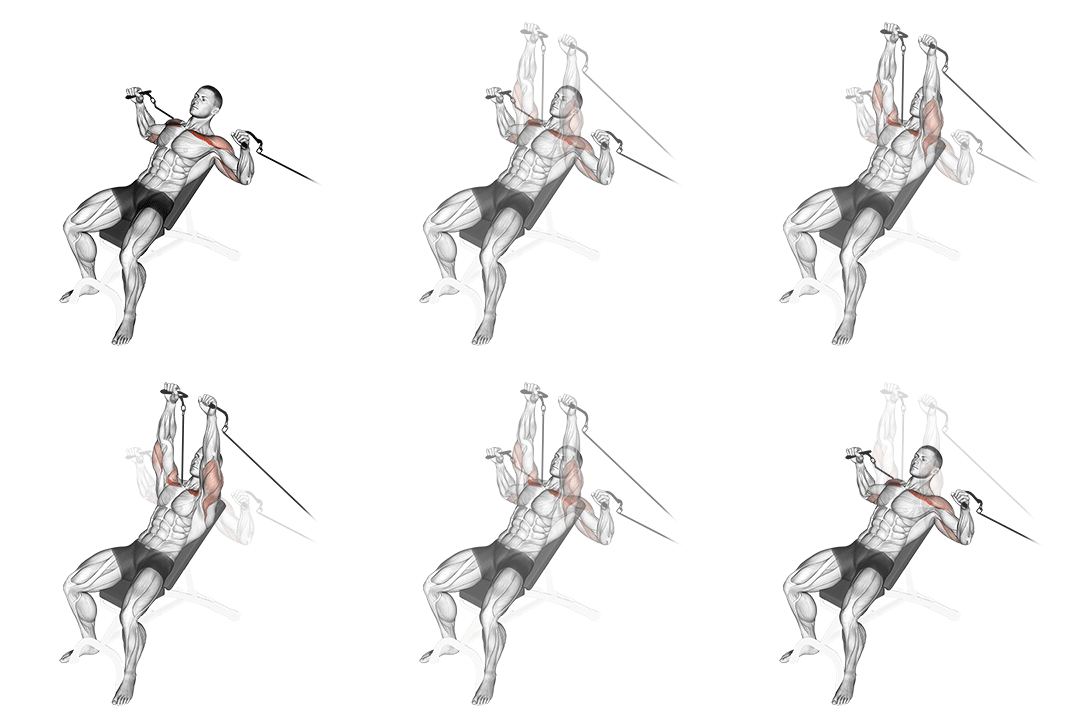
Cable Decline One Arm Press
Head-to-Head Comparison
| Attribute | Cable Decline Fly | Cable Decline One Arm Press |
|---|---|---|
| Target Muscle |
Pectorals
|
Pectorals
|
| Body Part |
Chest
|
Chest
|
| Equipment |
Cable
|
Cable
|
| Difficulty |
Intermediate
|
Intermediate
|
| Movement Type |
Isolation
|
Compound
|
| Secondary Muscles |
2
|
2
|
Secondary Muscles Activated
Cable Decline Fly
Cable Decline One Arm Press
Visual Comparison
Overview
Cable Decline Fly vs Cable Decline One Arm Press — two decline cable moves that both target the pectorals but reward different priorities. If you want clear guidance on which to add to your chest day, you’re in the right place. I’ll compare primary and secondary muscle activation, equipment needs, learning curve, injury considerations, and provide practical cues, rep ranges, and when to prioritize each lift. By the end you’ll know which exercise better serves hypertrophy, strength, beginners, and at-home training, plus actionable technique tips to protect your shoulders and maximize pec loading.
Key Differences
- Cable Decline Fly is an isolation exercise, while Cable Decline One Arm Press is a compound movement.
- Both exercises target the Pectorals using Cable. The main differences are in their movement patterns and muscle activation angles.
Pros & Cons
Cable Decline Fly
+ Pros
- Direct isolation of the pecs with continuous cable tension
- Strong stretch at the bottom—good for stretch-mediated hypertrophy
- Easier to learn and lower systemic fatigue per set
- Simple to substitute with bands or dumbbells for home use
− Cons
- Limited ability to load maximally for strength
- Higher risk of strain if you overload the stretched position
- Less triceps and shoulder strengthening compared to compound presses
Cable Decline One Arm Press
+ Pros
- Compound pattern allows heavier loading and greater mechanical tension
- Unilateral work fixes imbalances and improves anti-rotation core stability
- Stronger carryover to pressing strength and functional pushing
- More progression options (weight, tempo, unilateral variations)
− Cons
- Requires more stability and motor control—harder to master
- Greater systemic fatigue per set, limiting isolation volume
- Needs careful alignment to avoid shoulder impingement
When Each Exercise Wins
Flyes place the pecs under a long-length stretch with continuous tension, maximizing time-under-tension and stretch-mediated signaling. Use 3–4 sets of 8–15 reps with a controlled 2-1-1 tempo to exploit that stimulus.
The compound pressing pattern allows higher absolute loads and better transfer to pressing strength while recruiting triceps and deltoids. Train 3–5 sets of 3–6 reps or 4–8 unilateral reps, focusing on progressive overload and stable scapular mechanics.
A single-joint arc is simpler to coach and execute, letting beginners learn pec activation without managing heavy unilateral stability demands. Start with light weight and 10–15 controlled reps to build motor control and shoulder safety.
Flies are easier to replicate with resistance bands, dumbbells, or floor variations when a cable station or decline bench isn’t available. You can maintain continuous tension and hypertrophy stimulus using bands or a bench angle substitute.
Frequently Asked Questions
Can I do both Cable Decline Fly and Cable Decline One Arm Press in the same workout?
Yes. Use the One Arm Press early in the session for heavier compound loading (3–5 sets), then follow with flies as a finisher for 2–4 sets of 8–15 reps to increase time-under-tension and isolate the pecs.
Which exercise is better for beginners?
Cable Decline Fly is generally better for beginners due to its simpler single-joint pattern and lower stability demand. Start light, focus on slow eccentric control, and learn to maintain scapular retraction throughout the arc.
How do the muscle activation patterns differ?
Flies keep continuous horizontal adduction under tension and emphasize the pecs at longer muscle lengths, favoring stretch-mediated hypertrophy. One-arm presses distribute force between horizontal adduction and elbow extension, increasing triceps and stabilizer recruitment and producing higher peak mechanical tension.
Can Cable Decline One Arm Press replace Cable Decline Fly?
It can replace flies if your priority is strength and compound overload, but you’ll lose some stretch-specific stimulus. For optimal chest development, rotate or pair both—presses for load, flies for peak pec isolation and stretch.
Expert Verdict
Both moves deserve a place in a well-rounded chest program, but pick based on your primary goal. Choose Cable Decline Fly when you want isolated pec hypertrophy, a strong stretch stimulus, and simpler mechanics—program 3–4 sets of 8–15 reps with a controlled tempo and a 30–45° decline. Choose Cable Decline One Arm Press when your goal is pressing strength, unilateral balance, or when you need to overload the system—use 3–5 sets of 3–6 (strength) or 6–10 (hypertrophy) unilateral reps. If shoulder history exists, prioritize strict scapular control, modest range (avoid extreme bottom stretch), and a gradual loading progression.
Also Compare
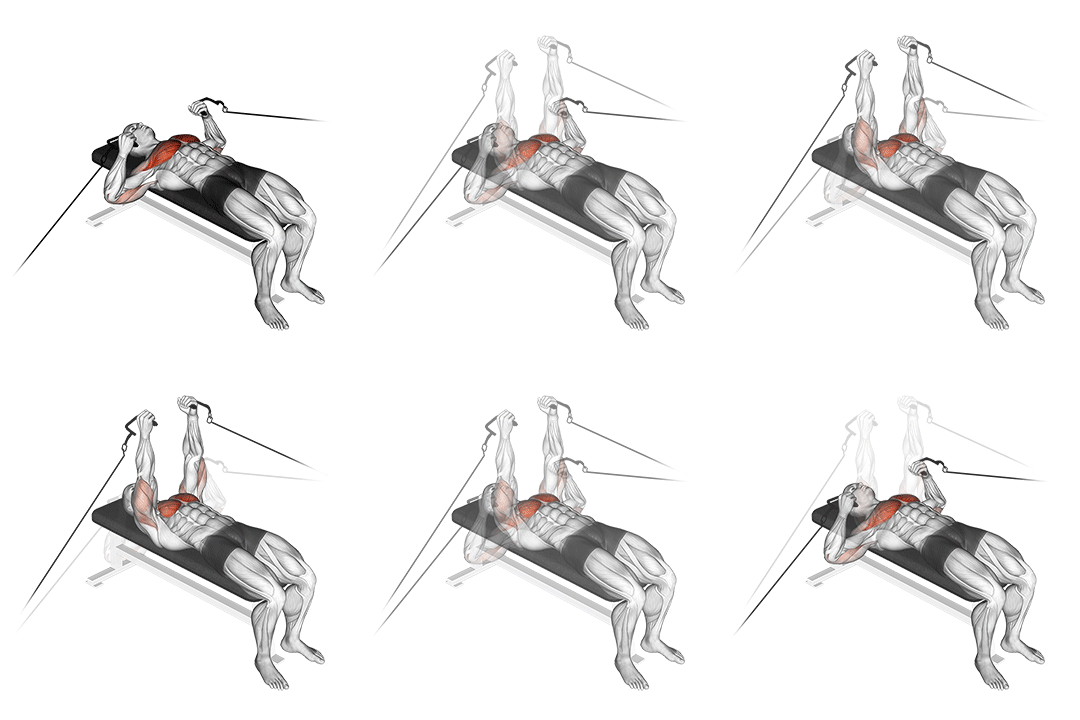
More comparisons with Cable Decline Fly
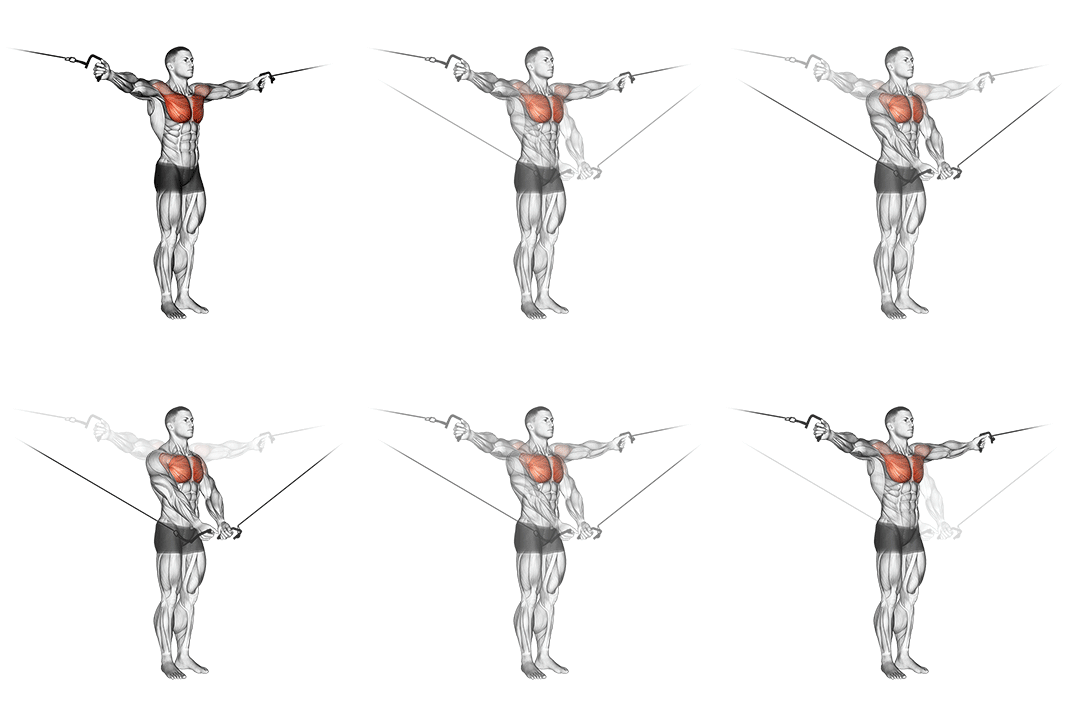
More comparisons with Cable Decline One Arm Press
Compare More Exercises
Use our free comparison tool to analyze any two exercises head-to-head.
Compare Exercises