

Cable Decline Fly vs Cable Decline Press: Complete Comparison Guide
Cable Decline Fly vs Cable Decline Press — both target your lower chest but they do it differently. If you want clear guidance on which to add to your routine, this comparison walks you through muscle emphasis, biomechanics, equipment needs, technique cues, rep ranges, and risk. You’ll get concrete tips for execution (angles, joint positions, tempo), notes on secondary muscle recruitment, and practical programming advice so you can choose the move that best supports your muscle growth, strength, and training setup.
Exercise Comparison
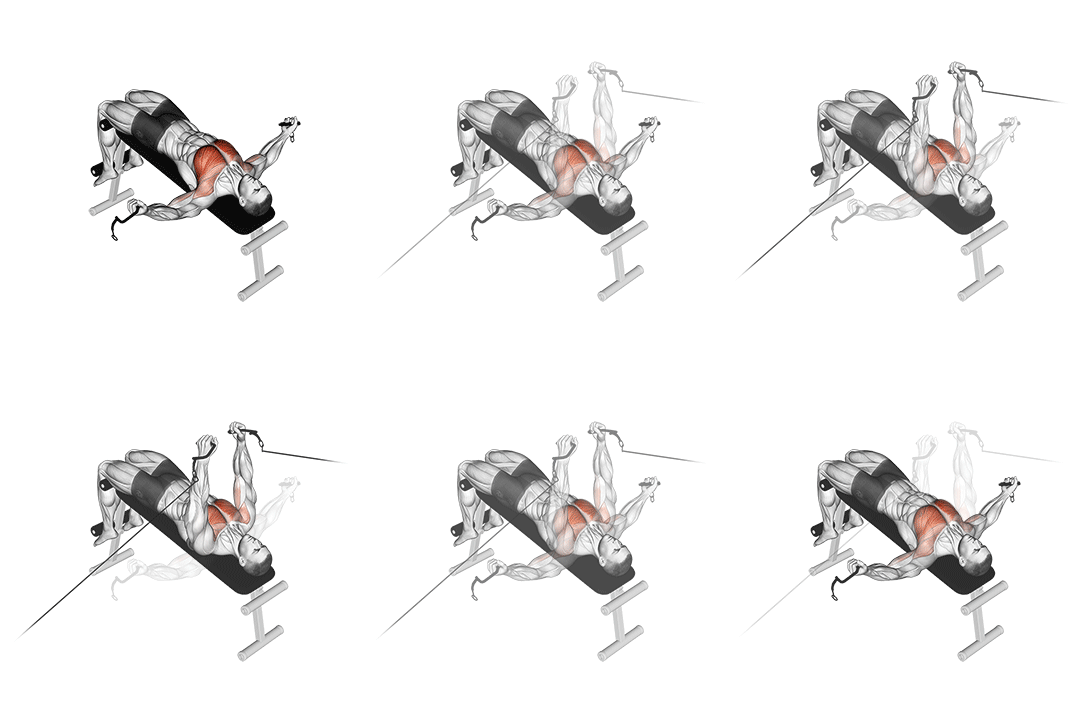
Cable Decline Fly
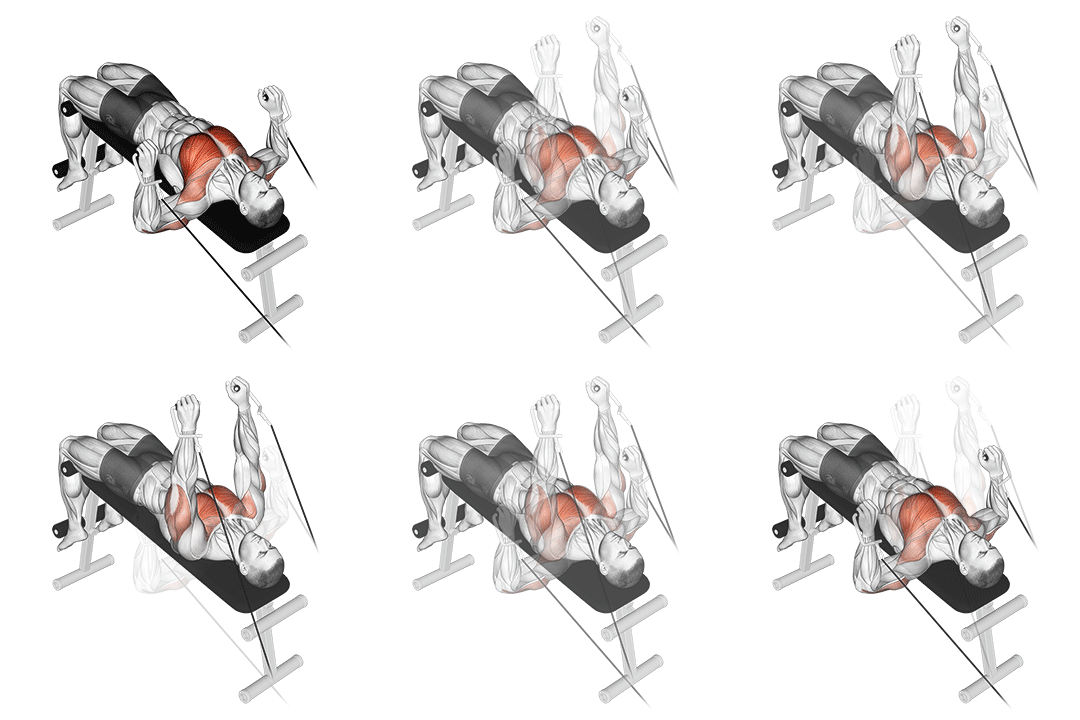
Cable Decline Press
Head-to-Head Comparison
| Attribute | Cable Decline Fly | Cable Decline Press |
|---|---|---|
| Target Muscle |
Pectorals
|
Pectorals
|
| Body Part |
Chest
|
Chest
|
| Equipment |
Cable
|
Cable
|
| Difficulty |
Intermediate
|
Intermediate
|
| Movement Type |
Isolation
|
Compound
|
| Secondary Muscles |
2
|
2
|
Secondary Muscles Activated
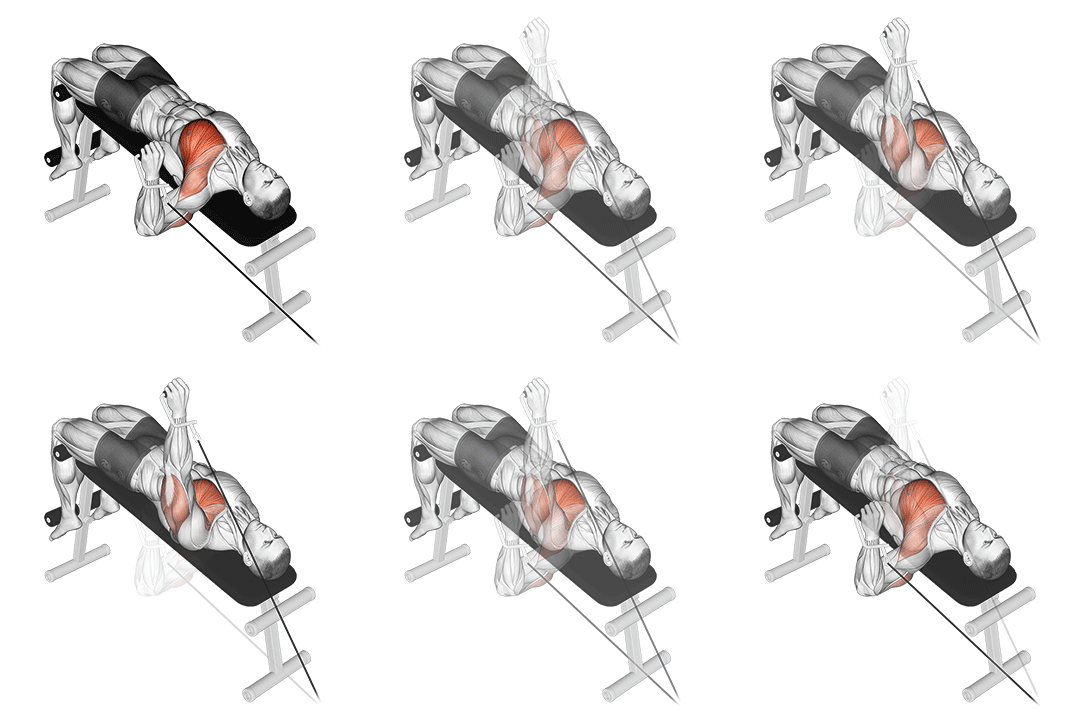
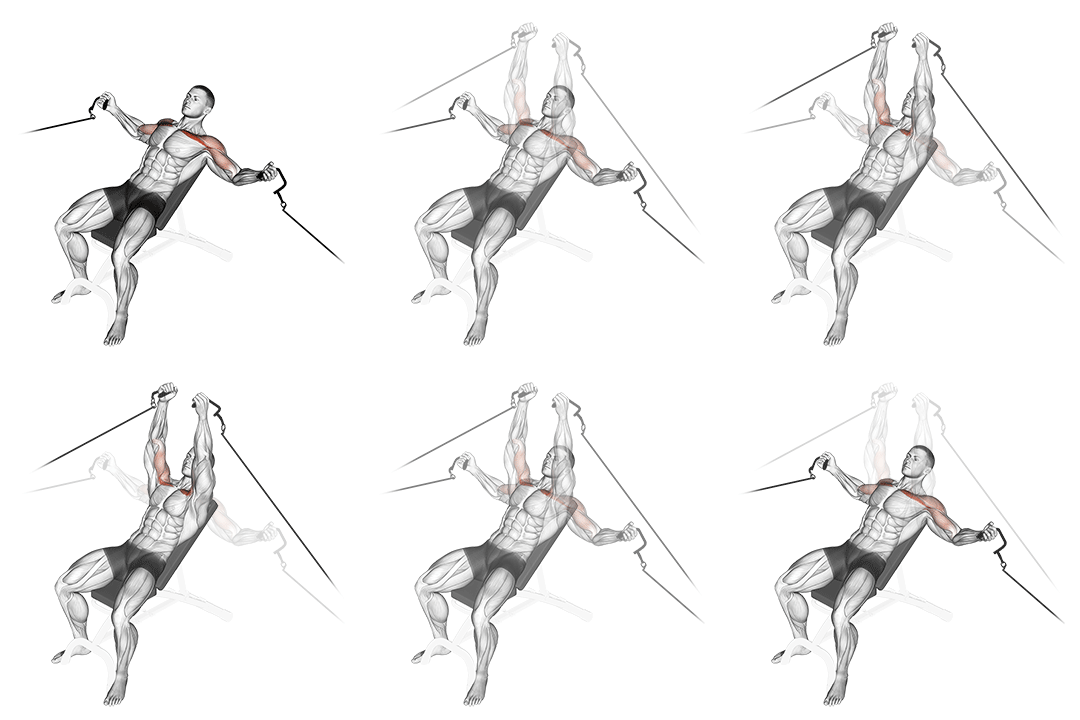
Cable Decline Fly
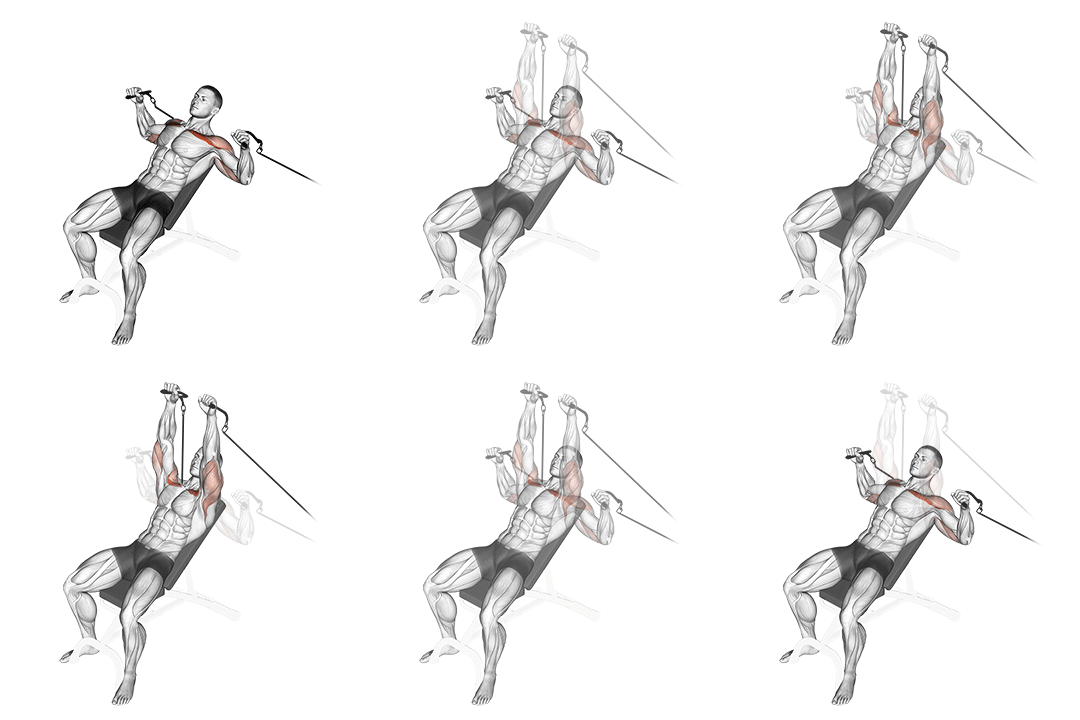
Cable Decline Press
Visual Comparison
Overview
Cable Decline Fly vs Cable Decline Press — both target your lower chest but they do it differently. If you want clear guidance on which to add to your routine, this comparison walks you through muscle emphasis, biomechanics, equipment needs, technique cues, rep ranges, and risk. You’ll get concrete tips for execution (angles, joint positions, tempo), notes on secondary muscle recruitment, and practical programming advice so you can choose the move that best supports your muscle growth, strength, and training setup.
Key Differences
- Cable Decline Fly is an isolation exercise, while Cable Decline Press is a compound movement.
- Both exercises target the Pectorals using Cable. The main differences are in their movement patterns and muscle activation angles.
Pros & Cons
Cable Decline Fly
+ Pros
- Direct chest isolation—high time under tension for the pecs
- Lower absolute load reduces dependence on triceps and shoulders
- Easier to feel and target specific chest fibers at long lengths
- Good for pre-exhaust or finishing work with 8–15+ reps
− Cons
- Limited maximal loading, so less transfer to pressing strength
- Risk of overstretch/pec strain at deep end-range with heavy weight
- Less triceps and shoulder development—needs pairing with presses for balanced upper-body strength
Cable Decline Press
+ Pros
- Higher total-load capacity—better for building pressing strength
- Develops triceps and anterior deltoids along with the chest
- More direct transfer to compound pressing movements
- Clear progression path with heavier loads and lower rep ranges
− Cons
- More technical—requires stable bench setup and scapular control
- Triceps or deltoids can limit chest stimulus before failure
- Greater shoulder stress if form breaks (risk of impingement or strain)
When Each Exercise Wins
The fly maximizes chest time under tension and places the pecs at longer lengths on the eccentric phase, which favors sarcomerogenesis and hypertrophy. Use 8–15 reps, 2–3s eccentrics, and short rest (60–90s) to tax the pec fibers directly.
The press allows heavier loading and better transfer to strength because it recruits triceps and deltoids and supports higher absolute loads. Program 3–6 rep sets with heavier resistance and full recovery to build pressing strength.
Beginners can learn horizontal adduction and chest-focused movement with less technical demand and lower loads. Start with light weight, focus on a 2–3s eccentric and a soft elbow to build motor control before adding presses.
If your home setup has limited load capacity, the fly lets you chase muscle growth through volume and tempo rather than heavy weight. A resistance band or lighter cable stack still provides meaningful chest stimulus.
Frequently Asked Questions
Can I do both Cable Decline Fly and Cable Decline Press in the same workout?
Yes. Pair the press first as your heavy compound to recruit multiple muscles, then follow with flies as a high-tension finisher to isolate the pecs. Keep total volume in check—2–4 sets of presses and 2–4 sets of flies is a practical approach.
Which exercise is better for beginners?
Cable Decline Fly is generally easier for beginners because it uses lighter loads and simpler movement patterns. Start with light resistance, a soft elbow, and 8–12 reps to build motor control before progressing to heavier presses.
How do the muscle activation patterns differ?
The fly emphasizes transverse plane adduction, creating high pec activation at long muscle lengths and during eccentric phases. The press shifts the force vector toward anterior-posterior loading, distributing activation across pecs, triceps, and anterior deltoids with peak force often at mid-range.
Can Cable Decline Press replace Cable Decline Fly?
The press can substitute if you need fewer exercises or focus on strength, but it won’t fully replace the fly’s isolation effect for targeting lower pec fibers. If your goal is maximal chest hypertrophy include both or use presses plus targeted isolation elsewhere.
Expert Verdict
Use the Cable Decline Fly when your priority is direct chest development and you want to emphasize time under tension, long muscle lengths, and precise fiber targeting—ideal for hypertrophy blocks and finishing exercises. Choose the Cable Decline Press when you need heavier loading, want to build pressing strength, and aim to develop triceps and anterior delts alongside the pecs. For balanced programming include both: start with presses as a primary compound (3–6 or 6–12 reps depending on goal), then use flys for 8–15 rep isolation work with controlled eccentrics. Prioritize scapular stability, soft elbows, and a 15–30° decline angle to protect the shoulder and optimize chest activation.
Also Compare
More comparisons with Cable Decline Fly
Compare More Exercises
Use our free comparison tool to analyze any two exercises head-to-head.
Compare Exercises