

Cable Decline Fly vs Cable Incline Fly: Complete Comparison Guide
Cable Decline Fly vs Cable Incline Fly — you’re comparing two cable isolation moves that shape different zones of the chest. This guide helps you pick the right one for your goals by breaking down muscle activation, movement mechanics, equipment needs, difficulty, and programming cues. You’ll get specific technique tips (elbow angle, bench angle, tempo), biomechanics explanations (force vector, length‑tension), rep ranges, and clear winner scenarios so you can choose the exercise that best fits your training plan.
Exercise Comparison
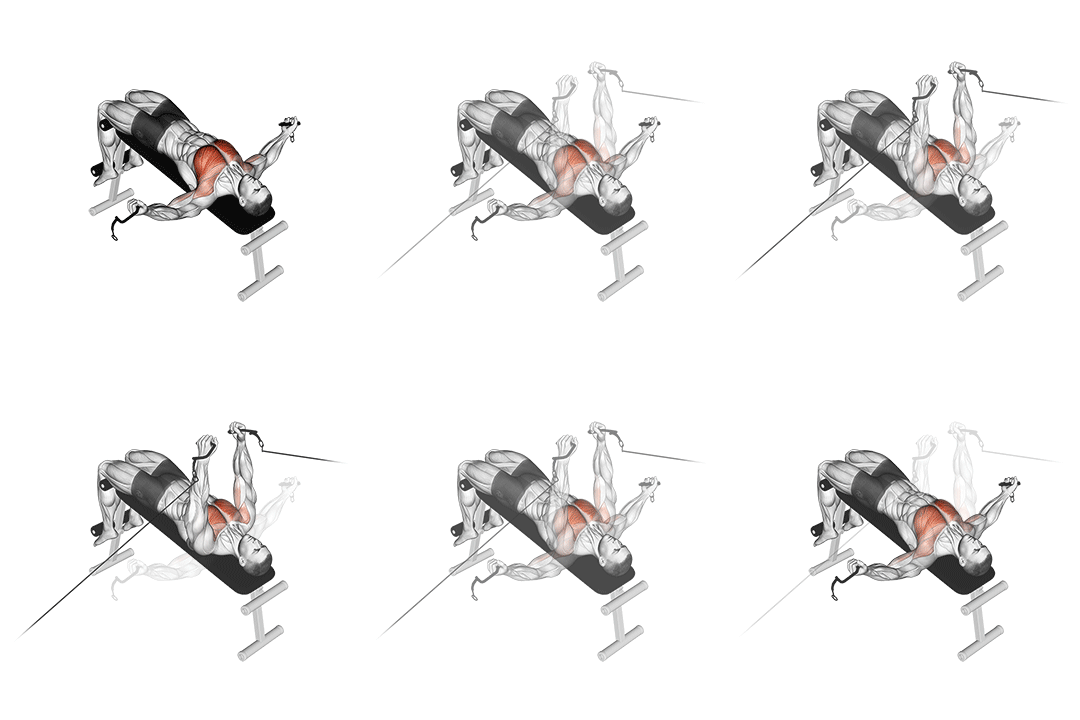
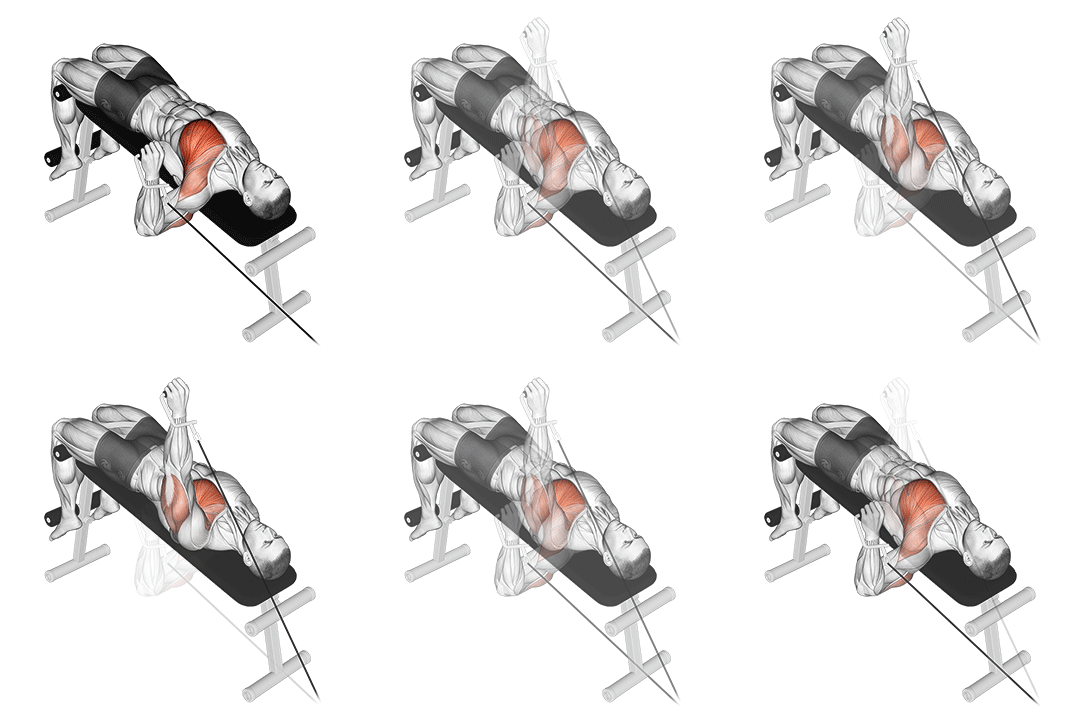
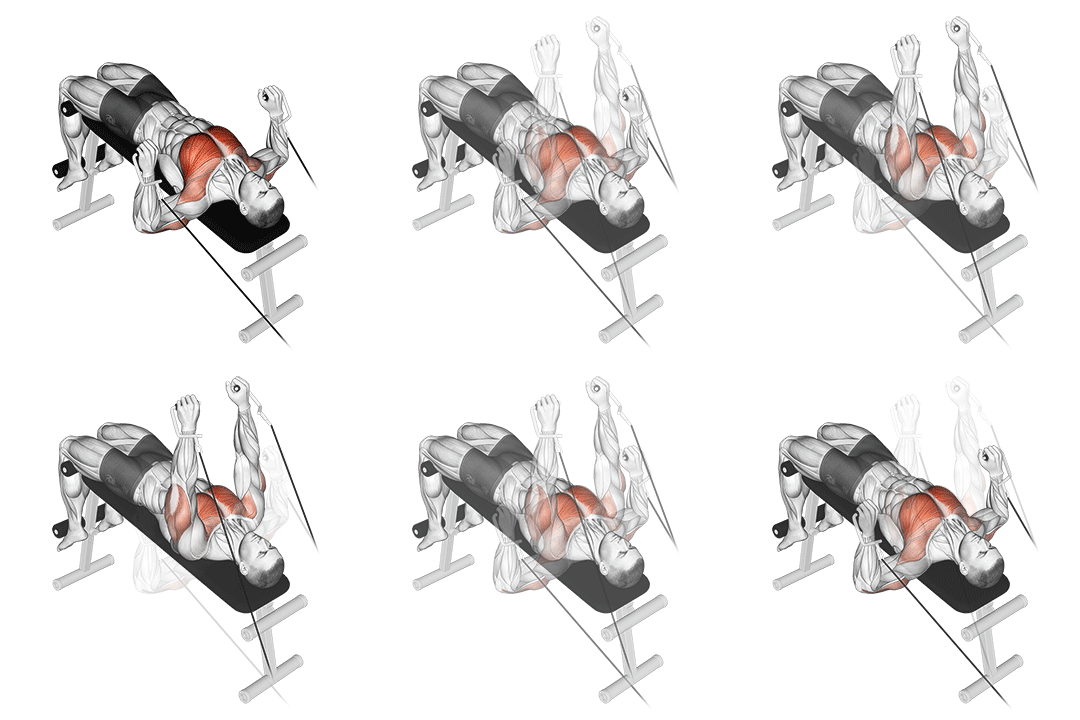
Cable Decline Fly
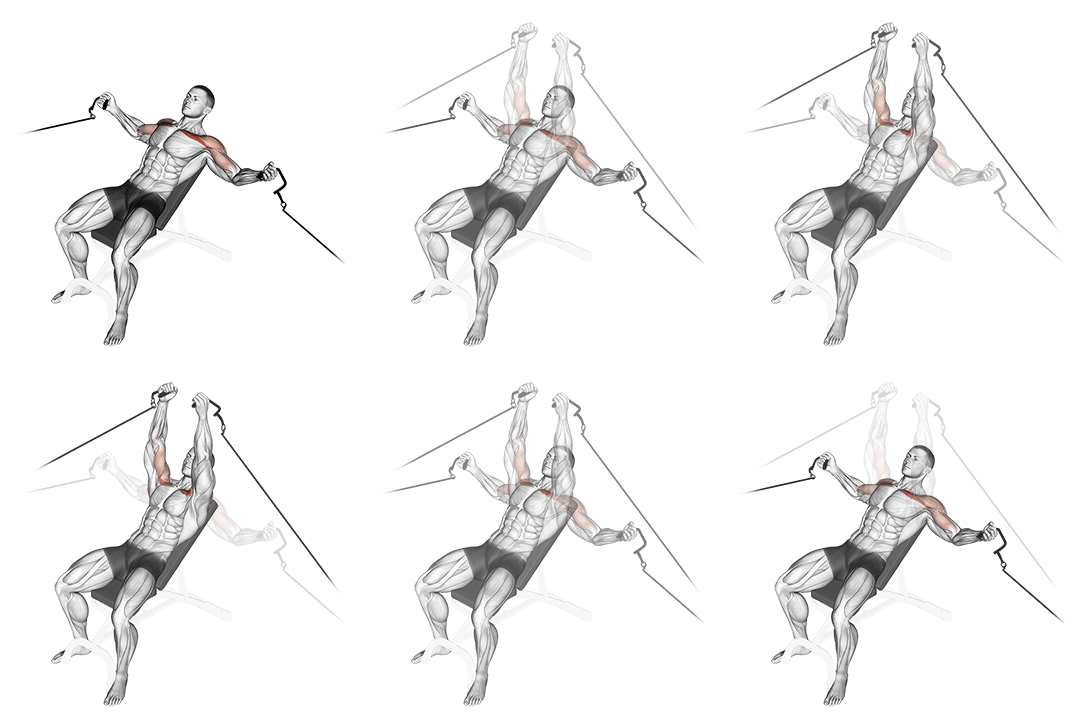
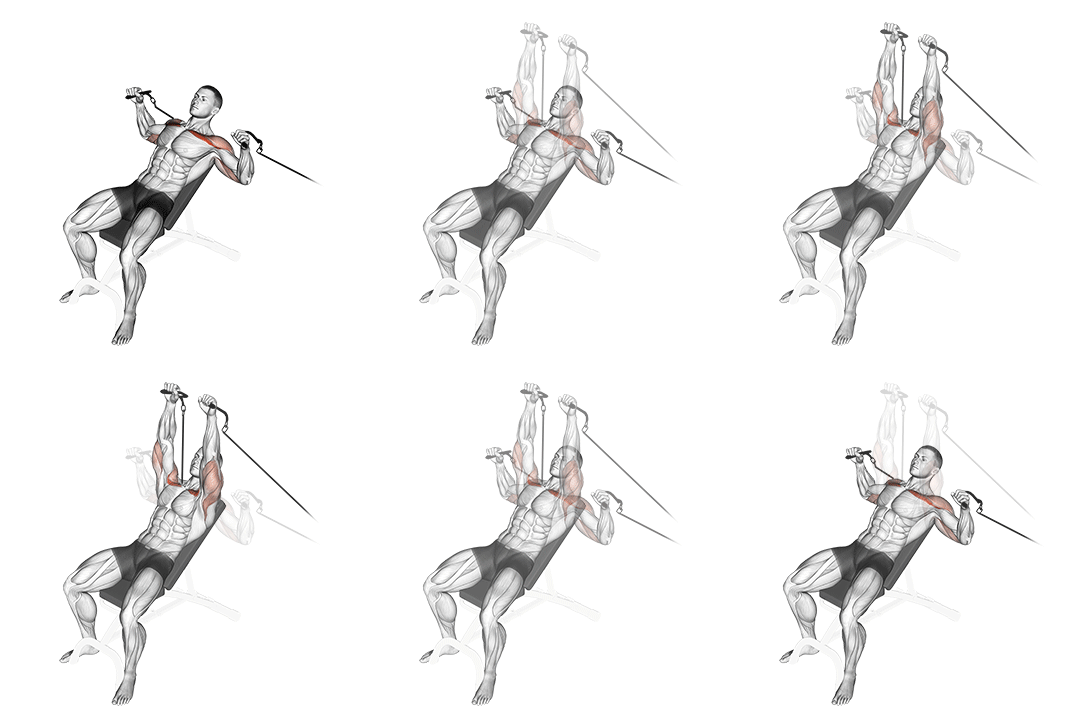
Cable Incline Fly
Head-to-Head Comparison
| Attribute | Cable Decline Fly | Cable Incline Fly |
|---|---|---|
| Target Muscle |
Pectorals
|
Pectorals
|
| Body Part |
Chest
|
Chest
|
| Equipment |
Cable
|
Cable
|
| Difficulty |
Intermediate
|
Intermediate
|
| Movement Type |
Isolation
|
Isolation
|
| Secondary Muscles |
2
|
2
|
Secondary Muscles Activated
Cable Decline Fly
Cable Incline Fly
Visual Comparison
Overview
Cable Decline Fly vs Cable Incline Fly — you’re comparing two cable isolation moves that shape different zones of the chest. This guide helps you pick the right one for your goals by breaking down muscle activation, movement mechanics, equipment needs, difficulty, and programming cues. You’ll get specific technique tips (elbow angle, bench angle, tempo), biomechanics explanations (force vector, length‑tension), rep ranges, and clear winner scenarios so you can choose the exercise that best fits your training plan.
Key Differences
- Both exercises target the Pectorals using Cable. The main differences are in their movement patterns and muscle activation angles.
Pros & Cons
Cable Decline Fly
+ Pros
- Targets lower pectoralis major (sternal head) more effectively
- Favors horizontal adduction vector for lower‑chest shape
- Useful for specialization and correcting lower‑chest lag
- Can reduce anterior deltoid dominance compared to incline
− Cons
- Requires decline bench and low‑anchor cable setup
- Higher shoulder strain risk if overextended
- Less accessible in many gyms
Cable Incline Fly
+ Pros
- Emphasizes upper pectoralis (clavicular head) and anterior deltoid
- More accessible—uses common high/mid cable pulleys
- Easier to control and progress with light loads
- Good for improving upper‑chest fullness and stability
− Cons
- Greater anterior deltoid involvement can steal load from pecs
- Less direct stress on lower chest for specialization
- At steep inclines (>45°) it shifts toward pressing mechanics
When Each Exercise Wins
For overall hypertrophy, Cable Incline Fly wins due to easier progressive overload in the 8–15 rep range and safer increments on common gym equipment. Its incline angle (30°–45°) places the clavicular fibers at a favorable length‑tension position for repeated sets and higher time‑under‑tension.
Cable Decline Fly better isolates the lower pecs and allows you to target a weak link in pressing patterns—useful for transferring carryover to decline or flat pressing. When paired with heavier, lower‑rep accessory work and controlled eccentrics, it supports targeted strength improvements in the sternal fibers.
Beginners benefit from the stability and guided line of pull of the incline setup; the incline bench limits excessive shoulder extension and makes technique easier to learn. Start with 3 sets of 10–12 reps, light load, and focus on scapular retraction and a 2–3s eccentric.
Most home setups (resistance bands anchored high or adjustable benches) replicate an incline fly more easily than a decline cable station. You can mimic the movement with bands at a 30°–45° anchor and an adjustable bench for similar upper‑pec stimulus.
Frequently Asked Questions
Can I do both Cable Decline Fly and Cable Incline Fly in the same workout?
Yes. Pair them strategically—use one as a primary isolation for the set focus and the other as a lighter finisher. For example, do heavier incline sets (3–4 sets of 8–10) then a decline drop‑set (2 sets of 12–15) to target the full chest length.
Which exercise is better for beginners?
Cable Incline Fly is better for beginners because the incline bench and cable path provide more natural control and reduce risky shoulder extension. Start light, prioritize 8–12 reps, and emphasize scapular retraction and a slight elbow bend.
How do the muscle activation patterns differ?
Activation shifts with bench angle: incline raises the cable line so the clavicular fibers and anterior deltoid work harder, while decline lowers the line to bias sternal fibers. This is due to changes in force vector relative to the torso and the pecs' length‑tension relationships.
Can Cable Incline Fly replace Cable Decline Fly?
Cable Incline Fly can replace decline if you lack equipment, but it won’t load the lower pecs as directly. If lower‑chest development is a priority, keep decline work in your program when possible; otherwise use incline variations with angle and handle adjustments to approximate the stimulus.
Expert Verdict
Use Cable Incline Fly when your goal is upper‑chest development, easier progressive overload, and accessibility—set the bench to 30°–45°, keep a 10°–20° elbow bend, and target 8–15 reps with controlled 2–3s eccentrics. Choose Cable Decline Fly when you need to emphasize the lower pecs or correct a lower‑chest lag: set decline to -15° to -30°, use moderate loads, and focus on horizontal adduction with scapular control. Both belong in a balanced chest plan: pick the incline for general hypertrophy and accessibility, and the decline for targeted lower‑pec specialization.
Also Compare
More comparisons with Cable Decline Fly
Compare More Exercises
Use our free comparison tool to analyze any two exercises head-to-head.
Compare Exercises