

Cable Decline One Arm Press vs Cable Decline Press: Complete Comparison Guide
Cable Decline One Arm Press vs Cable Decline Press — two cable-based decline variations that both target the pectorals but stress the chest and stabilizers differently. You’ll get clear, practical guidance on muscle activation, setup and technique cues, equipment needs, progression paths, and injury risk. I’ll show which one to pick for hypertrophy, strength, symmetry, or limited-equipment workouts and give rep ranges and angle cues so you can apply each movement immediately.
Exercise Comparison
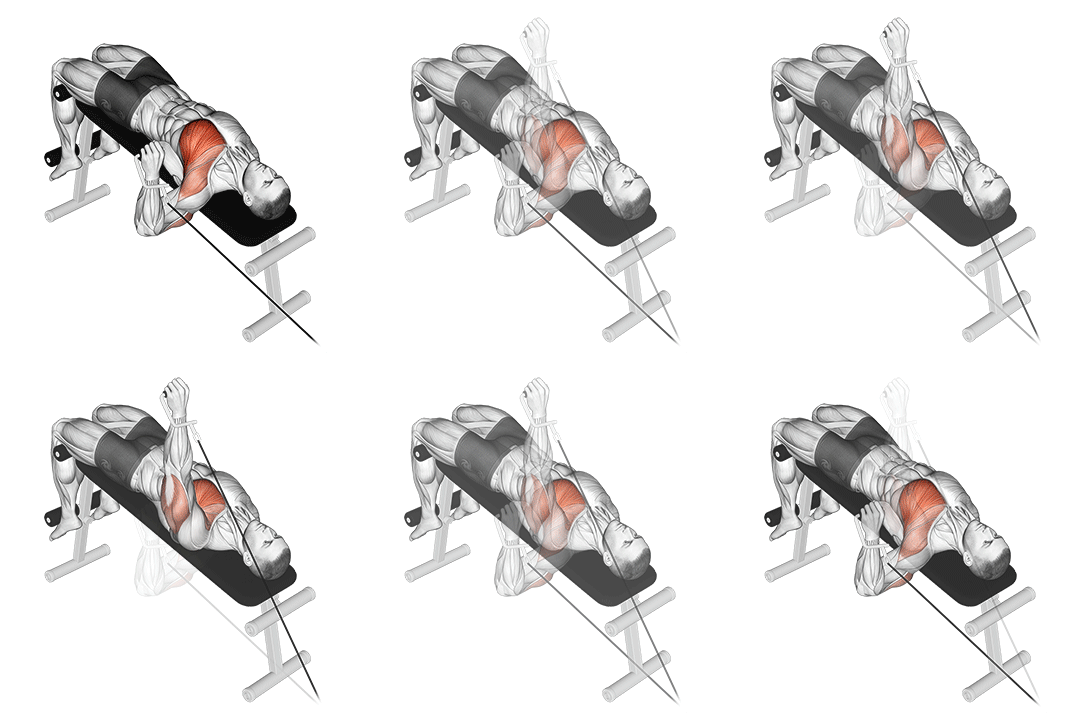
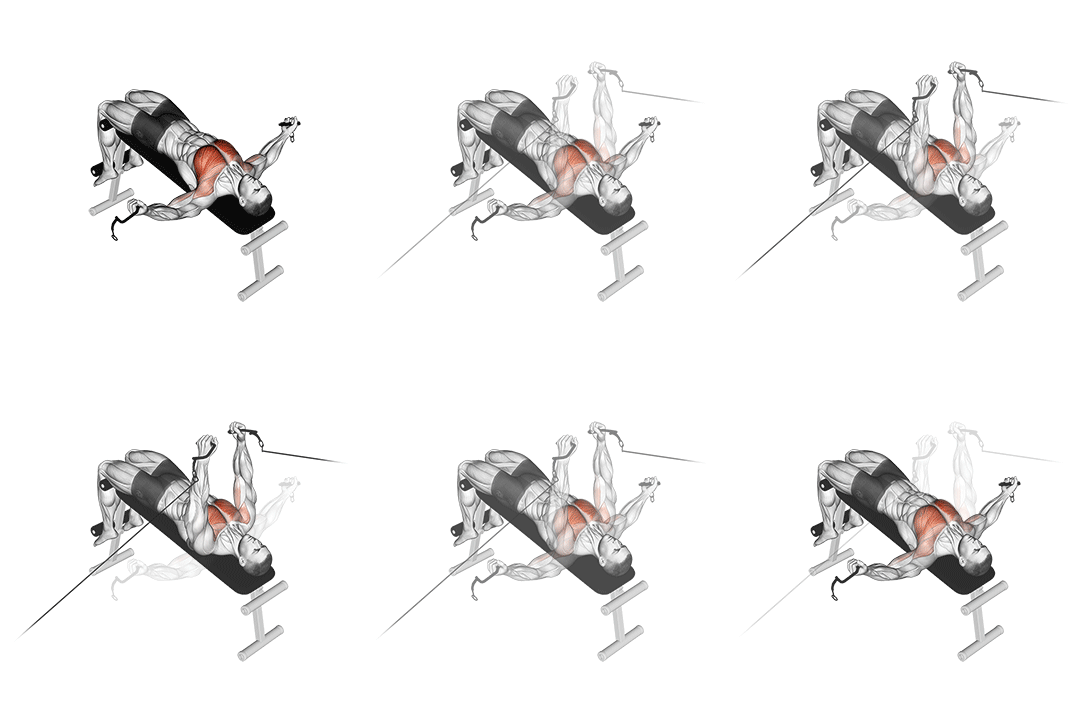
Cable Decline One Arm Press
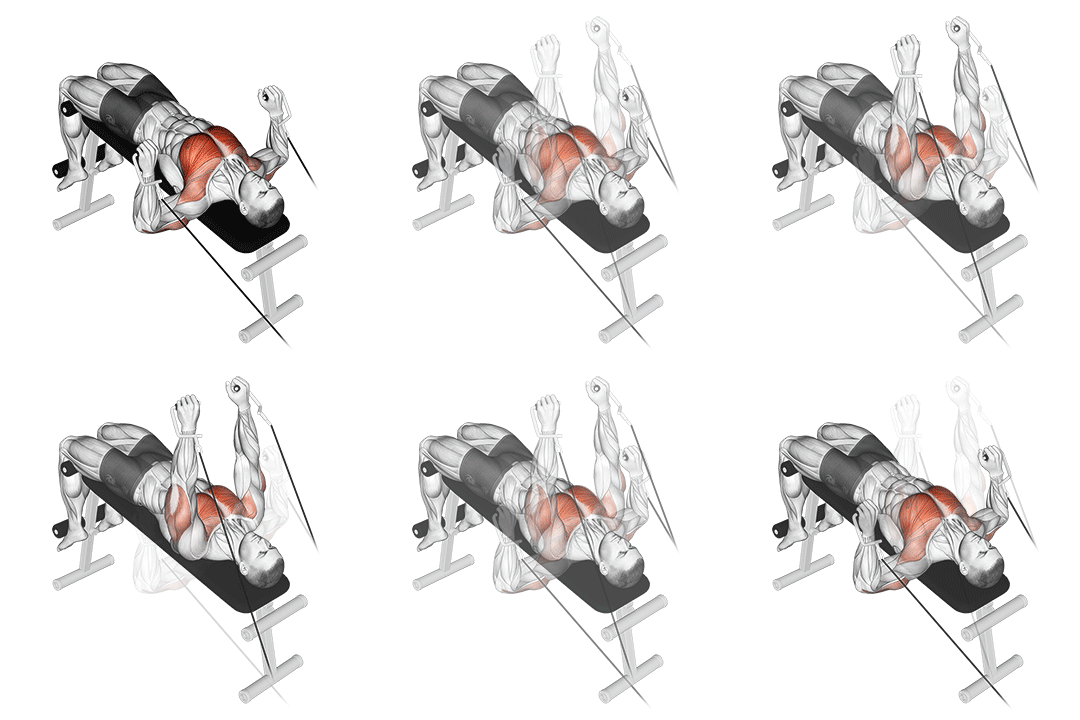
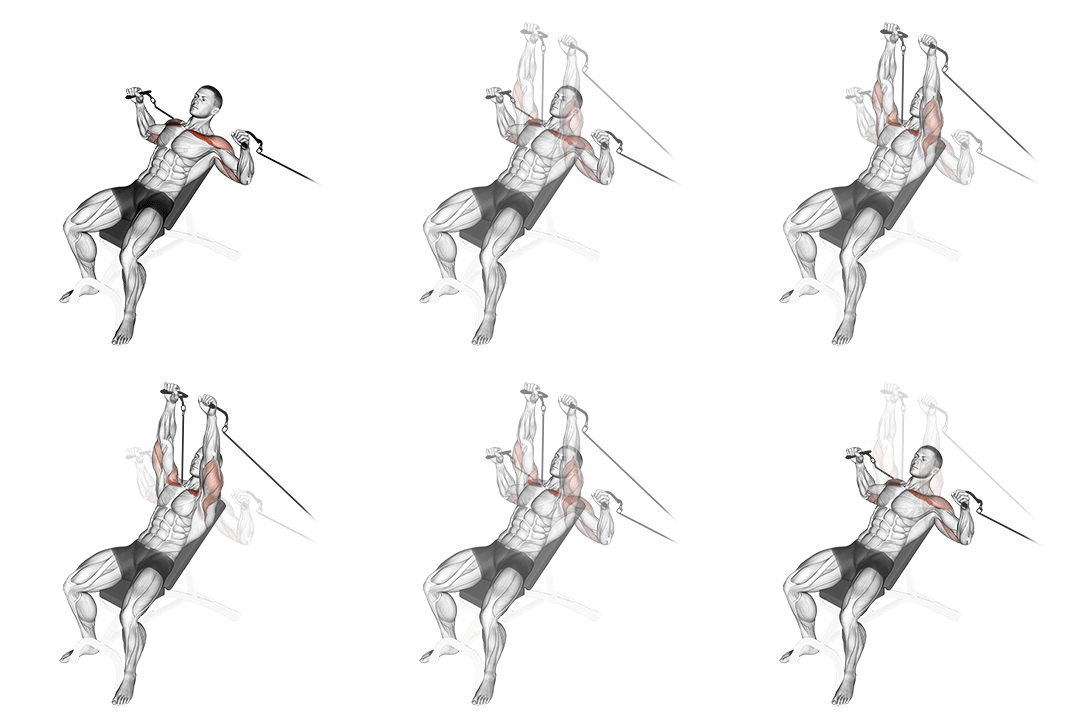
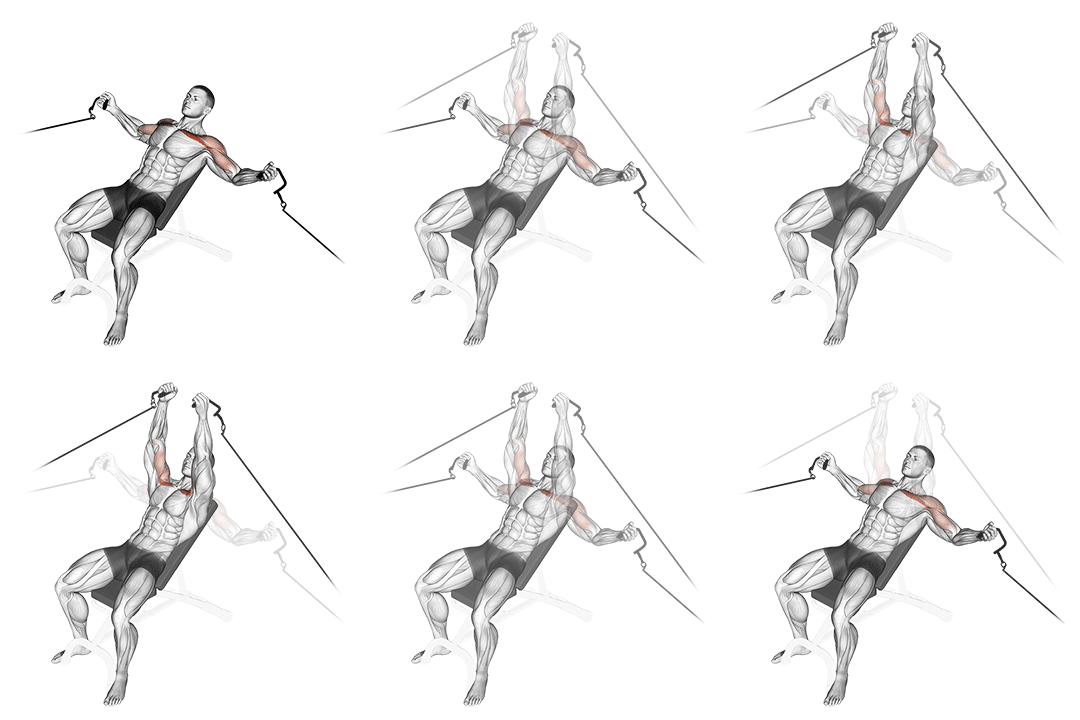
Cable Decline Press
Head-to-Head Comparison
| Attribute | Cable Decline One Arm Press | Cable Decline Press |
|---|---|---|
| Target Muscle |
Pectorals
|
Pectorals
|
| Body Part |
Chest
|
Chest
|
| Equipment |
Cable
|
Cable
|
| Difficulty |
Intermediate
|
Intermediate
|
| Movement Type |
Compound
|
Compound
|
| Secondary Muscles |
2
|
2
|
Secondary Muscles Activated
Cable Decline One Arm Press
Cable Decline Press
Visual Comparison
Overview
Cable Decline One Arm Press vs Cable Decline Press — two cable-based decline variations that both target the pectorals but stress the chest and stabilizers differently. You’ll get clear, practical guidance on muscle activation, setup and technique cues, equipment needs, progression paths, and injury risk. I’ll show which one to pick for hypertrophy, strength, symmetry, or limited-equipment workouts and give rep ranges and angle cues so you can apply each movement immediately.
Key Differences
- Both exercises target the Pectorals using Cable. The main differences are in their movement patterns and muscle activation angles.
Pros & Cons
Cable Decline One Arm Press
+ Pros
- Corrects left-right imbalances and improves unilateral strength transfer
- Boosts core and anti-rotation stability (obliques, serratus anterior)
- Requires minimal equipment—works with a single pulley or band
- Maintains constant tension through the range for strict pec control
− Cons
- Lower absolute load per side—limits maximal strength overload
- Higher coordination and stabilization demand for beginners
- Requires precise setup to avoid unwanted spinal rotation
Cable Decline Press
+ Pros
- Allows higher absolute loading for greater total chest tension
- More straightforward technique—easier for beginners to learn
- Symmetric loading reduces compensatory rotation
- Simple progressive overload with weight stacks or plates
− Cons
- Needs dual-pulley or crossover setup—less home-friendly
- Can increase anterior shoulder stress if elbows flare
- Less carryover for unilateral stability and core anti-rotation
When Each Exercise Wins
Bilateral pressing lets you stack more weight and accumulate higher total volume—ideal for 6–12 rep sets where total time under tension matters. The ability to overload both pecs simultaneously typically drives more overall hypertrophic stimulus.
The bilateral press supports heavier absolute loads and lower rep ranges (3–6 reps) with stable mechanics, enabling clearer progressive overload and neural adaptations needed for strength.
Two-arm decline pressing has a simpler motor pattern and lower rotational demand, making it easier to learn proper scapular retraction, elbow tracking, and breathing before adding unilateral complexity.
It requires only a single pulley or resistance band and a bench, so you can perform meaningful chest work without dual cable machines. It also develops core stability alongside chest stimulus.
Frequently Asked Questions
Can I do both Cable Decline One Arm Press and Cable Decline Press in the same workout?
Yes. Pairing them works well: start with heavier bilateral Cable Decline Press sets (3–6 or 6–12 reps) to accumulate load, then use the One Arm Press for 8–15 rep accessory sets to address imbalances and fatigue stabilizers. Keep total volume in check to avoid shoulder overuse.
Which exercise is better for beginners?
The Cable Decline Press is better for most beginners because it has a simpler, more stable movement pattern and lower anti-rotation demand. Once basic pressing mechanics and scapular control are solid, add unilateral work to develop symmetry and core strength.
How do the muscle activation patterns differ?
Both emphasize lower pec fibers due to the decline angle, but the one-arm press shifts more activation to obliques, serratus anterior, and scapular stabilizers because of rotational torque. Bilateral cable pressing produces more symmetrical pectoral and triceps activation with higher absolute force at mid-range.
Can Cable Decline Press replace Cable Decline One Arm Press?
If your goal is pure chest mass and strength, the bilateral Cable Decline Press can replace the one-arm variant. But if you need to fix unilateral imbalances, enhance core anti-rotation, or train with limited equipment, keep the one-arm press in your program.
Expert Verdict
Use the Cable Decline Press when your priority is maximal chest tension and straightforward progressive overload—set the bench at 15–30° decline and work primarily in 6–12 reps for hypertrophy or 3–6 reps for strength while focusing on scapular control. Choose the Cable Decline One Arm Press when you need to fix imbalances, build anti-rotation core strength, or you have limited equipment. Both benefit from constant cable tension and proper elbow path (roughly 45° from the torso). Alternate them across cycles: bilateral-focused blocks for size and strength, and unilateral blocks for symmetry and stability.
Also Compare
More comparisons with Cable Decline One Arm Press
Compare More Exercises
Use our free comparison tool to analyze any two exercises head-to-head.
Compare Exercises