

Cable Decline One Arm Press vs Cable Incline Bench Press: Complete Comparison Guide
Cable Decline One Arm Press vs Cable Incline Bench Press — which should you use to shape your chest? You’ll get a direct comparison of muscle emphasis, required equipment, technique cues, progression options, and injury considerations so you can pick the right move for your goal. I’ll cover how each exercise loads the pectorals through different force vectors and angles (decline ~15–30° vs incline ~30–45°), how secondary muscles assist, and practical programming tips including rep ranges and progression strategies you can apply today.
Exercise Comparison
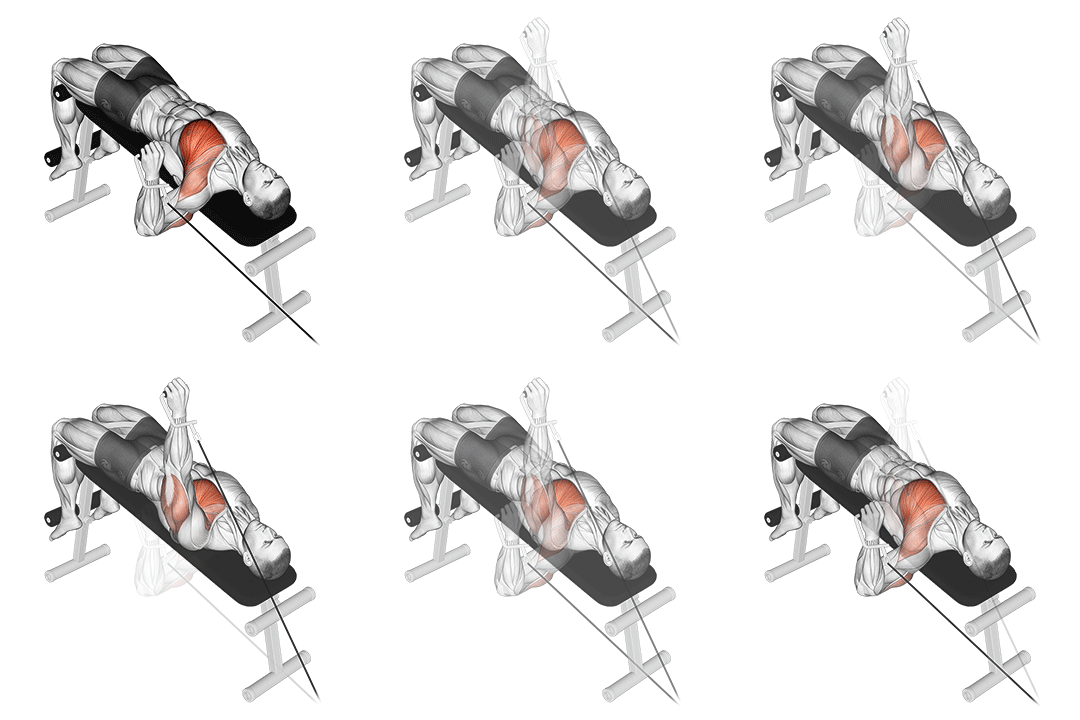
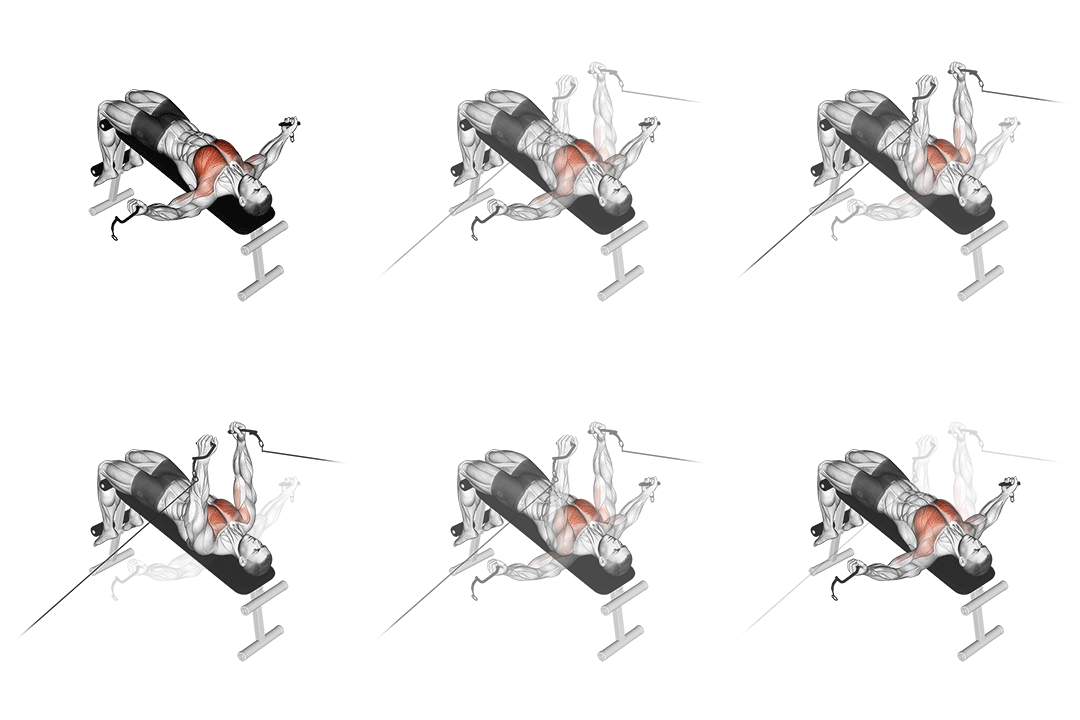
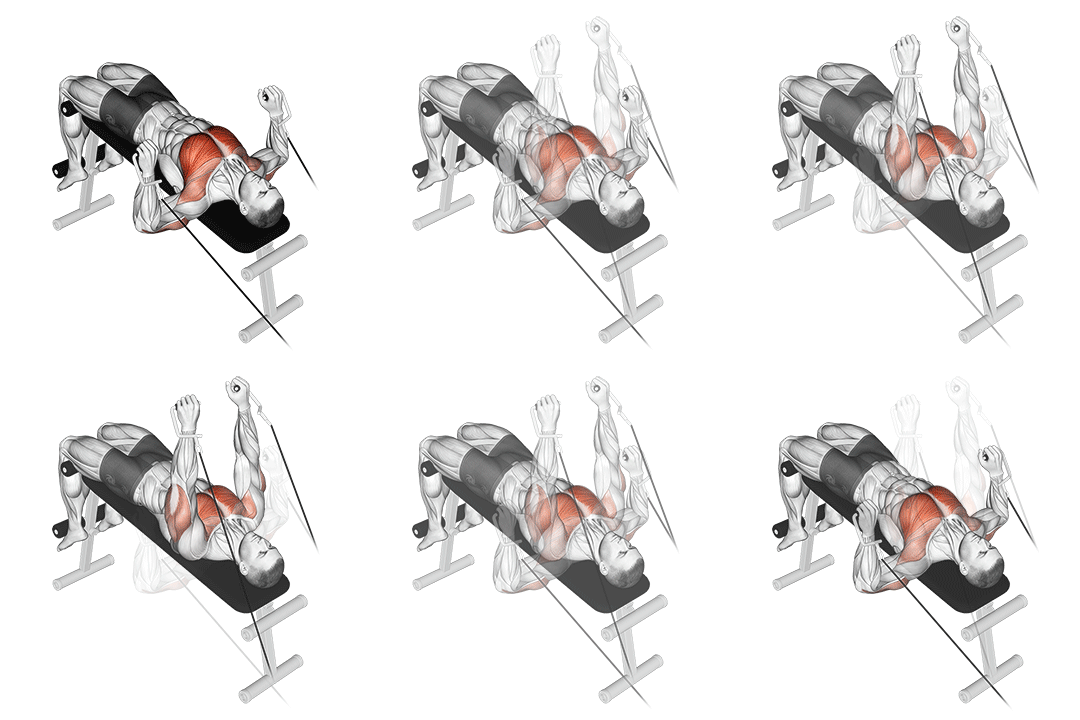
Cable Decline One Arm Press
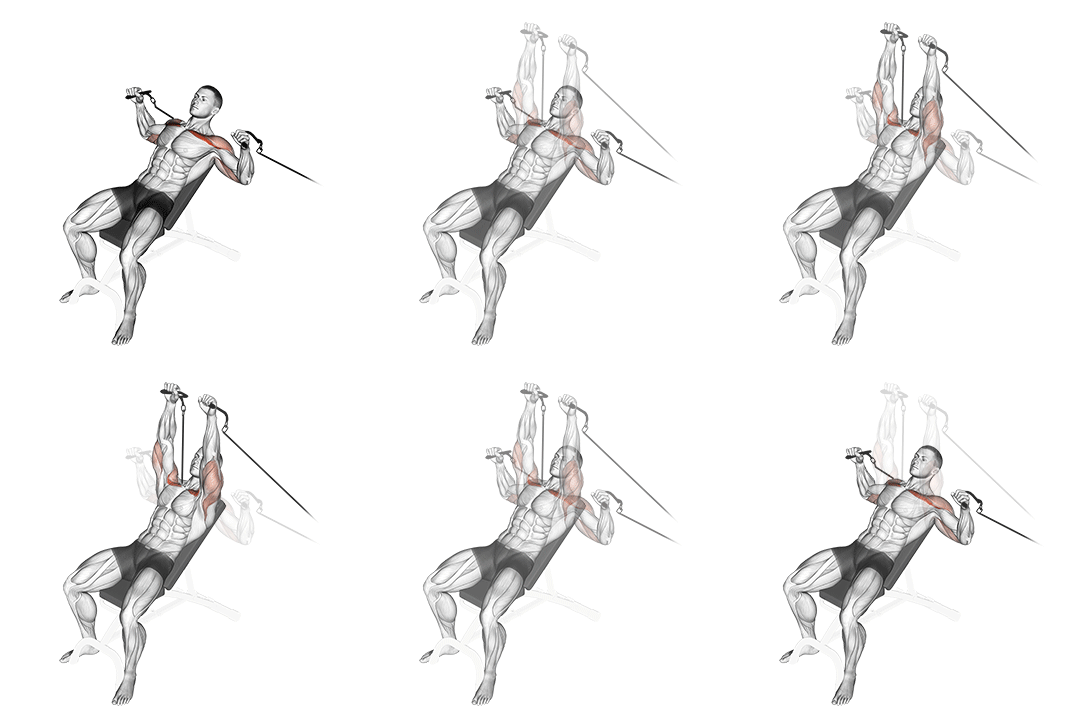
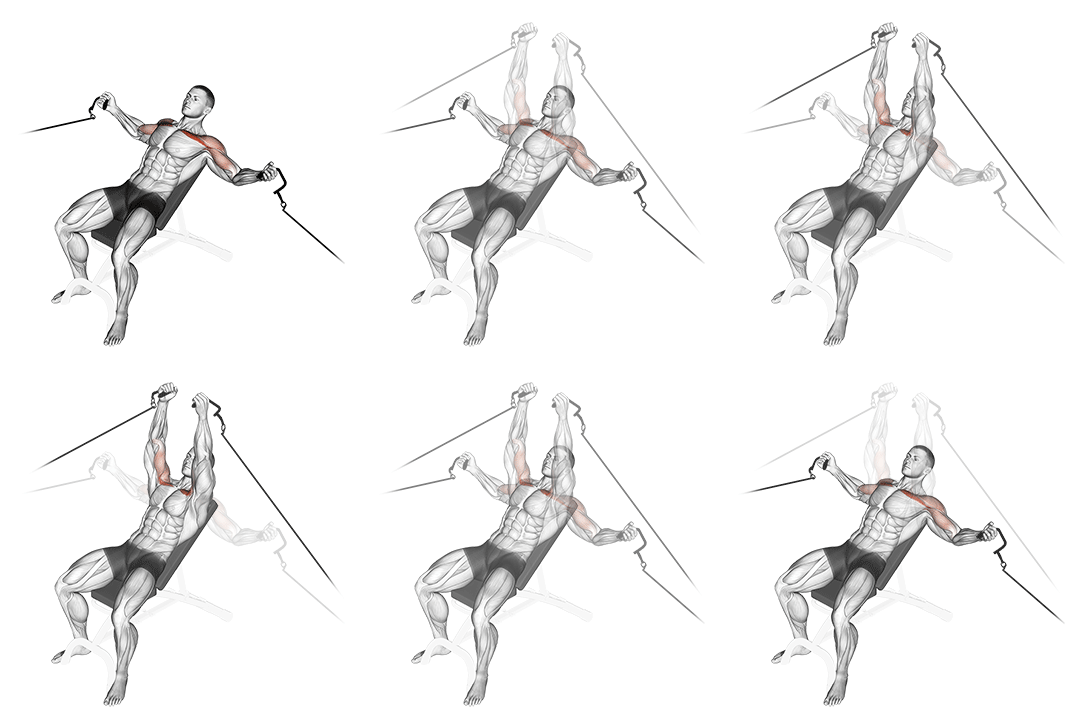
Cable Incline Bench Press
Head-to-Head Comparison
| Attribute | Cable Decline One Arm Press | Cable Incline Bench Press |
|---|---|---|
| Target Muscle |
Pectorals
|
Pectorals
|
| Body Part |
Chest
|
Chest
|
| Equipment |
Cable
|
Cable
|
| Difficulty |
Intermediate
|
Intermediate
|
| Movement Type |
Compound
|
Compound
|
| Secondary Muscles |
2
|
2
|
Secondary Muscles Activated
Cable Decline One Arm Press
Cable Incline Bench Press
Visual Comparison
Overview
Cable Decline One Arm Press vs Cable Incline Bench Press — which should you use to shape your chest? You’ll get a direct comparison of muscle emphasis, required equipment, technique cues, progression options, and injury considerations so you can pick the right move for your goal. I’ll cover how each exercise loads the pectorals through different force vectors and angles (decline ~15–30° vs incline ~30–45°), how secondary muscles assist, and practical programming tips including rep ranges and progression strategies you can apply today.
Key Differences
- Both exercises target the Pectorals using Cable. The main differences are in their movement patterns and muscle activation angles.
Pros & Cons
Cable Decline One Arm Press
+ Pros
- Greater lower-pectoral emphasis through a downward force vector
- High unilateral stability demand improves core anti-rotation and balance
- Allows independent arm work to correct side-to-side imbalances
- Cable resistance maintains tension through full ROM with controlled deceleration
− Cons
- Requires a decline bench or stable decline setup that isn’t always available
- Higher coordination and core demand increases technical difficulty
- Limited absolute loading compared to bilateral compound presses
Cable Incline Bench Press
+ Pros
- Stronger emphasis on upper (clavicular) pec fibers for balanced chest development
- Easier to load bilaterally for higher absolute strength and systematic overload
- Accessible setup in most gyms with an adjustable bench and cable tower
- Stable bilateral pattern reduces rotational stress and simplifies technique
− Cons
- Places more demand on the anterior deltoid, which can dominate if form breaks down
- Less core and unilateral stability carryover compared to one-arm variations
- High incline angles (>45°) shift work toward shoulders and away from the pecs
When Each Exercise Wins
Incline pressing allows heavier bilateral loading and targets the upper pecs that are often underdeveloped. Use 8–12 reps with a 30–45° incline to increase time under tension and hypertrophic stimulus; pair with varied inclines across sessions for full pec development.
Bilateral incline pressing supports higher absolute loads and progressive overload protocols (3–6 reps) with clearer neuromuscular carryover to pressing strength. The stable setup lets you focus on heavier loading and consistent volume.
The bilateral setup and simpler motor pattern make the incline easier to learn and safer for novices. Start with moderate loads and 8–12 reps to build pressing mechanics before adding unilateral or decline variations.
Most home setups with a cable station and an adjustable bench can perform inclines; decline one-arm presses need a secure decline option and space for safe unilateral loading. If you lack a decline bench, the incline is the practical choice.
Frequently Asked Questions
Can I do both Cable Decline One Arm Press and Cable Incline Bench Press in the same workout?
Yes. Place the Cable Incline Bench Press earlier for heavier bilateral loading (3–6 or 8–12 reps) and use the Cable Decline One Arm Press later as an accessory to target lower-pecs and single-arm stability for 8–15 reps. That sequencing preserves strength capacity for the main bilateral lift.
Which exercise is better for beginners?
Cable Incline Bench Press is better for beginners due to its bilateral stability and simpler setup. Start there to learn pressing mechanics and shoulder positioning before adding unilateral decline work that requires more core and scapular control.
How do the muscle activation patterns differ?
Incline pressing shifts the force vector upward, increasing shoulder flexion and clavicular head activation, while decline one-arm pressing shifts the vector downward and emphasizes sternal/lower fibers. Unilateral decline also increases core and scapular stabilizer activation because of anti-rotation demands.
Can Cable Incline Bench Press replace Cable Decline One Arm Press?
If your goal is overall chest mass and strength, the incline can replace the decline as a primary mover. However, if you need targeted lower-pec development or unilateral stability work, the decline one-arm press offers unique benefits you shouldn’t fully forgo.
Expert Verdict
Use the Cable Incline Bench Press as your primary chest builder when you want reliable upper-pectoral development, heavier bilateral loading, and a straightforward progression path. It’s the practical winner for hypertrophy and strength because it lets you systematically increase load while keeping the motor pattern simple. Use the Cable Decline One Arm Press as an accessory when you need to target lower-pec definition, correct unilateral imbalances, or increase core anti-rotation strength. Program decline one-arm presses for 8–15 reps, controlled tempo, and as a supplemental movement after heavier bilateral pressing.
Also Compare
More comparisons with Cable Decline One Arm Press
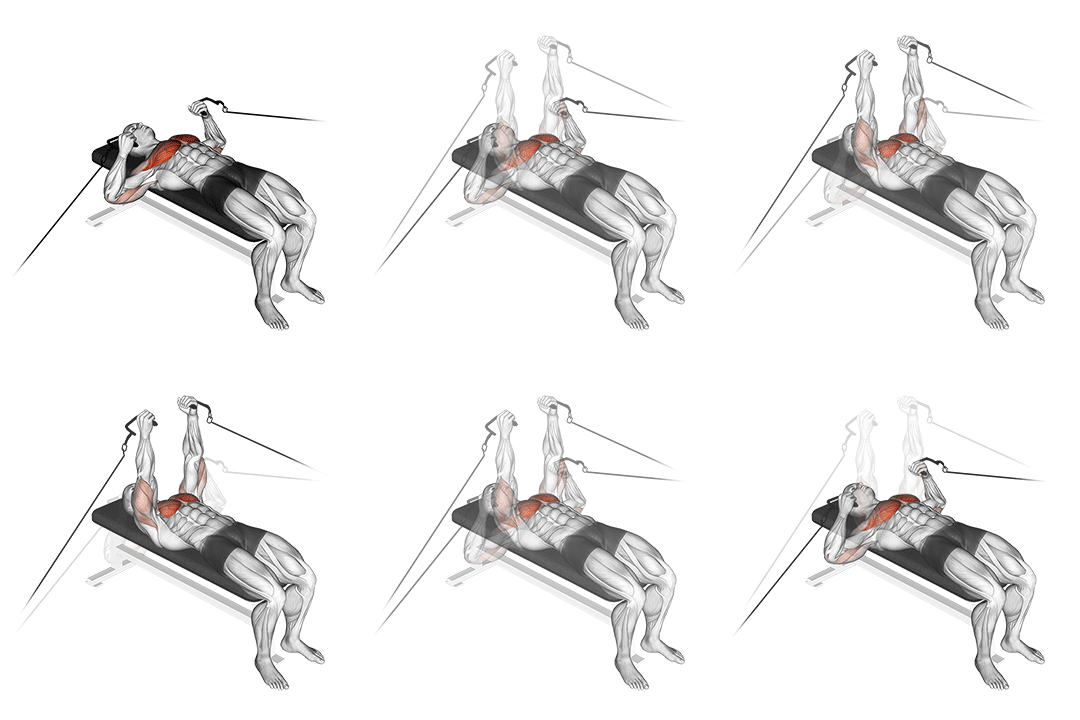
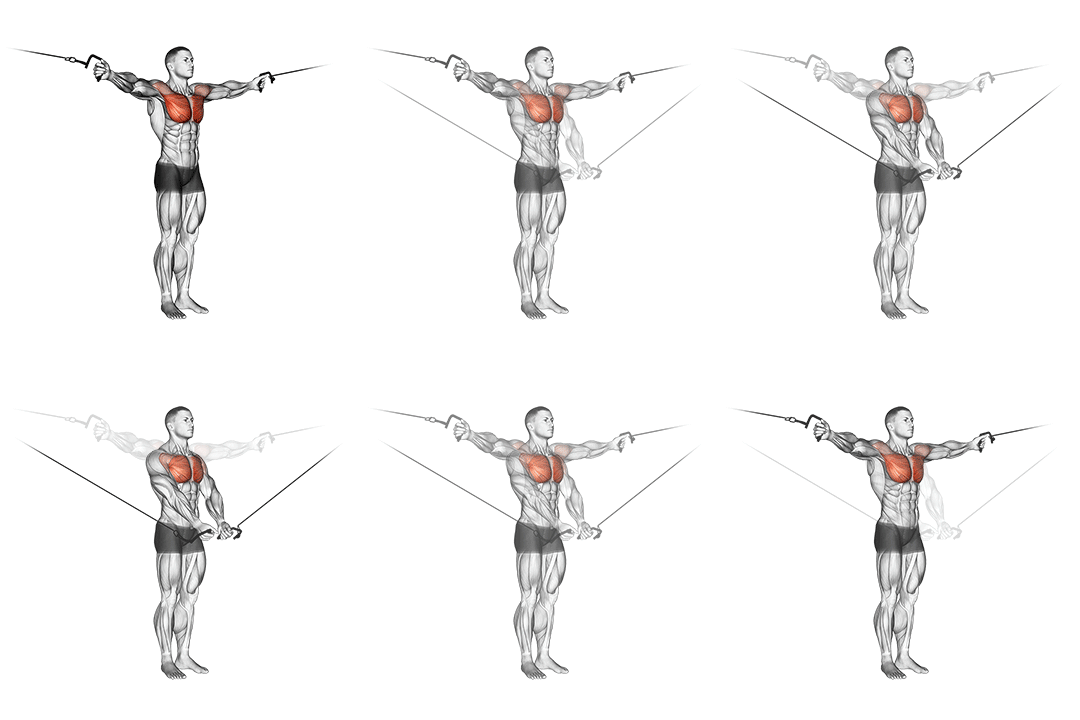
More comparisons with Cable Incline Bench Press
Compare More Exercises
Use our free comparison tool to analyze any two exercises head-to-head.
Compare Exercises