

Cable Decline Press vs Cable Incline Bench Press: Complete Comparison Guide
Cable Decline Press vs Cable Incline Bench Press — two cable variations that bias different regions of your chest. If you want clear guidance on which to pick, this comparison walks you through primary and secondary muscle activation, biomechanics (angles, force vectors, length-tension), equipment needs, difficulty, and practical programming cues. You’ll get technique tips (bench angle, elbow path, scapular position), rep ranges for hypertrophy and strength, and decisive recommendations for different goals so you can choose the best press for your routine.
Exercise Comparison
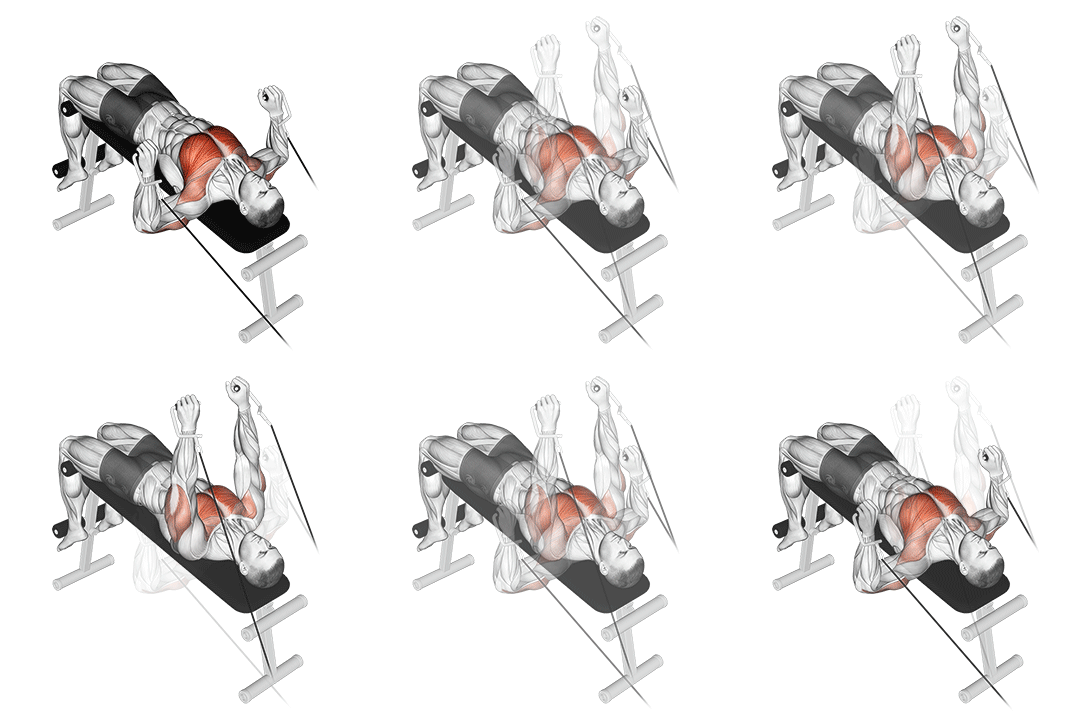
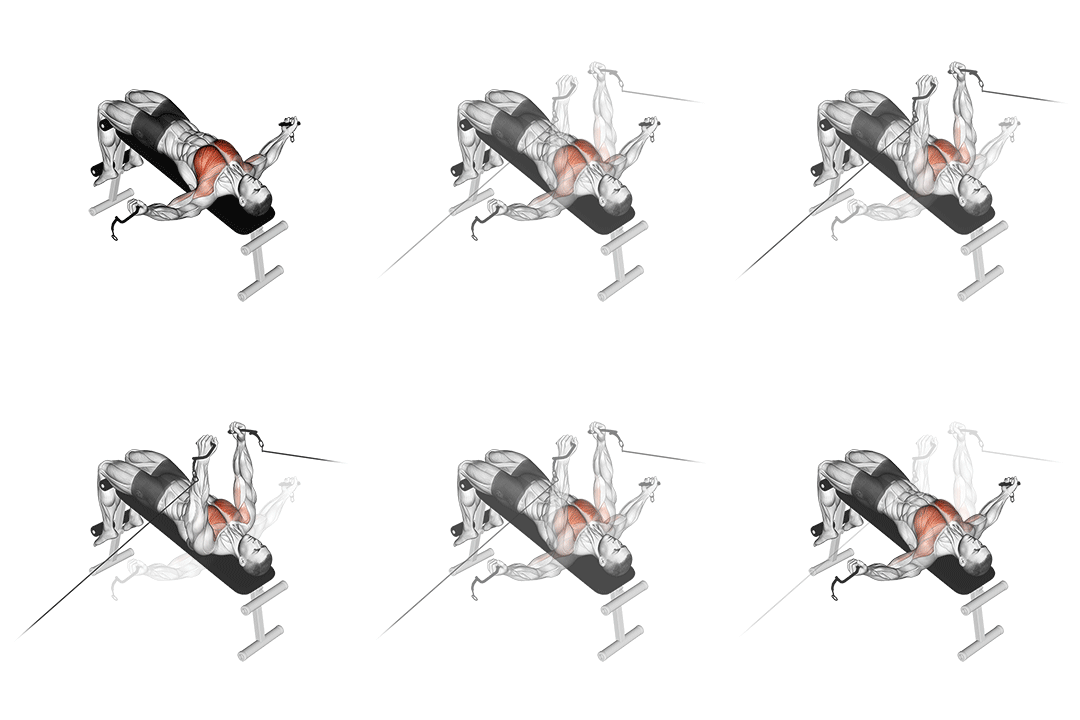
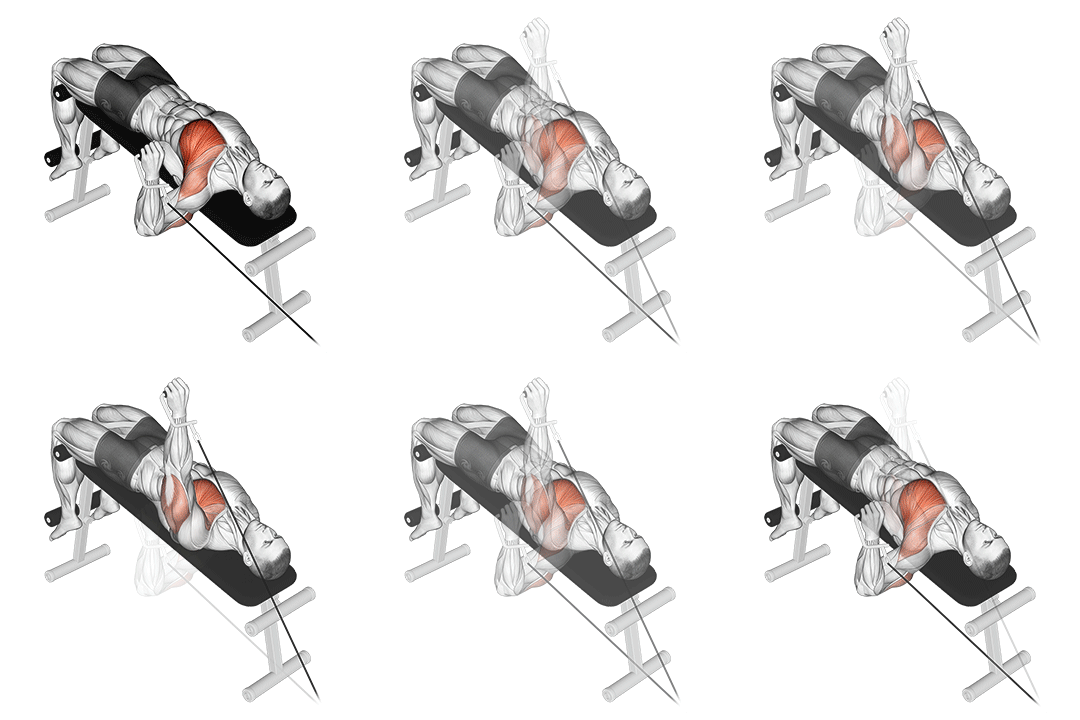
Cable Decline Press
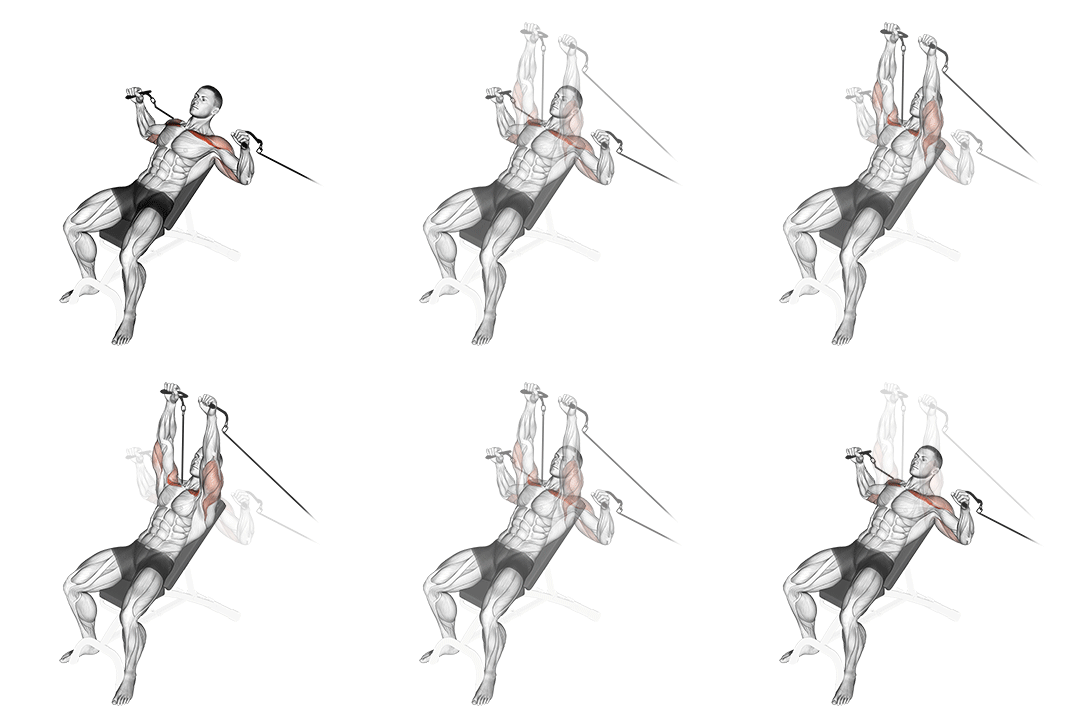
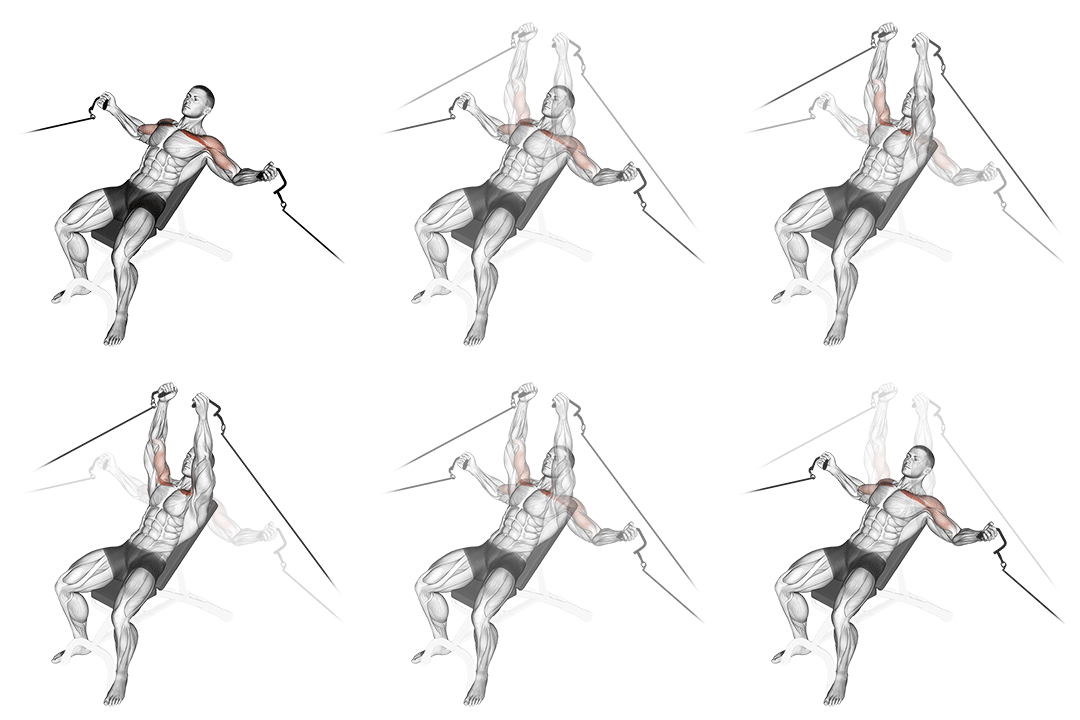
Cable Incline Bench Press
Head-to-Head Comparison
| Attribute | Cable Decline Press | Cable Incline Bench Press |
|---|---|---|
| Target Muscle |
Pectorals
|
Pectorals
|
| Body Part |
Chest
|
Chest
|
| Equipment |
Cable
|
Cable
|
| Difficulty |
Intermediate
|
Intermediate
|
| Movement Type |
Compound
|
Compound
|
| Secondary Muscles |
2
|
2
|
Secondary Muscles Activated
Cable Decline Press
Cable Incline Bench Press
Visual Comparison
Overview
Cable Decline Press vs Cable Incline Bench Press — two cable variations that bias different regions of your chest. If you want clear guidance on which to pick, this comparison walks you through primary and secondary muscle activation, biomechanics (angles, force vectors, length-tension), equipment needs, difficulty, and practical programming cues. You’ll get technique tips (bench angle, elbow path, scapular position), rep ranges for hypertrophy and strength, and decisive recommendations for different goals so you can choose the best press for your routine.
Key Differences
- Both exercises target the Pectorals using Cable. The main differences are in their movement patterns and muscle activation angles.
Pros & Cons
Cable Decline Press
+ Pros
- Stronger emphasis on mid and lower pectorals for fuller chest thickness
- Allows heavier, more stable pressing line for mechanical tension
- Lower anterior shoulder torque — friendlier for some shoulder issues
- Good transfer to flat bench lockout and mid-range pressing strength
− Cons
- Decline benches or decline set-ups are less common in gyms
- Setup and cable line-of-pull require attention to avoid awkward vectors
- Limited variation compared to incline (fewer pulley angle options)
Cable Incline Bench Press
+ Pros
- Emphasizes upper pecs and anterior deltoids for balanced chest development
- Easier setup with common adjustable benches and pulley heights
- More variation by changing incline angle and pulley position
- Great for improving lockout and shoulder-integrated pressing
− Cons
- Higher anterior shoulder loading — riskier with poor scapular control
- May shift too much work to deltoids if angle is too steep
- Can be harder to load pecs purely without deltoid takeover
When Each Exercise Wins
For overall chest thickness and mechanical tension on sternal fibers, decline allows a longer pec ROM and heavier line-of-pull on the mid/lower chest. Use 6–12 reps, 3–4 sets, and a -15° to -30° bench angle to maximize tension on those fibers.
Incline pressing strengthens the upper pecs and anterior deltoid chain important for pressing power and lockout. Train heavier (3–6 reps) at 30°–45° incline and include pauses to build force production at sticking points.
Incline setup is simpler and movement patterns are more intuitive; beginners can learn scapular retraction and elbow path faster. Start with light loads, 8–12 reps, and focus on controlled eccentric tempo.
Adjustable benches and resistance bands or a single low-pulley option mimic incline cable lines more easily than decline setups. You can change angle and pulley height for variety without a dedicated decline bench.
Frequently Asked Questions
Can I do both Cable Decline Press and Cable Incline Bench Press in the same workout?
Yes — pairing them can target multiple chest regions. Sequence them by priority: do the variation that matches your main goal first (e.g., decline for sternal focus), then use the other for 2–3 accessory sets at higher reps or lighter load.
Which exercise is better for beginners?
Cable Incline Bench Press is generally better for beginners because setup and movement pattern are simpler and easier to cue. Start with 8–12 reps, learn scapular retraction and a 30°–45° elbow path, and progress load as form solidifies.
How do the muscle activation patterns differ?
Incline increases clavicular (upper) pec and anterior deltoid activation due to an upward force vector and greater shoulder flexion. Decline shifts the force vector down, loading sternal and lower pec fibers more and reducing anterior shoulder torque; this changes length-tension relationships and moment arms throughout the press.
Can Cable Incline Bench Press replace Cable Decline Press?
Not entirely — incline and decline bias different fiber regions and force vectors. If you must pick one for equipment reasons, incline offers broader accessibility, but swapping in decline periodically ensures fuller chest development and reduces regional imbalances.
Expert Verdict
Both cable variations deserve a place in smart chest programming. Choose Cable Decline Press when your priority is mid/lower pec thickness and higher mechanical tension with less anterior shoulder torque — set the bench at -15° to -30°, load for 6–12 reps, and focus on full ROM and controlled eccentrics. Choose Cable Incline Bench Press when you need upper-chest emphasis, better accessibility, and more variation options — use 30°–45° incline, emphasize scapular retraction, and watch deltoid takeover. For most lifters, rotate both across training blocks to hit different fiber orientations and maximize balanced muscle growth.
Also Compare
More comparisons with Cable Decline Press
More comparisons with Cable Incline Bench Press
Compare More Exercises
Use our free comparison tool to analyze any two exercises head-to-head.
Compare Exercises