

Cable Decline Press vs Cable Incline Fly: Complete Comparison Guide
Cable Decline Press vs Cable Incline Fly — both hit the chest, but they do it in very different ways. If you want clear guidance on which to pick for size, strength, or upper- vs lower-pec emphasis, this comparison has your back. You’ll get technique cues (bench angles, elbow position, tempo), biomechanical explanations (force vectors, length–tension relationships), and practical recommendations (rep ranges, progression tips). Read on to learn how each move loads your pecs, which secondary muscles assist, the equipment you need, and when to program each exercise into your week.
Exercise Comparison
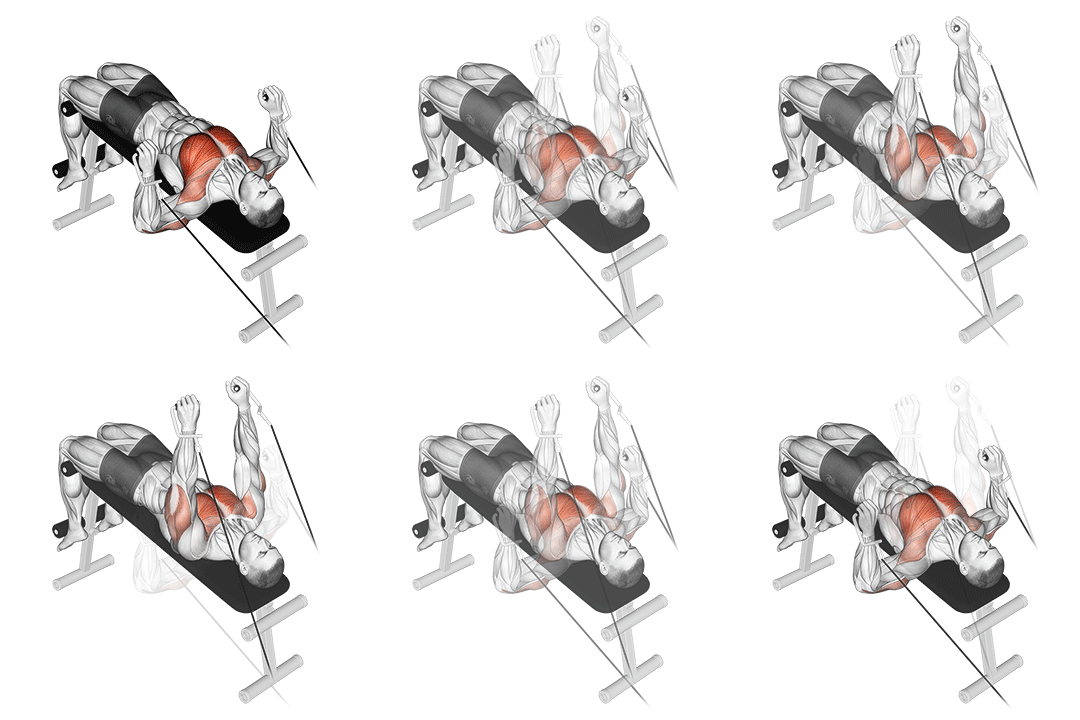
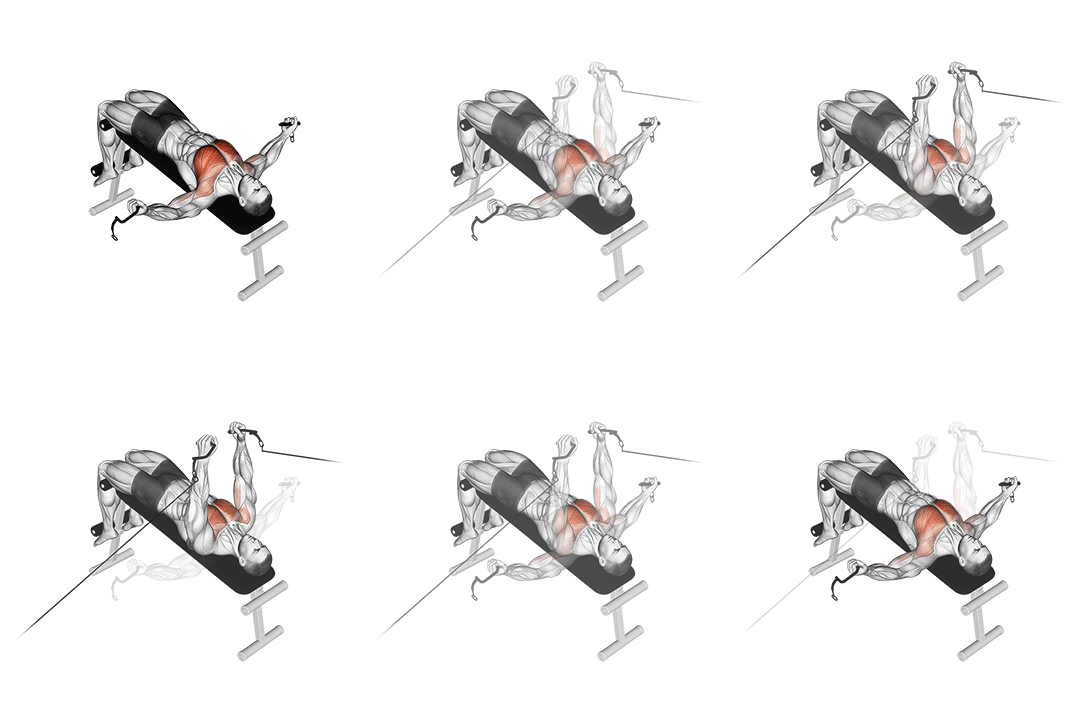
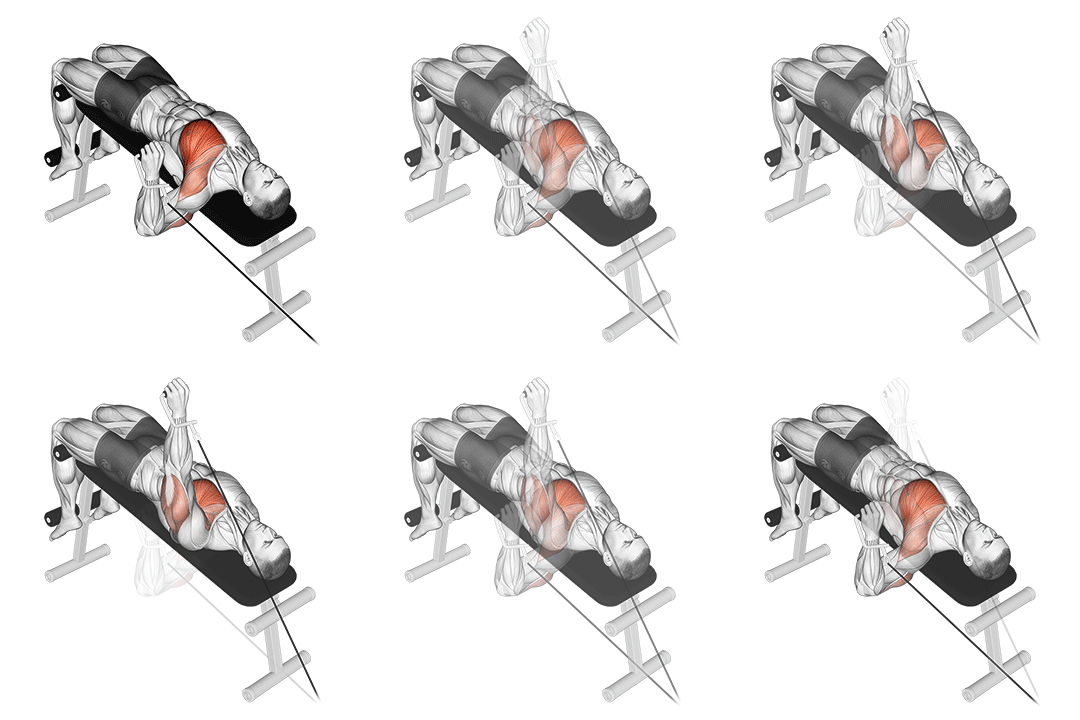
Cable Decline Press
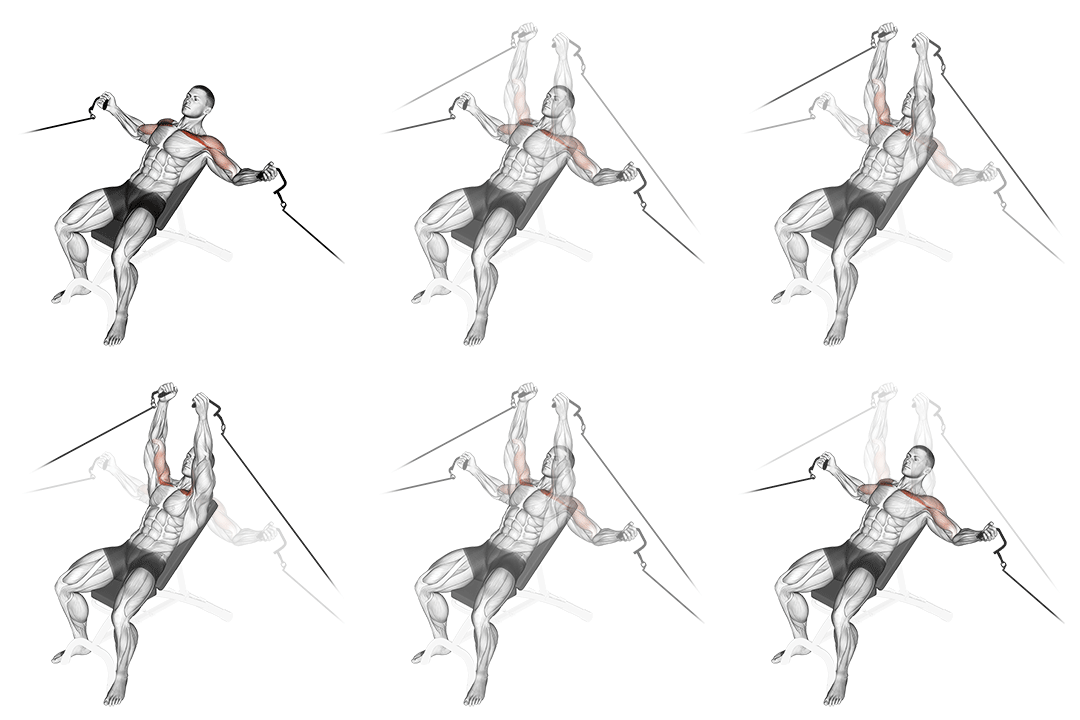
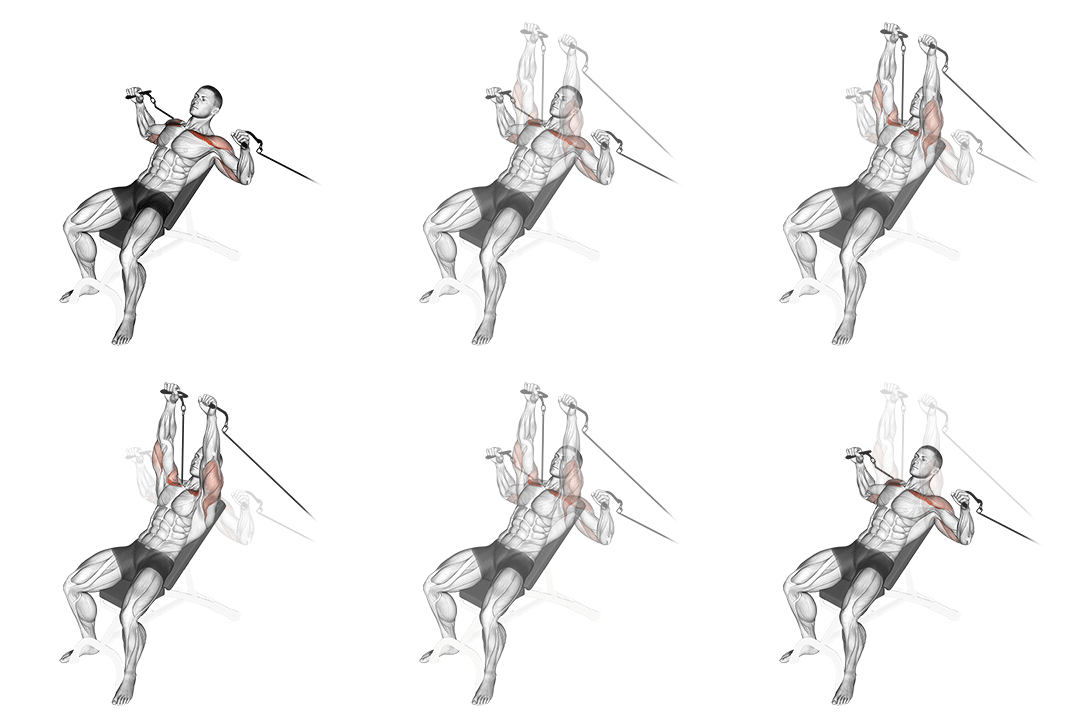
Cable Incline Fly
Head-to-Head Comparison
| Attribute | Cable Decline Press | Cable Incline Fly |
|---|---|---|
| Target Muscle |
Pectorals
|
Pectorals
|
| Body Part |
Chest
|
Chest
|
| Equipment |
Cable
|
Cable
|
| Difficulty |
Intermediate
|
Intermediate
|
| Movement Type |
Compound
|
Isolation
|
| Secondary Muscles |
2
|
2
|
Secondary Muscles Activated
Cable Decline Press
Cable Incline Fly
Visual Comparison
Overview
Cable Decline Press vs Cable Incline Fly — both hit the chest, but they do it in very different ways. If you want clear guidance on which to pick for size, strength, or upper- vs lower-pec emphasis, this comparison has your back. You’ll get technique cues (bench angles, elbow position, tempo), biomechanical explanations (force vectors, length–tension relationships), and practical recommendations (rep ranges, progression tips). Read on to learn how each move loads your pecs, which secondary muscles assist, the equipment you need, and when to program each exercise into your week.
Key Differences
- Cable Decline Press is a compound movement, while Cable Incline Fly is an isolation exercise.
- Both exercises target the Pectorals using Cable. The main differences are in their movement patterns and muscle activation angles.
Pros & Cons
Cable Decline Press
+ Pros
- Stronger lower-pec emphasis via a downward force vector
- Allows heavier loading for strength and hypertrophy (compound pattern)
- Better for overall chest thickness and pressing strength
- Transfers well to horizontal pressing movements like bench press
− Cons
- Requires decline bench or secure setup
- Higher spinal and shoulder stress if form breaks down
- Less isolated upper-pec development compared with incline variations
Cable Incline Fly
+ Pros
- Excellent upper-pec/clavicular stimulation at 30–45°
- Low spinal load and easy setup in most gyms
- Great for time-under-tension and peak contraction work
- Angle is highly adjustable to target different pec fibers
− Cons
- Limited absolute loading compared with compound presses
- Higher stretch on pecs increases strain risk if uncontrolled
- Requires strong scapular control to avoid shoulder compensation
When Each Exercise Wins
The decline press allows heavier loads and more overall mechanical tension, which drives cross-sectional growth. Combine 6–12 reps with controlled 2–3s eccentrics to maximize time under tension for the sternal pec fibers.
As a compound pressing movement it accepts higher absolute loads and trains elbow extension torque and triceps strength, both crucial for pressing strength. Use 3–6 rep ranges with paused reps to build transfer to heavier barbell work.
The incline fly has a simpler single-joint pattern and lower axial load, letting you learn chest contraction and scapular control without mastering complex bracing. Start with light resistance, 10–15 reps, and focus on a 2s eccentric.
You can replicate the incline fly with resistance bands or dumbbells and an adjustable bench set to 30–45°, making it more practical at home. The decline press needs a decline setup or specialized pulleys that most home gyms lack.
Frequently Asked Questions
Can I do both Cable Decline Press and Cable Incline Fly in the same workout?
Yes — pairing them works well: start with the compound Cable Decline Press for heavy sets (3–5 sets, 6–10 reps), then add 2–4 sets of Cable Incline Fly at higher reps (8–15) for extra volume and stretch. Sequence the press first to handle heavier loads and use the fly as a targeted finisher to increase time under tension.
Which exercise is better for beginners?
Cable Incline Fly is better for beginners because it isolates the pectoral arc and reduces the need for advanced bracing and leg drive. Begin with light weight, focus on scapular retraction, and maintain a 10–15 rep range to learn the movement pattern safely.
How do the muscle activation patterns differ?
The decline press produces peak tension closer to lockout and emphasizes horizontal adduction and elbow extension, engaging triceps and anterior deltoids. The incline fly produces peak mid-range tension with a longer stretch at the bottom, shifting force vectors upward to bias the clavicular head and rely more on scapular and rotator-cuff control.
Can Cable Incline Fly replace Cable Decline Press?
Not entirely — the incline fly can substitute for volume and upper-pec focus, but it won’t match the decline press’s capacity for heavy loading and overall chest thickness. If your goal is maximal strength or heavy hypertrophy, keep the decline press; use the fly as an accessory or replacement when equipment/setup is limited.
Expert Verdict
Use Cable Decline Press when your goal is lower-pec thickness, pressing strength, and greater mechanical tension — program it for 4–6 sets of 6–12 reps with tight bracing, feet anchored, and elbows tracking 30–45° from the torso. Choose Cable Incline Fly when you want upper-pec shaping, higher time under tension, or a low-spine-load isolation option — perform 3–4 sets of 8–15 reps with a slight elbow bend and a controlled 2–3s eccentric. For balanced development, rotate both across training blocks: prioritize the press for strength blocks and emphasize the fly in volume or shaping phases.
Also Compare
More comparisons with Cable Decline Press
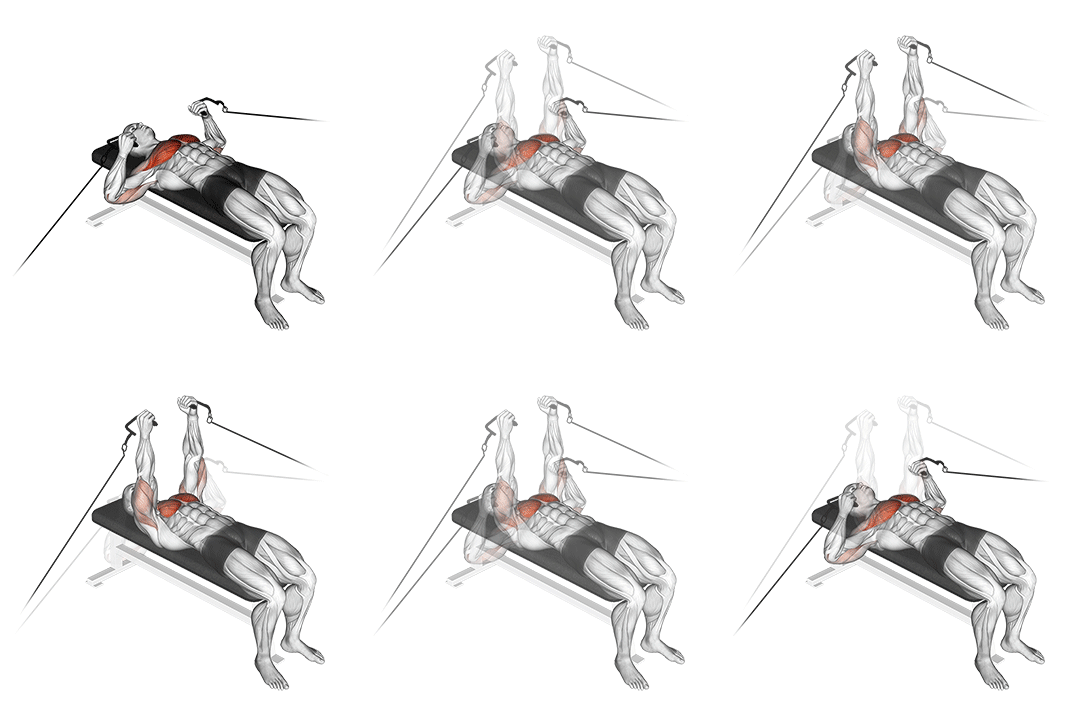
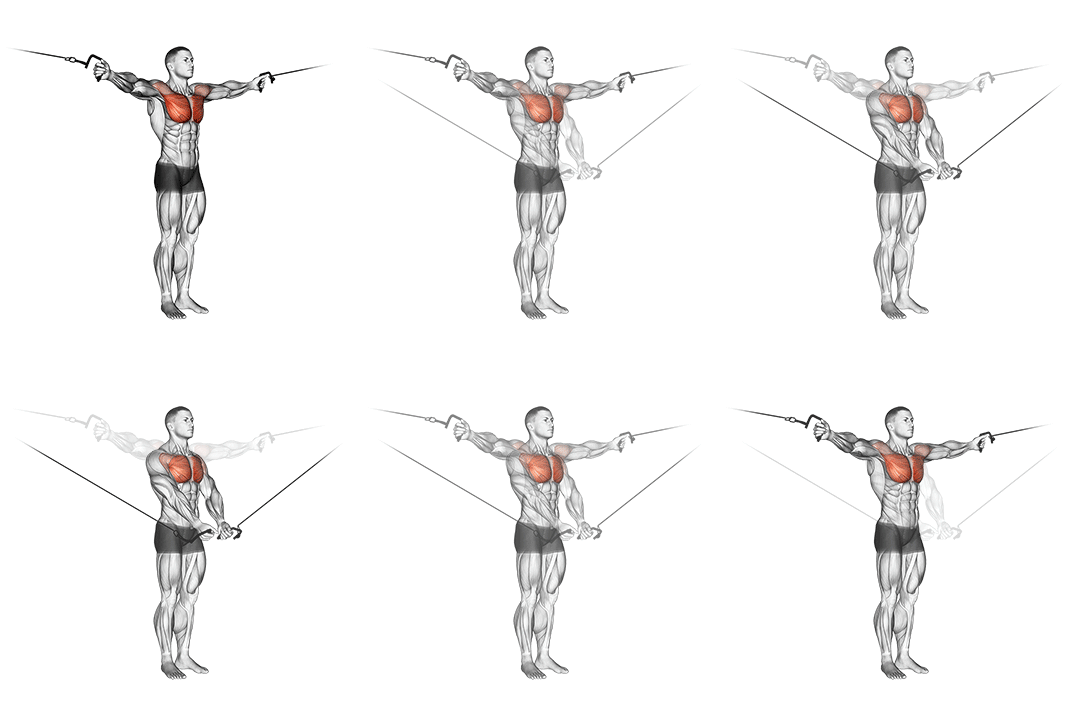
Compare More Exercises
Use our free comparison tool to analyze any two exercises head-to-head.
Compare Exercises