

Cable Decline Seated Wide-grip Row vs Cable Floor Seated Wide-grip Row: Complete Comparison Guide
Cable Decline Seated Wide-grip Row vs Cable Floor Seated Wide-grip Row — two cable variations that target the lats with a wide grip. If you want clearer guidance on which to use for muscle growth, strength, or simple gym access, this comparison has your back. You'll get a side-by-side look at muscle activation, equipment needs, technique cues, rep ranges, and exactly when to pick one over the other. Read on for practical tips, biomechanics-based reasoning, and actionable programming recommendations.
Exercise Comparison
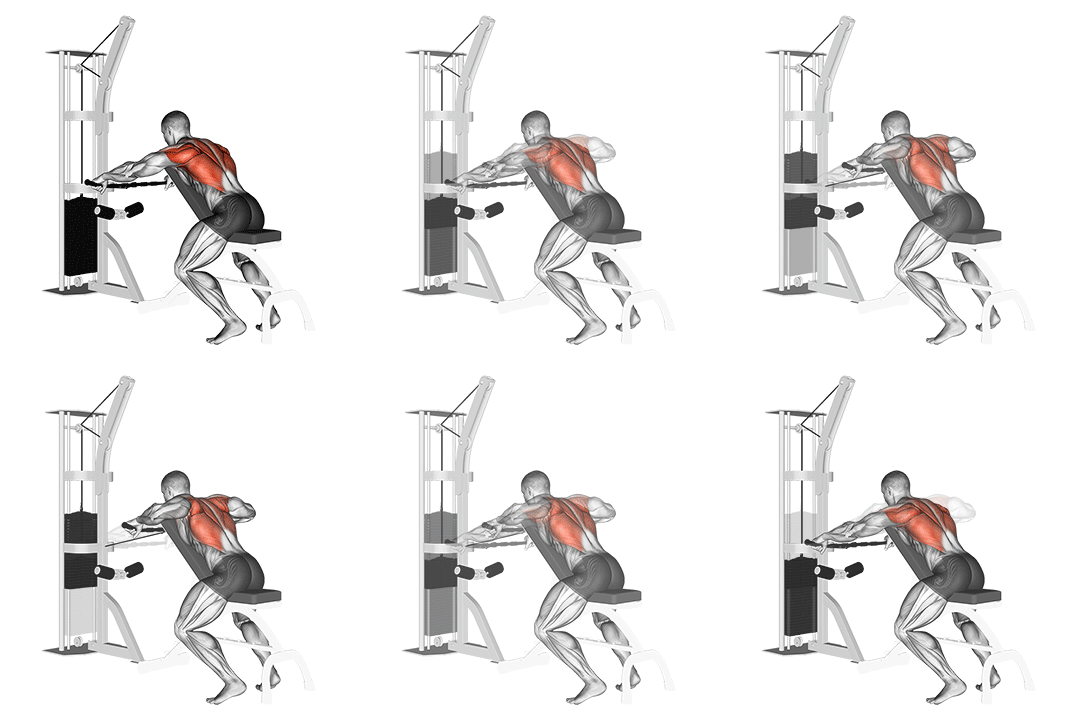
Cable Decline Seated Wide-grip Row
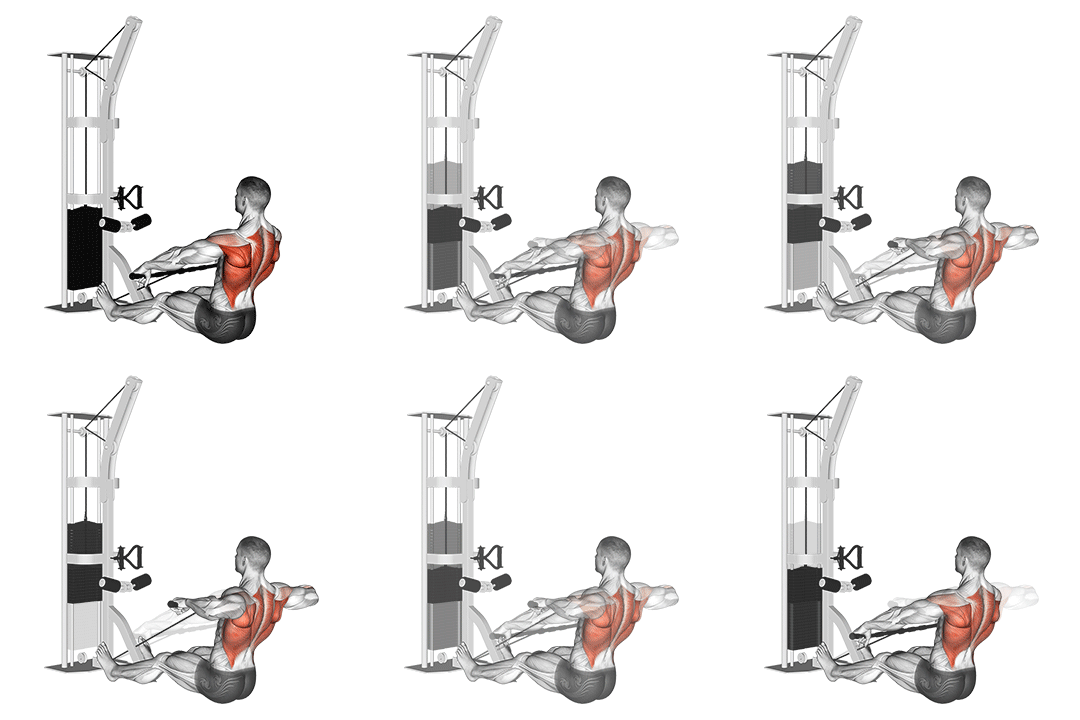
Cable Floor Seated Wide-grip Row
Head-to-Head Comparison
| Attribute | Cable Decline Seated Wide-grip Row | Cable Floor Seated Wide-grip Row |
|---|---|---|
| Target Muscle |
Lats
|
Lats
|
| Body Part |
Back
|
Back
|
| Equipment |
Cable
|
Cable
|
| Difficulty |
Intermediate
|
Intermediate
|
| Movement Type |
Compound
|
Compound
|
| Secondary Muscles |
2
|
2
|
Secondary Muscles Activated
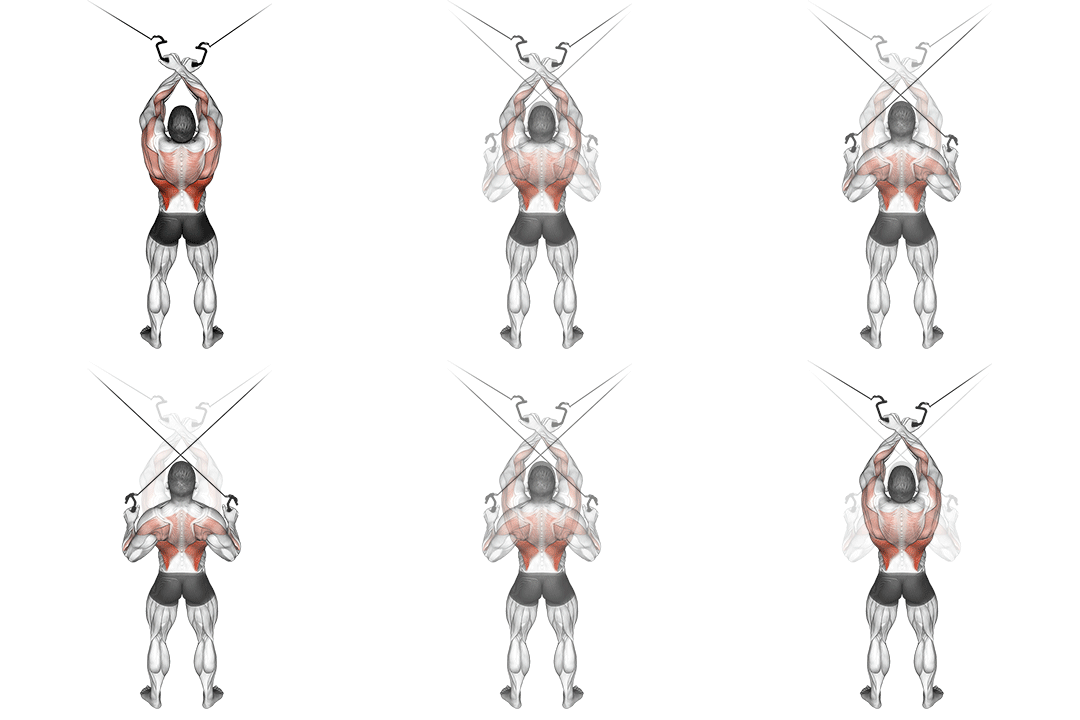
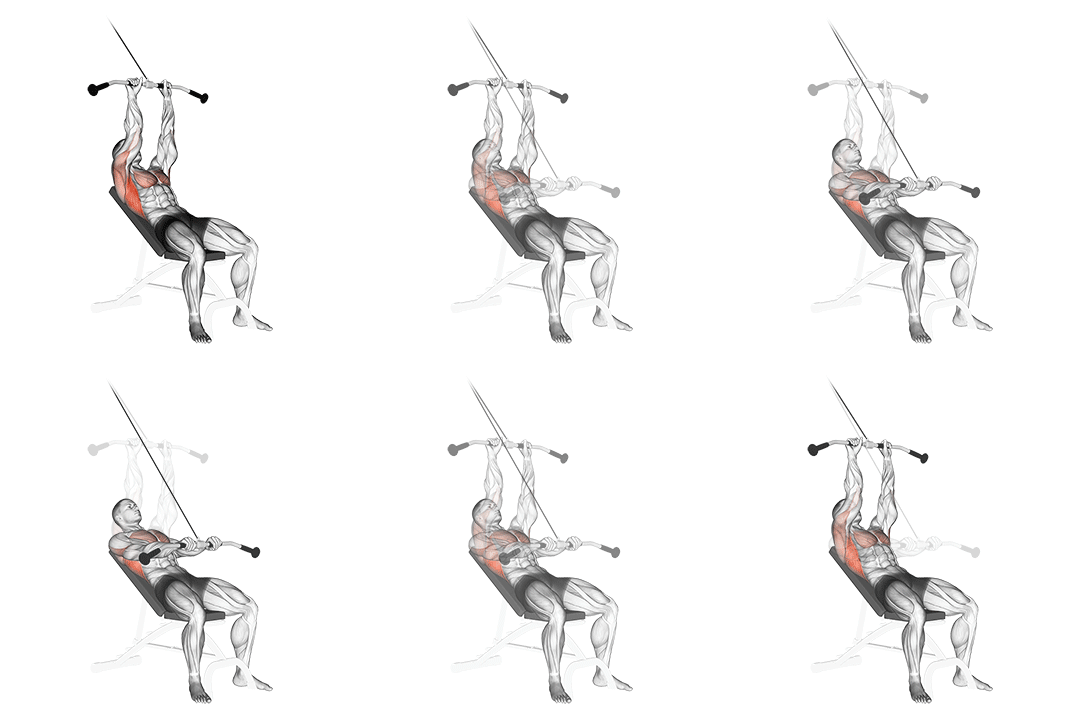
Cable Decline Seated Wide-grip Row
Cable Floor Seated Wide-grip Row
Visual Comparison
Overview
Cable Decline Seated Wide-grip Row vs Cable Floor Seated Wide-grip Row — two cable variations that target the lats with a wide grip. If you want clearer guidance on which to use for muscle growth, strength, or simple gym access, this comparison has your back. You'll get a side-by-side look at muscle activation, equipment needs, technique cues, rep ranges, and exactly when to pick one over the other. Read on for practical tips, biomechanics-based reasoning, and actionable programming recommendations.
Key Differences
- Both exercises target the Lats using Cable. The main differences are in their movement patterns and muscle activation angles.
Pros & Cons
Cable Decline Seated Wide-grip Row
+ Pros
- Greater lat pre-stretch and peak tension due to 15–30° decline angle
- Better loading of posterior delts and lower traps for improved scapular retraction
- Easier to maintain strict body position when bench supports the torso
- High progression ceiling for hypertrophy with controlled eccentric lengthening
− Cons
- Requires a decline bench and more setup time
- Slightly higher technical demand to keep spine neutral and avoid lumbar extension
- Less accessible in crowded gyms or home settings without a bench
Cable Floor Seated Wide-grip Row
+ Pros
- Minimal equipment and fast setup — sit on the floor and pull
- Safer for beginners due to limited lower-back excursion and simpler body position
- Consistent tension through the set because ROM is slightly shorter
- Easier to pair with supersets or circuit work in crowded gyms
− Cons
- Shorter ROM reduces lat pre-stretch, potentially limiting peak tension
- Can encourage shoulder rounding if scapular control is weak
- Less stimulus for posterior delts and lower traps compared with the decline variant
When Each Exercise Wins
The decline position increases the lat pre-stretch and mechanical tension through a longer range of motion, which favors hypertrophy. Use 6–12 reps with controlled eccentrics (2–3 s) to exploit length-tension benefits.
Higher peak force potential from the longer ROM and better trunk support lets you apply heavier loads safely. Pair heavier 4–8 rep blocks with solid scapular retraction to build pulling strength.
Simpler setup and reduced lower-back demand make the floor variation easier to learn. Focus on 8–15 reps and mastering scapular retraction and elbow drive before increasing load.
It requires only a low anchor or resistance band and a floor mat, so you can recreate it at home. If you lack a decline bench or space, the floor row provides the most practical lat stimulus.
Frequently Asked Questions
Can I do both Cable Decline Seated Wide-grip Row and Cable Floor Seated Wide-grip Row in the same workout?
Yes. Use the decline row as a primary heavy or hypertrophy-focused set (6–10 reps), then follow with the floor row for higher-rep volume or technique work (10–15 reps). That pairing exploits the decline’s stretch and the floor’s consistent tension without excessive fatigue to the lower back.
Which exercise is better for beginners?
Cable Floor Seated Wide-grip Row is better for beginners because it has a simpler setup and limits lower-back movement, letting novices focus on scapular control and elbow-driven pulling before adding load.
How do the muscle activation patterns differ?
Decline rows produce a greater lat pre-stretch and a slightly steeper pull vector that increases posterior deltoid and lower-trap involvement, while floor rows create a flatter horizontal vector with steadier tension on the lats and more consistent biceps contribution through the set.
Can Cable Floor Seated Wide-grip Row replace Cable Decline Seated Wide-grip Row?
Yes, it can replace it when equipment or safety is a concern, but expect a modest reduction in peak lat stretch and posterior deltoid activation. If your goal is maximal hypertrophy, rotate in the decline version when possible to target the lats through a longer ROM.
Expert Verdict
Use the Cable Decline Seated Wide-grip Row when your priority is maximizing lat stretch and peak tension — it’s the go-to for targeted hypertrophy and heavier loading (6–12 rep range, 2–3 s eccentric). Choose the Cable Floor Seated Wide-grip Row when you want simple setup, lower technical demand, or a safer option for beginners and home training (8–15 reps). Both hit the lats effectively; pick decline for maximal mechanical tension and floor for accessibility and consistency. Alternate between them across training blocks to balance ROM exposure and joint tolerance.
Also Compare
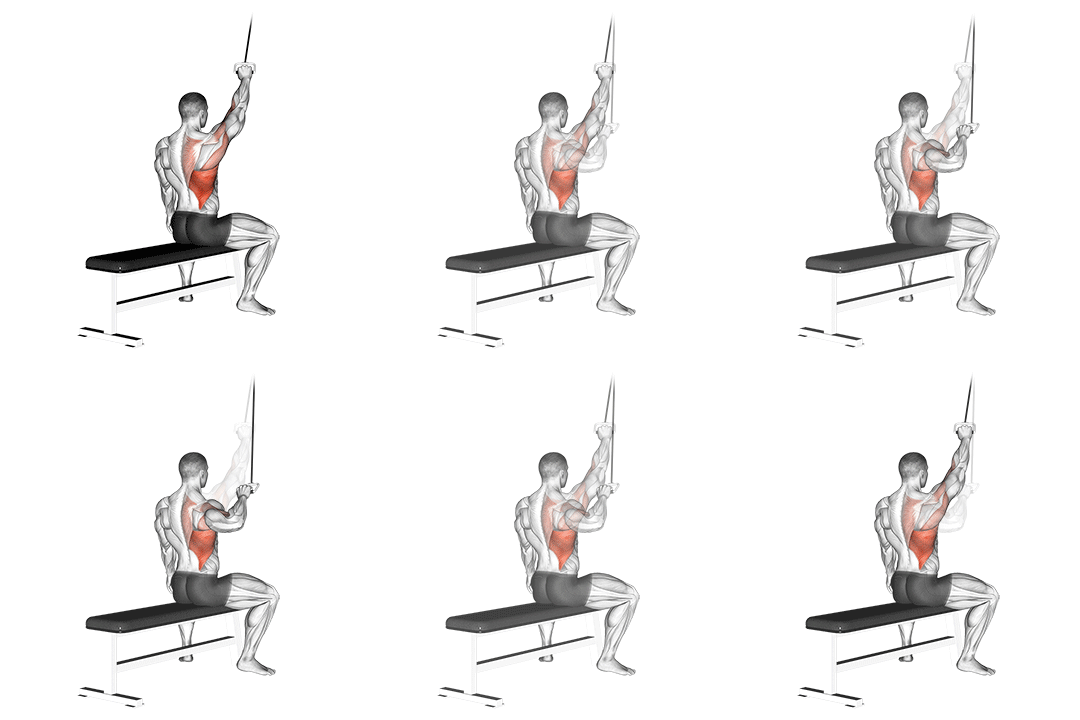
More comparisons with Cable Decline Seated Wide-grip Row
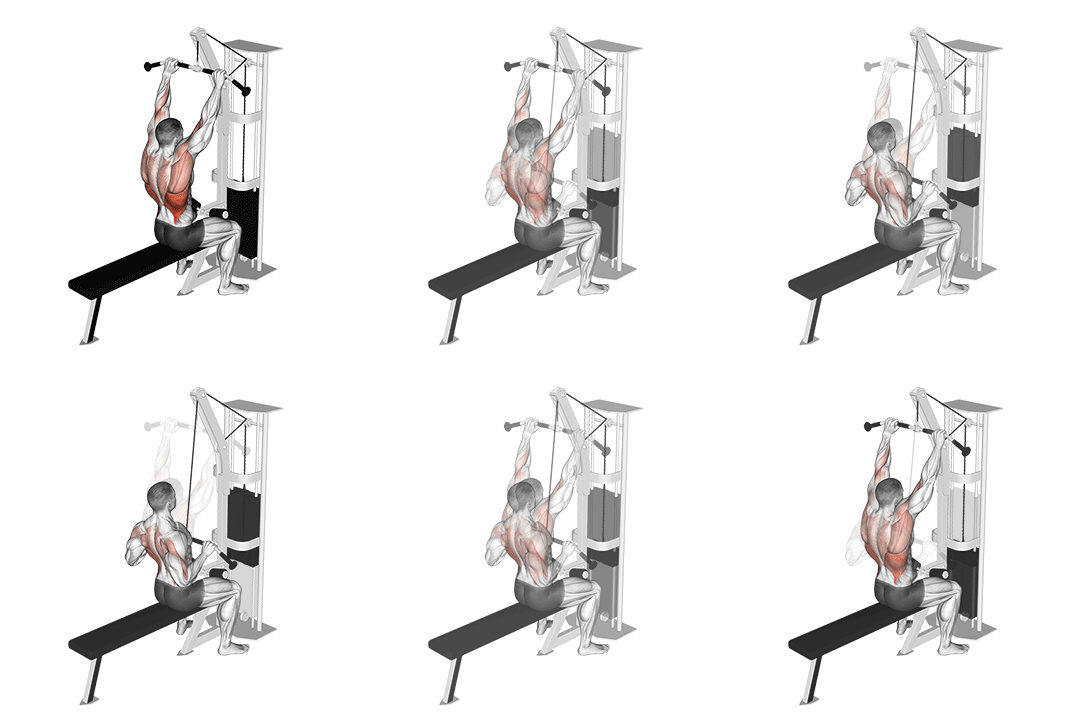
More comparisons with Cable Floor Seated Wide-grip Row
Compare More Exercises
Use our free comparison tool to analyze any two exercises head-to-head.
Compare Exercises