

Cable Decline Seated Wide-grip Row vs Cable Incline Pushdown: Complete Comparison Guide
Cable Decline Seated Wide-grip Row vs Cable Incline Pushdown — you’ve got two cable-based lats builders, but they load the back differently. If you want clarity on which movement better targets the lats, how secondary muscles like biceps or triceps contribute, and which one fits your equipment and goals, you’re in the right place. I’ll compare biomechanics, give technique cues (bench angles, grip, tempo), show programming ranges (6–12 reps for hypertrophy; 3–6 for strength emphasis), and offer clear recommendations so you can pick the right move for your routine.
Exercise Comparison
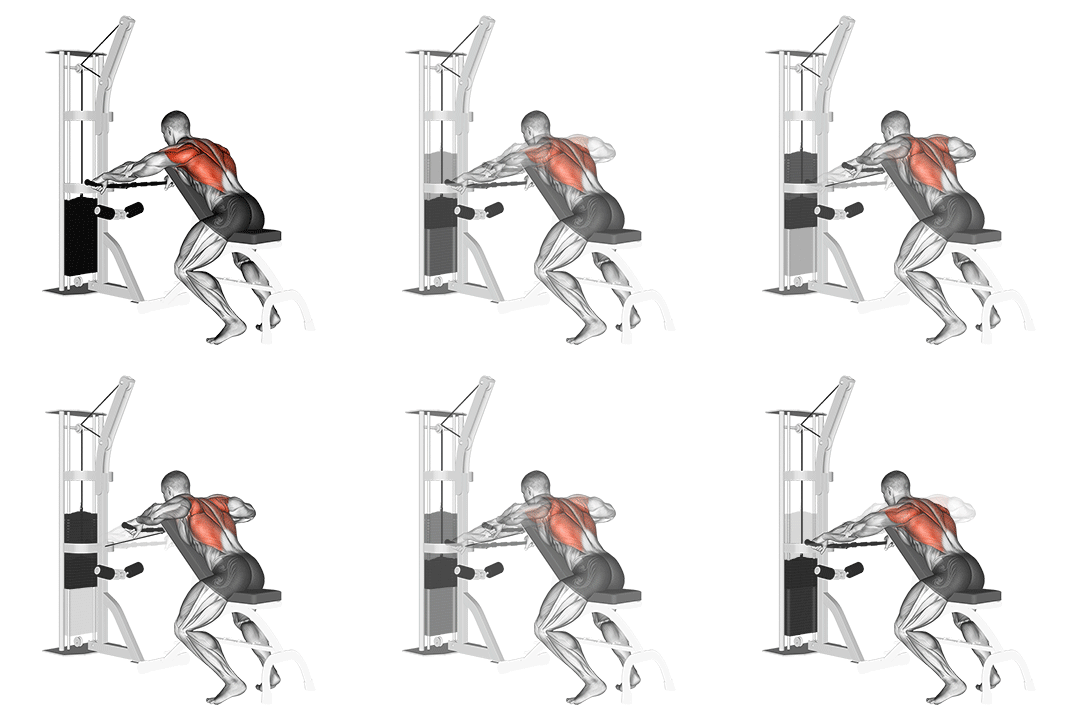
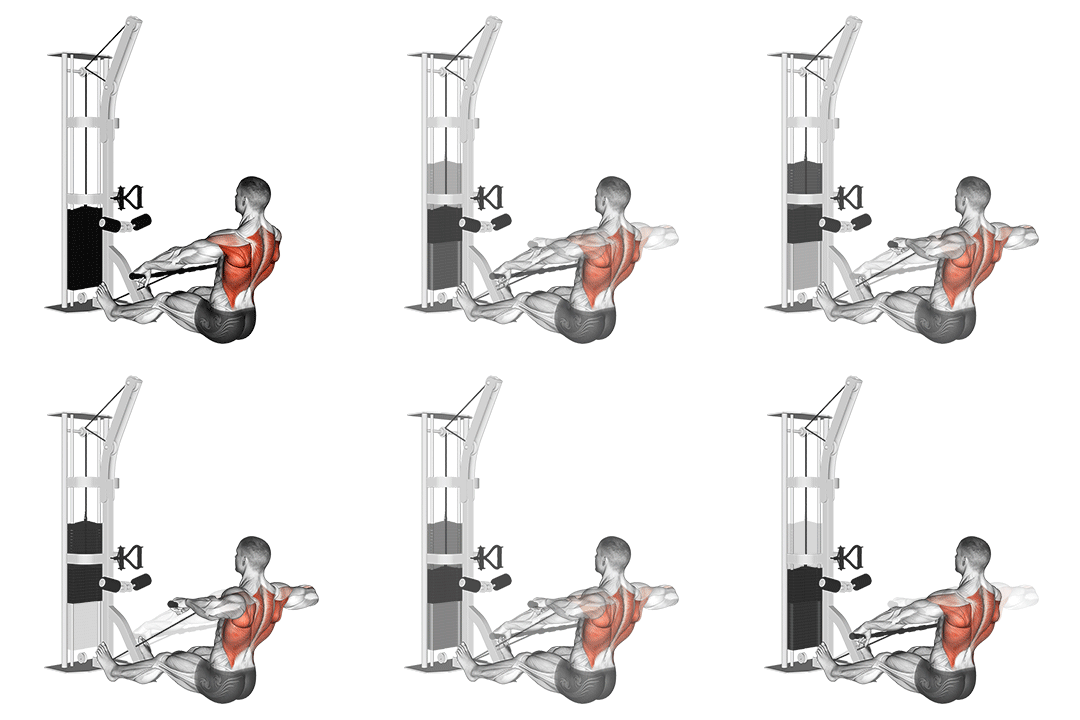
Cable Decline Seated Wide-grip Row
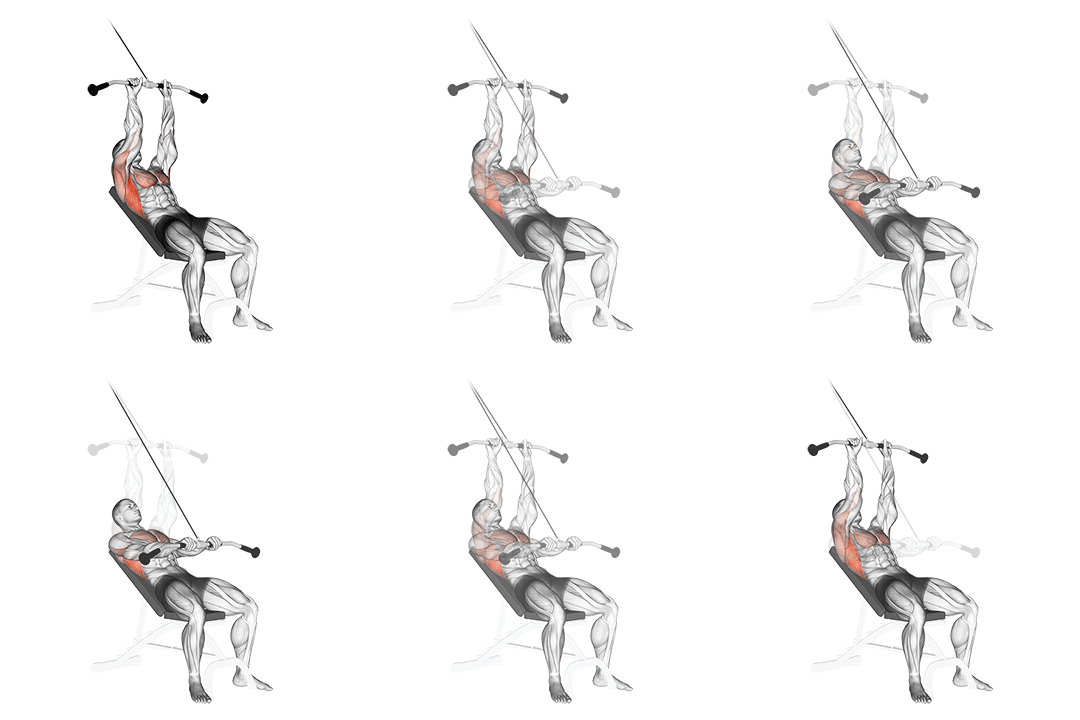
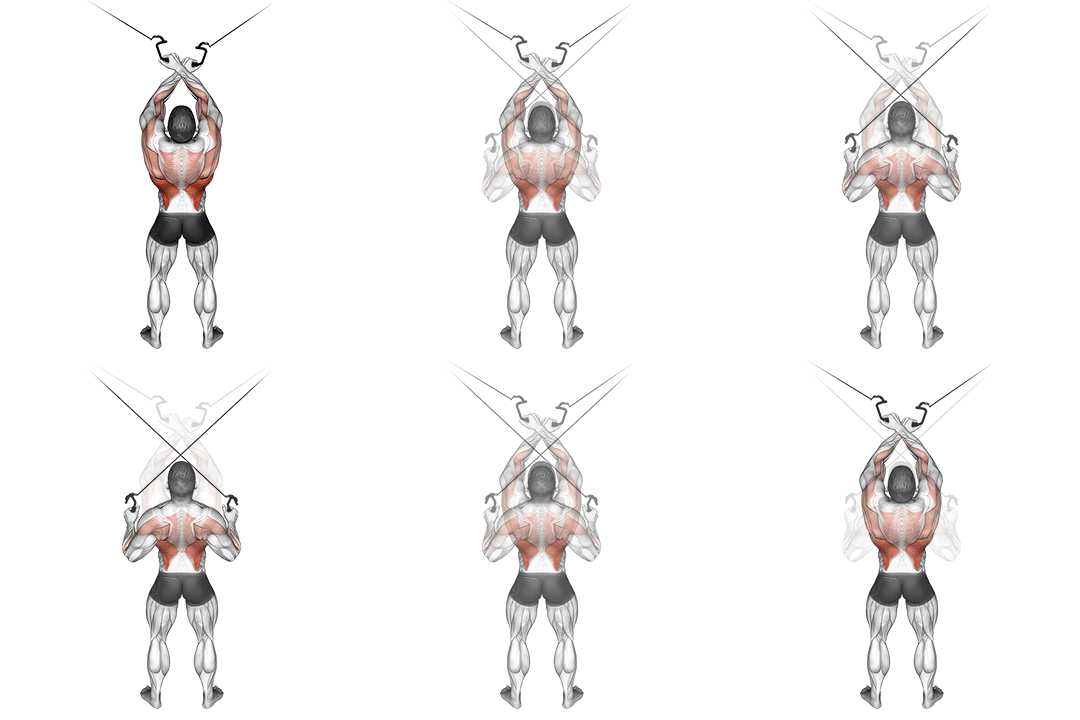
Cable Incline Pushdown
Head-to-Head Comparison
| Attribute | Cable Decline Seated Wide-grip Row | Cable Incline Pushdown |
|---|---|---|
| Target Muscle |
Lats
|
Lats
|
| Body Part |
Back
|
Back
|
| Equipment |
Cable
|
Cable
|
| Difficulty |
Intermediate
|
Intermediate
|
| Movement Type |
Compound
|
Compound
|
| Secondary Muscles |
2
|
2
|
Secondary Muscles Activated
Cable Decline Seated Wide-grip Row
Cable Incline Pushdown
Visual Comparison
Overview
Cable Decline Seated Wide-grip Row vs Cable Incline Pushdown — you’ve got two cable-based lats builders, but they load the back differently. If you want clarity on which movement better targets the lats, how secondary muscles like biceps or triceps contribute, and which one fits your equipment and goals, you’re in the right place. I’ll compare biomechanics, give technique cues (bench angles, grip, tempo), show programming ranges (6–12 reps for hypertrophy; 3–6 for strength emphasis), and offer clear recommendations so you can pick the right move for your routine.
Key Differences
- Both exercises target the Lats using Cable. The main differences are in their movement patterns and muscle activation angles.
Pros & Cons
Cable Decline Seated Wide-grip Row
+ Pros
- Allows heavier loading for mechanical tension and strength (suitable for 4–12 rep ranges)
- Strong biceps and forearm recruitment for arm development
- Stable chest support reduces torso compensation when set up correctly
- Horizontal pull vector emphasizes mid-to-lower lat fibers and scapular retraction
− Cons
- Needs a low-pulley station and a bench or support
- Wide grip can reduce range of motion compared to narrow grips
- Risk of cheating via torso lean if not properly braced
Cable Incline Pushdown
+ Pros
- Places the lats under stretch at start position for enhanced length-tension stimulus
- Loads the lats in a more vertical force vector, complementing horizontal pulls
- Good for refining end-range lat engagement and mind-muscle connection
- Chest-supported bench position reduces lower-back loading
− Cons
- Requires an incline bench + high pulley—less common in some gyms
- Can stress anterior shoulder if bench angle or path is poor
- Triceps and shoulders can take over, limiting pure lat overload
When Each Exercise Wins
The row allows heavier loads and a stronger horizontal pull vector, creating higher mechanical tension on the lats and more biceps crossover stimulus. Use 6–12 reps with a 2–1–2 tempo and full scapular retraction to maximize hypertrophy.
Rows let you progressively overload with heavier plates and lower rep ranges (3–6 reps) while maintaining a stable chest-supported position, making them superior for developing pulling strength and force production.
The row’s pull pattern is intuitive and forgiving when you use chest support; beginners can learn scapular retraction and elbow drive without complex shoulder positioning. Stick to controlled 8–12 rep sets and focus on form.
Incline pushdown variations can be replicated with resistance bands and a bench at home to recreate the overhead-to-downward vector, offering a simple lat-stretch stimulus without needing a low-pulley rig. Bands let you hit the same length-tension profile.
Frequently Asked Questions
Can I do both Cable Decline Seated Wide-grip Row and Cable Incline Pushdown in the same workout?
Yes — pairing them works well: do rows first as a heavy compound (3–6 or 6–10 reps) to build mechanical tension, then use incline pushdowns for 8–15 reps to emphasize stretch and metabolic stress. Sequence by intensity and rest 90–120 seconds between heavy sets.
Which exercise is better for beginners?
The Cable Decline Seated Wide-grip Row is generally better for beginners because its pull pattern is easier to learn with chest support and clear elbow-driven mechanics. Start light, focus on scapular retraction, and progress reps before adding weight.
How do the muscle activation patterns differ?
Rows produce peak activation during scapular retraction and elbow drive, engaging lats concentrically with strong biceps assistance. Incline pushdowns load the lats from a longer starting length with a more vertical force, increasing passive tension and relying more on triceps and shoulder stabilizers.
Can Cable Incline Pushdown replace Cable Decline Seated Wide-grip Row?
Not fully. Incline pushdowns complement rows by targeting the lats at longer lengths, but they rarely match the row’s capacity for heavy loading and biceps engagement. Use incline pushdowns as an accessory or substitute only when row variations aren’t possible.
Expert Verdict
Use the Cable Decline Seated Wide-grip Row as your primary lat builder when your priority is load, strength, and overall back thickness—it lets you apply heavier resistance, recruits biceps and forearms, and stresses the lats through a powerful horizontal vector. Add Cable Incline Pushdowns as an accessory to emphasize lat stretch and end-range contraction, especially if you want to target fibers under tension at longer muscle lengths. Program rows for 4–12 reps depending on strength vs hypertrophy goals and include 8–15 rep incline pushdowns to increase time under tension and refine lat activation.
Also Compare
More comparisons with Cable Decline Seated Wide-grip Row
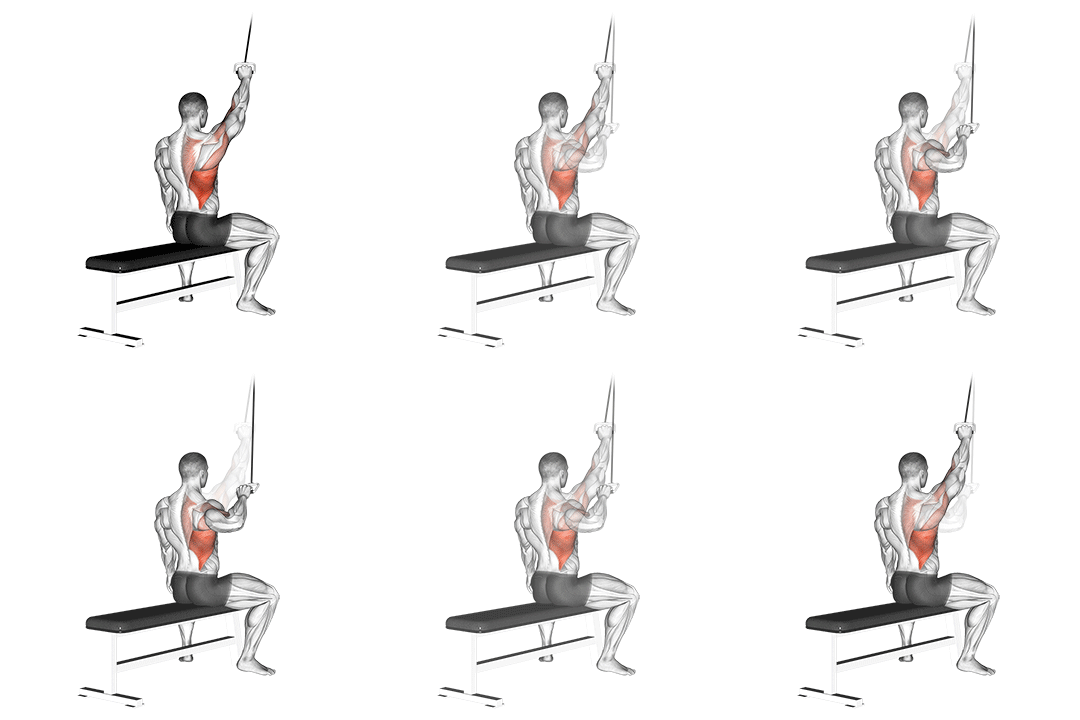
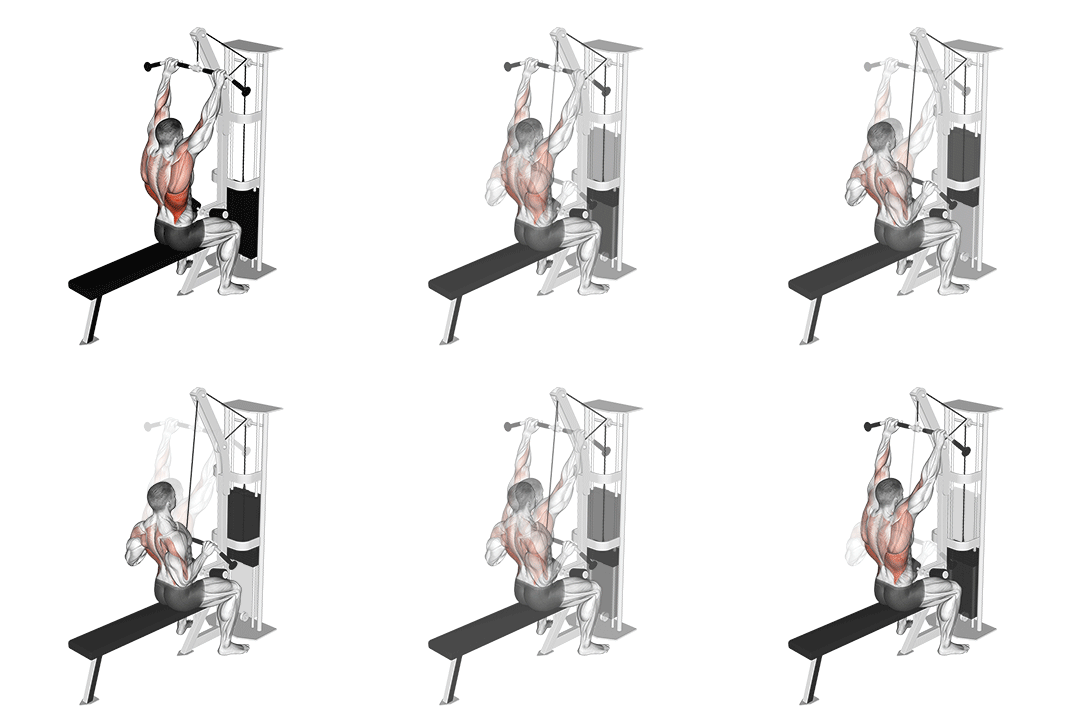
More comparisons with Cable Incline Pushdown
Compare More Exercises
Use our free comparison tool to analyze any two exercises head-to-head.
Compare Exercises