

Cable Decline Seated Wide-grip Row vs Cable Pulldown: Complete Comparison Guide
Cable Decline Seated Wide-grip Row vs Cable Pulldown — two staple cable moves that both target the lats but load them through different planes and lengths. If you want clear guidance on which to use for muscle growth, strength, rehab, or home workouts, you’re in the right place. I’ll break down primary and secondary muscle activation, equipment needs, concrete technique cues, rep ranges (8–12 for hypertrophy, 4–6 for strength), and simple progressions so you can pick the best tool for your goals.
Exercise Comparison
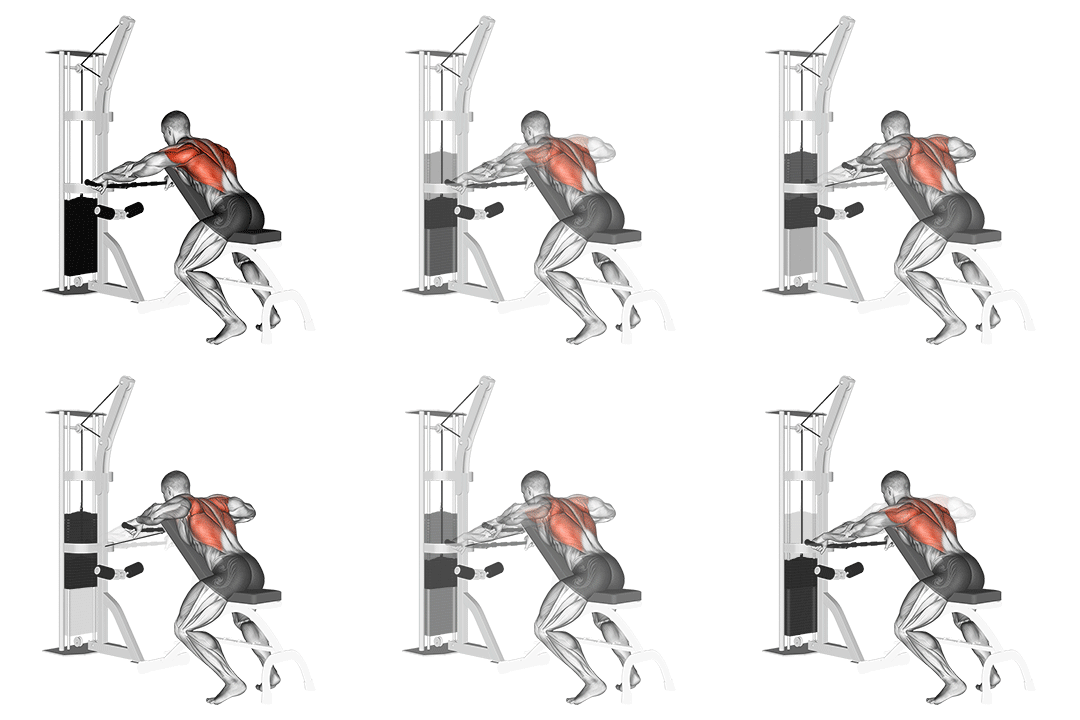
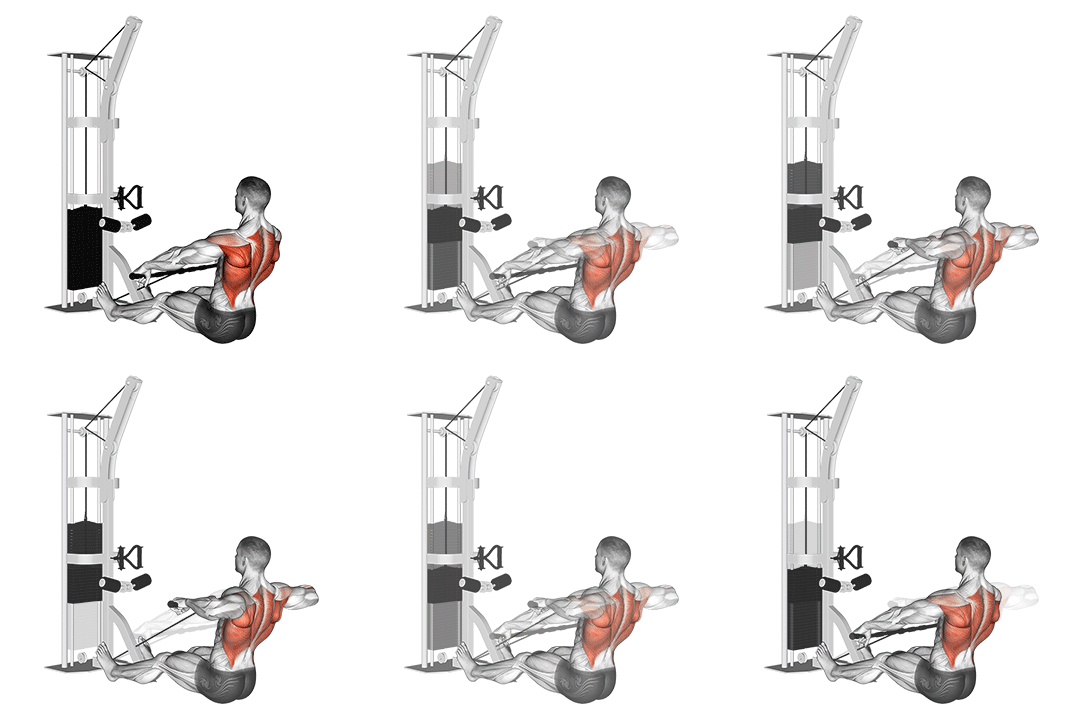
Cable Decline Seated Wide-grip Row
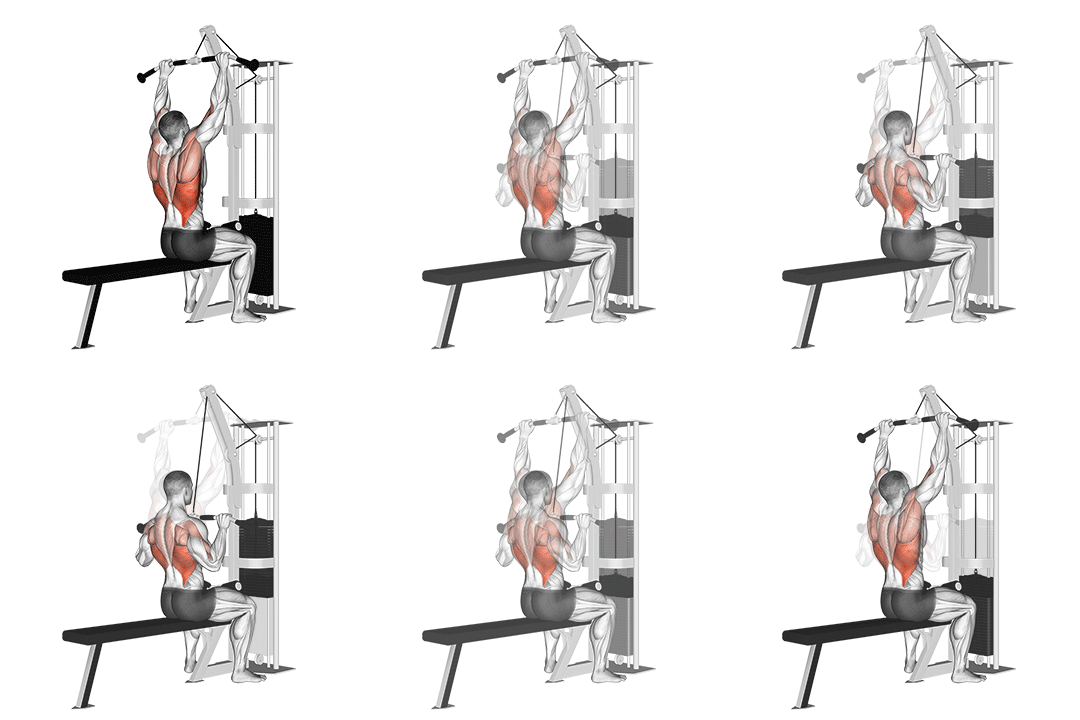
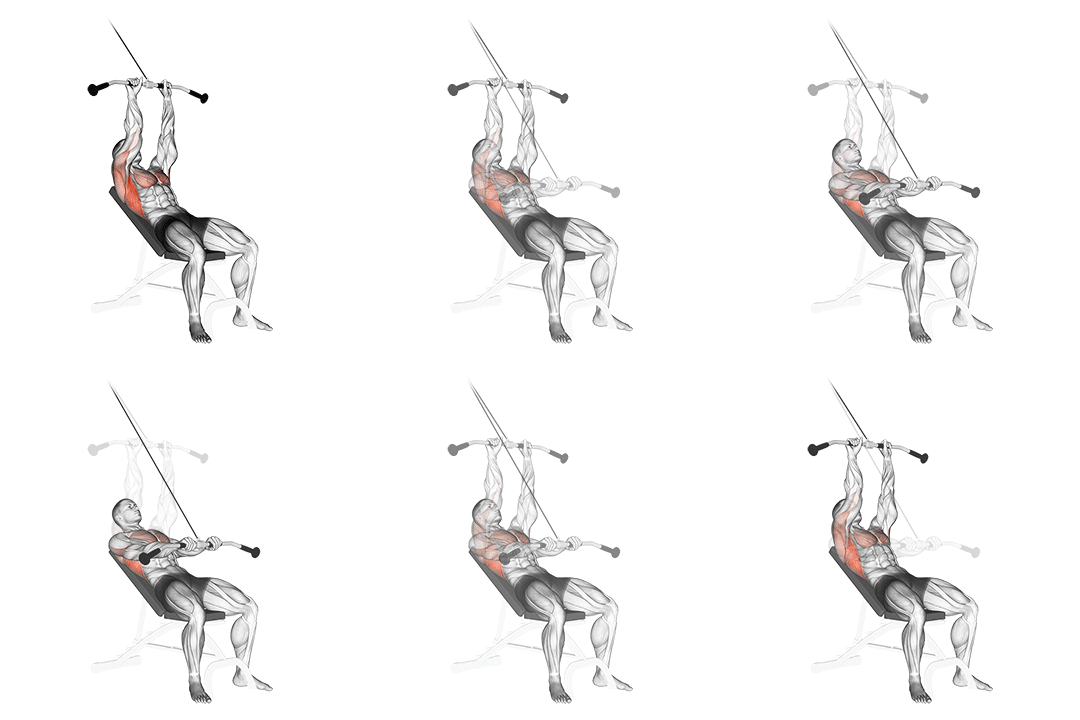
Cable Pulldown
Head-to-Head Comparison
| Attribute | Cable Decline Seated Wide-grip Row | Cable Pulldown |
|---|---|---|
| Target Muscle |
Lats
|
Lats
|
| Body Part |
Back
|
Back
|
| Equipment |
Cable
|
Cable
|
| Difficulty |
Intermediate
|
Intermediate
|
| Movement Type |
Compound
|
Compound
|
| Secondary Muscles |
2
|
2
|
Secondary Muscles Activated
Cable Decline Seated Wide-grip Row
Cable Pulldown
Visual Comparison
Overview
Cable Decline Seated Wide-grip Row vs Cable Pulldown — two staple cable moves that both target the lats but load them through different planes and lengths. If you want clear guidance on which to use for muscle growth, strength, rehab, or home workouts, you’re in the right place. I’ll break down primary and secondary muscle activation, equipment needs, concrete technique cues, rep ranges (8–12 for hypertrophy, 4–6 for strength), and simple progressions so you can pick the best tool for your goals.
Key Differences
- Both exercises target the Lats using Cable. The main differences are in their movement patterns and muscle activation angles.
Pros & Cons
Cable Decline Seated Wide-grip Row
+ Pros
- Stronger scapular retraction and mid-back development
- Better for horizontal force-vector training and posture correction
- Easier to overload with heavy, controlled rows and varied grips
- Greater posterior deltoid and rhomboid recruitment for thickness
− Cons
- Requires a decline bench or specific station and setup
- Less stretch on the lats at the start of the movement
- Harder to learn proper scapular-first technique for beginners
Cable Pulldown
+ Pros
- Common machine in most gyms and easy to set up
- Places lats under longer muscle length at top of eccentric
- Simpler cueing and stabilization via thigh pads
- Better for strict vertical pulling and isolating the lat
− Cons
- Less mid-back thickness — reduced rhomboid/trap focus
- Behind-the-neck variations increase shoulder injury risk
- Can encourage torso lean if load is too heavy
When Each Exercise Wins
Cable Pulldown gives a larger stretch on the lats at the top of the eccentric and is easy to load for 8–12 rep ranges. That longer muscle length under tension improves mechanical stimulus for hypertrophy when paired with controlled eccentrics (2–3s).
Rows allow heavier, horizontal loading and better carryover to compound pulling patterns; you can progressively load with 4–6 rep sets while maintaining strict scapular retraction and reduced torso cheat, promoting posterior chain strength.
Pulldowns have simpler setup, stable thigh bracing, and an intuitive vertical path. That makes it easier to teach scapular depression and avoid lower-back compensation while learning lat-driven pulling.
If you have to pick one, pulldown-type systems (lat pulldown attachments or resistance-band overhead pulldowns) are easier to mimic at home than a dedicated decline row station, so they’re more practical for limited equipment.
Frequently Asked Questions
Can I do both Cable Decline Seated Wide-grip Row and Cable Pulldown in the same workout?
Yes. A smart split is to perform pulldowns first for long-length lat loading (8–12 reps) then follow with rows for horizontal thickness (6–10 reps). Keep total volume manageable—6–10 sets combined per session.
Which exercise is better for beginners?
Cable Pulldown is better for beginners because it stabilizes the torso with a thigh pad and has a simpler vertical path. It lets learners focus on scapular depression and lat engagement before adding complex row mechanics.
How do the muscle activation patterns differ?
Pulldowns load the lat at longer initial muscle lengths (arms overhead) emphasizing eccentric stretch, while rows bias scapular retraction and mid-lat firing with the elbows tracking behind the torso. The timing shifts from concurrent scapular-humeral motion (pulldown) to scapula-first then humerus (row).
Can Cable Pulldown replace Cable Decline Seated Wide-grip Row?
Pulldowns can substitute when your priority is lat isolation or you lack a row station, but they won’t fully replace the horizontal force-vector benefits and mid-back activation rows provide. If posture, thickness, and scapular strength matter, include both across your program.
Expert Verdict
Both moves deserve a place in a balanced back program. Use Cable Pulldown when you want maximum lat stretch, simpler loading, and straightforward hypertrophy work in 8–12 reps; favor front pulldowns to the chest and avoid behind-the-neck pulls. Use Cable Decline Seated Wide-grip Row when your goal is mid-back thickness, scapular retraction strength, or heavy horizontal loading in 4–8 rep ranges. For most lifters, alternate them across sessions (e.g., pulldowns early for mechanical tension, rows later for density and posture) to hit the lats at different lengths and force vectors.
Also Compare
More comparisons with Cable Decline Seated Wide-grip Row
More comparisons with Cable Pulldown
Compare More Exercises
Use our free comparison tool to analyze any two exercises head-to-head.
Compare Exercises