

Cable Floor Seated Wide-grip Row vs Cable Incline Pushdown: Complete Comparison Guide
Cable Floor Seated Wide-grip Row vs Cable Incline Pushdown — two cable-based back compounds that look similar on paper but load your lats and joints differently. If you want clearer decisions for hypertrophy, strength, or programming, this guide breaks down muscle activation, equipment needs, technique cues, and injury risks. You’ll get rep-range recommendations (6–12 for heavy sets, 8–15 for volume), angle guidance (bench at 30–45° for the incline version), and concrete progressions so you can pick the move that fits your goals and gym setup.
Exercise Comparison
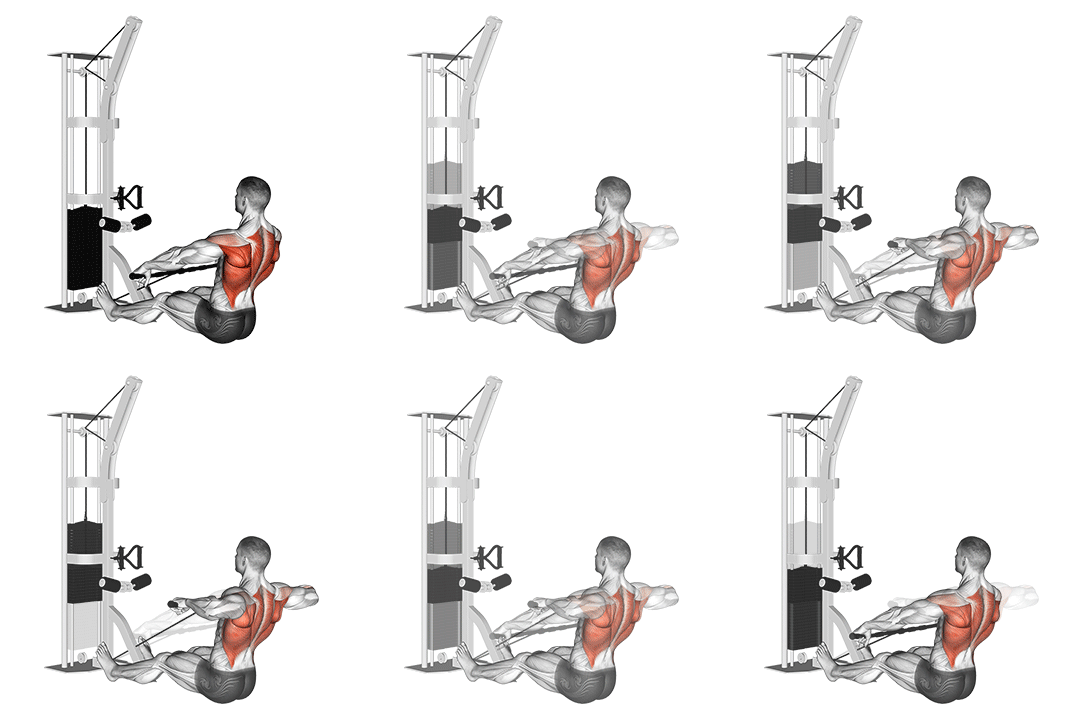
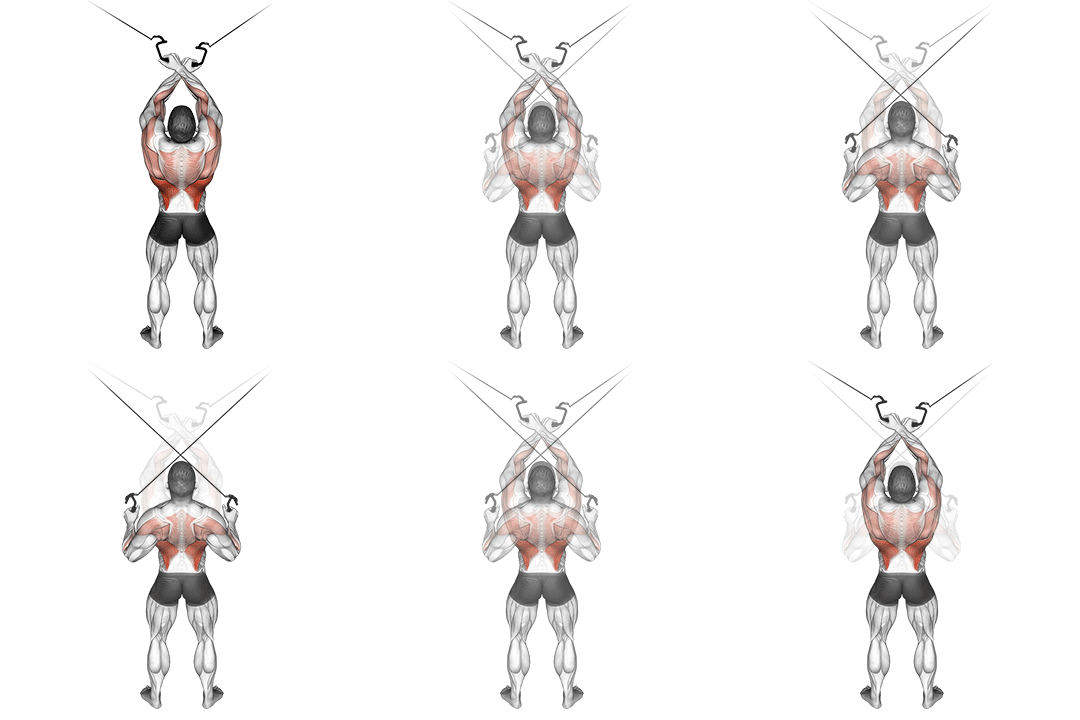
Cable Floor Seated Wide-grip Row
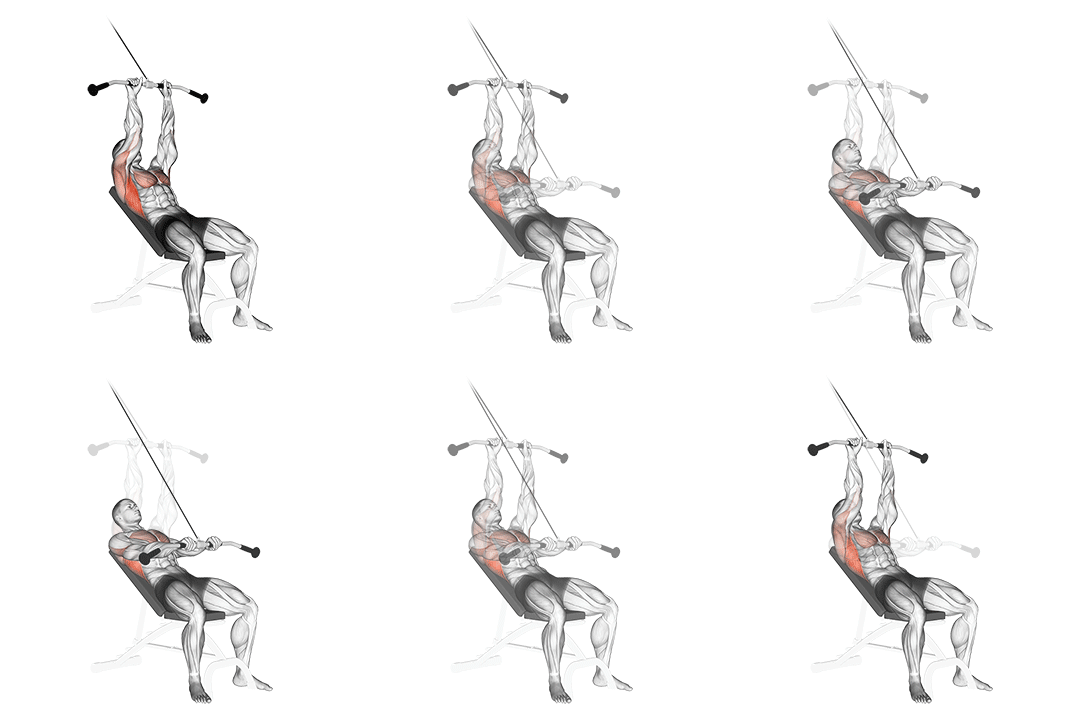
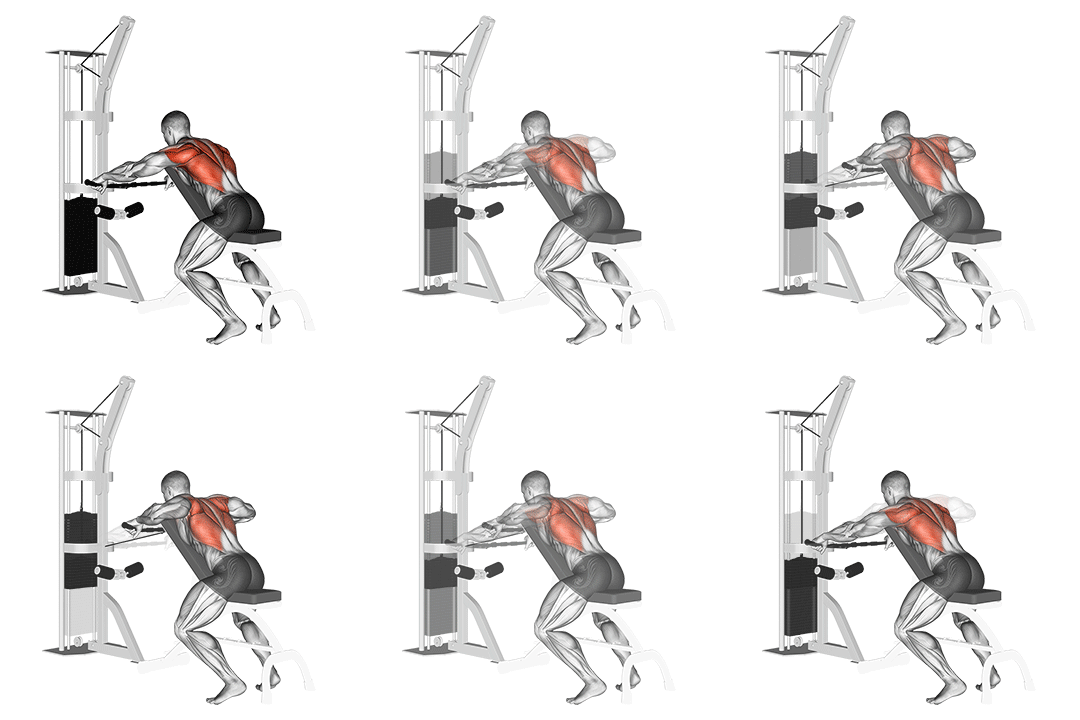
Cable Incline Pushdown
Head-to-Head Comparison
| Attribute | Cable Floor Seated Wide-grip Row | Cable Incline Pushdown |
|---|---|---|
| Target Muscle |
Lats
|
Lats
|
| Body Part |
Back
|
Back
|
| Equipment |
Cable
|
Cable
|
| Difficulty |
Intermediate
|
Intermediate
|
| Movement Type |
Compound
|
Compound
|
| Secondary Muscles |
2
|
2
|
Secondary Muscles Activated
Cable Floor Seated Wide-grip Row
Cable Incline Pushdown
Visual Comparison
Overview
Cable Floor Seated Wide-grip Row vs Cable Incline Pushdown — two cable-based back compounds that look similar on paper but load your lats and joints differently. If you want clearer decisions for hypertrophy, strength, or programming, this guide breaks down muscle activation, equipment needs, technique cues, and injury risks. You’ll get rep-range recommendations (6–12 for heavy sets, 8–15 for volume), angle guidance (bench at 30–45° for the incline version), and concrete progressions so you can pick the move that fits your goals and gym setup.
Key Differences
- Both exercises target the Lats using Cable. The main differences are in their movement patterns and muscle activation angles.
Pros & Cons
Cable Floor Seated Wide-grip Row
+ Pros
- Loads the mid and lower lats with a strong horizontal force vector for heavy mechanical tension
- Greater ability to increase absolute load and use progressive overload (6–12 rep strength sets)
- Strong biceps and forearm recruitment for improved pulling strength transfer
- Versatile tempo and pause variations to increase time under tension
− Cons
- Higher demand on trunk control; rounding the lumbar spine raises injury risk
- Requires precise scapular control — easy to cheat with shoulder shrugging
- Wider grip can reduce range of motion for some lifters, limiting peak contraction
Cable Incline Pushdown
+ Pros
- Keeps lats under continuous tension through a lengthened start position (benefits length-tension relationship)
- Simpler teaching cues and bracing — easier for lifters weak in scapular control
- Adds triceps and shoulder stabilizer work for compound upper-body development
- Bench angle (30–45°) lets you fine-tune stretch and tension on the lats
− Cons
- Less capacity for very heavy absolute loading compared to horizontal rows
- Can place anterior shoulder at risk if you overreach at the top of the movement
- Requires an adjustable bench positioned under a high cable, which may limit accessibility
When Each Exercise Wins
The horizontal pull allows heavier loads and clearer peak contraction of the mid/lower lats; use 6–12 reps with slow eccentrics (2–4 s) and 1–2 s squeeze at the top to maximize mechanical tension and time under tension.
Rows transfer directly to pulling strength because of greater elbow flexion torque and heavier loading potential; progress with heavier sets (4–8 reps) and periodic overload weeks to build force output.
The incline setup stabilizes the torso and provides a consistent line of pull, simplifying cueing and reducing compensatory movements; start with 8–15 reps focusing on full range and controlled tempo.
Low-pulley attachments and compact cable stations or resistance-band equivalents recreate the row more easily than a high cable plus incline bench setup, making the row more practical for limited spaces.
Frequently Asked Questions
Can I do both Cable Floor Seated Wide-grip Row and Cable Incline Pushdown in the same workout?
Yes. Do the heavy Cable Floor Seated Wide-grip Row first to maximize force production, then use Cable Incline Pushdown as a higher-rep finisher to exploit stretch-mediated hypertrophy and extend time under tension.
Which exercise is better for beginners?
Cable Incline Pushdown is generally better for beginners because the bench stabilizes your torso and the vertical line of pull simplifies technique, reducing the need for advanced scapular control.
How do the muscle activation patterns differ?
The row produces peak lat activation at the end of the concentric with strong scapular retraction and biceps involvement, while the incline pushdown emphasizes a larger initial stretch of the lats and steady tension through the descent with less elbow flexor dominance.
Can Cable Incline Pushdown replace Cable Floor Seated Wide-grip Row?
Replace only if your goal is limited to lat stretch and continuous tension; it won’t fully substitute for the row’s capacity for heavy loading and pulling-strength development. For balanced development, include both across your program.
Expert Verdict
Use the Cable Floor Seated Wide-grip Row when your priority is mechanical tension and progressive overload for the lats and pulling strength — it’s ideal for heavy sets, tempo control, and building thicker mid-back development. Choose the Cable Incline Pushdown when you need a simpler, more stable option that emphasizes lat stretch and continuous tension with less demand on scapular stability — great for beginners or as an accessory during higher-volume phases. Program both: alternate emphasis weeks or pair them in a session (compound heavy row first, lighter incline sets for finishers) to exploit different force vectors and length-tension benefits.
Also Compare
More comparisons with Cable Floor Seated Wide-grip Row
More comparisons with Cable Incline Pushdown
Compare More Exercises
Use our free comparison tool to analyze any two exercises head-to-head.
Compare Exercises