

Cambered Bar Lying Row vs Lever Bent Over Row: Complete Comparison Guide
Cambered Bar Lying Row vs Lever Bent Over Row — if you want a practical side-by-side of two strong upper-back row options, you’re in the right place. I’ll show you how each movement stresses the traps, rhomboids, and rear delts; the role of the hip hinge and spinal loading; equipment needs; and clear programming cues (rep ranges, tempo, and progression). You’ll get technique tips to lock scapular retraction, exact torso angles to aim for, and concise recommendations for hypertrophy, strength, posture work, or home training.
Exercise Comparison
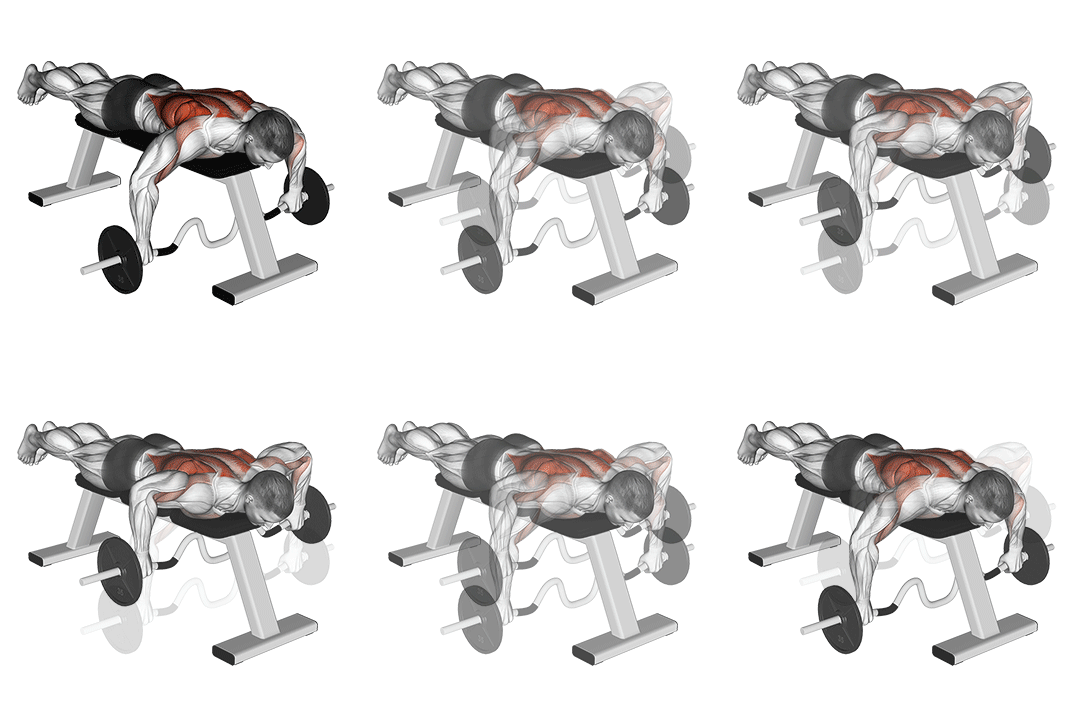
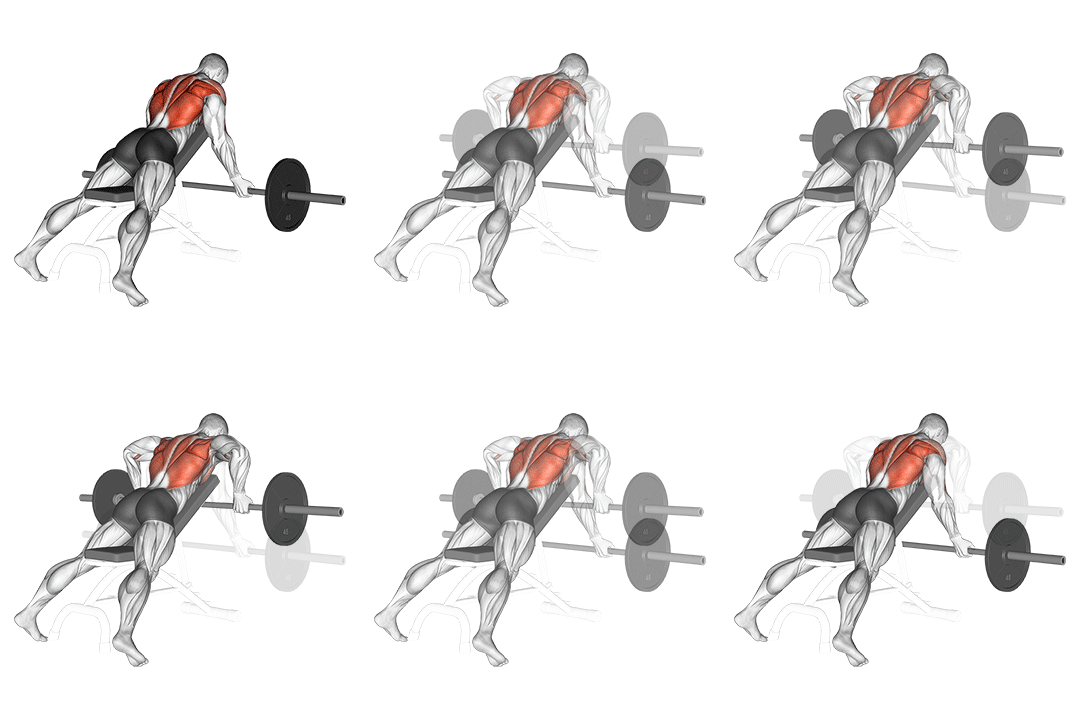
Cambered Bar Lying Row
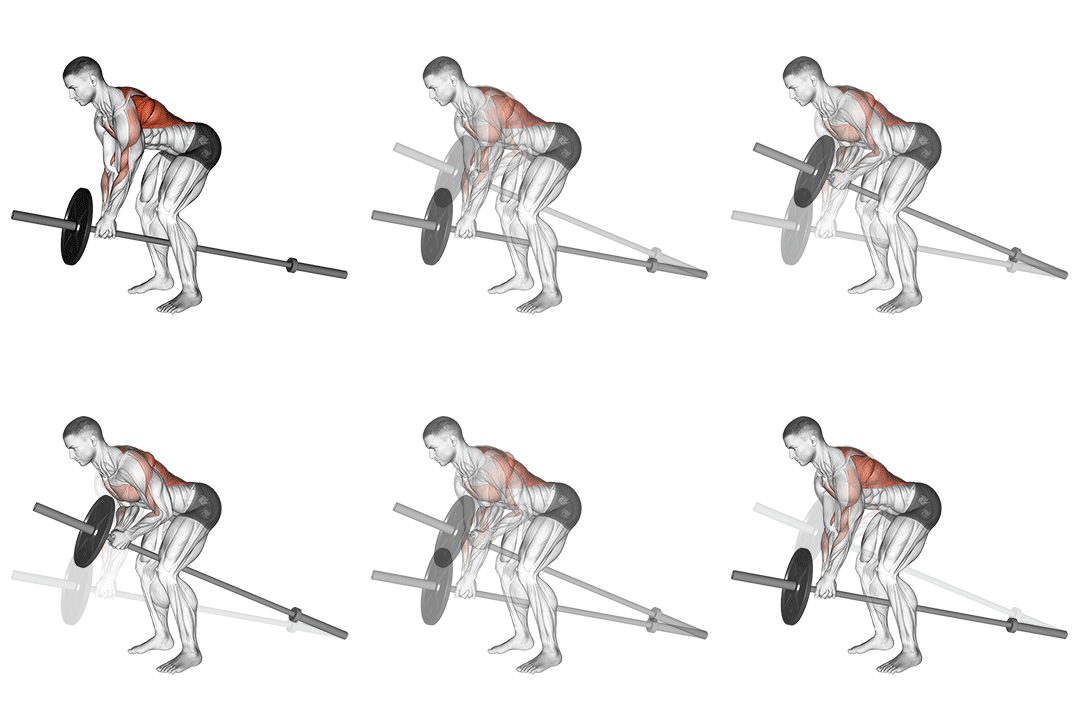
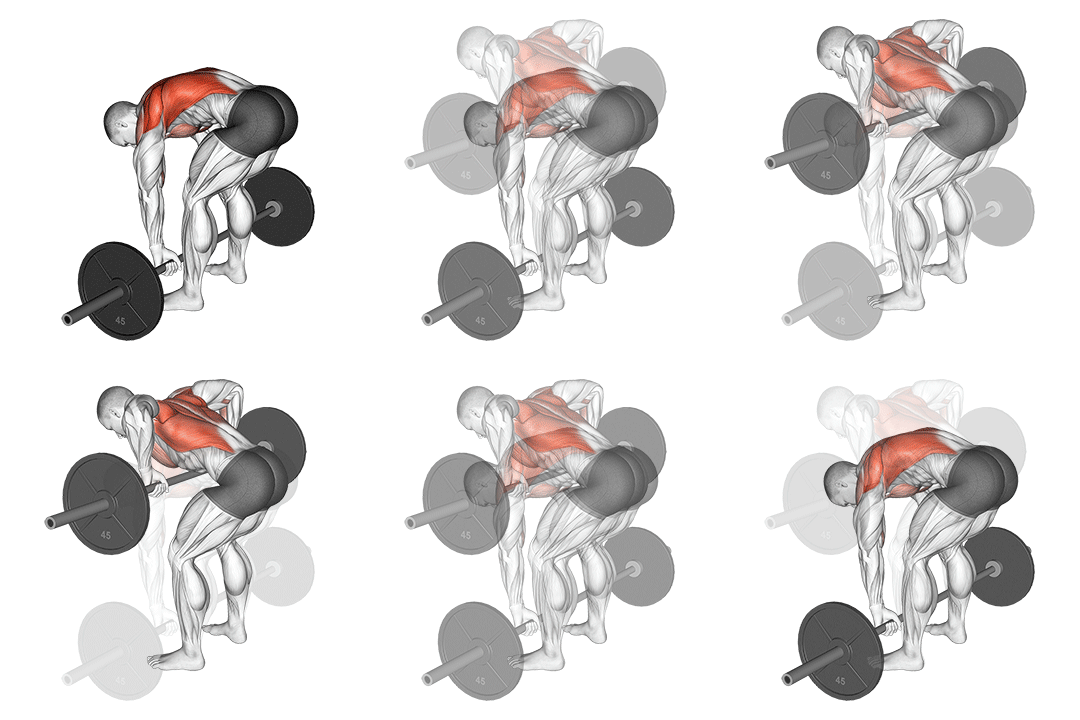
Lever Bent Over Row
Head-to-Head Comparison
| Attribute | Cambered Bar Lying Row | Lever Bent Over Row |
|---|---|---|
| Target Muscle |
Upper-back
|
Upper-back
|
| Body Part |
Back
|
Back
|
| Equipment |
Barbell
|
Barbell
|
| Difficulty |
Intermediate
|
Intermediate
|
| Movement Type |
Compound
|
Compound
|
| Secondary Muscles |
2
|
2
|
Secondary Muscles Activated
Cambered Bar Lying Row
Lever Bent Over Row
Visual Comparison
Overview
Cambered Bar Lying Row vs Lever Bent Over Row — if you want a practical side-by-side of two strong upper-back row options, you’re in the right place. I’ll show you how each movement stresses the traps, rhomboids, and rear delts; the role of the hip hinge and spinal loading; equipment needs; and clear programming cues (rep ranges, tempo, and progression). You’ll get technique tips to lock scapular retraction, exact torso angles to aim for, and concise recommendations for hypertrophy, strength, posture work, or home training.
Key Differences
- Both exercises target the Upper-back using Barbell. The main differences are in their movement patterns and muscle activation angles.
Pros & Cons
Cambered Bar Lying Row
+ Pros
- Chest support reduces lumbar loading so you can hit upper‑back contraction without heavy spinal shear
- Longer horizontal pull ROM improves end‑range scapular retraction and muscle time under tension
- Easier technique focus—simple cues: chest on pad, drive elbows back, squeeze scapulae 1 s
- Great for high‑volume hypertrophy sets (6–15 reps) and for isolating the rhomboids/traps
− Cons
- Requires a cambered bar and adjustable bench not always available
- Absolute loading ceiling may be lower than free‑body bent‑over variants
- Less posterior chain and core carryover since the hip hinge is removed
Lever Bent Over Row
+ Pros
- High progression ceiling—easy to add heavy loads for strength work (3–6 reps)
- Develops posterior chain and anti‑flexion bracing alongside upper‑back strength
- Versatile: adjust torso angle (30–60°) to bias different back regions and force vectors
- Requires only a standard barbell, so very gym/home friendly
− Cons
- Higher lumbar shear and risk if bracing or hip hinge is flawed
- Technique demands (torso angle, bar path) make it harder to teach and track consistency
- Can let hips/legs cheat the rep if form breaks, reducing upper‑back focus
When Each Exercise Wins
The chest support lets you maximize scapular retraction and time under tension with a clean horizontal pull, which targets rhomboids and mid‑traps more directly. Use 6–12 reps with a 2‑0‑2 tempo and a 1‑second squeeze to exploit length‑tension at end range.
Bent‑over rows allow heavier absolute loads and practice of full‑body bracing, improving carryover to deadlifts and pulls. Program 3–6 reps, low‑volume sets, and progressive overload to raise maximal pulling strength.
Chest support removes the need for a perfect hip hinge and stabilizing strength, so novices can learn scapular mechanics and elbow path safely. Start with light sets of 8–12 reps focusing on scapular retraction and a neutral spine.
A standard barbell or even dumbbells let you replicate the bent‑over pattern at home with minimal gear, making it the practical pick. Prioritize core bracing and limit load if you lack a squat rack or spotter.
Frequently Asked Questions
Can I do both Cambered Bar Lying Row and Lever Bent Over Row in the same workout?
Yes—pairing a supported cambered row as a volume/set‑finisher after heavier bent‑over sets works well. Do heavy bent‑over sets first (3–6 reps) then follow with 2–4 sets of cambered rows for 8–12 reps to reinforce scapular squeeze without adding lumbar fatigue.
Which exercise is better for beginners?
Cambered Bar Lying Row is generally better for beginners because chest support removes complex bracing demands and lets new lifters learn scapular retraction and elbow path. Start light and focus on 8–12 controlled reps with a 2‑0‑2 tempo.
How do the muscle activation patterns differ?
Cambered lying rows bias scapular retraction and end‑range rhomboid/trap contraction with minimal erector activity, while bent‑over rows require greater erector, glute, and hamstring co‑activation due to the hip hinge. Trunk angle shifts the force vector and changes moment arms, altering which upper‑back fibers hit peak tension.
Can Lever Bent Over Row replace Cambered Bar Lying Row?
Yes, if your goal is overall strength and you can maintain strict bracing, bent‑over rows can substitute and add posterior chain carryover. If you need to limit lumbar load or want maximal upper‑back isolation for hypertrophy or rehab, keep the cambered lying row in the program instead.
Expert Verdict
Both rows have clear places in a smart program. Choose the cambered bar lying row when you want strict upper‑back isolation, lower lumbar stress, and controlled time under tension—ideal for hypertrophy blocks, rehab, or when you need to limit spinal shear. Pick the lever bent‑over row when your goal is maximal strength, posterior chain development, and equipment accessibility; it lets you overload the posterior chain and reinforce the hip hinge. Use the cambered variation for 6–12 rep hypertrophy work and the bent‑over row for 3–6 strength cycles, and rotate them across mesocycles to balance isolation and whole‑body strength.
Also Compare
More comparisons with Cambered Bar Lying Row
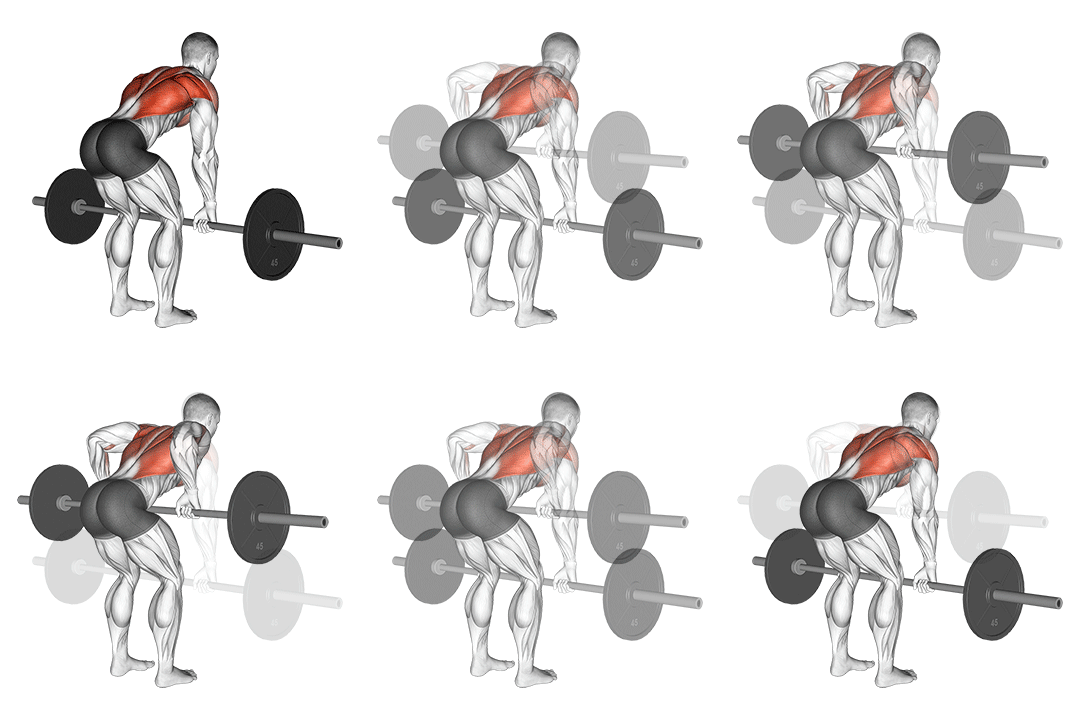
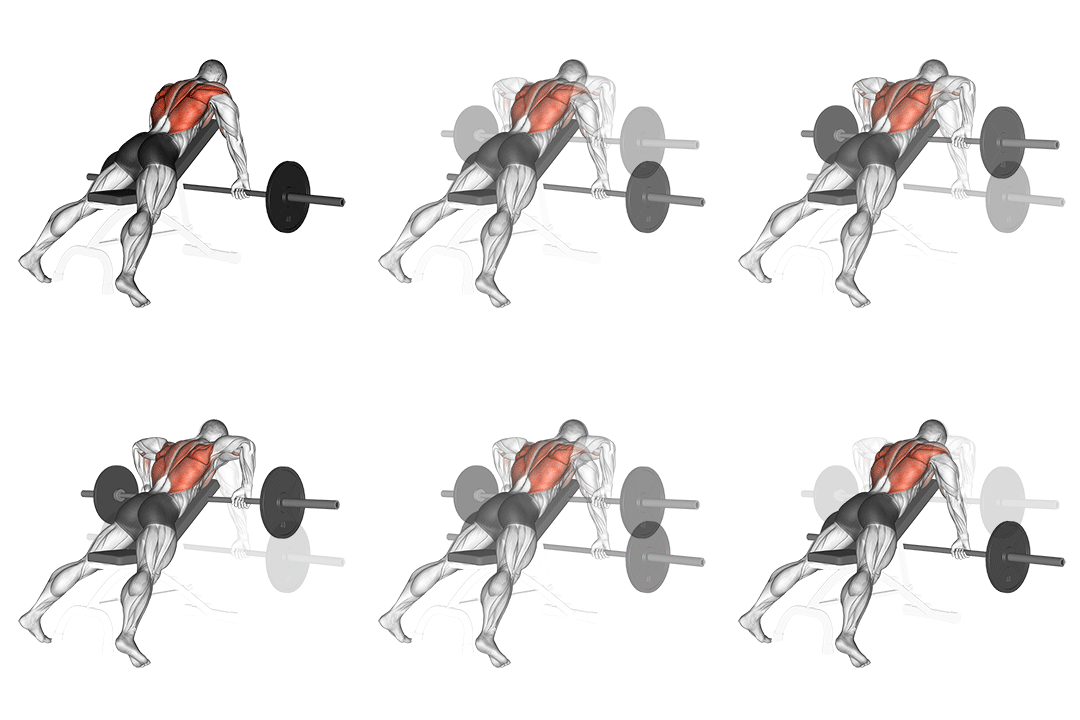
More comparisons with Lever Bent Over Row
Compare More Exercises
Use our free comparison tool to analyze any two exercises head-to-head.
Compare Exercises