

Chest And Front Of Shoulder Stretch vs Chest Dip (on Dip-pull-up Cage): Complete Comparison Guide
Chest And Front Of Shoulder Stretch vs Chest Dip (on Dip-pull-up Cage) — you’re comparing a mobility-focused isolation move with a heavy compound press. This guide walks you through muscle activation, equipment needs, risks, and which to pick for muscle growth, strength, or recovery. You’ll get clear technique cues, rep and hold ranges, and biomechanical reasons why one stresses the pecs differently than the other. Use this to decide whether you should add a static chest stretch, a loaded chest dip, or both to your routine.
Exercise Comparison
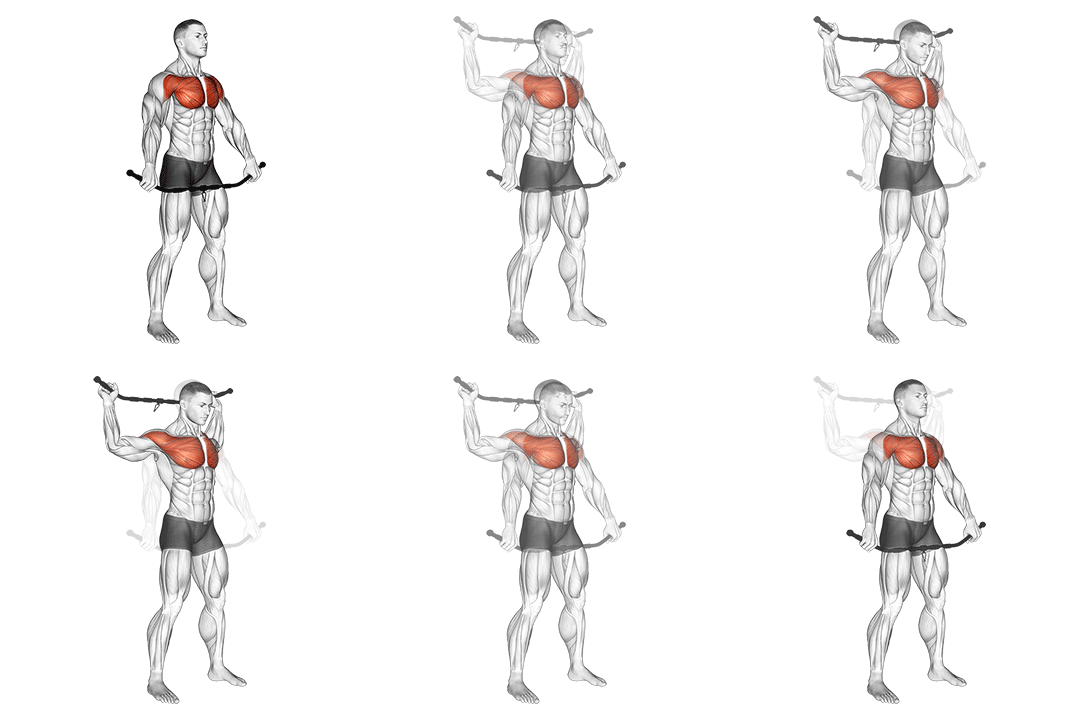
Chest And Front Of Shoulder Stretch
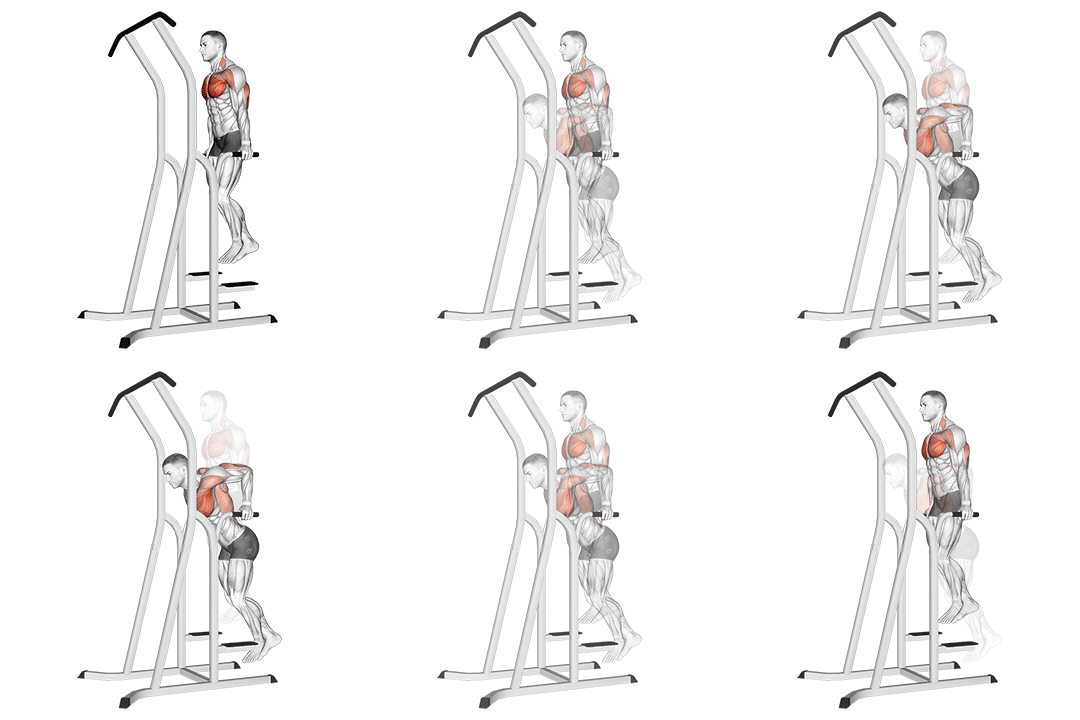
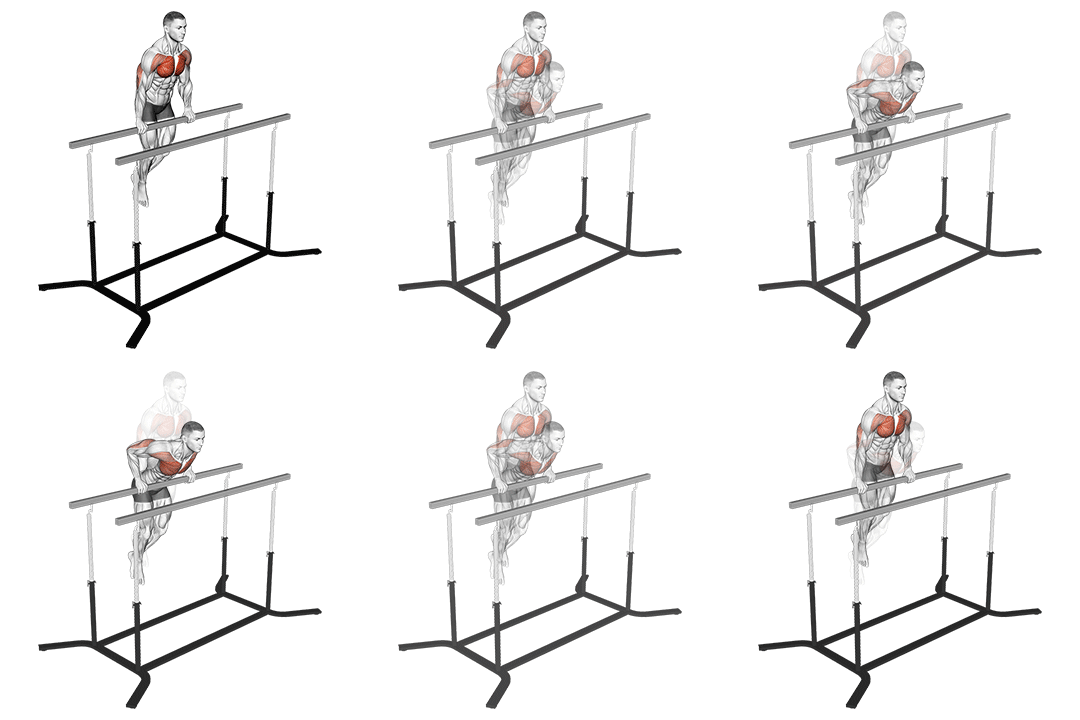
Chest Dip (on Dip-pull-up Cage)
Head-to-Head Comparison
| Attribute | Chest And Front Of Shoulder Stretch | Chest Dip (on Dip-pull-up Cage) |
|---|---|---|
| Target Muscle |
Pectorals
|
Pectorals
|
| Body Part |
Chest
|
Chest
|
| Equipment |
Body-weight
|
Body-weight
|
| Difficulty |
Beginner
|
Intermediate
|
| Movement Type |
Isolation
|
Compound
|
| Secondary Muscles |
1
|
2
|
Secondary Muscles Activated
Chest And Front Of Shoulder Stretch
Chest Dip (on Dip-pull-up Cage)
Visual Comparison
Overview
Chest And Front Of Shoulder Stretch vs Chest Dip (on Dip-pull-up Cage) — you’re comparing a mobility-focused isolation move with a heavy compound press. This guide walks you through muscle activation, equipment needs, risks, and which to pick for muscle growth, strength, or recovery. You’ll get clear technique cues, rep and hold ranges, and biomechanical reasons why one stresses the pecs differently than the other. Use this to decide whether you should add a static chest stretch, a loaded chest dip, or both to your routine.
Key Differences
- Chest And Front Of Shoulder Stretch is an isolation exercise, while Chest Dip (on Dip-pull-up Cage) is a compound movement.
- Difficulty levels differ: Chest And Front Of Shoulder Stretch is beginner, while Chest Dip (on Dip-pull-up Cage) is intermediate.
- Both exercises target the Pectorals using Body-weight. The main differences are in their movement patterns and muscle activation angles.
Pros & Cons
Chest And Front Of Shoulder Stretch
+ Pros
- Improves anterior shoulder and pec flexibility and range of motion
- Requires no equipment — usable in most settings
- Low-load option for rehab and prehab (30–120s holds)
- Easy to scale and pair with strength work as a warm-up or cooldown
− Cons
- Does not provide significant hypertrophic or strength stimulus
- Can overstretch unstable shoulders if done without scapular control
- Limited progression options for long-term strength gains
Chest Dip (on Dip-pull-up Cage)
+ Pros
- High mechanical load on the pecs — effective for hypertrophy and strength
- Works triceps and anterior deltoids simultaneously for compound benefit
- Easy to progressive overload with added weight or volume
- Directly trains pushing mechanics and upper-body stability
− Cons
- Higher shoulder stress and injury risk when performed with poor form
- Requires equipment and baseline upper-body strength
- Can exacerbate anterior shoulder pain if depth or technique is poor
When Each Exercise Wins
Dips apply large external loads and long time-under-tension across concentric and eccentric phases, making them superior for stimulating muscle growth. Use 6–12 reps, 3–4 sets, with progressive loading to maximize hypertrophy.
Dips allow heavy loading and neural adaptation—perform 3–6 reps, 4–6 sets, and add external weight to raise maximal pressing strength. The compound movement transfers to other pressing patterns.
The stretch is low-load and teaches shoulder positioning, mobility, and scapular awareness. Beginners should build mobility and basic scapular control before attempting full dips.
No equipment and minimal space make the stretch ideal for home use. If you have only a doorway or wall, you can safely improve chest mobility and pair it with push-up progressions.
Frequently Asked Questions
Can I do both Chest And Front Of Shoulder Stretch and Chest Dip (on Dip-pull-up Cage) in the same workout?
Yes. Use the stretch as a warm-up or cooldown: 30–60s holds before dips improves ROM and reduces risk, while post-workout holds (60–120s) aid tissue recovery. Do heavy dips earlier in the session when you’re fresh.
Which exercise is better for beginners?
Start with the chest/front-of-shoulder stretch to build mobility and scapular control, then progress to assisted dips or push-up variations. Dips demand strength and coordination; master bodyweight pressing patterns first.
How do the muscle activation patterns differ?
Dips produce high active pectoral activation during concentric and eccentric phases (mid-range peak), while the stretch produces low voluntary activation and high passive tension at end-range. Dips also recruit triceps strongly; the stretch mainly loads the anterior deltoid passively.
Can Chest Dip (on Dip-pull-up Cage) replace Chest And Front Of Shoulder Stretch?
No — dips can build muscle and strength but do not replace the mobility benefits of a dedicated chest/front-of-shoulder stretch. Use dips for overload and the stretch to maintain tissue length, joint health, and posture.
Expert Verdict
Use Chest Dip (on Dip-pull-up Cage) when your goal is muscle growth or pressing strength. Its compound force vectors load the pecs, triceps, and anterior deltoids under high mechanical tension; program dips for 3–12 reps depending on whether you target strength or hypertrophy, and keep torso lean (~15–30° forward) to bias the chest. Use Chest And Front Of Shoulder Stretch when you need mobility, recovery, or to prepare the shoulder for heavier work. Hold 30–120 seconds, emphasize scapular retraction, and keep abduction under 90° to protect the capsule. For most trainees, combine both: prioritize dips for overload and use the stretch for mobility and tissue quality.
Also Compare
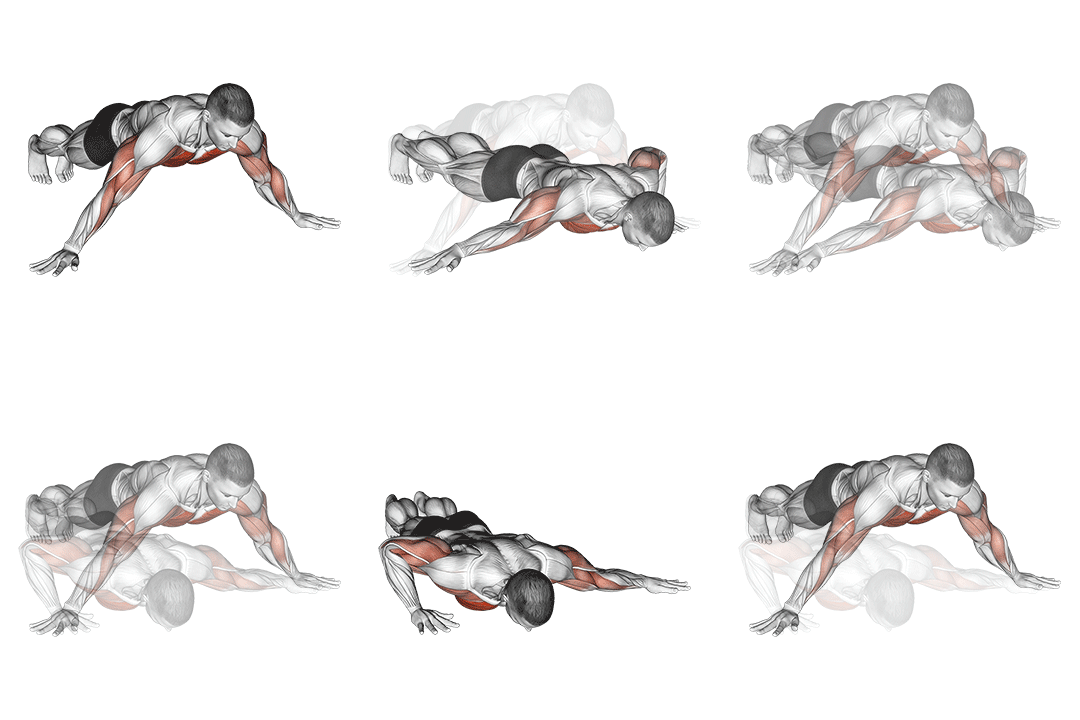
More comparisons with Chest And Front Of Shoulder Stretch
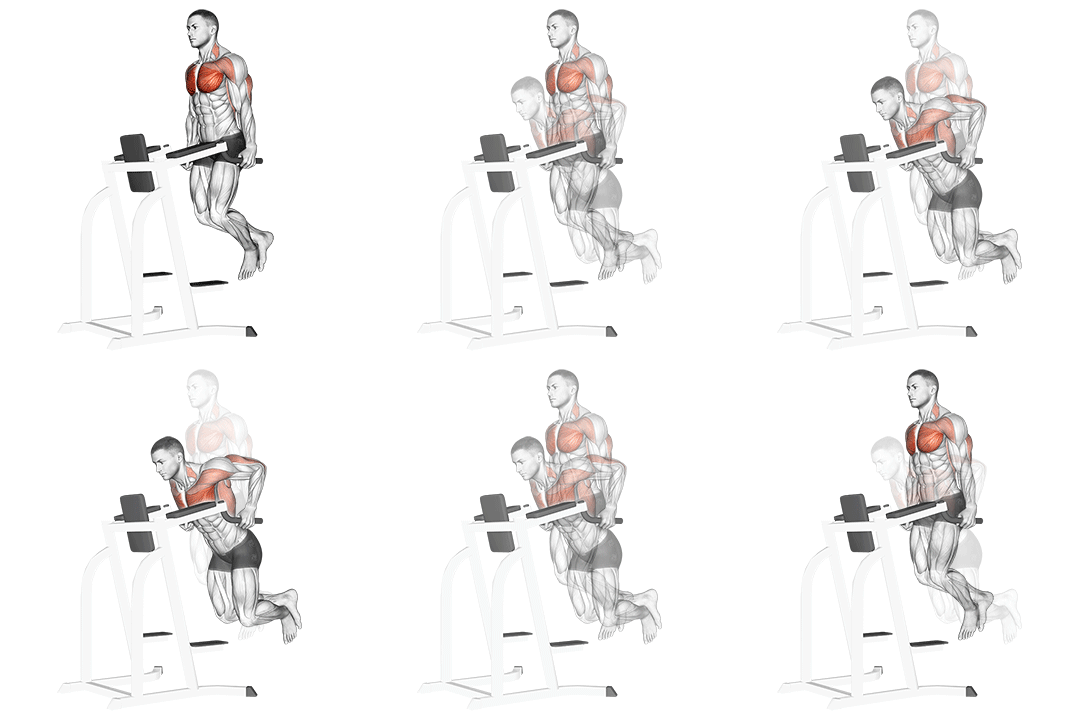
More comparisons with Chest Dip (on Dip-pull-up Cage)
Compare More Exercises
Use our free comparison tool to analyze any two exercises head-to-head.
Compare Exercises