

Chest And Front Of Shoulder Stretch vs Chest Tap Push-up (male): Complete Comparison Guide
Chest And Front Of Shoulder Stretch vs Chest Tap Push-up (male) — choose the right move for chest care or development. You’ll get a clear, practical comparison that covers muscle activation, biomechanics, equipment, skill level, progression and injury risk. I’ll show how the static isolation stretch changes length-tension in the pectorals and front deltoids, and how the advanced, compound chest tap push-up loads the pectorals, triceps and shoulders through a high-force concentric phase and brief plyometric contact. Read on to learn which exercise to use for mobility, muscle growth, strength, or programming in a home routine.
Exercise Comparison
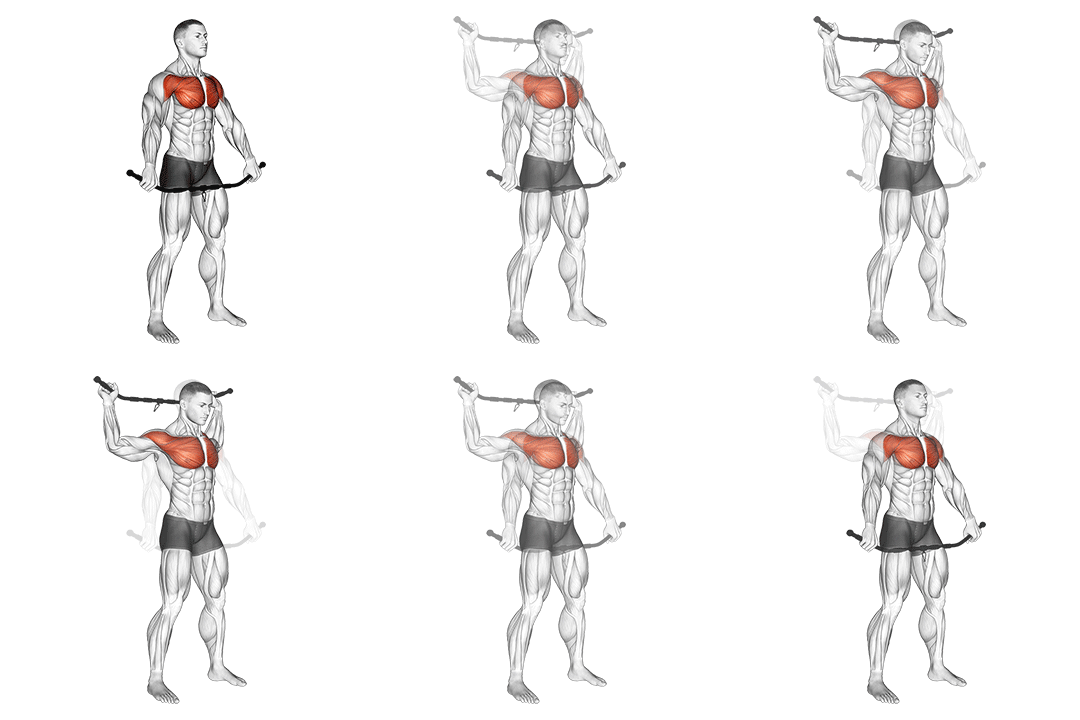
Chest And Front Of Shoulder Stretch
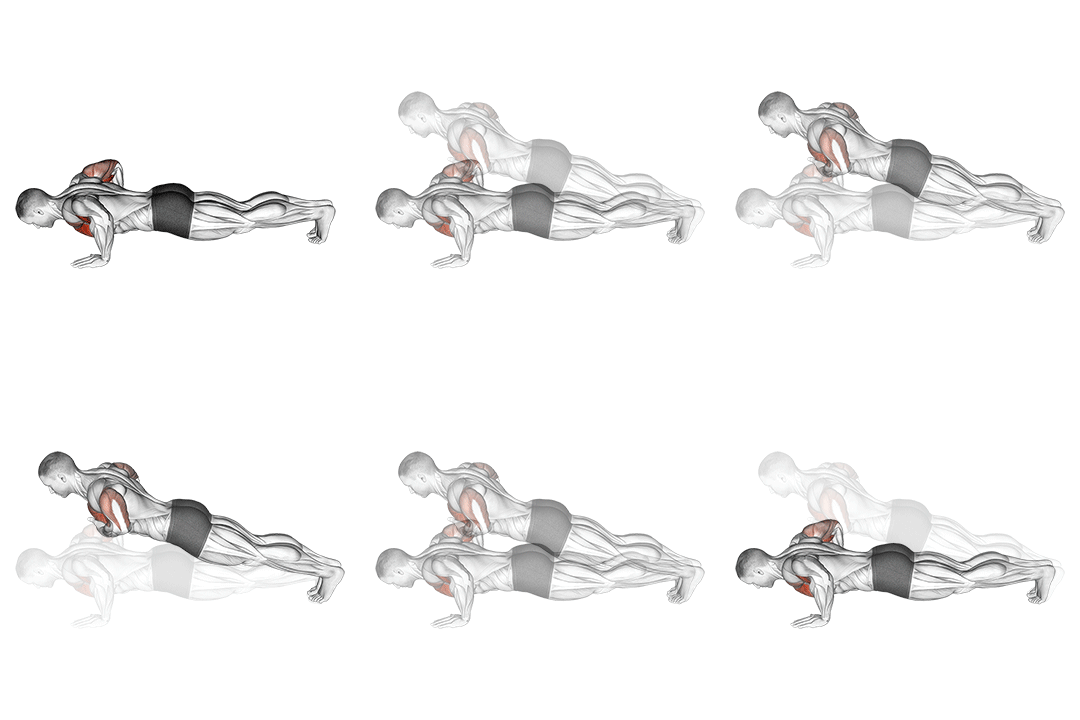
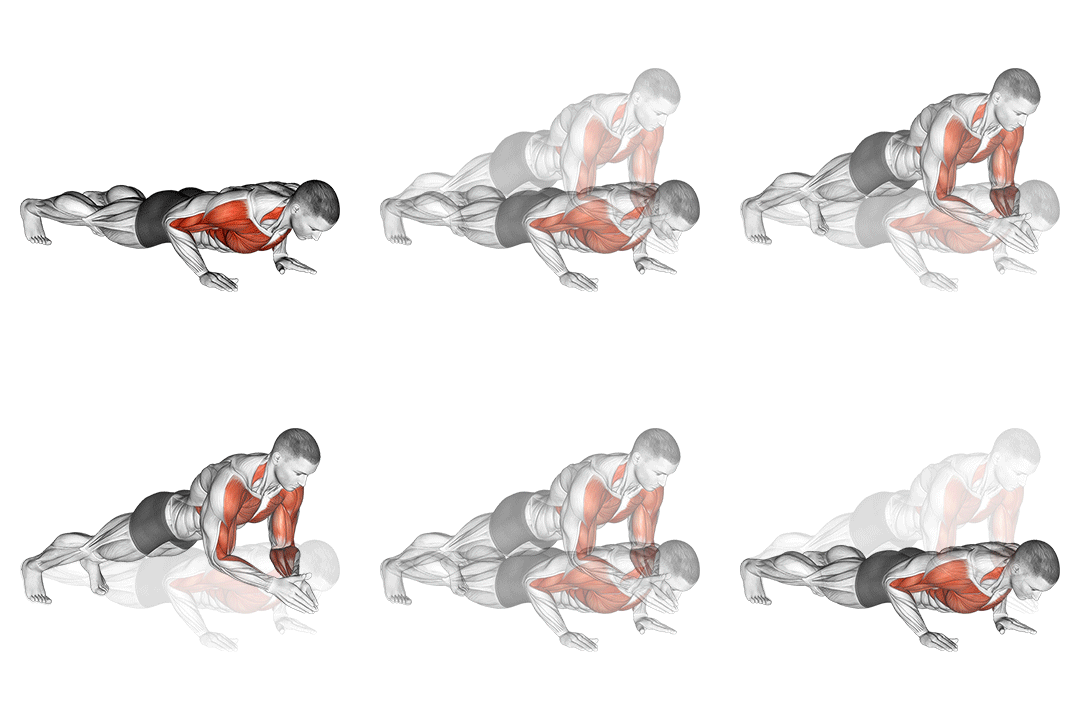
Chest Tap Push-up (male)
Head-to-Head Comparison
| Attribute | Chest And Front Of Shoulder Stretch | Chest Tap Push-up (male) |
|---|---|---|
| Target Muscle |
Pectorals
|
Pectorals
|
| Body Part |
Chest
|
Chest
|
| Equipment |
Body-weight
|
Body-weight
|
| Difficulty |
Beginner
|
Advanced
|
| Movement Type |
Isolation
|
Compound
|
| Secondary Muscles |
1
|
2
|
Secondary Muscles Activated
Chest And Front Of Shoulder Stretch
Chest Tap Push-up (male)
Visual Comparison
Overview
Chest And Front Of Shoulder Stretch vs Chest Tap Push-up (male) — choose the right move for chest care or development. You’ll get a clear, practical comparison that covers muscle activation, biomechanics, equipment, skill level, progression and injury risk. I’ll show how the static isolation stretch changes length-tension in the pectorals and front deltoids, and how the advanced, compound chest tap push-up loads the pectorals, triceps and shoulders through a high-force concentric phase and brief plyometric contact. Read on to learn which exercise to use for mobility, muscle growth, strength, or programming in a home routine.
Key Differences
- Chest And Front Of Shoulder Stretch is an isolation exercise, while Chest Tap Push-up (male) is a compound movement.
- Difficulty levels differ: Chest And Front Of Shoulder Stretch is beginner, while Chest Tap Push-up (male) is advanced.
- Both exercises target the Pectorals using Body-weight. The main differences are in their movement patterns and muscle activation angles.
Pros & Cons
Chest And Front Of Shoulder Stretch
+ Pros
- Improves pectoral length and shoulder extension
- Very low equipment and skill requirements
- Useful daily for posture and upper-chest mobility
- Low acute joint loading—good for rehab and warm-ups
− Cons
- Minimal concentric loading—poor for building strength
- Doesn't provide progressive overload for muscle growth
- Can aggravate anterior shoulder pain if done with poor scapular control
Chest Tap Push-up (male)
+ Pros
- High pectoral, triceps, and shoulder activation for hypertrophy
- Builds explosive strength and power via stretch-shortening
- Requires no external equipment—easy to program into circuits
- Scalable intensity with reps, tempo, or elevation
− Cons
- Advanced skill and shoulder stability required
- Higher injury risk if technique or scapular control is poor
- Fatigue can compromise form quickly, increasing joint stress
When Each Exercise Wins
The chest tap push-up applies concentric and eccentric overload and higher motor-unit recruitment, allowing you to work in hypertrophy rep ranges (6–12) and progressively increase intensity.
Its explosive concentric phase and capacity for added difficulty (elevated feet, weighted vest) provide better mechanical tension and neural drive required for strength improvements.
It requires minimal strength or coordination, improves scapular mobility and tissue length, and prepares the shoulder complex before introducing loaded pushing movements.
When you want efficient, equipment-free chest training at home, the chest tap push-up delivers compound loading and progressions—just ensure you have baseline push strength and practice safely.
Frequently Asked Questions
Can I do both Chest And Front Of Shoulder Stretch and Chest Tap Push-up (male) in the same workout?
Yes. Do the stretch as a warm-up or cool-down to prime tissue length and scapular mobility, then perform chest tap push-ups for strength or hypertrophy. Keep the stretch low-intensity and pain-free; perform push-ups fresh to preserve explosive form.
Which exercise is better for beginners?
Chest And Front Of Shoulder Stretch is better for absolute beginners because it requires minimal strength and teaches you proper shoulder positioning. Start with mobility work until you can perform controlled standard push-ups before attempting chest tap variations.
How do the muscle activation patterns differ?
The stretch produces low sustained activation, shifting the pectorals toward longer muscle lengths and passive tension. The chest tap push-up creates high phasic activation—eccentric control followed by a concentric, often plyometric, spike in pec and triceps EMG.
Can Chest Tap Push-up (male) replace Chest And Front Of Shoulder Stretch?
No—if your goal is mobility and correcting thoracic/shoulder tightness, the stretch is necessary. The chest tap push-up can build strength and power but does not reliably improve range-of-motion or tissue extensibility.
Expert Verdict
Use the Chest And Front Of Shoulder Stretch when your priority is mobility, posture correction, or preparing the chest and anterior shoulder for heavier work. Hold 20–60 seconds per side, 2–4 sets, focusing on a slight scapular retraction and avoiding pain. Use the Chest Tap Push-up (male) when your goal is muscle growth or strength: program 3–5 sets of 6–12 explosive reps, or 3–6 reps for power work, and progress via tempo or elevation. Be decisive—stretch for range and recovery, push-up for overload and performance—but include both across a balanced program.
Also Compare
More comparisons with Chest And Front Of Shoulder Stretch
More comparisons with Chest Tap Push-up (male)
Compare More Exercises
Use our free comparison tool to analyze any two exercises head-to-head.
Compare Exercises