

Chest And Front Of Shoulder Stretch vs Push-up: Complete Comparison Guide
Chest And Front Of Shoulder Stretch vs Push-up — which should you use in your routine? You’ll get a clear, practical breakdown so you can choose based on mobility, muscle activation, injury risk, and training goals. I’ll cover how each movement loads the pectorals, what secondary muscles get involved, specific technique cues, recommended rep ranges or hold times, and when to use the stretch as a warm-up versus using push-ups for strength and muscle growth.
Exercise Comparison
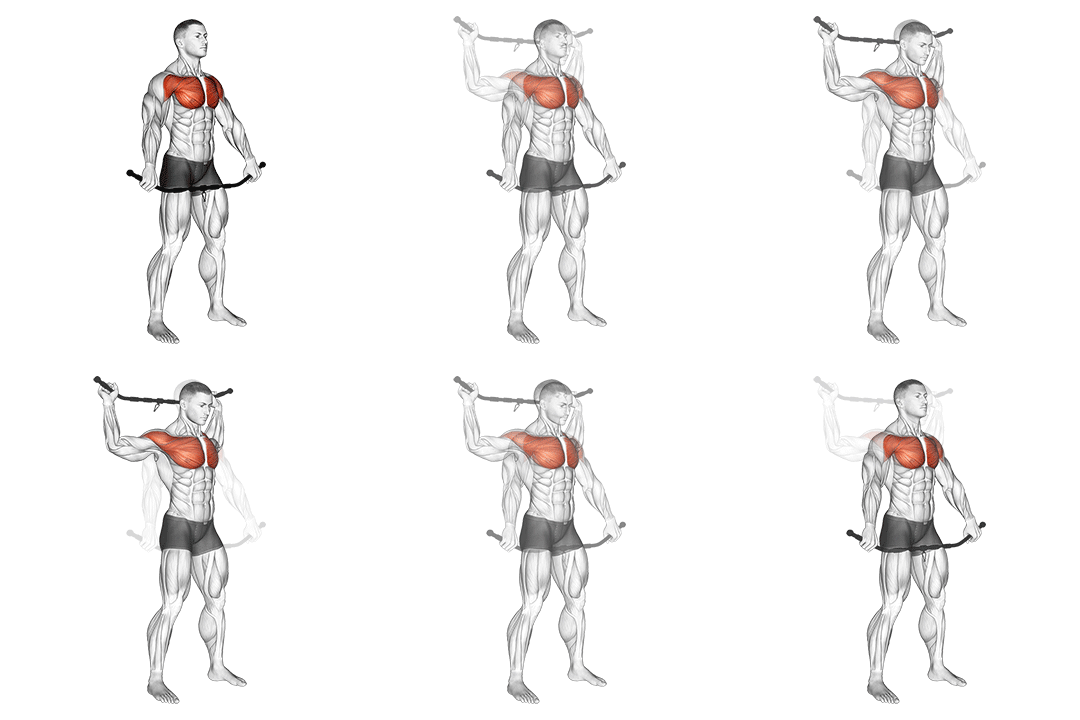
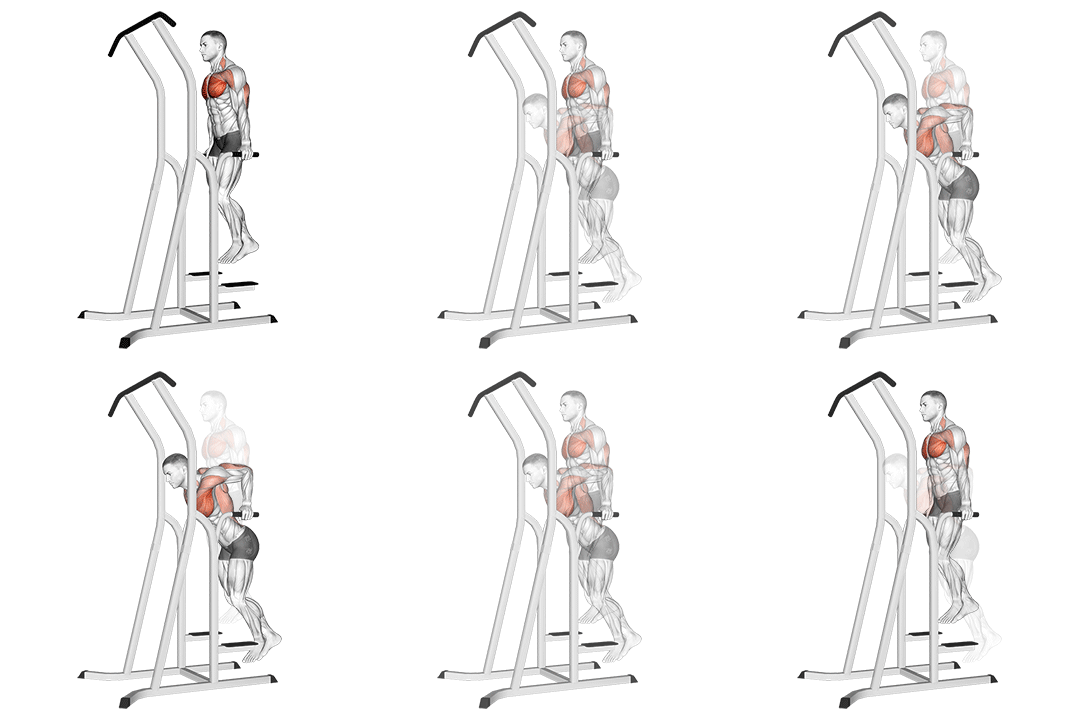
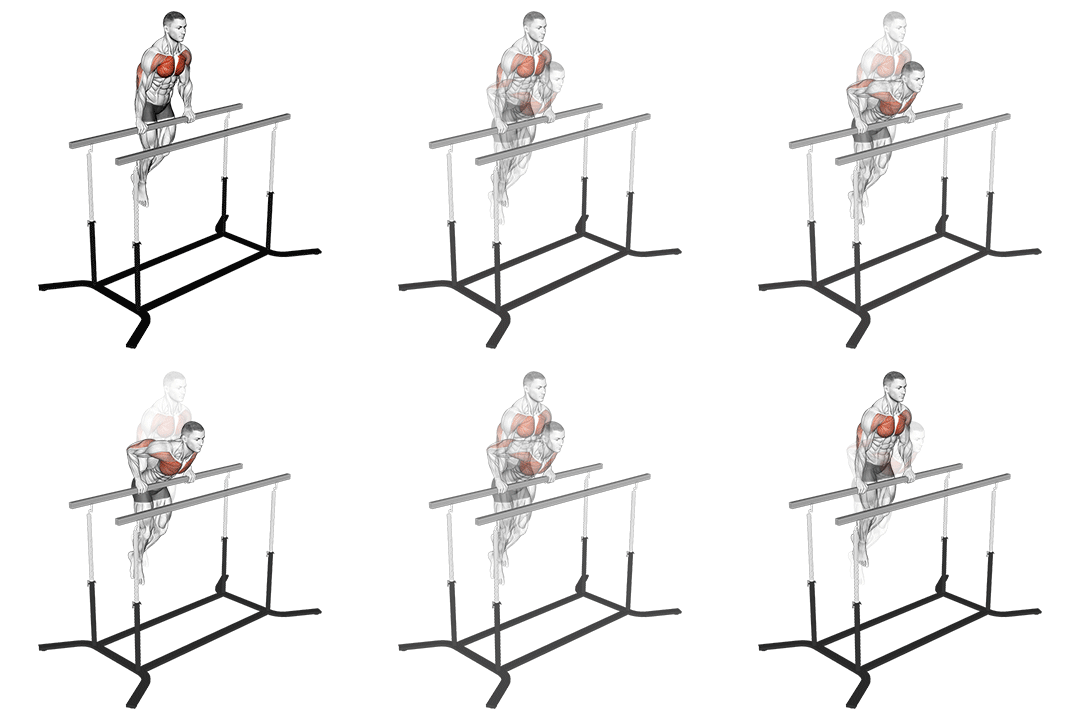
Chest And Front Of Shoulder Stretch
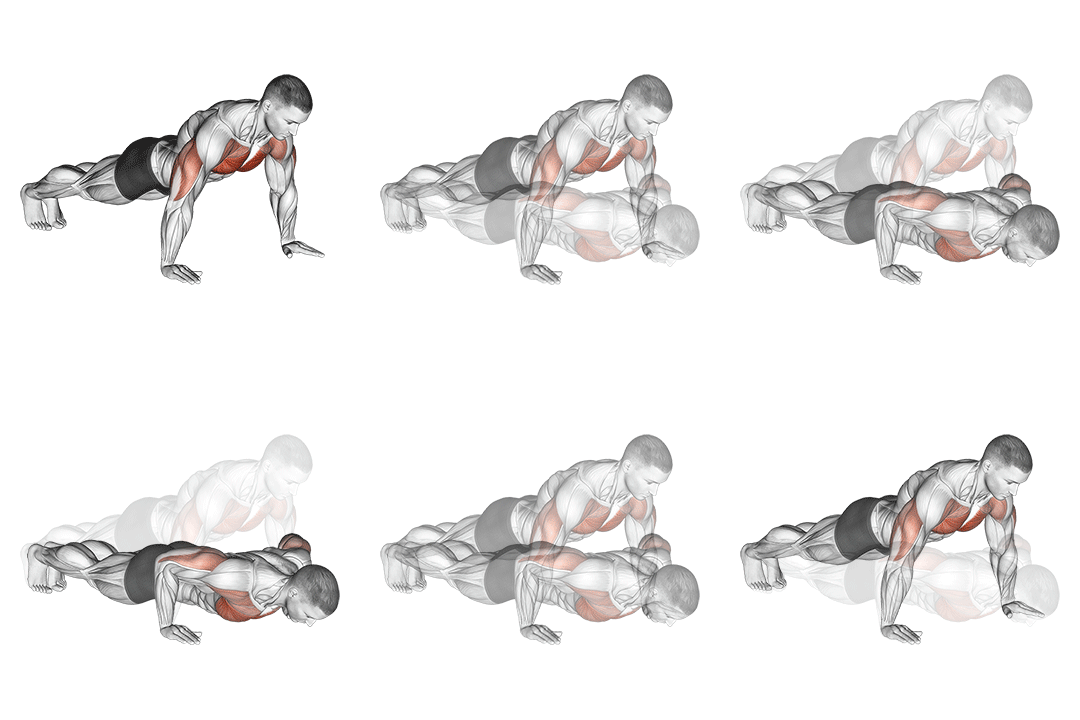
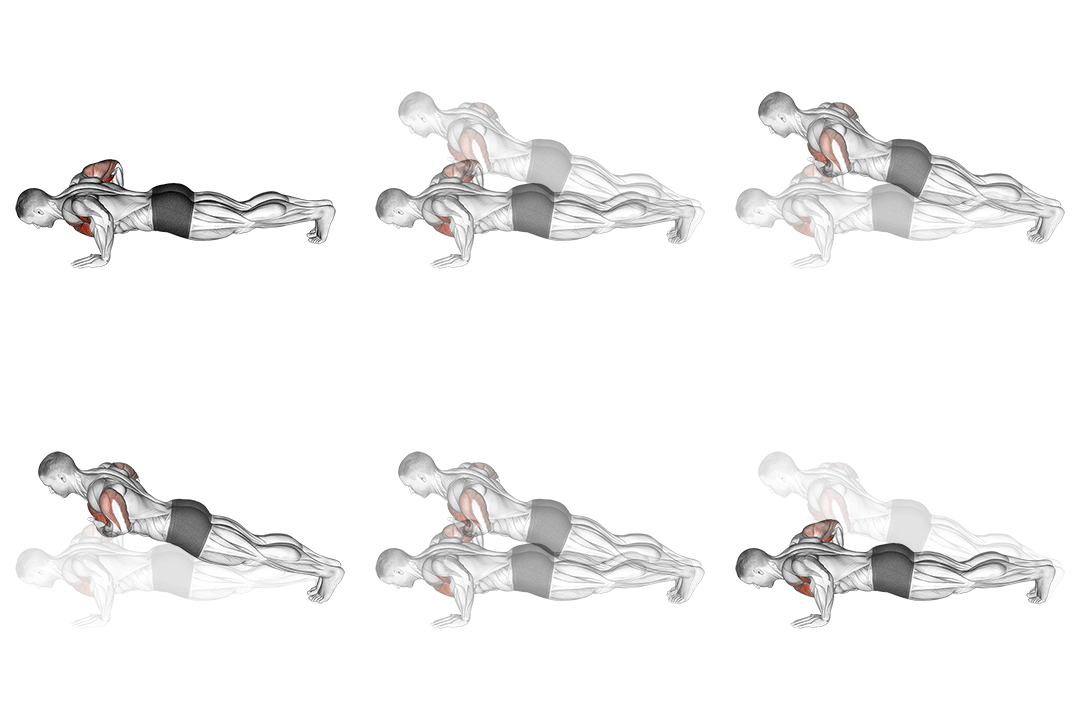
Push-up
Head-to-Head Comparison
| Attribute | Chest And Front Of Shoulder Stretch | Push-up |
|---|---|---|
| Target Muscle |
Pectorals
|
Pectorals
|
| Body Part |
Chest
|
Chest
|
| Equipment |
Body-weight
|
Body-weight
|
| Difficulty |
Beginner
|
Intermediate
|
| Movement Type |
Isolation
|
Compound
|
| Secondary Muscles |
1
|
3
|
Secondary Muscles Activated
Chest And Front Of Shoulder Stretch
Push-up
Visual Comparison
Overview
Chest And Front Of Shoulder Stretch vs Push-up — which should you use in your routine? You’ll get a clear, practical breakdown so you can choose based on mobility, muscle activation, injury risk, and training goals. I’ll cover how each movement loads the pectorals, what secondary muscles get involved, specific technique cues, recommended rep ranges or hold times, and when to use the stretch as a warm-up versus using push-ups for strength and muscle growth.
Key Differences
- Chest And Front Of Shoulder Stretch is an isolation exercise, while Push-up is a compound movement.
- Difficulty levels differ: Chest And Front Of Shoulder Stretch is beginner, while Push-up is intermediate.
- Both exercises target the Pectorals using Body-weight. The main differences are in their movement patterns and muscle activation angles.
Pros & Cons
Chest And Front Of Shoulder Stretch
+ Pros
- Improves anterior shoulder and pectoral flexibility by placing muscle on a lengthened position
- Low skill and low-load — safe for rehabilitation and mobility-focused sessions
- Useful as a warm-up to restore thoracic extension and reduce rounded-shoulder posture
- Requires no strength baseline or special equipment
− Cons
- Does not provide meaningful mechanical tension for muscle growth or strength
- Can be overused and irritate the anterior capsule if pushed into painful ranges
- Limited progression options for building pressing capacity
Push-up
+ Pros
- Delivers mechanical tension for pectoral hypertrophy and strength when progressed
- Works multiple muscle groups (triceps, deltoids, core) through a functional pressing pattern
- Highly scalable: regressions and progressions let you match strength levels
- No equipment needed and easy to program into sets/reps (3–4 sets of 6–20 reps)
− Cons
- Requires scapular control and core stability; faults increase injury risk
- Can overload the anterior shoulder if depth or hand position is extreme
- Less focused on mobility — may increase tissue shortening if not paired with stretching
When Each Exercise Wins
Push-ups provide concentric and eccentric loading across the pectoralis with clear progression pathways (tempo, external load, leverage). Aim for 3–4 sets of 6–12 reps for strength-oriented hypertrophy or 8–20 reps for metabolic hypertrophy.
Push-ups train force production and transfer across the shoulder and elbow joints. You can progress to weighted or deficit/decline variations to increase mechanical demand and develop pressing strength.
The stretch is low-skill and lowers shoulder load while improving mobility and posture. Use 20–60 second holds, 2–3 sets to establish safe range before loading with push-up variations.
Both need no equipment, but push-ups deliver the best return for time by training the chest, triceps, and core together. Variations let you scale difficulty without weights, making them ideal for compact home sessions.
Frequently Asked Questions
Can I do both Chest And Front Of Shoulder Stretch and Push-up in the same workout?
Yes. Use the stretch as a warm-up and mobility primer—2–3 sets of 30–45 seconds—to improve shoulder position and allow safer press mechanics. Follow with push-ups as your main-loading exercise, focusing on controlled eccentrics and a 90° elbow depth before pressing back up.
Which exercise is better for beginners?
For mobility and pain-free introduction to shoulder movement, the Chest And Front Of Shoulder Stretch is better because it’s low-load and easy to coach. For building strength, beginners should progress to assisted push-ups (knees or incline) once they can maintain a neutral spine and scapular control.
How do the muscle activation patterns differ?
The stretch holds the pectorals at long muscle lengths with low active force due to the length-tension relationship, so activation is modest. Push-ups create dynamic concentric/eccentric contractions with higher pectoral and triceps recruitment and significant core engagement, changing activation based on hand position and torso angle.
Can Push-up replace Chest And Front Of Shoulder Stretch?
No—push-ups won’t replace the mobility gains from a dedicated stretch. They build strength but can shorten anterior tissues if not paired with lengthening work. Keep the stretch in your warm-up or cooldown to preserve range while using push-ups for loading.
Expert Verdict
Use the Chest And Front Of Shoulder Stretch primarily as a mobility and preparatory tool: 30–60 second holds for 2–3 sets before pressing work, or daily to restore shoulder extension and reduce anterior tightness. Use push-ups when your goal is muscle growth or strength — program 3–4 sets with rep ranges matched to your aim (6–12 reps for strength/hypertrophy, 12–20 for endurance) and progress via leverage, tempo, or added load. Combine both: stretch to improve range and reduce injury risk, then load the joint with controlled push-ups to build force and muscle.
Also Compare
More comparisons with Chest And Front Of Shoulder Stretch
Compare More Exercises
Use our free comparison tool to analyze any two exercises head-to-head.
Compare Exercises