

Chest Dip (on Dip-pull-up Cage) vs Chest Dip On Straight Bar: Complete Comparison Guide
Chest Dip (on Dip-pull-up Cage) vs Chest Dip On Straight Bar — both are bodyweight compound moves that load the pectorals, triceps, and shoulders. You’ll get a clear, actionable breakdown of muscle activation, movement mechanics, equipment needs, technique cues, and program recommendations. Read on to learn which variation better serves hypertrophy, strength, beginners, and home workouts, with specific rep ranges, trunk angles, and injury-risk guidance to help you pick the right dip for your goals.
Exercise Comparison
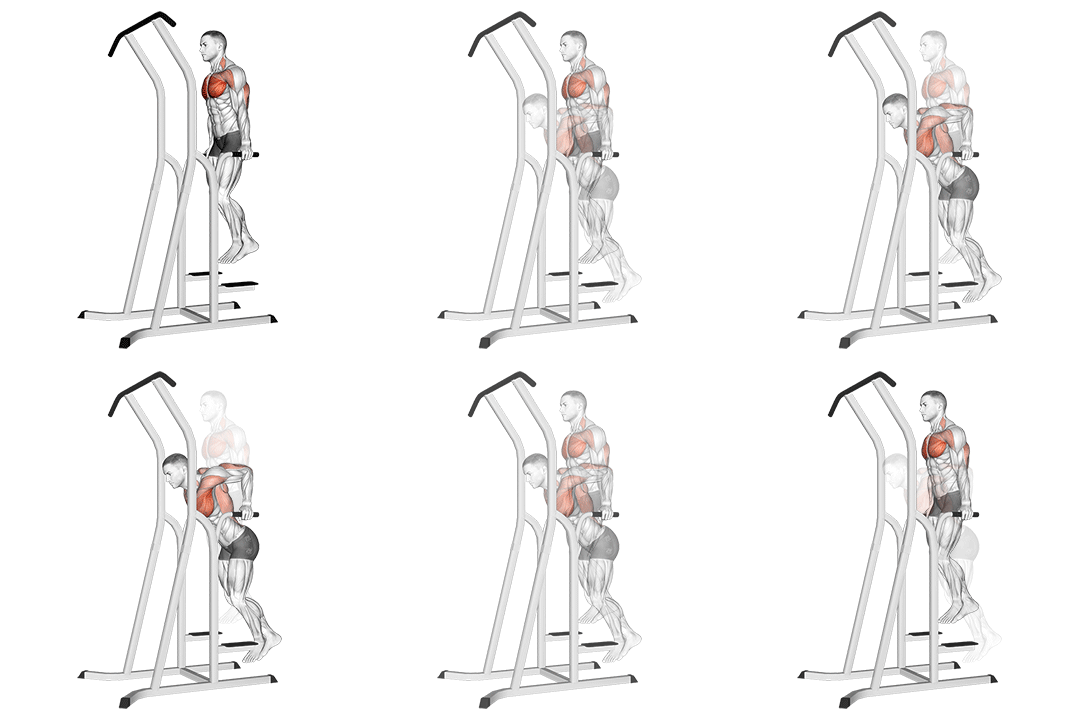
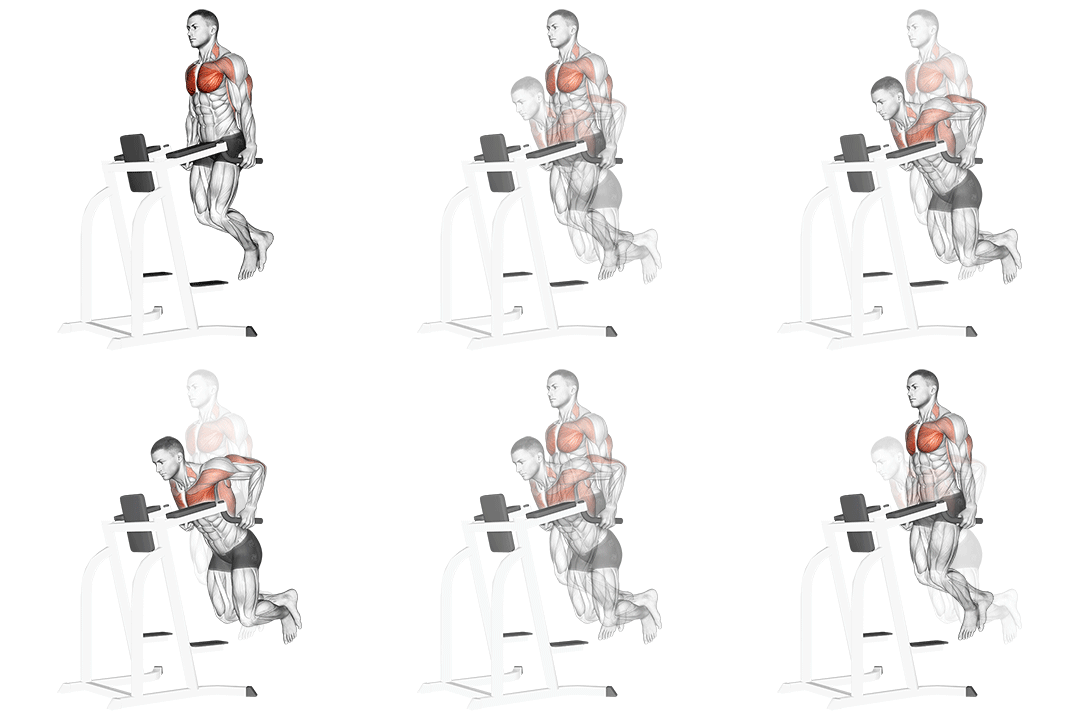
Chest Dip (on Dip-pull-up Cage)
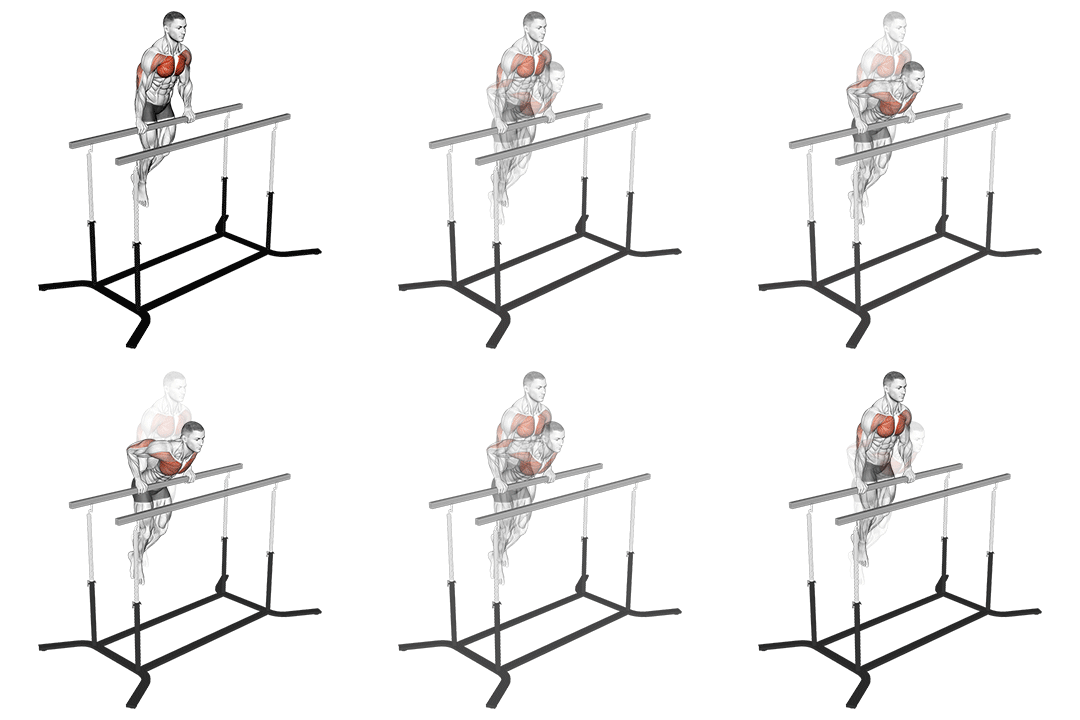
Chest Dip On Straight Bar
Head-to-Head Comparison
| Attribute | Chest Dip (on Dip-pull-up Cage) | Chest Dip On Straight Bar |
|---|---|---|
| Target Muscle |
Pectorals
|
Pectorals
|
| Body Part |
Chest
|
Chest
|
| Equipment |
Body-weight
|
Body-weight
|
| Difficulty |
Intermediate
|
Intermediate
|
| Movement Type |
Compound
|
Compound
|
| Secondary Muscles |
2
|
2
|
Secondary Muscles Activated
Chest Dip (on Dip-pull-up Cage)
Chest Dip On Straight Bar
Visual Comparison
Overview
Chest Dip (on Dip-pull-up Cage) vs Chest Dip On Straight Bar — both are bodyweight compound moves that load the pectorals, triceps, and shoulders. You’ll get a clear, actionable breakdown of muscle activation, movement mechanics, equipment needs, technique cues, and program recommendations. Read on to learn which variation better serves hypertrophy, strength, beginners, and home workouts, with specific rep ranges, trunk angles, and injury-risk guidance to help you pick the right dip for your goals.
Key Differences
- Both exercises target the Pectorals using Body-weight. The main differences are in their movement patterns and muscle activation angles.
Pros & Cons
Chest Dip (on Dip-pull-up Cage)
+ Pros
- Stable, neutral-handle grip reduces wrist stress and improves control
- Easier to add external weight with a belt for progressive overload (5–25+ lb)
- Allows a wide hand spacing and forward lean (20–40°) to maximize chest tension
- Cleaner scapular positioning and easier to cue chest-first descent
− Cons
- Requires parallel bars or a dip station, which aren’t always available
- Can encourage excessive forward lean if mobility is poor, stressing shoulders
- Less portable than a straight bar option
Chest Dip On Straight Bar
+ Pros
- Highly accessible—many pull-up bars or park rigs allow this variation
- Challenges shoulder stability and forces improved core/bracing control
- Can be done at home with a secure straight bar or a sturdy playground bar
- Narrower hand path can increase anterior deltoid stimulus for some lifters
− Cons
- Less stable for heavy loading; harder to add weight cleanly with a belt
- Wrist and forearm stress can be higher due to hand position on the bar
- Balance demands and shoulder torsion increase injury risk if form degrades
When Each Exercise Wins
The cage allows a forward trunk lean of 20–40° and wider hand spacing, which increases mechanical tension on the sternocostal fibers. It’s also easier to add incremental load (5–25+ lb) to push hypertrophy in the 6–12 rep range.
Stable handles and safer loading options (dip belts, chains) let you train heavy 3–6 rep sets with consistent technique, improving force production through the full range of motion more effectively than a straight bar.
Parallel handles and lateral stability make it easier to learn proper scapular control and chest-first descent. Assisted band dips on a cage let beginners build strength without compromising shoulder position.
Straight bars (or playground bars) are more common in home and park setups. If you lack a dip station, straight bar dips provide a viable chest-focused option with minimal equipment.
Frequently Asked Questions
Can I do both Chest Dip (on Dip-pull-up Cage) and Chest Dip On Straight Bar in the same workout?
Yes. Pairing them can work well: use the cage dips as your primary heavy or hypertrophy movement (3–12 reps), then add 2–3 sets of straight bar dips for stability and accessory work with higher reps (8–15). Watch total volume to avoid shoulder overload.
Which exercise is better for beginners?
Chest Dip (on Dip-pull-up Cage) is better for most beginners because neutral handles and lateral stability make it easier to learn scapular control and to use band assistance. Start with assisted sets and stop at about 90° elbow flexion while you build strength and mobility.
How do the muscle activation patterns differ?
With a forward trunk lean (20–40°) on a cage, the pectoralis major works through a longer eccentric stretch and higher concentric tension, increasing chest activation. An upright or narrow straight-bar position shifts torque toward the elbow extensors and anterior deltoid, reducing relative chest load.
Can Chest Dip On Straight Bar replace Chest Dip (on Dip-pull-up Cage)?
Yes, it can replace the cage dip when equipment is limited, but expect differences in loading and feel. For maximal hypertrophy or heavy strength work, the cage dip is preferable; for portability and accessibility, the straight bar is a practical substitute.
Expert Verdict
Choose the dip-pull-up cage when your priority is controlled chest loading, progressive overload, and clean technique—especially for hypertrophy and strength work (6–12 reps for size, 3–6 for strength). Use a forward trunk lean (20–40°), stop around 90° elbow flexion, and add weight via belt once you can do 8–10 bodyweight reps. Pick the straight bar variation when equipment is limited or you want to challenge shoulder stability and core bracing; narrow-hand straight bar dips work well for home or park training but require stricter wrist care and slower loading progressions. Both are valid—match the choice to your equipment, shoulder health, and training phase.
Also Compare
More comparisons with Chest Dip (on Dip-pull-up Cage)
More comparisons with Chest Dip On Straight Bar
Compare More Exercises
Use our free comparison tool to analyze any two exercises head-to-head.
Compare Exercises