

Chest Dip (on Dip-pull-up Cage) vs Chest Tap Push-up (male): Complete Comparison Guide
Chest Dip (on Dip-pull-up Cage) vs Chest Tap Push-up (male) — if you want a stronger, thicker chest you need to choose exercises that match your goals and access. This guide walks you through biomechanics, muscle activation, equipment needs, difficulty, progressions, and injury risk so you can pick the right move for your program. I’ll give technique cues (torso angle, elbow path, rep ranges), practical progressions, and clear scenarios for when each exercise should lead your chest training.
Exercise Comparison
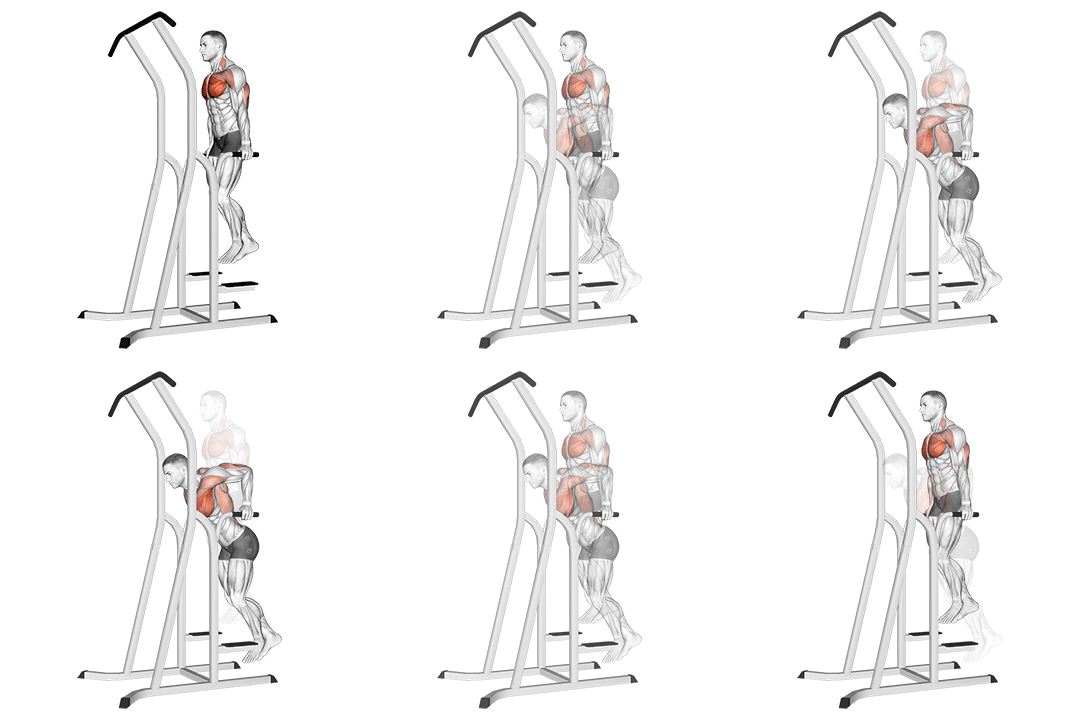
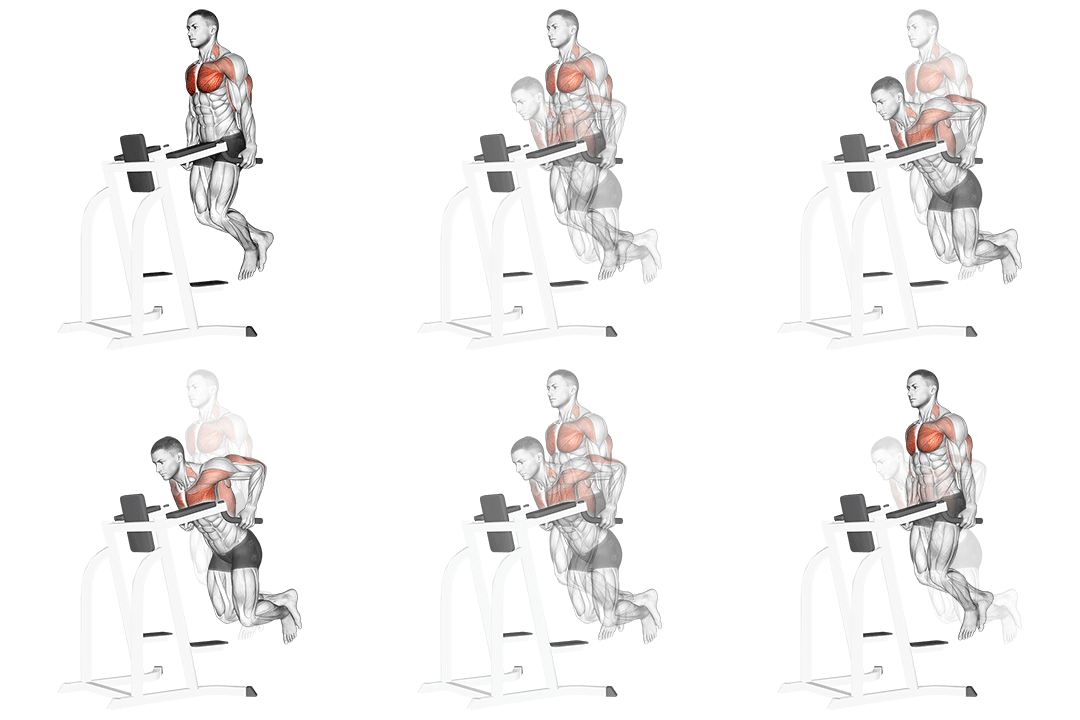
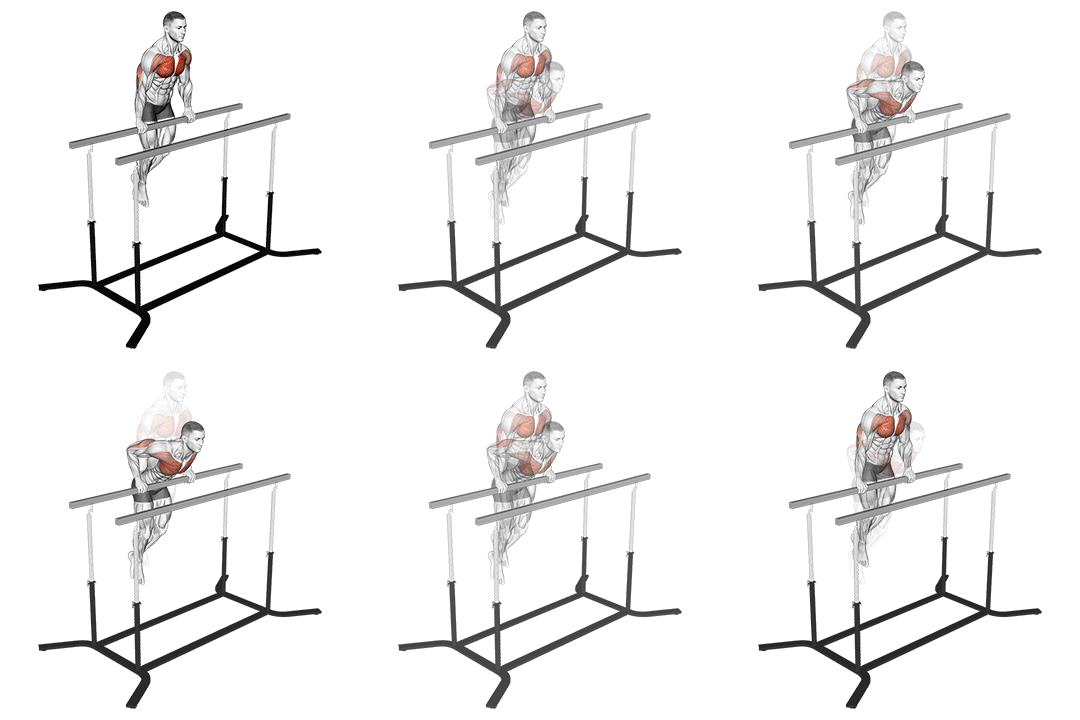
Chest Dip (on Dip-pull-up Cage)
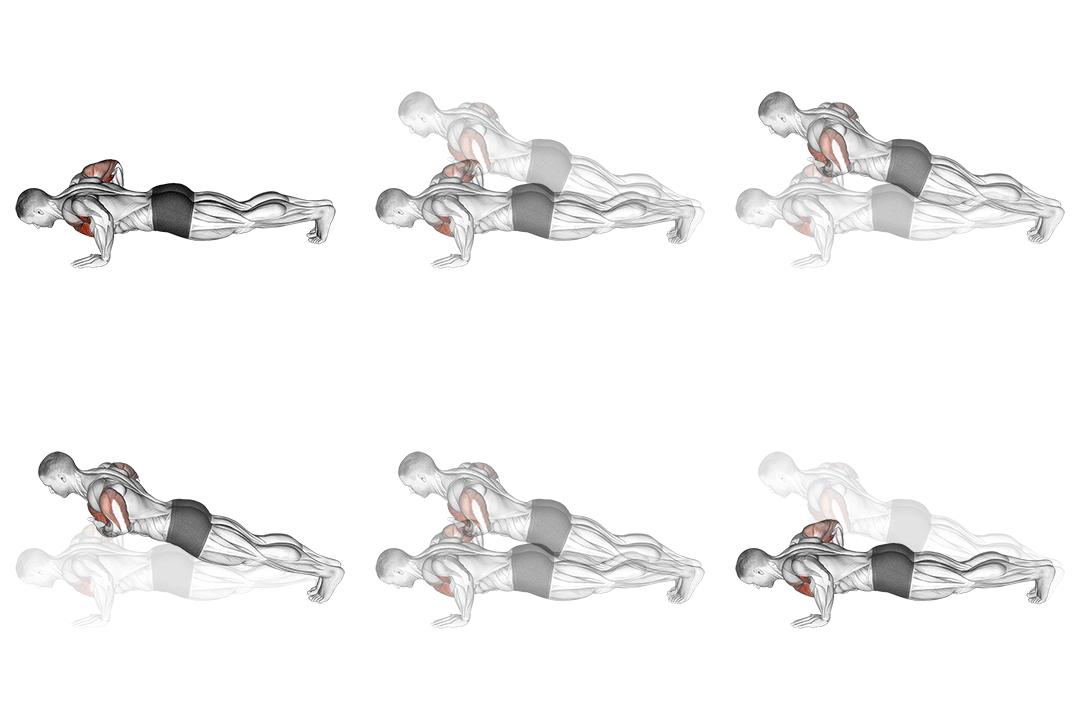
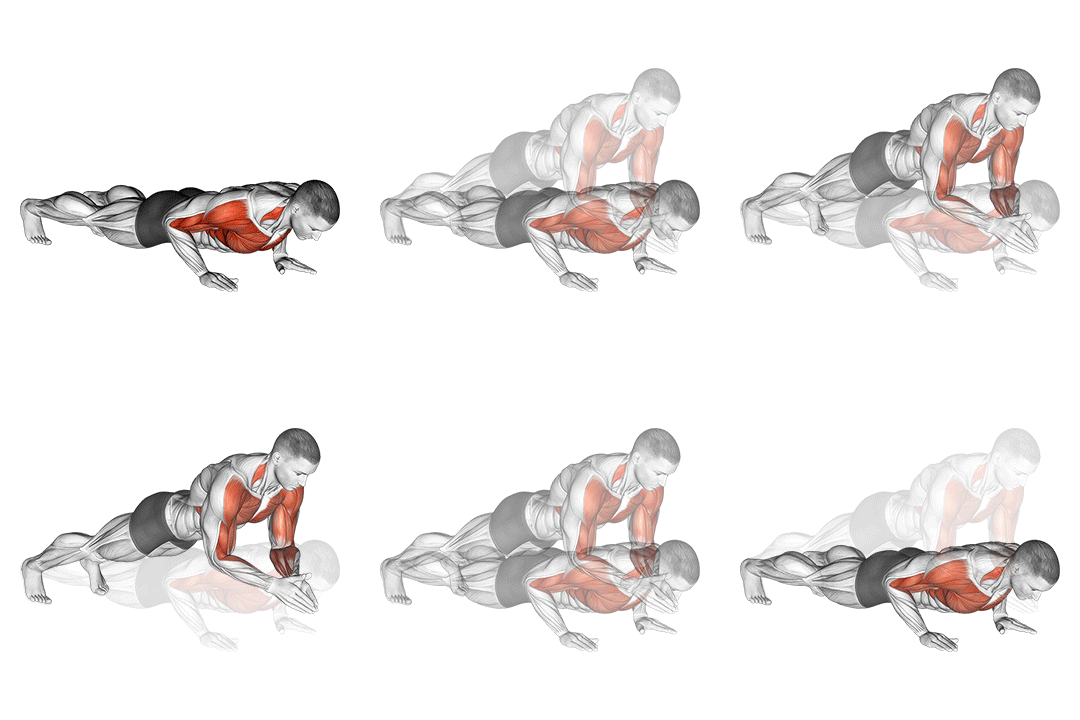
Chest Tap Push-up (male)
Head-to-Head Comparison
| Attribute | Chest Dip (on Dip-pull-up Cage) | Chest Tap Push-up (male) |
|---|---|---|
| Target Muscle |
Pectorals
|
Pectorals
|
| Body Part |
Chest
|
Chest
|
| Equipment |
Body-weight
|
Body-weight
|
| Difficulty |
Intermediate
|
Advanced
|
| Movement Type |
Compound
|
Compound
|
| Secondary Muscles |
2
|
2
|
Secondary Muscles Activated
Chest Dip (on Dip-pull-up Cage)
Chest Tap Push-up (male)
Visual Comparison
Overview
Chest Dip (on Dip-pull-up Cage) vs Chest Tap Push-up (male) — if you want a stronger, thicker chest you need to choose exercises that match your goals and access. This guide walks you through biomechanics, muscle activation, equipment needs, difficulty, progressions, and injury risk so you can pick the right move for your program. I’ll give technique cues (torso angle, elbow path, rep ranges), practical progressions, and clear scenarios for when each exercise should lead your chest training.
Key Differences
- Difficulty levels differ: Chest Dip (on Dip-pull-up Cage) is intermediate, while Chest Tap Push-up (male) is advanced.
- Both exercises target the Pectorals using Body-weight. The main differences are in their movement patterns and muscle activation angles.
Pros & Cons
Chest Dip (on Dip-pull-up Cage)
+ Pros
- High mechanical overload potential — easily loadable with belt or plates for strength and hypertrophy
- Greater stretch on the pecs at the bottom, increasing length-tension stimulus for muscle growth
- Consistent plane of motion helps target the sternal pecs when you lean torso ~30–45°
- Scalable with assistance bands and partial ROM to train through weak points
− Cons
- Requires dip bars or a dip-pull-up cage — less convenient for home-only training
- Deeper ROM can aggravate anterior shoulder structures if mobility or control is poor
- Harder to hit explosive power and fast-twitch recruitment compared with plyometric options
Chest Tap Push-up (male)
+ Pros
- Needs no equipment — ideal for minimalist or travel workouts
- Builds explosive strength and fast-twitch recruitment via the plyometric concentric
- Improves core stability and scapular control due to brief flight and tap phase
- Can be performed in high-intensity circuits for metabolic stimulus and power-endurance
− Cons
- Advanced skill — poor timing or weak scapular control increases injury risk
- Harder to progressively overload absolute strength (limited safe external loading)
- Wrist and AC joint stress during high-volume plyometrics can be problematic for some lifters
When Each Exercise Wins
Dips allow consistent mechanical overload (add 5–25+ lb increments) and put the pecs through a long ROM with a pronounced stretch, which maximizes time under tension and the length-tension advantage for hypertrophy. Use 6–12 reps with controlled eccentrics and 1–3 second bottom pauses to target growth.
You can load dips progressively and train in low-rep ranges (3–6 reps) to increase maximal pressing force. The vertical loading and ability to add heavy plates give a clearer path to higher absolute strength than bodyweight plyometrics.
With band assistance or machine-assisted dips you can teach the downward and upward elbow path and build strength safely. Chest Tap Push-up (male) is a plyometric skill that typically exceeds beginner capacity due to the power and stability required.
Requires only a floor and minimal space, so you can train anywhere. It gives a strong chest and power stimulus without bars or plates, enabling effective home sessions and circuit-style conditioning.
Frequently Asked Questions
Can I do both Chest Dip (on Dip-pull-up Cage) and Chest Tap Push-up (male) in the same workout?
Yes — pair them intelligently. Do weighted or heavy dips first to target strength and hypertrophy (3–6 sets of 4–10 reps), then finish with 2–4 sets of 3–6 explosive chest tap push-ups for power. Keep total shoulder volume in check to avoid overuse.
Which exercise is better for beginners?
Chest Dip (on Dip-pull-up Cage) is more beginner-friendly when scaled with assistance bands or machine support because you can learn the movement and build strength progressively. Chest Tap Push-up (male) requires advanced timing and power and is not recommended as a first chest exercise.
How do the muscle activation patterns differ?
Dips produce sustained pectoral activation across a long eccentric-concentric ROM, emphasizing length-tension and slow-to-mixed fiber work. Chest Tap Push-ups spike peak pectoral and triceps activation on the explosive concentric, favoring fast-twitch recruitment and power development.
Can Chest Tap Push-up (male) replace Chest Dip (on Dip-pull-up Cage)?
Not entirely. If your goal is heavy progressive overload and maximal strength or hypertrophy, dips are superior because you can add external load and control ROM. If you lack equipment or want power and convenience, the chest tap push-up is a strong substitute but won’t fully replicate heavy-load strength adaptations.
Expert Verdict
Use Chest Dip (on Dip-pull-up Cage) when your priority is hypertrophy or raw pressing strength — its long ROM and easy loading make it the go-to for 3–12 rep work sets and slow eccentrics. Cue a 30–45° forward lean, tuck elbows about 20–30° from the body, and avoid >90° shoulder extension if you lack mobility. Choose Chest Tap Push-up (male) when you need power, sport-specific explosiveness, or equipment-free training; focus on soft landings, scapular stability, and sets of 3–6 explosive reps. For programming, combine both if you want overload plus speed: heavy dips earlier in the session and 2–4 sets of 3–6 chest taps later for power and rate of force development.
Also Compare
More comparisons with Chest Dip (on Dip-pull-up Cage)
More comparisons with Chest Tap Push-up (male)
Compare More Exercises
Use our free comparison tool to analyze any two exercises head-to-head.
Compare Exercises