

Chest Dip (on Dip-pull-up Cage) vs Clap Push Up: Complete Comparison Guide
Chest Dip (on Dip-pull-up Cage) vs Clap Push Up: You want a stronger, thicker chest—but which move fits your goals and access? I’ll break down mechanics, muscle activation, equipment needs, injury risk, and clear progressions so you can choose. You’ll get technique cues (torso angle, elbow path, tempo), rep ranges (6–12 for hypertrophy, 3–6 for explosive work), and programming tips for strength, muscle growth, and beginners. Use the comparison to match the exercise to your training phase and reduce common shoulder or wrist issues.
Exercise Comparison
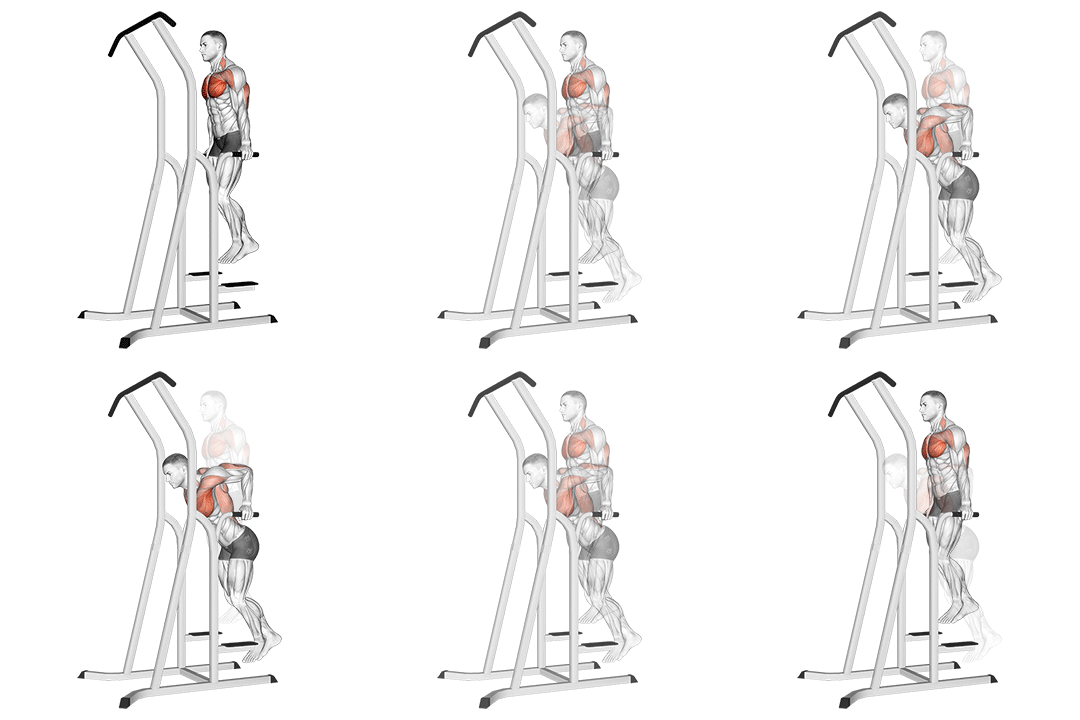
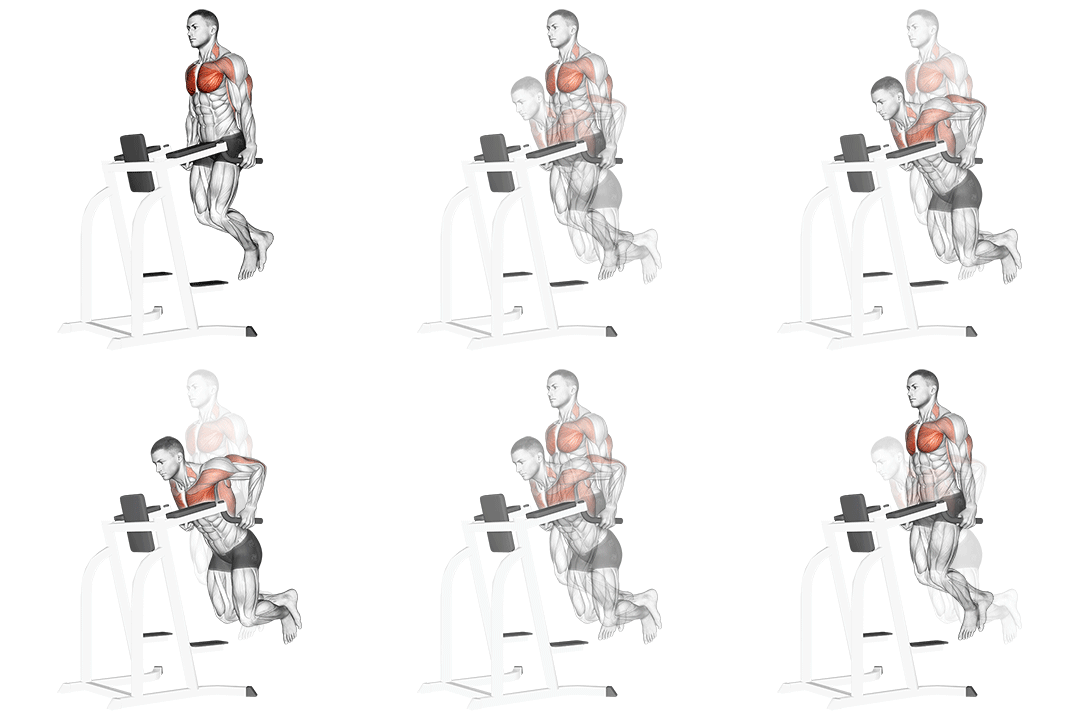
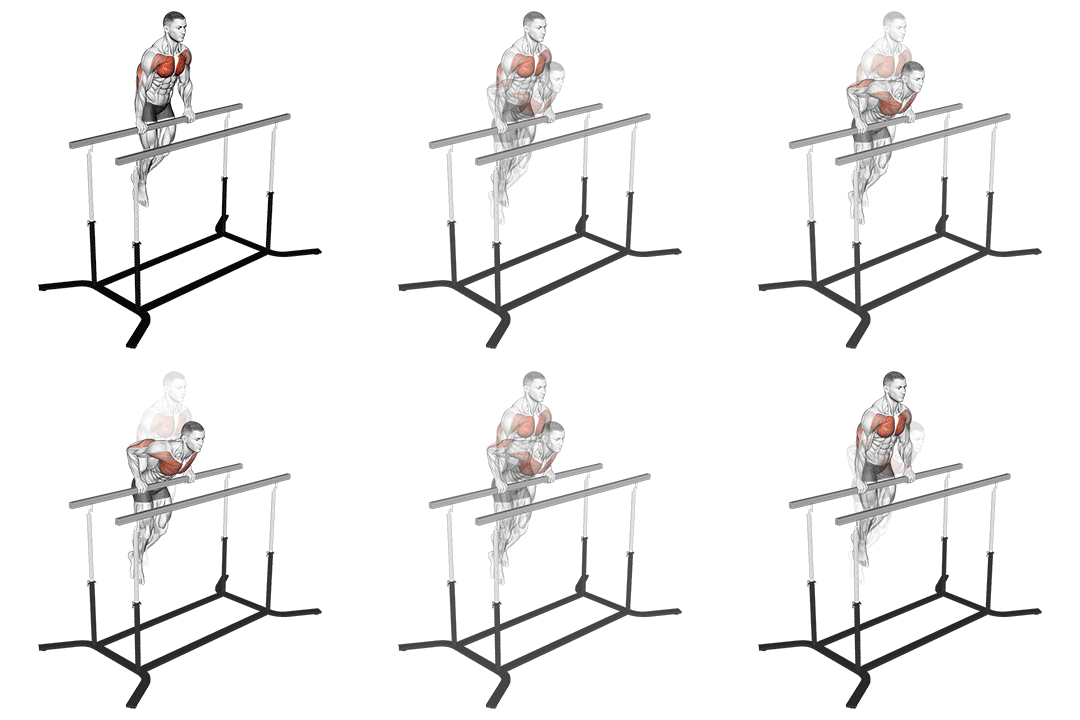
Chest Dip (on Dip-pull-up Cage)
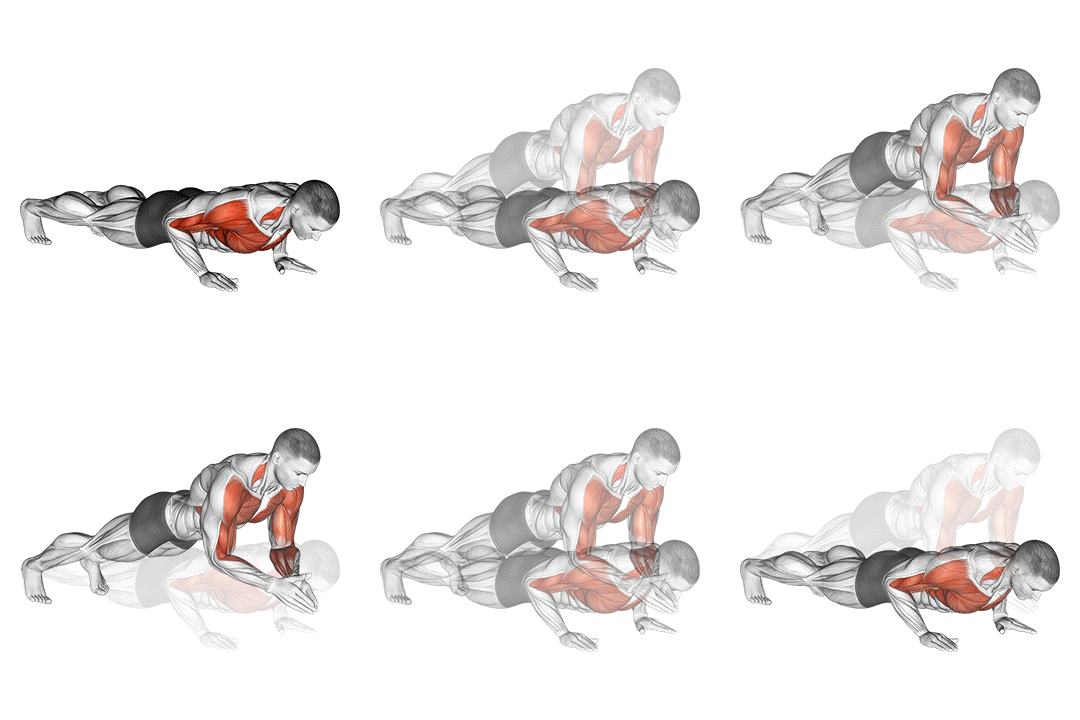
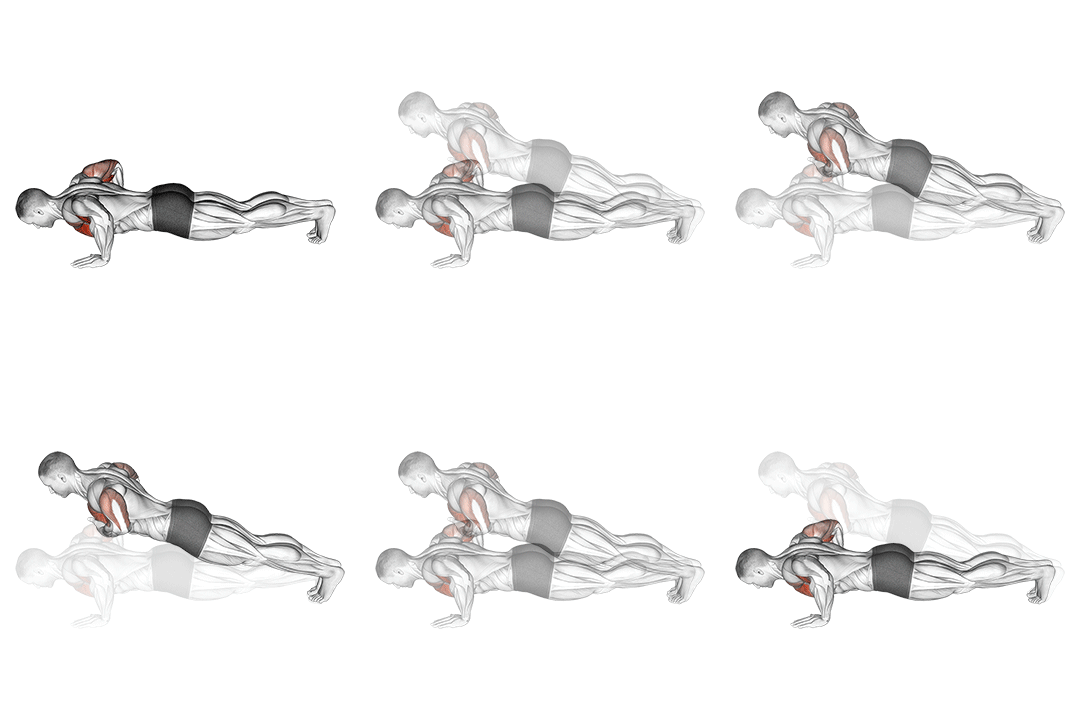
Clap Push Up
Head-to-Head Comparison
| Attribute | Chest Dip (on Dip-pull-up Cage) | Clap Push Up |
|---|---|---|
| Target Muscle |
Pectorals
|
Pectorals
|
| Body Part |
Chest
|
Chest
|
| Equipment |
Body-weight
|
Body-weight
|
| Difficulty |
Intermediate
|
Advanced
|
| Movement Type |
Compound
|
Compound
|
| Secondary Muscles |
2
|
2
|
Secondary Muscles Activated
Chest Dip (on Dip-pull-up Cage)
Clap Push Up
Visual Comparison
Overview
Chest Dip (on Dip-pull-up Cage) vs Clap Push Up: You want a stronger, thicker chest—but which move fits your goals and access? I’ll break down mechanics, muscle activation, equipment needs, injury risk, and clear progressions so you can choose. You’ll get technique cues (torso angle, elbow path, tempo), rep ranges (6–12 for hypertrophy, 3–6 for explosive work), and programming tips for strength, muscle growth, and beginners. Use the comparison to match the exercise to your training phase and reduce common shoulder or wrist issues.
Key Differences
- Difficulty levels differ: Chest Dip (on Dip-pull-up Cage) is intermediate, while Clap Push Up is advanced.
- Both exercises target the Pectorals using Body-weight. The main differences are in their movement patterns and muscle activation angles.
Pros & Cons
Chest Dip (on Dip-pull-up Cage)
+ Pros
- Large range of motion for pectoral stretch and length-tension advantage
- Easy to progressively overload with weight belts or chains
- Strong transfer to pressing strength because of high mechanical load
- Scapular and core stability integration when performed correctly
− Cons
- Requires a stable dip bar or cage
- Deep range can stress the anterior shoulder if mobility or control is poor
- Less emphasis on explosive power and rate of force development
Clap Push Up
+ Pros
- No equipment required — high accessibility
- Develops power and rate of force development via plyometric action
- Great for fast-twitch fiber stimulation and athletic performance
- Minimal setup; easy to program as part of metabolic or power circuits
− Cons
- High technical and neuromuscular demand — hard to learn
- Limited ability to progressively add heavy load for max strength
- Higher acute risk to wrists, hands, and AC joint on imperfect landings
When Each Exercise Wins
Chest dips allow a larger working range and easy progressive overload (6–12 reps with added weight). The extended eccentric phase and ability to increase time under tension make them superior for targeted pectoral growth.
You can systematically increase external load on dips to build absolute pressing strength. The vertical-to-anterior force vector and capacity for heavy sets (3–8 reps) transfer well to overall upper-body pressing strength.
With regressions like band-assisted dips or partial range, dips scale more cleanly for novices. Clap push-ups require baseline power and control that most beginners lack, increasing injury risk.
Clap push-ups need no specialized equipment and can be done on any flat surface, making them ideal for equipment-free home sessions. If you lack the ability, regress to incline plyo or standard push-ups.
Frequently Asked Questions
Can I do both Chest Dip (on Dip-pull-up Cage) and Clap Push Up in the same workout?
Yes. Pair dips for heavy sets (3–8 reps) early in the workout, then use clap push-ups as a power-finisher (3–6 explosive reps) to train rate of force development. Keep total volume reasonable and watch shoulder fatigue—rotate them between sessions if soreness accumulates.
Which exercise is better for beginners?
Chest dips are better for beginners when properly regressed (band-assisted or machine-assisted) because they scale with load and range. Clap push-ups require baseline strength, plyometric control, and reliable scapular mechanics that most beginners haven’t developed yet.
How do the muscle activation patterns differ?
Dips emphasize eccentric lengthening and sustained tension on the pecs with a bigger role for the triceps during elbow extension. Clap push-ups produce a high-rate concentric spike via the stretch-shortening cycle, emphasizing power and quick recruitment of fast-twitch fibers rather than long eccentrics.
Can Clap Push Up replace Chest Dip (on Dip-pull-up Cage)?
Not entirely. Clap push-ups are useful for power and fast-twitch development but offer limited progressive overload for maximal strength or hypertrophy. If your goal is increased mechanical load and muscle growth, keep dips or weighted pressing in your program alongside plyometric work.
Expert Verdict
Use chest dips when your priority is muscle growth or max pressing strength. Dips let you exploit a long pec stretch, add measurable external load (5–50+ lbs), and manipulate torso lean to emphasize the sternal or clavicular fibers; program sets of 6–12 for hypertrophy and 3–6 heavy reps for strength. Use clap push-ups when you want to develop explosive power, rate of force development, and athletic upper-body transfer; program 3–6 explosive reps across 3–5 sets. If you train at home with no equipment, clap push-ups win for accessibility, but start with progressions to protect shoulders and wrists.
Also Compare
More comparisons with Chest Dip (on Dip-pull-up Cage)
Compare More Exercises
Use our free comparison tool to analyze any two exercises head-to-head.
Compare Exercises