

Chest Dip (on Dip-pull-up Cage) vs Push-up: Complete Comparison Guide
Chest Dip (on Dip-pull-up Cage) vs Push-up — two staple bodyweight chest moves with overlapping benefits but different mechanics. If you want clear guidance on which to choose for hypertrophy, strength, shoulder health, or convenience, you’re in the right place. I’ll compare primary and secondary muscle activation, equipment needs, learning curves, injury risks, and give concrete technique cues you can use today (angles, elbow position, rep ranges). By the end you’ll know which exercise to prioritize based on your goals and how to program progressions safely.
Exercise Comparison
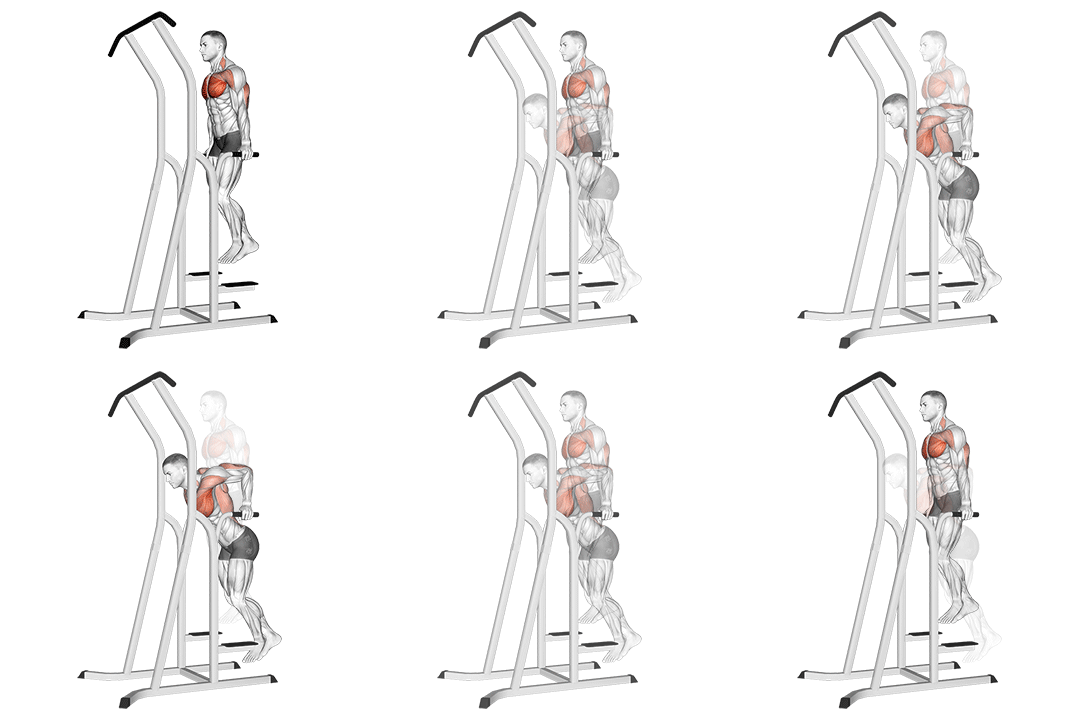
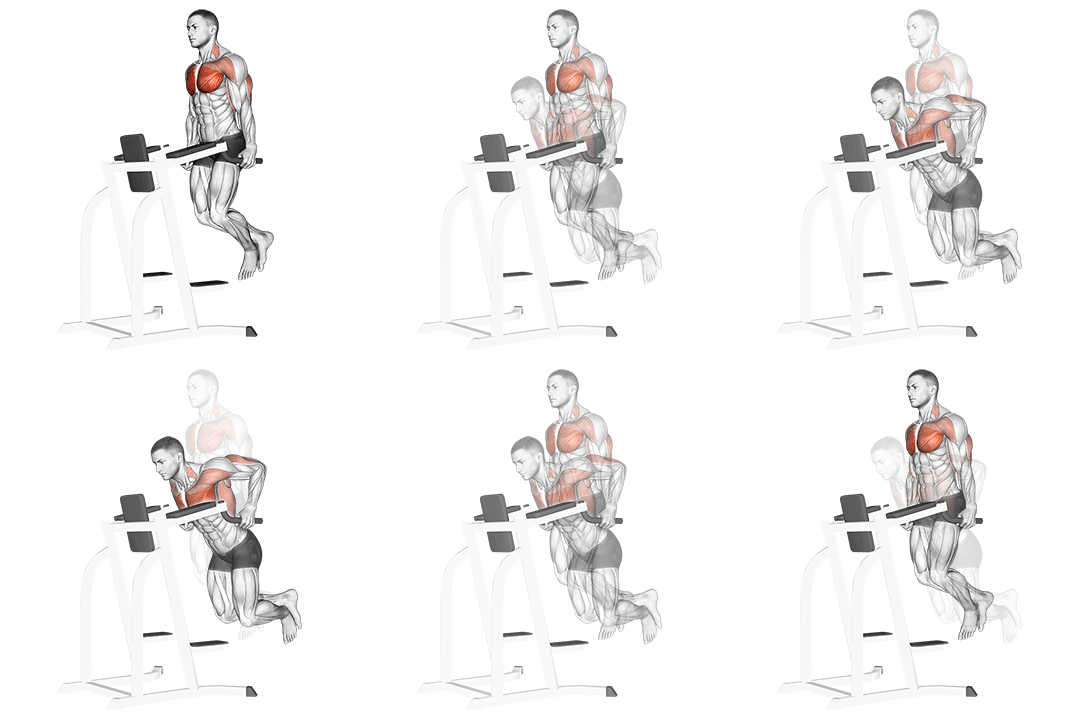
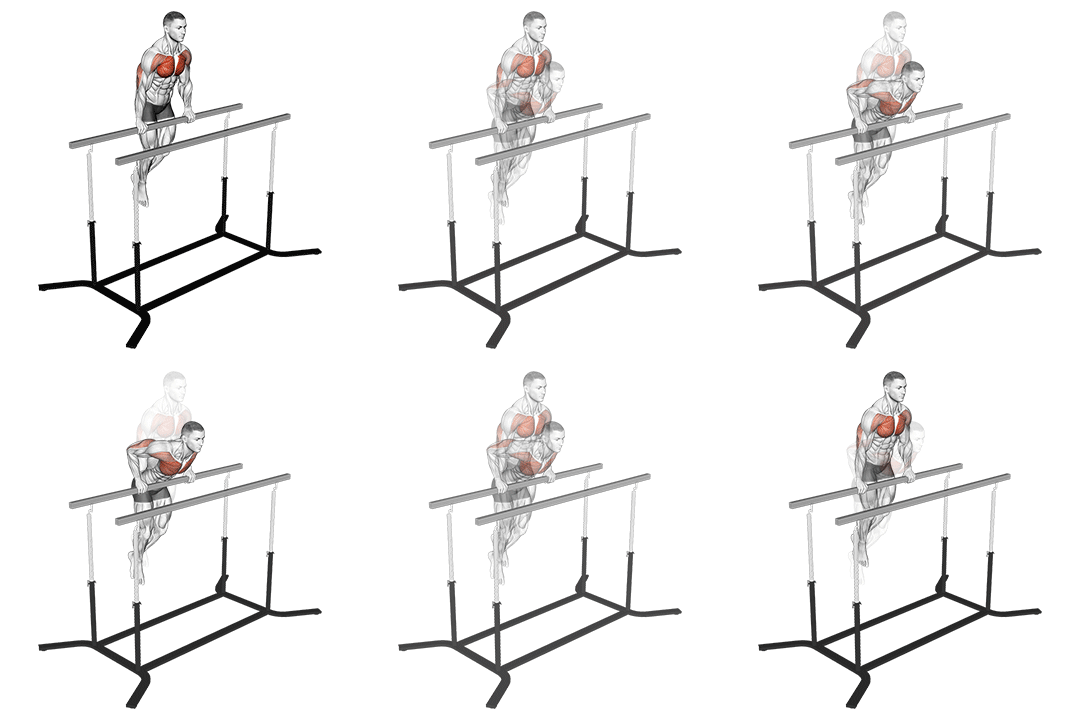
Chest Dip (on Dip-pull-up Cage)
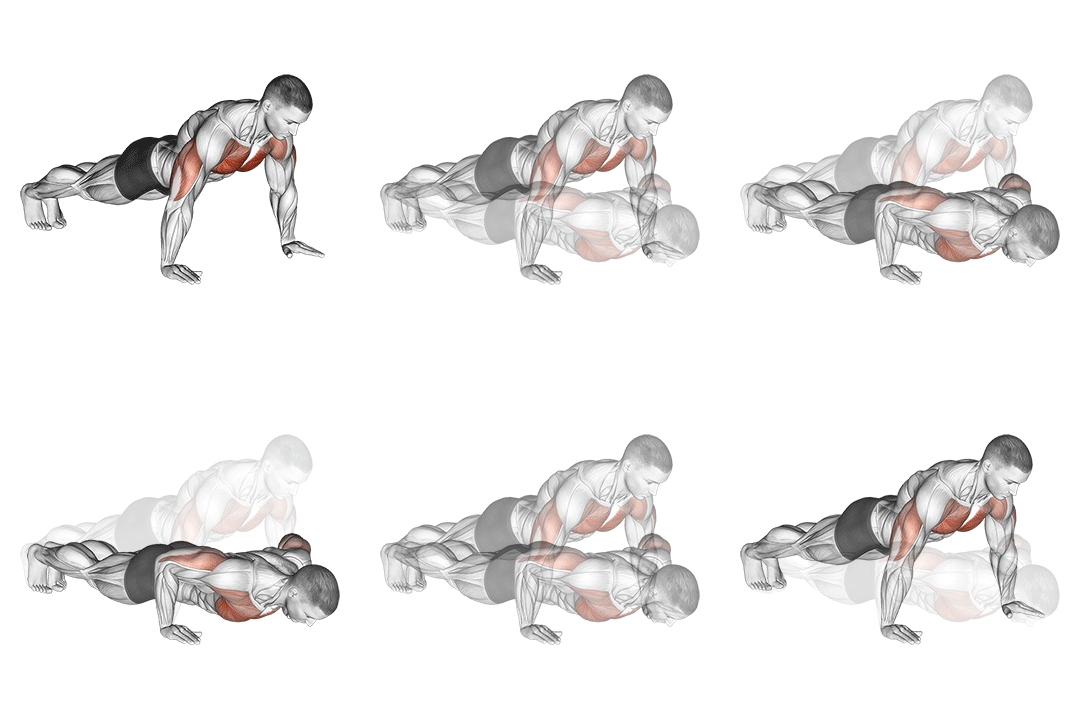
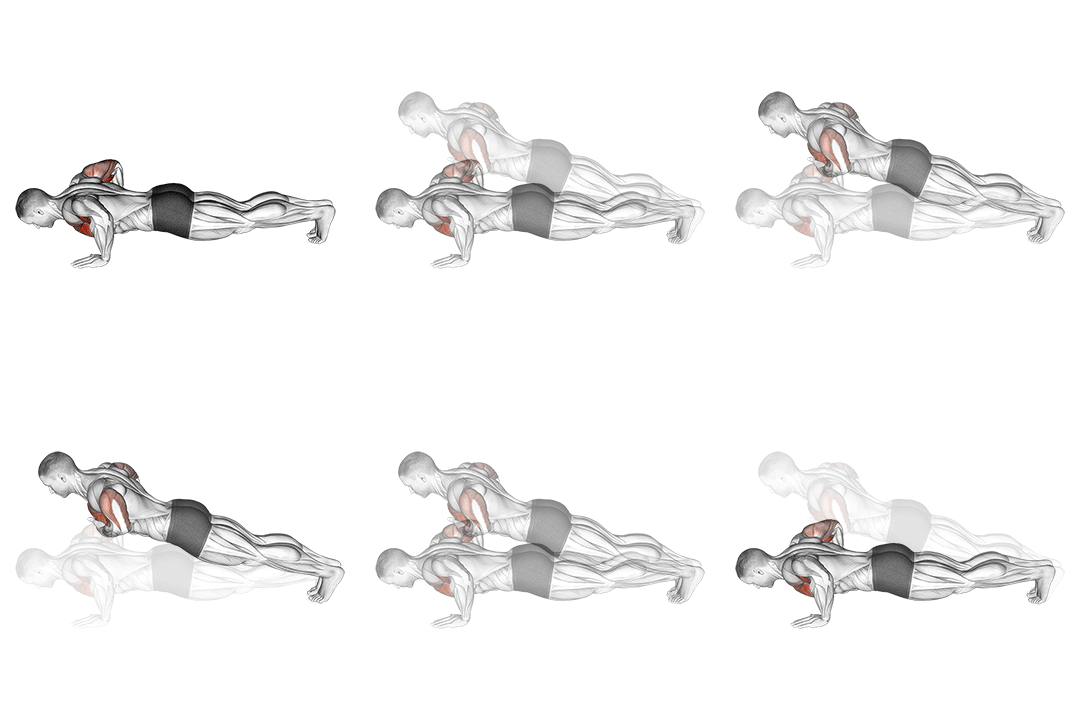
Push-up
Head-to-Head Comparison
| Attribute | Chest Dip (on Dip-pull-up Cage) | Push-up |
|---|---|---|
| Target Muscle |
Pectorals
|
Pectorals
|
| Body Part |
Chest
|
Chest
|
| Equipment |
Body-weight
|
Body-weight
|
| Difficulty |
Intermediate
|
Intermediate
|
| Movement Type |
Compound
|
Compound
|
| Secondary Muscles |
2
|
3
|
Secondary Muscles Activated
Chest Dip (on Dip-pull-up Cage)
Push-up
Visual Comparison
Overview
Chest Dip (on Dip-pull-up Cage) vs Push-up — two staple bodyweight chest moves with overlapping benefits but different mechanics. If you want clear guidance on which to choose for hypertrophy, strength, shoulder health, or convenience, you’re in the right place. I’ll compare primary and secondary muscle activation, equipment needs, learning curves, injury risks, and give concrete technique cues you can use today (angles, elbow position, rep ranges). By the end you’ll know which exercise to prioritize based on your goals and how to program progressions safely.
Key Differences
- Both exercises target the Pectorals using Body-weight. The main differences are in their movement patterns and muscle activation angles.
Pros & Cons
Chest Dip (on Dip-pull-up Cage)
+ Pros
- Higher overload potential — easy to add weight for strength and hypertrophy
- Greater chest stretch at bottom — favorable for length-tension stimulus
- Strong recruitment of triceps long head and anterior deltoid
- Compact set-up on a dip/pull-up cage; efficient compound movement
− Cons
- Higher shoulder impingement risk if mobility or technique is poor
- Requires equipment (dip bars or cage)
- Harder to learn for beginners due to balance and depth control
Push-up
+ Pros
- Extremely accessible — no equipment needed for basic variations
- Easier to scale and regress (incline, knees, wall)
- Requires strong core and scapular control—transfers to other lifts
- Low shoulder injury risk when performed with proper scapular mechanics
− Cons
- Limited absolute overload without external weight or advanced variations
- Less chest stretch at bottom compared with deep dips
- Wrist discomfort for some lifters unless modifications are used
When Each Exercise Wins
Dips allow greater mechanical tension through added external load and a deeper stretch at longer muscle lengths, which increases hypertrophy stimulus. Aim for 6–12 reps with progressive loading and controlled 2–3 s eccentrics.
Because you can load dips with significant extra weight (belt, vest) they’re better for absolute pressing strength. Train in 3–6 rep ranges with heavy sets and full control.
Push-ups scale easily via incline or knee regressions, build core and scapular stability first, and reduce shoulder load compared to deep weighted dips.
Push-ups need minimal space and no fixed bars; you can vary intensity with incline/decline, tempo, or a backpack for added load to match goals at home.
Frequently Asked Questions
Can I do both Chest Dip (on Dip-pull-up Cage) and Push-up in the same workout?
Yes — pairing them works well. Use push-ups as a warm-up or volume builder (2–4 sets of 8–15 reps, tempo control) and follow with weighted or bodyweight dips as a heavy set focus (3–5 sets of 6–10 reps). Monitor fatigue and keep shoulder-friendly ranges.
Which exercise is better for beginners?
Push-ups are better for beginners because they can be regressed (incline or knees) to build core and scapular control before loading. Start with 3–4 sets of 8–15 reps and progress by reducing incline or increasing time under tension.
How do the muscle activation patterns differ?
Dips load pecs at longer muscle lengths and increase triceps/anterior deltoid activation when you lean forward, increasing stretch and mechanical tension. Push-ups emphasize horizontal adduction with stronger serratus anterior and core demand while keeping peak pec length shorter.
Can Push-up replace Chest Dip (on Dip-pull-up Cage)?
Push-ups can substitute when you lack equipment or need lower shoulder stress, but they don’t fully replace dips for heavy overload and maximal chest stretch. For equivalent hypertrophy aim to use weighted push-ups or progressive decline variations to approach the loading capability of dips.
Expert Verdict
Choose Chest Dips when your goal is chest hypertrophy or heavier pressing strength and you have the shoulder mobility and equipment to load the movement safely. Dips place the pecs at longer lengths and let you add meaningful external resistance (use 6–12 reps for hypertrophy, 3–6 for strength). Choose Push-ups if you need accessibility, better joint-friendly progression, or to emphasize core and scapular control — use incline progressions, tempo reps, or weighted vests for overload. If possible, combine both: use push-ups as a technical and volume builder and dips as a heavy overload movement once your shoulder mechanics are solid.
Also Compare
More comparisons with Chest Dip (on Dip-pull-up Cage)
Compare More Exercises
Use our free comparison tool to analyze any two exercises head-to-head.
Compare Exercises