

Chest Dip On Straight Bar vs Chest Tap Push-up (male): Complete Comparison Guide
Chest Dip On Straight Bar vs Chest Tap Push-up (male) — which should you include in your chest work? You’ll get a direct comparison of primary and secondary muscle activation, biomechanics (force vectors, length-tension, ROM), technique cues, progression pathways, and who each move best serves. I’ll show rep ranges, specific angles to cue, and practical progressions so you can choose the exercise that matches your equipment, training age, and goals.
Exercise Comparison
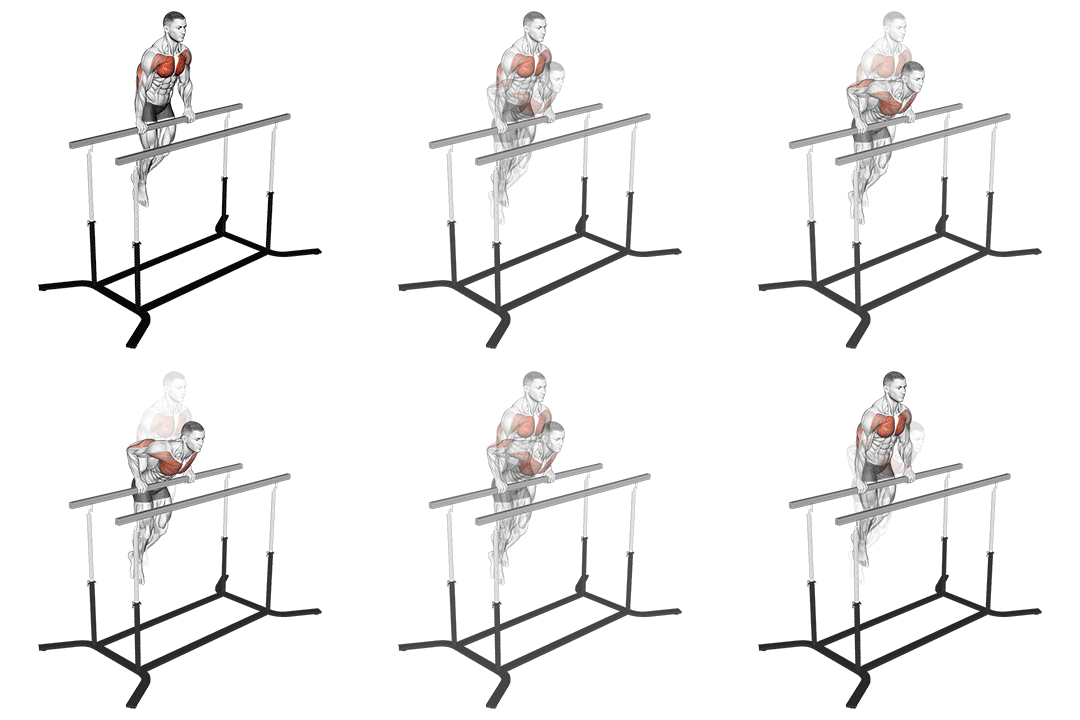
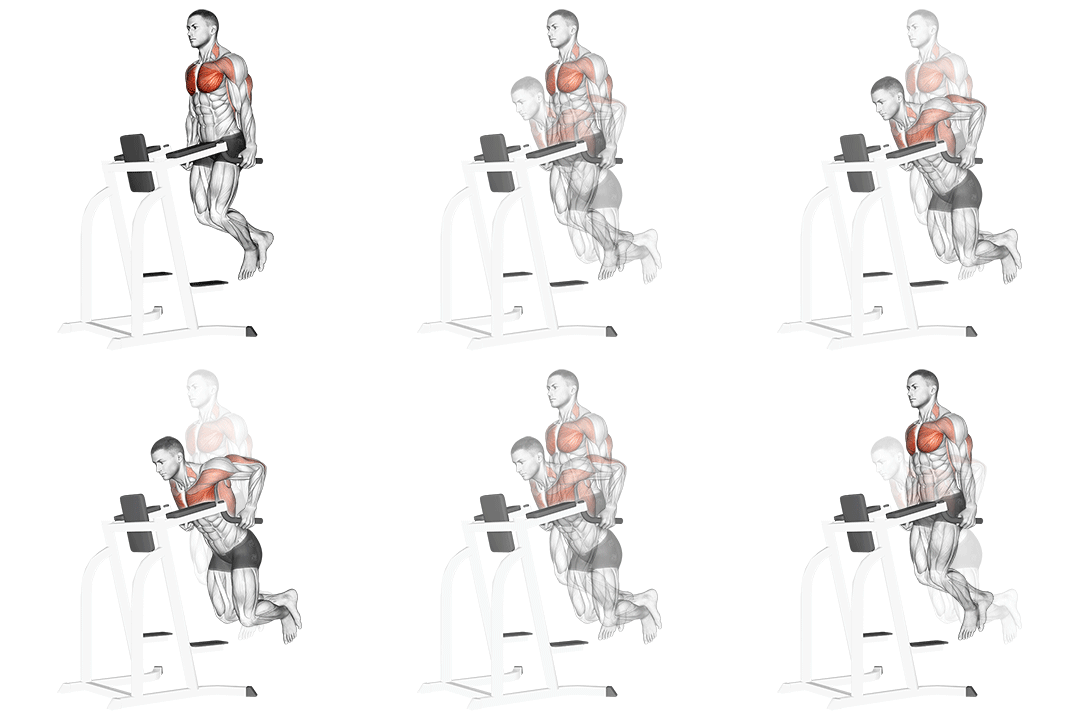
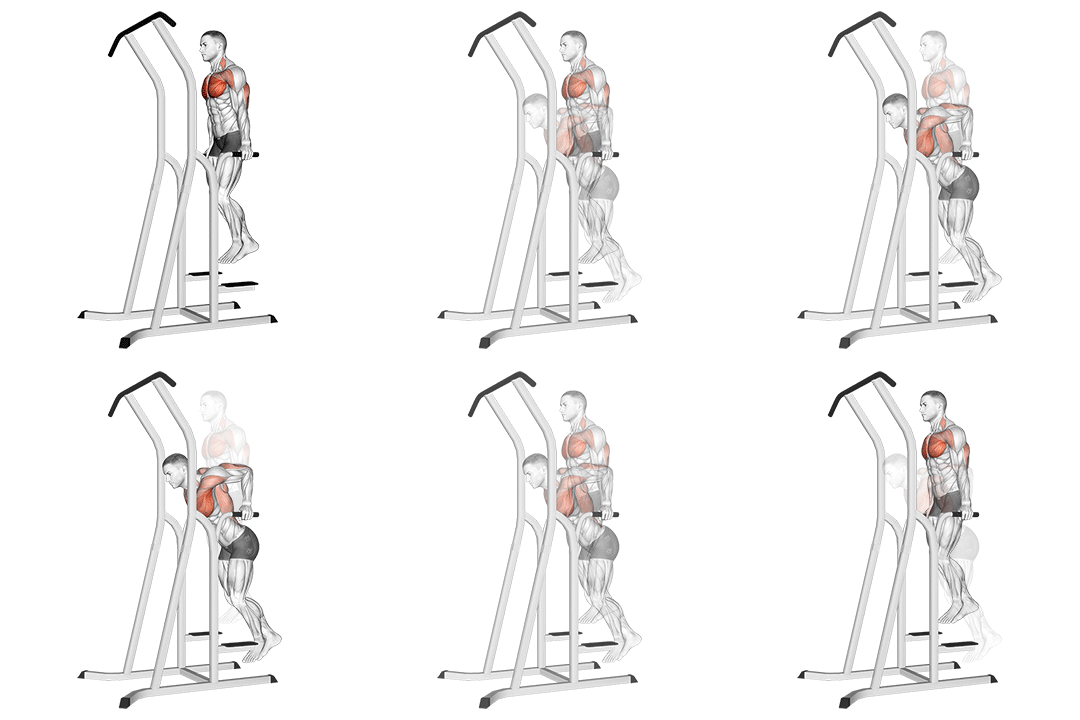
Chest Dip On Straight Bar
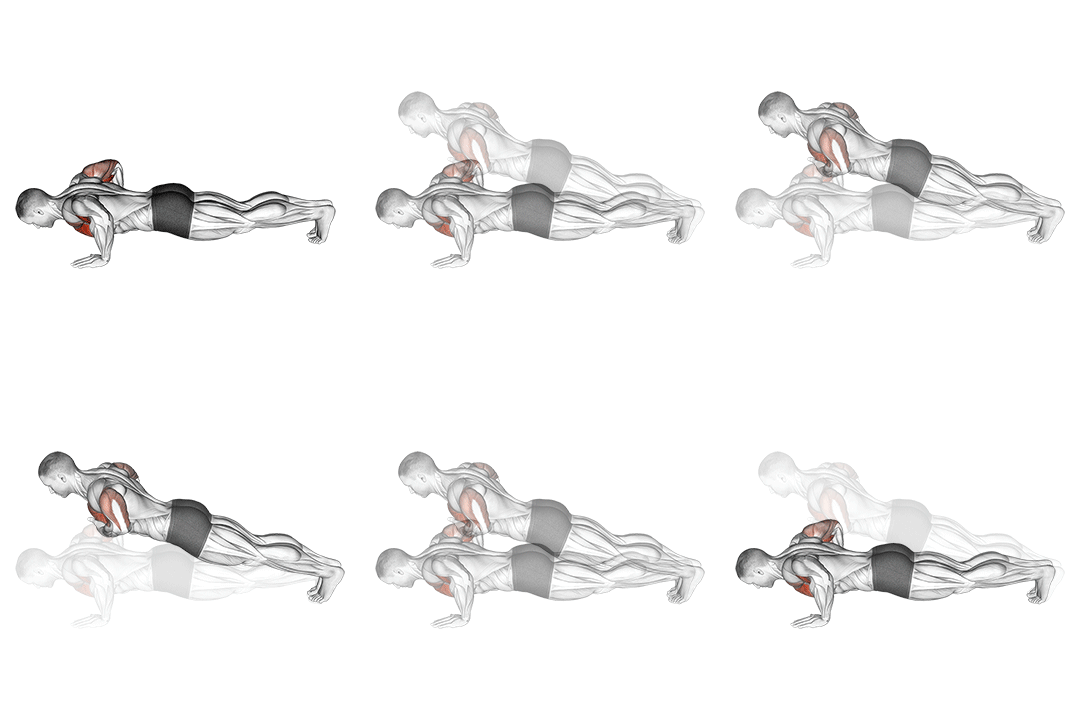
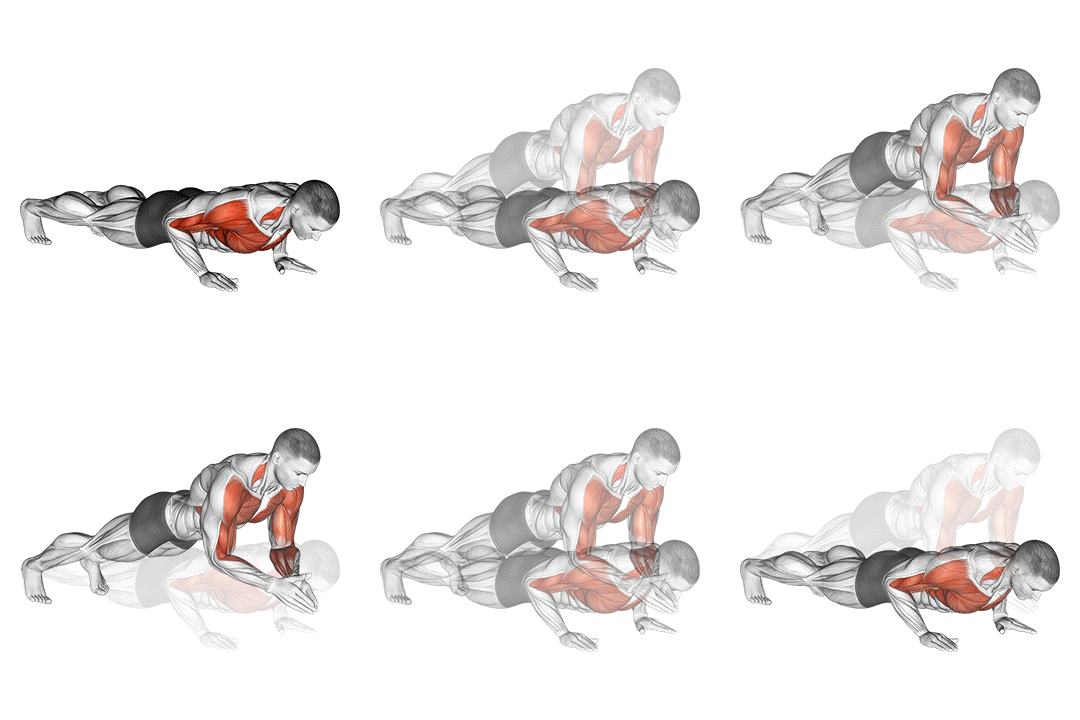
Chest Tap Push-up (male)
Head-to-Head Comparison
| Attribute | Chest Dip On Straight Bar | Chest Tap Push-up (male) |
|---|---|---|
| Target Muscle |
Pectorals
|
Pectorals
|
| Body Part |
Chest
|
Chest
|
| Equipment |
Body-weight
|
Body-weight
|
| Difficulty |
Intermediate
|
Advanced
|
| Movement Type |
Compound
|
Compound
|
| Secondary Muscles |
2
|
2
|
Secondary Muscles Activated
Chest Dip On Straight Bar
Chest Tap Push-up (male)
Visual Comparison
Overview
Chest Dip On Straight Bar vs Chest Tap Push-up (male) — which should you include in your chest work? You’ll get a direct comparison of primary and secondary muscle activation, biomechanics (force vectors, length-tension, ROM), technique cues, progression pathways, and who each move best serves. I’ll show rep ranges, specific angles to cue, and practical progressions so you can choose the exercise that matches your equipment, training age, and goals.
Key Differences
- Difficulty levels differ: Chest Dip On Straight Bar is intermediate, while Chest Tap Push-up (male) is advanced.
- Both exercises target the Pectorals using Body-weight. The main differences are in their movement patterns and muscle activation angles.
Pros & Cons
Chest Dip On Straight Bar
+ Pros
- High mechanical tension through long ROM for muscle growth
- Easy to progressively overload with added weight
- Strong carryover to pressing strength due to large moment arms
- Clear technique cues (lean, scapular control, elbow path) simplify coaching
− Cons
- Requires specific equipment (stable bar or dip station)
- Can increase anterior shoulder stress when performed too deep
- Less emphasis on core anti-rotation and explosive power
Chest Tap Push-up (male)
+ Pros
- Minimal equipment — great for home or travel
- Develops explosive horizontal power and scapular control
- Enhances core anti-rotation and unilateral stability
- High metabolic demand when performed in sets of 6–12 reps
− Cons
- Technically demanding; hard to scale linearly with load
- Higher acute wrist and shoulder strain during plyometric landing
- Requires good baseline strength and control to execute safely
When Each Exercise Wins
Dips provide a longer ROM and easier progressive overload (weighted dips, 6–12 rep ranges), producing greater time under tension and mechanical tension on pectoral fibers for muscle growth.
You can add consistent external load to dips and manipulate leverage, making them superior for increasing maximal pressing strength and building force across the full shoulder extension range.
While both moves are challenging, dips can be more safely scaled with assisted variations, partial ROM, and eccentric-focused reps, making them easier for a novice to progress toward than a plyometric tap push-up.
Tap push-ups need no fixed apparatus and are easy to program into bodyweight circuits, giving you a powerful chest stimulus with minimal equipment at home.
Frequently Asked Questions
Can I do both Chest Dip On Straight Bar and Chest Tap Push-up (male) in the same workout?
Yes. Pair them strategically: use weighted or bodyweight dips as your primary heavy or hypertrophy movement (3–5 sets of 6–12), then add chest tap push-ups as a power or conditioning finish (3–5 sets of 3–6 explosive reps or 8–12 for tempo circuits). Allow 48–72 hours recovery for high-intensity sessions.
Which exercise is better for beginners?
Neither is ideal as a first chest move, but dips are easier to scale with assistance, negatives, or limited ROM. Start with assisted dips or standard push-ups, build to full dips, and only attempt chest tap push-ups after you can perform 20 strict push-ups with control.
How do the muscle activation patterns differ?
Dips create high activation through a long shoulder extension ROM, producing sustained tension at longer muscle lengths. Tap push-ups produce short, high-velocity concentric efforts and require rapid eccentric control — activation spikes around full extension and during the deceleration phase, emphasizing power and stabilizers.
Can Chest Tap Push-up (male) replace Chest Dip On Straight Bar?
It can replace dips for power and accessibility but not perfectly for progressive overload or maximal hypertrophy. If your goal is pure size or maximal strength, prioritize dips; if you lack equipment or want explosiveness and core work, prioritize chest tap push-ups.
Expert Verdict
Use Chest Dip On Straight Bar when your priority is targeted pectoral hypertrophy and maximal pressing strength. The dip’s longer shoulder extension, forward lean option, and straightforward loadability (add 2.5–10 kg increments) make it ideal for progressive overload and 6–12 rep hypertrophy blocks. Choose Chest Tap Push-up (male) if you train at home, want to build horizontal explosive power, or aim to improve scapular stability and core anti-rotation. Program tap push-ups in 3–6 rep explosive sets or 8–12 rep circuits for metabolic conditioning. Combine both across a mesocycle: prioritize dips for heavy phases and tap push-ups for power or finishing circuits.
Also Compare
More comparisons with Chest Dip On Straight Bar
More comparisons with Chest Tap Push-up (male)
Compare More Exercises
Use our free comparison tool to analyze any two exercises head-to-head.
Compare Exercises